
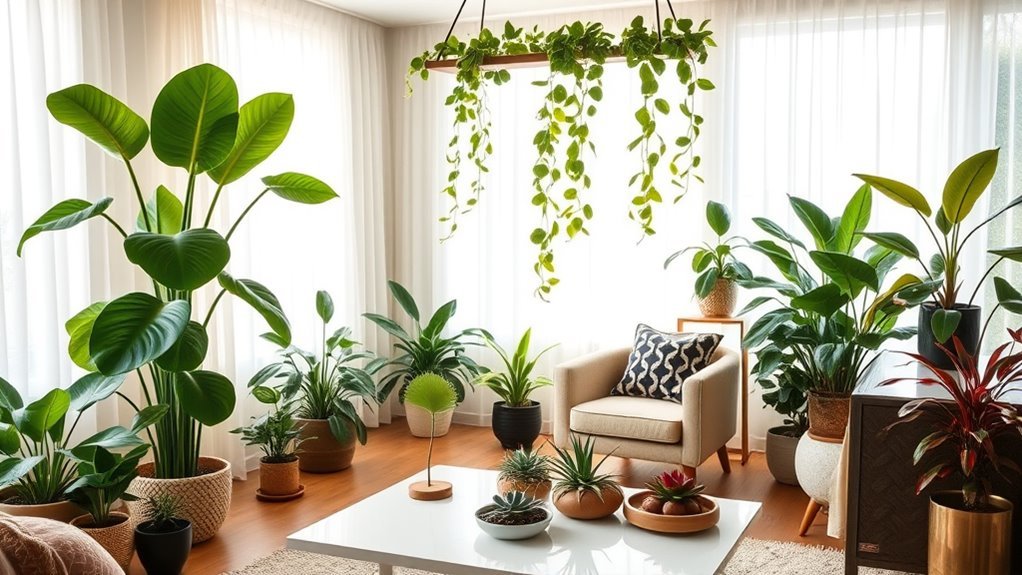
Indoor plants can make a living room feel softer, fresher, and more finished, but the best results come from matching each plant to the room’s light, layout, and care routine. Start by reading the light in your space, then choose plants that fit your style, place them where they can grow safely, and use pots that support both drainage and design.
Quick Answer
To incorporate indoor plants into a living room, assess the light first, choose plants that match those conditions, group them in odd numbers, vary heights and textures, and use pots with drainage. Place statement plants in corners, trailing plants on shelves, and easy-care plants near seating areas where you’ll remember to check them.
Key Takeaways
- Choose plants for the light you actually have, not the light you wish the room had.
- Group plants in threes, mixing height, leaf size, and texture for a natural look.
- Water by checking the soil, not by following the same schedule for every plant.
- Use pots with drainage holes or a nursery pot inside a decorative cachepot.
- Check plant toxicity before buying if you have pets or young children.
At a Glance
| Time Required | 30–60 minutes to assess light and plan placement; ongoing care takes 5–15 minutes per week for a small collection. |
| Difficulty | Beginner-friendly when you choose plants that match your room’s light and your maintenance style. |
| Tools Needed | Watering can, saucers, well-draining potting mix, pruning snips, microfiber cloth, optional light meter or moisture meter. |
| Cost | About $20–$150+, depending on plant size, pot quality, and whether you add stands or grow lights. |
How to Assess Your Living Room Lighting?
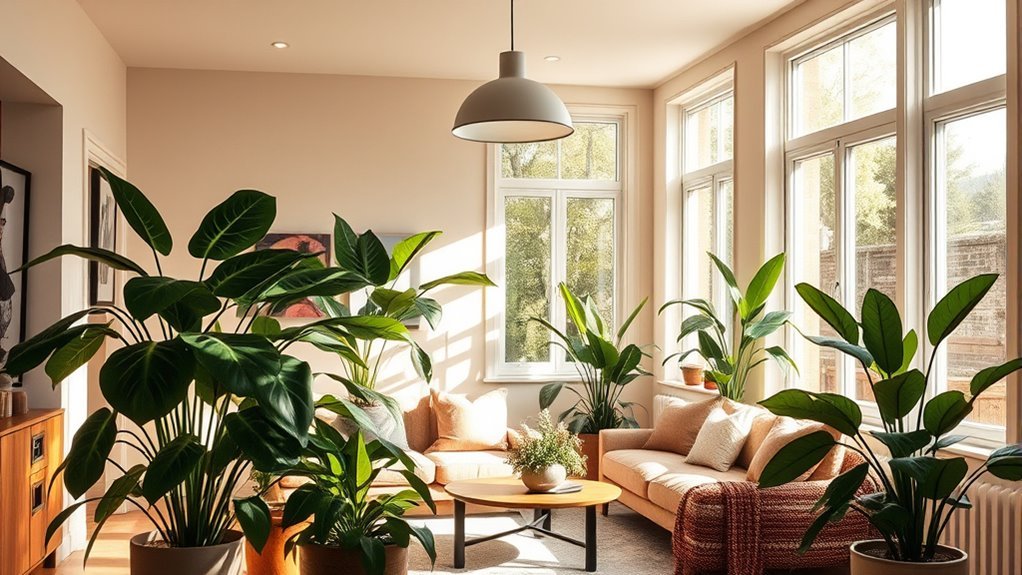
Before you buy a plant, watch how natural light moves through your living room for one full day. Note which areas receive direct sun, bright indirect light, medium light, and low light. A south- or southwest-facing window is usually brightest, while north-facing rooms and deep corners are usually lower light.
The University of Minnesota Extension recommends choosing plants with light requirements that match your home and using supplemental lighting when natural sunlight is not enough. You can estimate light with a smartphone light meter app, a handheld light meter, or simple observation: if you can comfortably read a book without turning on a lamp, the spot may support low-light foliage plants, but it may not support flowering plants or succulents.
| Light Level | What It Looks Like | Good Plant Choices |
|---|---|---|
| Low light | North window, shaded corner, or a spot several feet from a bright window. | Snake plant, ZZ plant, pothos, peace lily, cast iron plant. |
| Medium light | Bright room with indirect light or near an east-facing window. | Spider plant, peperomia, philodendron, ferns, rubber plant. |
| Bright indirect light | Close to a sunny window but protected by a sheer curtain or set just outside direct rays. | Monstera, fiddle leaf fig, anthurium, bird of paradise. |
| Direct sun | Several hours of sunbeams directly hitting the leaves. | Cacti, many succulents, herbs, citrus, and other high-light plants. |
Note: A “low-light plant” still needs some usable light. Low light usually means tolerant of shade, not happy in a windowless room. If your living room has no natural light, use a full-spectrum grow light on a timer.
Choose Indoor Plants That Fit Your Style
To create a living room that feels intentional, choose plants that match both your decor and your care habits. A tall palm can soften an empty corner, a pothos can trail from a shelf, and a sculptural snake plant can add structure beside a sofa. The goal is not to collect every plant you like; it is to choose the right plant for the right spot.
| Plant Type | Ideal Conditions | Style | Best Use |
|---|---|---|---|
| Snake Plant | Low to bright indirect light; let soil dry well. | Modern | Beside sofas, console tables, and narrow corners. |
| Pothos | Low to medium indirect light; forgiving watering needs. | Boho | Shelves, bookcases, hanging planters, and mantels. |
| Anthurium | Bright indirect light; even moisture without soggy soil. | Vibrant | Coffee tables, side tables, and colorful accents. |
| Peace Lily | Low to medium indirect light; prefers lightly moist soil. | Classic Elegance | Softening dark corners and adding glossy foliage. |
| Fiddle Leaf Fig | Bright indirect light; consistent watering and rotation. | Statement | Large empty corners and spaces near bright windows. |
Warning: Many common houseplants, including pothos, peace lily, snake plant, and some philodendrons, can irritate pets if chewed. Before buying, check the ASPCA toxic and non-toxic plant list, and keep risky plants out of reach of pets and young children.
Plan Plant Placement Before You Buy
Plant styling works best when you plan the location before choosing the plant. Look at your living room like a floor plan: where do people walk, where does the eye land first, where does the room feel empty, and where will you actually remember to water?
- Use corners for height: A tall palm, rubber plant, bird of paradise, or fiddle leaf fig can fill an awkward corner without adding more furniture.
- Use shelves for trailing plants: Pothos, philodendron, string of hearts, and hoya can soften bookcases and wall shelves.
- Keep traffic paths clear: Avoid placing wide plants where people brush against them or where leaves block drawers, doors, or walkways.
- Avoid vents and heaters: Hot, cold, or dry blasts from HVAC vents can scorch leaves and dry soil unevenly.
- Leave room for growth: A plant that looks perfect today may need more width, height, or a larger pot next year.
Recommended Products
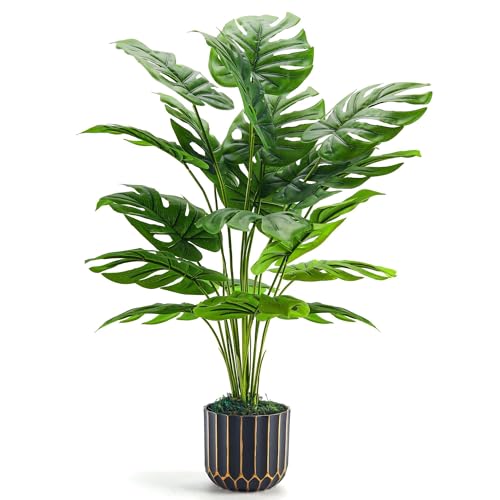
28 inches: Pots are 4.9'' tall, 4.3'' wide, monstera plants are 28'' tall, our faux trees indoor are perfectly proportioned to fit any shelf or desk. Unique black and gold pot design adds premium beauty to your home

🌳【Lifelike Texture】 The CyanZen 4ft Artificial Dracaena Tree features 6 realistic trunks and 90 rubber silk leaves with intricate, clear veins. Its irregular branches and vibrant coloring beautifully replicate natural tropical plants, bringing an authentic green ambiance into your home.

Lifelike Realism & Natural Beauty: Expertly crafted with detailed stems and lush green leaves, this artificial trees for home decor indoor boasts a "Real to the Touch" texture that mimics a living Dracaena. An ideal floor plant that doubles as elegant tree decor indoor, bringing lasting vibrancy to any room.
How to Care for Your Indoor Plants?
Caring for indoor plants is less about doing the same thing every Saturday and more about noticing what each plant needs. Light, pot size, season, temperature, humidity, and soil mix all affect how often you water, fertilize, rotate, and prune.
Watering Routine Essentials
Use a check-in routine instead of a fixed watering calendar. The University of Georgia Extension explains that watering needs vary by plant type, plant size, container volume, soil moisture, and light intensity. Push your finger about an inch into the potting mix. If it is still moist, wait. If it feels dry and the plant is one that prefers drying between waterings, water thoroughly until excess water drains out.
After watering, empty the saucer so roots do not sit in standing water. If you use a decorative pot without drainage, keep the plant in its plastic nursery pot inside the decorative container, then remove it for watering and let it drain before putting it back.
Pro Tip: Check plants weekly, but only water when the soil and plant tell you it is time. Yellow leaves, soft stems, fungus gnats, and sour-smelling soil can signal overwatering.
Light Requirements Overview
Light drives plant growth, so place each plant where it can receive the amount of light it needs. Rotate plants every week or two so growth stays even. If a plant leans strongly toward the window, stretches with long gaps between leaves, or loses variegation, it likely needs more light. If leaves look bleached, crispy, or scorched, the plant may be receiving too much direct sun.
If your living room is dim, add a full-spectrum LED grow light. Set it on a timer so foliage plants receive consistent light, and position it far enough from leaves to prevent heat or light stress.
Soil and Fertilization Tips
Choose a well-draining indoor potting mix that fits the plant. Most foliage plants do well in a light, aerated mix, while cacti and succulents need a faster-draining cactus mix. UGA Extension notes that a good potting mix should be well drained, aerated, hold water and nutrients well, and provide oxygen to the roots.
Fertilize only when plants are actively growing, usually spring through early fall. Start with a diluted houseplant fertilizer, following the label, and reduce or stop feeding during winter when growth slows. Over-fertilizing can build up salts in the soil and damage roots, so more fertilizer is not always better.
| Care Area | What To Do |
|---|---|
| Watering | Check the top inch of soil first; water thoroughly only when the plant needs it. |
| Fertilization | Feed lightly during active growth; reduce feeding during winter or low-light months. |
| Humidity | Group humidity-loving plants together, use a pebble tray, or use a room humidifier if the air is very dry. |
| Leaf Care | Wipe broad leaves with a damp cloth so dust does not block light. |
| Pruning | Trim yellow, dead, or damaged leaves with clean snips to keep plants tidy. |
Note: Misting is not a cure for dry air, and it is not ideal for plants with fuzzy or hairy leaves because lingering moisture can encourage disease. For humidity-loving plants, grouping plants or using a humidifier is usually more effective.
Grouping Plants With the Rule of Three
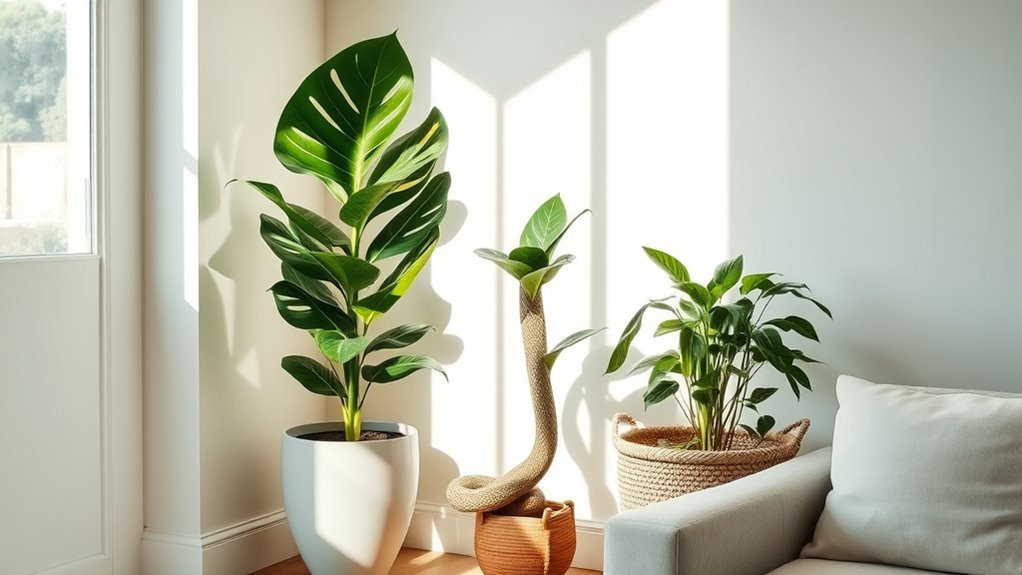
Three is a useful number when arranging indoor plants because it creates a balanced display without looking too staged. Choose one tall plant, one medium plant, and one smaller or trailing plant. This gives the arrangement height, fullness, and movement.
For the most polished look, group plants with similar care needs. A fern that wants steady moisture should not share the same tight grouping as a cactus that needs dry soil and bright sun. You can still mix leaf shapes and pot styles, but the plants should be happy in the same light zone.
Experimenting With Heights and Textures
Height and texture are what make a plant display feel designed instead of random. Combine upright, trailing, broad-leaf, and fine-textured plants so each one has a clear role in the room.
Vary Plant Heights Strategically
Use tall plants as anchors, medium plants as fillers, and small plants as accents. A fiddle leaf fig, kentia palm, or bird of paradise can lead the eye upward. A snake plant or rubber plant adds mid-level structure. A small pothos, peperomia, or fern can finish the arrangement on a table, stand, or shelf.
Plant stands are especially helpful in small living rooms because they create vertical layers without taking up much floor space. Use them to lift smaller plants closer to window light or to create a tiered look beside a sofa.
Mix Textures For Depth
Texture keeps greenery from looking flat. Pair glossy leaves with matte leaves, round leaves with narrow leaves, and upright forms with trailing forms. For example, a rubber plant, a bird’s nest fern, and a trailing pothos create more depth together than three plants with the same leaf size and shape.
Create Visual Focal Points
Use plants to support the room’s existing focal point, not fight it. If the focal point is a fireplace, place plants on one side to soften the lines. If it is a large window, frame it with one tall plant and one lower plant. If it is a sofa, add a plant stand or side-table plant near one arm to balance the furniture.
Pick Fun Pots That Make Your Plants Shine
The right pot can make a simple plant look styled. Choose containers that echo your living room materials: terracotta for warmth, ceramic for polish, concrete for a modern edge, woven baskets for texture, or metal for contrast. Just make sure the inner pot drains properly.
| Pot Style | Colors | Unique Containers | Best For |
|---|---|---|---|
| Terracotta | Earthy tones | Aged clay pots | Mediterranean, rustic, and relaxed rooms. |
| Ceramic | Bright hues or soft neutrals | Glazed statement pots | Modern, colorful, or polished spaces. |
| Concrete | Neutral shades | Minimal planters | Industrial and contemporary rooms. |
| Metal | Black, brass, bronze, or bold colors | Raised metal stands | Adding shine, contrast, or height. |
| Woven Basket | Natural fibers | Seagrass or rattan baskets | Boho, coastal, Scandinavian, and cozy rooms. |
When using baskets or decorative cachepots, keep the plant in a draining nursery pot inside the outer container. This gives you the decorative look without trapping water around the roots.
Recommended Products

【With Drain Holes and Mesh Pad】:Large drain holes are good for draining, and with leak-proof mesh pads, it keeps soil from running away, suitable for orchids, succulents, cacti, other flowers and green plants, perfect for home decoration.

【Practical Size Combo】-These plastic planters indoor combines with 6 different sizes, 8 inch 7inch 6.5 inch 6 inch 5.5 inch 5 inch which are suitable for planting most small and medium-sized home office plants.Ideal gift,Carbonfree Certified.
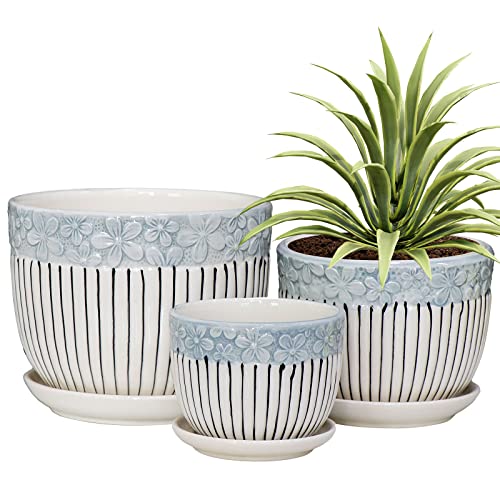
VERSATILE 3-POT SET: Includes large (6.7"D X 5.5"H), medium (5.5"D X 4.2"H), and small (4.2"D X 3.3"H) pots to fit all common houseplants, such as succulents, cactus, aloe, orchids, african violets, snake plants, herbs, pothos, and lilies
Common Indoor Plant Problems and Quick Fixes
Even easy-care plants occasionally show stress. Most living room plant problems come from the wrong light, too much water, dry air, pests, or a pot that no longer fits the root system.
| Problem | Likely Cause | Quick Fix |
|---|---|---|
| Yellow leaves | Often overwatering, poor drainage, or sudden stress. | Check soil moisture, empty saucers, and confirm the pot drains. |
| Brown crispy tips | Dry air, underwatering, salt buildup, or inconsistent care. | Water thoroughly when needed, avoid over-fertilizing, and raise humidity for tropical plants. |
| Leggy growth | Not enough light. | Move closer to a brighter window or add a grow light. |
| Wilting after watering | Possible root stress from soggy soil. | Check drainage and let the soil dry to the correct level before watering again. |
| Sticky leaves or webbing | Possible pests such as scale, mealybugs, aphids, or spider mites. | Isolate the plant, wipe leaves, and treat promptly with an appropriate houseplant pest-control method. |
| Roots circling the pot | Plant is root-bound. | Repot into a container only 1–2 inches wider than the current pot. |
Frequently Asked Questions
How do you arrange indoor plants in a living room?
Start with the room’s light zones, then place plants by size and purpose. Use tall plants in corners, trailing plants on shelves, and small plants on tables. Group plants in odd numbers, mix leaf shapes, and keep plants with similar light and watering needs together.
What are the basic requirements for indoor plants?
Indoor plants need suitable light, correct watering, drainage, breathable potting mix, stable temperature, appropriate humidity, occasional fertilizer during active growth, and routine checks for pests, dust, and root crowding.
How do you use plants in home décor?
Use plants the way you would use art, lighting, or textiles. Choose foliage that complements your color palette, pots that match your materials, and placements that highlight windows, corners, shelves, fireplaces, or seating areas without blocking movement.
How do you style with indoor plants without making the room look cluttered?
Limit each area to one strong plant moment. For example, use one tall floor plant in a corner, one trailing plant on a shelf, and one small table plant near seating. Repeat pot colors or materials so the collection feels connected.
What indoor plants are best for low-light living rooms?
Snake plant, ZZ plant, pothos, cast iron plant, peace lily, and some dracaenas are common low-light choices. They still need some light to grow, so avoid placing them in completely dark corners unless you add a grow light.
How many plants should you put in a living room?
For a small living room, start with three to five plants: one floor plant, one trailing plant, and one to three tabletop plants. Larger rooms can handle more, but leave enough space for air movement, cleaning, and easy watering.
Conclusion
Indoor plants can transform a living room when they are chosen with both design and care in mind. Start with light, choose plants that fit the room, group them with intention, and use pots that support drainage as well as style. With the right placement and a simple check-in routine, your living room can feel greener, calmer, and more personal without becoming difficult to maintain.
Enjoy houseplants for their beauty, texture, and calming presence, but avoid treating them as a substitute for good ventilation, proper cleaning, or an air purifier when indoor air quality is the concern.
Sources
- University of Minnesota Extension: Lighting for indoor plants and starting seeds — supports light assessment, plant-light matching, and grow-light guidance.
- University of Georgia Extension: Growing Indoor Plants with Success — supports watering, fertilization, potting mix, and indoor plant care guidance.
- ASPCA: Toxic and Non-Toxic Plants List — supports pet-safety cautions for houseplants.
- Roberts et al.: The effect of short-term exposure to the natural environment on depressive mood — supports cautious wording around nature exposure and mood benefits.
- Cummings & Waring: Potted plants do not improve indoor air quality — supports the caution that houseplants should not be relied on as a real-home air-purification solution.


[…] How to Use Indoor Plants in Living Room Design: Step-by-Step Guide […]