Disclosure: As an Amazon Associate, we may earn from qualifying purchases. This does not affect the price you pay.
If you are searching for a 50-liter dehumidifier, check the capacity unit before buying. A true 50-liter-per-day machine removes about 106 US pints per day, while a common 50-pint home dehumidifier removes about 23.7 liters per day. The models below range from 50 to 115 advertised pints per day, so they are better described as 50-pint and high-capacity home dehumidifiers rather than identical 50-liter units.
For the closest advertised output to 50 liters per day, the Gasbye is the strongest match under its stated high-heat, high-humidity test conditions. The Waykar offers a step up from standard 50-pint models, while Midea and Hisense are better choices when a built-in pump, smart control, or easier basement drainage matters more than maximum headline capacity.
Quick buying note: Do not compare headline pint ratings unless the test conditions are similar. Warmer, wetter air lets a dehumidifier collect more water, so “maximum” capacity can be much higher than performance in a cool basement.
- Closest to 50 liters/day at advertised maximum: Gasbye
- Higher-capacity gravity-drain option: Waykar
- Smart model with a built-in pump: Midea Smart Access
- Cold-basement pump option: Hisense
- Large bucket and smart controls: Midea Cube
- Quieter 50-pint option: AEOCKY Boreas
Quick Comparison
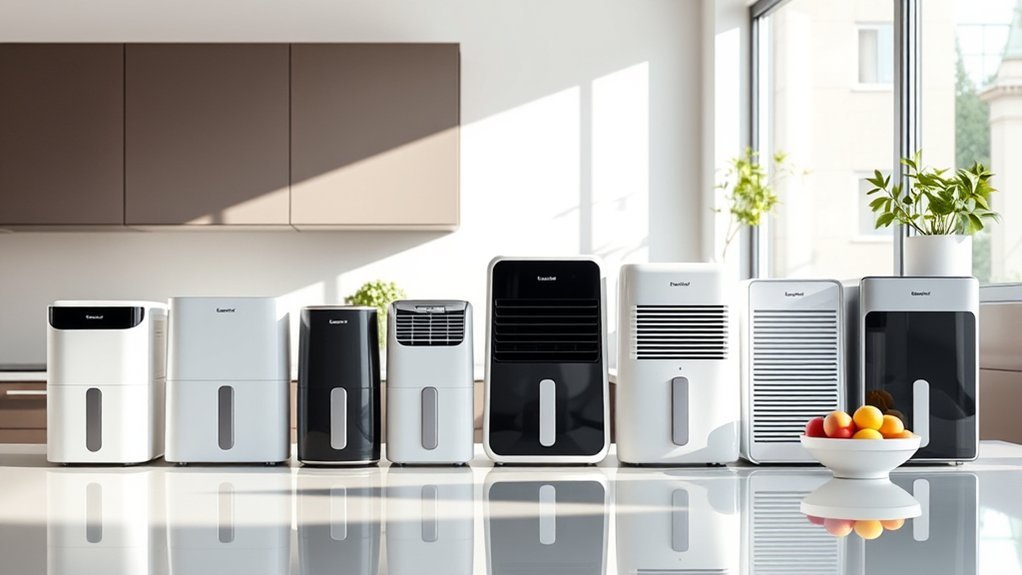
| Product | Advertised Daily Removal | Drainage | Best Fit | Amazon |
|---|---|---|---|---|
| Gasbye DryPrime | Up to 115 pints/day in stated hot, humid conditions | Tank or gravity hose | Closest match to a 50-liter/day headline rating | Check Price |
| Waykar 80 Pint | Up to 80 pints/day in stated hot, humid conditions | Tank or gravity hose | Large damp areas with a nearby floor drain | Check Price |
| Midea Smart Access with Pump | 50 pints/day | Built-in pump, tank, or continuous drain | Smart control and upward drainage | Check Price |
| Hisense 50 Pint with Pump | 50 pints/day | Built-in pump, tank, or continuous drain | Cool basements and flexible pump drainage | Check Price |
| Midea Cube 50 Pint | 50 pints/day | Large tank or gravity drain | Smart monitoring and fewer bucket-emptying trips | Check Price |
| AEOCKY Boreas | Up to 50 pints/day in stated hot, humid conditions | Tank or gravity hose | Bedrooms, living spaces, and quieter operation | Check Price |
Gasbye Energy Star Dehumidifier for Basements and Large Rooms
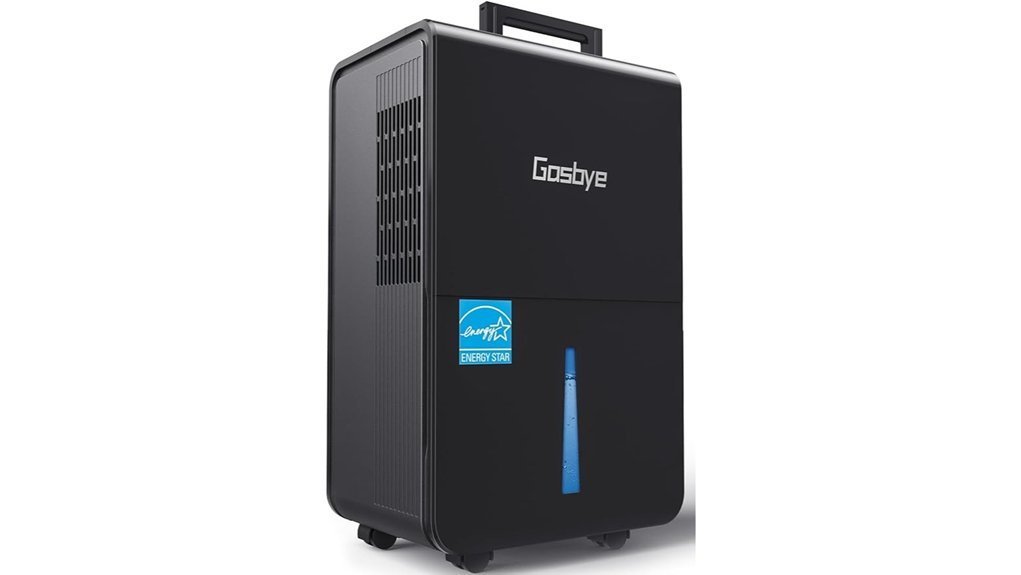
Best high-output option: The Gasbye DryPrime is the closest product in this roundup to a 50-liter-per-day headline capacity. Its advertised output reaches 115 pints per day at 86°F and 80% relative humidity, but the same unit is rated lower as conditions become cooler or less humid. That makes it important to judge it by your actual basement temperature and moisture load rather than the maximum number alone.
The unit is designed for spaces up to 4,500 square feet and provides a 1.72-gallon tank, an included drain hose, a washable filter, automatic restart, and several operating modes. At about 43 pounds, it is better treated as a semi-permanent basement or large-room appliance than something you will carry between floors often.
Why You’ll Like It: It combines the highest advertised removal rate among the remaining picks with flexible gravity drainage and a relatively large collection tank.
Best For: Very damp basements, garages, and large open areas where high moisture removal matters more than app control or a built-in pump.
Pros:
- Closest advertised capacity to 50 liters per day among these portable models.
- Shows different removal rates for different temperature and humidity conditions.
- Includes tank, drain hose, garden-hose adapter, washable filter, and automatic restart.
Cons:
- The 115-pint figure is a maximum-condition rating, not a cool-basement expectation.
- Gravity drainage requires the hose outlet to stay below the dehumidifier.
- The heavier cabinet is less convenient for frequent room-to-room movement.
Waykar 80 Pint Energy Star Dehumidifier for Large Spaces
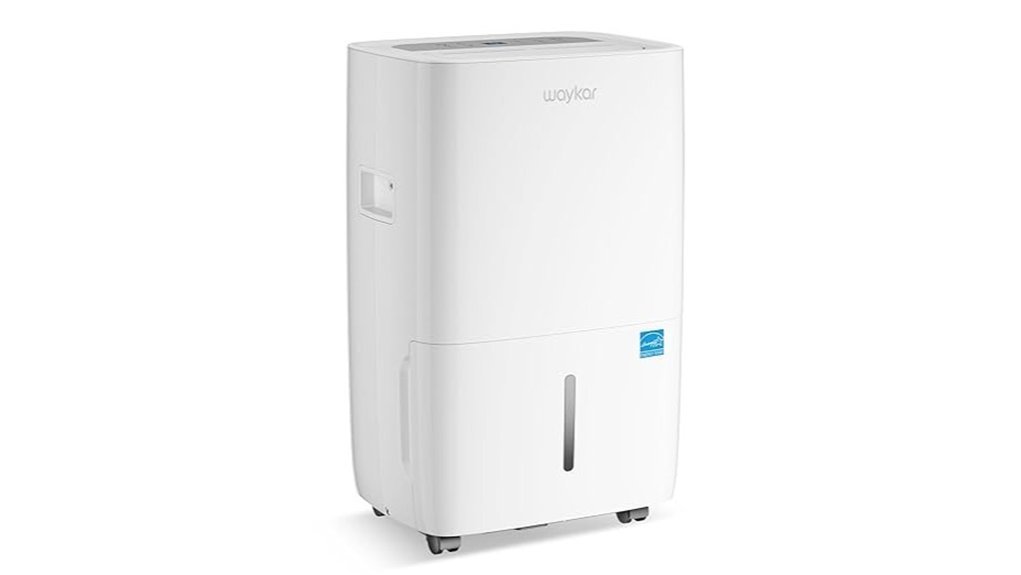
Best step-up capacity: The Waykar sits between standard 50-pint models and the Gasbye’s higher maximum claim. It is advertised to remove up to 80 pints per day at 95°F and 90% relative humidity, so it is most useful to buyers who want more headroom for warm, very damp spaces but do not need a true commercial or ducted 50-liter-per-day system.
Its adjustable humidistat covers 30% to 80%, while the automatic swing outlet helps circulate dry air around a larger room. The unit supports bucket collection or gravity drainage through the included hose. It also has casters, auto defrost, and a stated operating noise level around 42 dB.
Why You’ll Like It: It offers higher advertised moisture removal than a typical 50-pint unit without moving into a permanently installed whole-home system.
Best For: Large basements, laundry areas, RV storage, and open living spaces with a suitable low drain point.
Pros:
- Higher advertised capacity than standard 50-pint portable models.
- Automatic swing helps distribute airflow through a larger area.
- Energy Star certification, auto defrost, casters, and continuous drainage improve everyday usability.
Cons:
- The 80-pint figure is based on hot, humid test conditions.
- No built-in pump, so the hose cannot drain uphill.
- The small backup tank fills faster than a large-tank design when the hose is not connected.
Midea 50 Pint Smart Access Dehumidifier with Pump
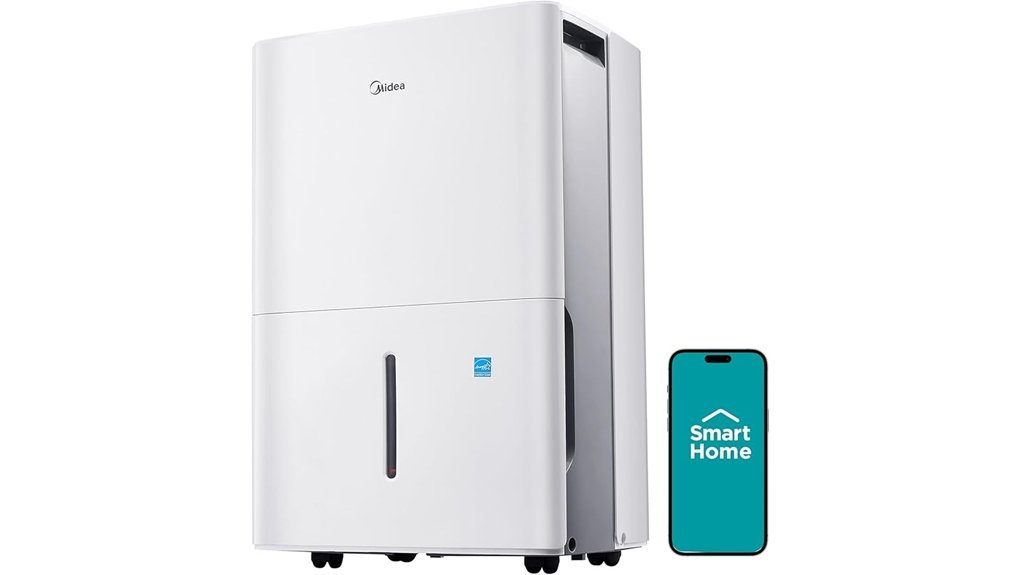
Best smart pump option: This Midea removes up to 50 pints per day and is designed for large residential spaces. Its main advantage is not a 50-liter extraction rate, but the combination of a built-in pump, SmartHome app control, voice-assistant support, wheels, and multiple operating modes.
The pump can move collected water to a higher drain point, making it more flexible than gravity-only models in below-grade basements. The splash-guard bucket is also useful when you choose manual emptying. At roughly 42 pounds, the casters help, but carrying it on stairs may still require care.
Why You’ll Like It: You can monitor and adjust humidity remotely while the pump handles drainage to a sink, window, or other suitable outlet.
Best For: Basements where the available drain is above floor level and buyers who value app or voice control.
Pros:
- Built-in pump provides more placement flexibility than gravity drainage alone.
- SmartHome app and voice-assistant control support remote adjustments.
- Four modes, two fan speeds, timer, wheels, and splash-guard bucket improve convenience.
Cons:
- A 50-pint unit is about 23.7 liters per day, not 50 liters per day.
- Smart features add setup steps that manual-control buyers may not need.
- The cabinet is still heavy enough that it is best kept on one floor.
Hisense 50 Pint Portable Dehumidifier with Pump
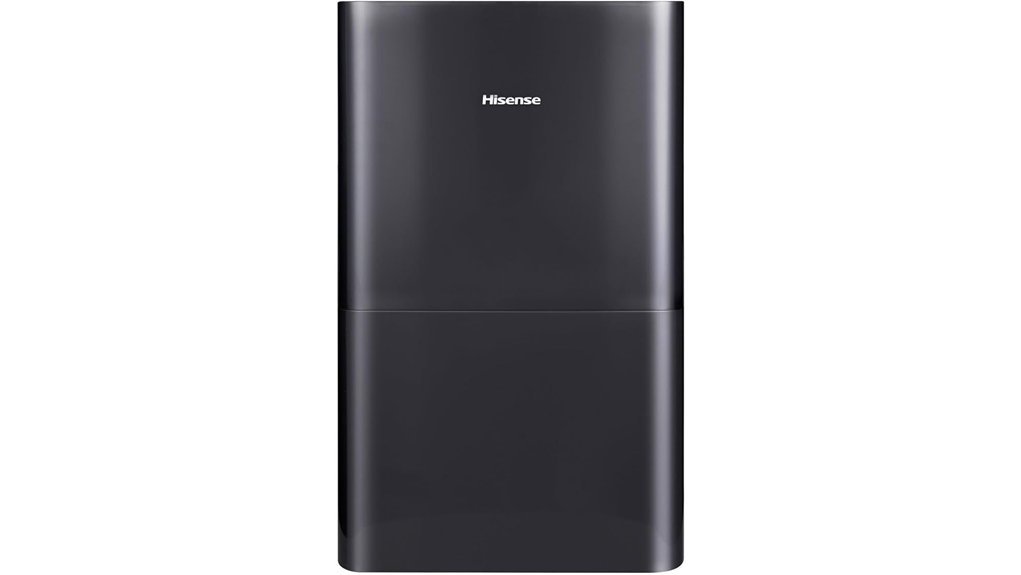
Best for cooler basements: The Hisense combines a 50-pint daily rating with a built-in pump and low-temperature operation down to 38°F. That makes it a practical choice for a chilly basement where a gravity drain is unavailable or positioned above the unit.
The included quick-connect hose can send water to a sink or basement window. You can choose Auto, Continuous, or Manual mode and adjust among three fan speeds. It also includes a 24-hour timer, adjustable humidistat, full-tank shutoff, and a two-year parts-and-labor warranty.
Why You’ll Like It: It focuses on dependable basement features: pump drainage, low-temperature operation, simple modes, and a longer standard warranty than many one-year models.
Best For: Cool basements, garages, and lower-level rooms that need upward drainage.
Pros:
- Built-in pump and quick-connect hose reduce manual bucket emptying.
- Operates at temperatures as low as 38°F.
- Three modes, three fan speeds, timer, humidistat, and two-year warranty add flexibility.
Cons:
- It is a 50-pint model, not a true 50-liter-per-day unit.
- The roughly 40-pound weight is not ideal for frequent lifting.
- Pump setup still requires a secure hose route and a suitable discharge point.
Midea Cube 50 Pint Dehumidifier with Alexa Control
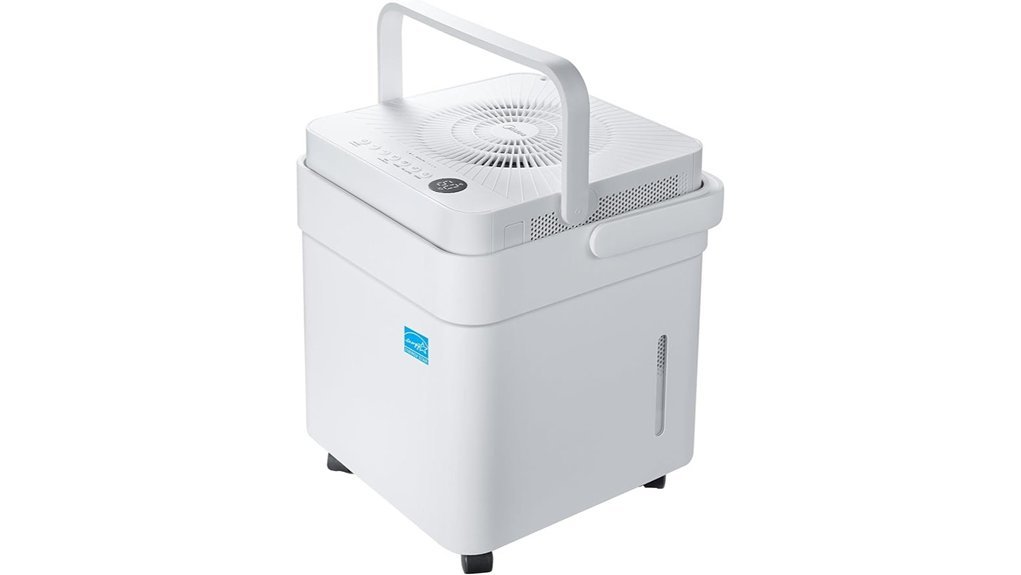
Best large-tank smart option: The Midea Cube is a 50-pint dehumidifier with a modular lift-and-twist design. Its approximately 16-liter bucket is much larger than the tanks found in many conventional portable units, helping it run longer between manual emptying sessions.
You can monitor humidity and water level through the SmartHome app and use Alexa or Google Assistant for compatible voice control. The unit supports bucket collection or gravity drainage, but this version does not include a built-in pump. Its large filled bucket can also become heavy, so continuous drainage is often the easier setup in a basement.
Why You’ll Like It: The oversized tank and smart monitoring reduce the need to check the unit as often, while the nested design helps with storage.
Best For: Buyers who want a large bucket, app control, and flexible storage but do not need uphill pump drainage.
Pros:
- Large removable bucket can reduce emptying frequency.
- SmartHome app, Alexa, and Google Assistant support remote control.
- Nested and extended configurations provide flexible use and storage.
Cons:
- No built-in pump on this version.
- A full large-capacity bucket can be awkward and heavy to carry.
- The 50-pint rating is not equivalent to 50 liters per day.
AEOCKY Boreas 50 Pint Dehumidifier with Drain Hose
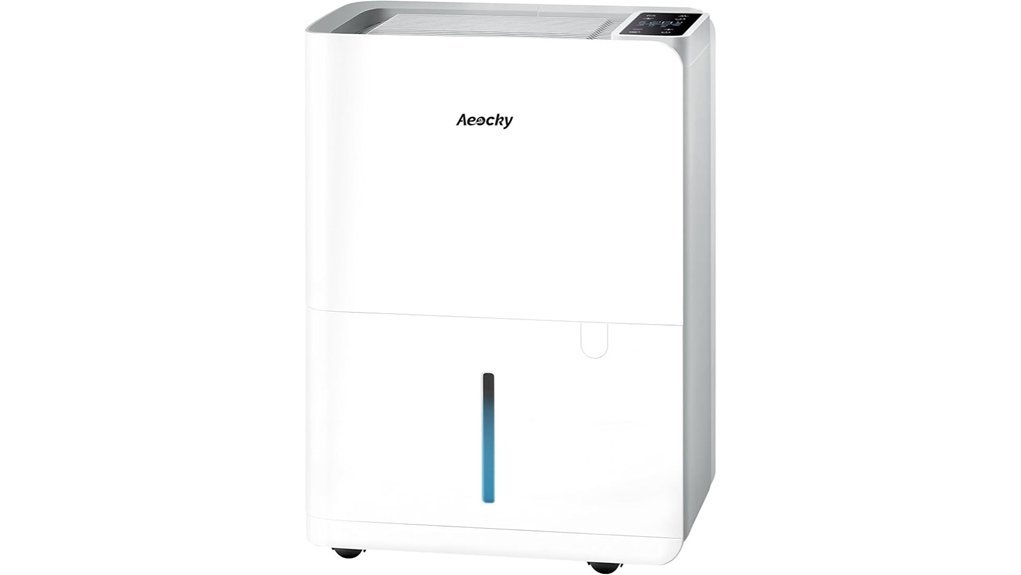
Best quieter 50-pint option: The AEOCKY Boreas is advertised for spaces up to 3,500 square feet and reaches a maximum of 50 pints per day in hot, highly humid conditions. The manufacturer also publishes a lower 38-pint rate at 86°F and 80% relative humidity, which is a more useful reminder that room conditions strongly affect extraction.
The unit supports manual bucket collection or continuous gravity drainage. It has casters, an integrated handle, a washable filter, and a stated noise level around 40 dB. A three-year warranty is another useful point for buyers comparing long-term ownership support.
Why You’ll Like It: It pairs a relatively quiet design with simple gravity drainage and a longer warranty than many portable dehumidifiers.
Best For: Bedrooms, living areas, and moderately damp basements with access to a low floor drain.
Pros:
- Publishes capacity at more than one temperature and humidity condition.
- Stated 40 dB operation is suitable for buyers prioritizing lower noise.
- Continuous gravity drain, casters, handle, washable filter, and three-year warranty improve usability.
Cons:
- Maximum capacity is still only 50 pints, or about 23.7 liters per day.
- No built-in pump for upward drainage.
- Coverage claims should be treated as estimates because layout, temperature, and moisture load affect results.
How to Choose Between 50-Pint and 50-Liter-Class Dehumidifiers
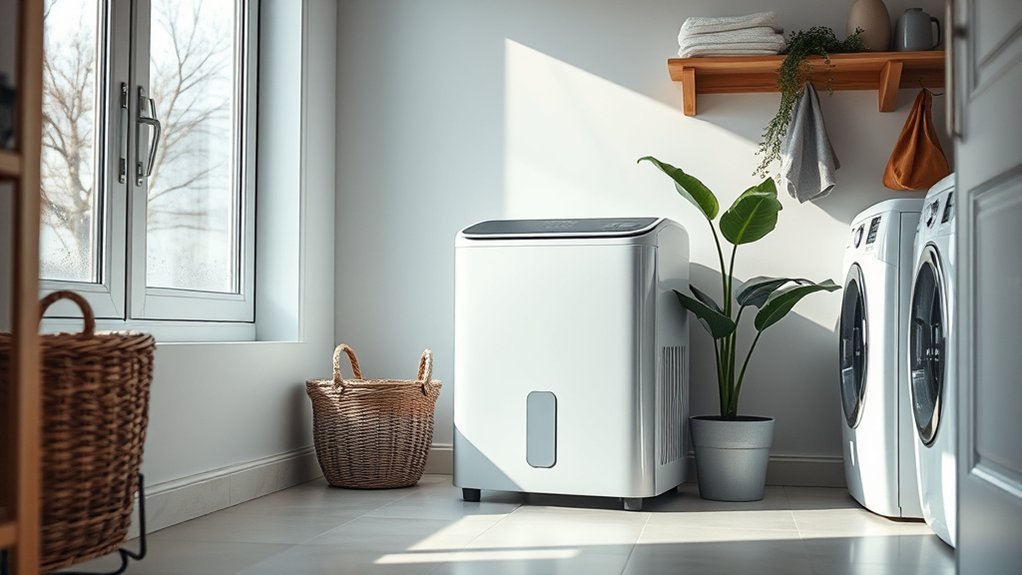
Start with the unit of measurement, then compare the room’s actual moisture load, temperature, drainage access, noise tolerance, and maintenance needs. A large square-footage claim alone does not tell you how quickly a unit will control a wet basement.
Understand Liters Versus Pints
A 50-pint dehumidifier removes about 23.7 liters of water per day under its rated conditions. A 50-liter-per-day unit is closer to 106 US pints per day. These are not interchangeable labels, and the water-tank volume is a separate specification from daily extraction capacity.
Compare Test Conditions
Capacity rises when the air is warmer and more humid. A model advertised at 80, 100, or 115 pints under extreme conditions may remove much less water in a cool basement. Give more weight to ratings that clearly state temperature and relative humidity, and avoid comparing two maximum figures measured under different conditions.
Match Capacity to the Moisture Load
Choose based on how wet the room is, not only its floor area. A mildly damp open basement may need less capacity than a smaller room with seepage, laundry drying, or frequent door openings. Oversizing can help the unit reach the target humidity faster, but an extremely large unit may cost more, take up more space, and cycle frequently in a lightly damp room.
Choose the Right Drainage Method
A gravity drain is simple and reliable when the hose can run continuously downhill to a floor drain. A built-in pump is more flexible because it can move water upward to a sink or window. Bucket-only operation is easy to set up but can interrupt dehumidification whenever the tank fills.
Check Noise, Efficiency, and Low-Temperature Operation
For bedrooms and living rooms, compare the manufacturer’s low- and high-fan noise figures when available. In cool basements, auto defrost and a clearly stated minimum operating temperature are more important than a very low headline noise claim. Energy Star certification can also help you compare efficiency, but confirm that the certification applies to the exact model.
Decide Whether Smart Controls Matter
Wi-Fi, app alerts, and voice control are useful when the dehumidifier sits in a basement or another area you do not visit often. Manual controls may be a better value when you only need a humidistat, timer, auto restart, and continuous drainage.
Before You Buy: Confirm the exact model number, rated pints per day, test conditions, drain-hose requirements, pump lift limit, minimum operating temperature, tank size, warranty terms, and whether the advertised Energy Star status applies to that exact model.
Frequently Asked Questions
Is 50 Pints the Same as 50 Liters?
No. Fifty US pints is about 23.7 liters. A true 50-liter-per-day dehumidifier is roughly equivalent to 106 US pints per day.
Why Do Some Dehumidifiers Have Two Capacity Numbers?
Manufacturers may publish a maximum number measured in very warm, humid air and a lower number measured under more moderate conditions. Always compare ratings taken under similar test conditions.
Do I Need a Built-In Pump?
You need a pump when the drain point is higher than the dehumidifier or when the hose cannot run downhill. If you have a nearby floor drain, gravity drainage is usually simpler and has fewer moving parts.
What Humidity Level Is Best for Most Homes?
A target around 40% to 50% relative humidity works well for many homes. Avoid setting the unit lower than necessary, and use a separate hygrometer if you want to check the dehumidifier’s built-in reading.
Can a Dehumidifier Remove Mold?
No. A dehumidifier can reduce the moisture that supports mold growth, but it does not remove existing mold or repair a water leak. Fix the moisture source and clean or remediate existing mold appropriately.
How Often Should I Clean the Filter?
Follow the manufacturer’s schedule and inspect the filter regularly. Homes with pets, renovation dust, or heavy daily use may need more frequent cleaning than lightly used rooms.
Conclusion
The best choice depends on whether you truly need 50 liters per day or simply a strong portable home dehumidifier. The Gasbye is the closest match to that output at its advertised maximum, while the Waykar offers a higher-capacity step above common 50-pint units. For easier drainage, choose the Midea Smart Access or Hisense pump models. The Midea Cube suits buyers who prefer a large tank and smart monitoring, while the AEOCKY Boreas is a practical quieter option with gravity drainage.
Whichever model you choose, compare capacity under realistic conditions, confirm the drainage route before ordering, and size the unit for the room’s moisture load rather than relying on square footage alone.