
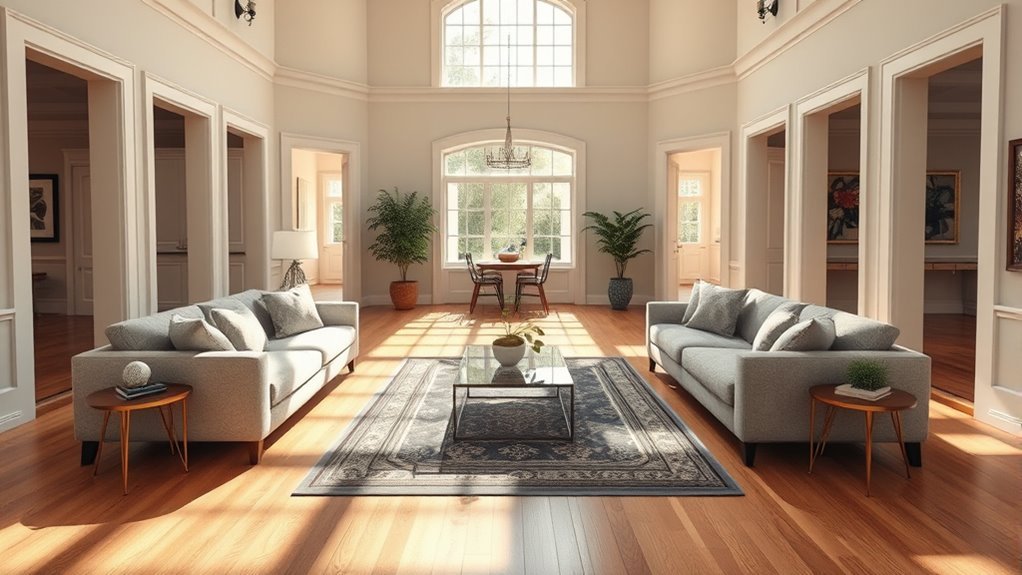
Game night works best when your living room feels easy to move through, comfortable to sit in, and simple to snack in. Start with your main sofa or sectional, set the best seats at a comfortable viewing distance from the TV, add flexible extra seating, and give every guest a nearby place for drinks, controllers, cards, or snacks.
Quick Answer
To set up your living room for game night, arrange your main seats around the TV or game table, keep 30–36 inches of walking space where possible, place a drink surface within reach of every 1–2 guests, add movable seating, control glare, and keep snacks in one easy-access zone.
Key Takeaways
- Use the sofa or sectional as your anchor piece, then build the rest of the room around sightlines, conversation, and traffic flow.
- For a 65-inch TV, a main seating distance around 8–9 feet is a strong mixed-use target, but comfort, eyesight, and content matter.
- Add side tables, trays, ottomans, poufs, and sofa tables so guests do not have to balance drinks or snacks on their laps.
- Keep kids, pets, cords, and tip-over risks in mind before the first guest arrives.
At a Glance
| Time Required | 30–45 minutes for a full reset; 10 minutes for a quick pre-kickoff tidy |
| Difficulty | Easy |
| Tools Needed | Tape measure, painter’s tape, trays, side tables, cord clips, baskets, extra pillows or poufs |
| Cost | $0 if you rearrange what you own; $25–$150 if you add trays, poufs, lamps, or small tables |
Select the Right Anchor Piece for Comfort
Your anchor piece is the sofa, sectional, or main seating group that sets the tone for the night. Choose the piece that gives the most people a comfortable view of the TV or game table without blocking walkways. A sectional works well for sports, video games, and movie-style viewing, while a sofa with two movable chairs is often better for board games and conversation.
If you already have a sectional with a chaise, place the chaise on the side that does not cut through the main path to the kitchen, bathroom, or snack station. If your sofa is deep, add upright pillows so guests can sit forward during fast-paced games instead of sinking too far back.
Pro Tip: Before moving heavy furniture, outline the sofa, chairs, and coffee table with painter’s tape. This lets you test walkways and viewing angles without dragging everything around twice.
Recommended Products

【112 INCH SPACIOUS U-SHAPE】 The 112" L x 35 W x 47" D u shaped couch is easy fits perfectly in most living rooms, generous seating for the family, this sectional couch offers plenty of space for lounging.

Setup Guide: Delivered in 3 boxes with clear instructions. Cushions vacuum-packed; allow 48h for 80% recovery, gently pat to fluff fully in a week. Please ensure full assembly before use

Multiple Package Issues: Multiple package may not arrive at the same time. If you have any questions about the tracking numbers or the tracking state of the sectional sleeper sofa we will help you
Identify Your Viewing Zone for the Best Experience
The best viewing zone depends on your TV size, resolution, room layout, and what you are playing or watching. For a 65-inch TV, a main seat around 8–9 feet from the screen is a strong mixed-use target for sports, movies, and casual gaming. RTINGS lists 8 feet 10 inches as the recommended 30-degree field-of-view distance for a 65-inch TV, while Sony notes that 4K TVs can be viewed from much closer because pixels are harder to distinguish at normal distances: RTINGS TV size-to-distance guide and Sony viewing distance guidance.
Use those numbers as a starting point, not a rule that overrides comfort. If guests are playing detail-heavy video games, reading small on-screen text, or watching a 4K stream, a closer chair may help. If the room is mostly for conversation during a sports game, slightly farther seating can still work.
- Main TV seat: Place the sofa where the most people get a direct view without turning their necks.
- Secondary seats: Angle chairs inward so guests can see both the screen and each other.
- Board game zone: Keep a flat table surface well lit, with enough elbow room for cards, dice, tokens, and snacks.
- Traffic path: Leave 30–36 inches of walking room where possible, especially between seating and doorways.
Note: If your room cannot hit the “ideal” distance, prioritize a clear view, comfortable posture, and easy movement. A slightly imperfect distance is better than a layout where guests trip over tables or crane their necks all night.
Choose Your Ideal Seating Layout for Conversation
The right seating layout depends on how your group plays. A sports night needs everyone oriented toward the TV. A board game night needs table access. A party game night needs open sightlines and face-to-face seating. The goal is to make the room feel social without making anyone feel stuck in a corner.
L-Shape Sectional Advantages
An L-shaped sectional works well when the TV is the main focus. It gives several guests a shared viewing angle and creates a natural corner for blankets, pillows, and relaxed lounging. Add one accent chair or stool near the open side of the L so the layout feels more conversational and less like a row of theater seats.
Keep the coffee table or ottoman about 16–20 inches from the sofa if possible. That is close enough for snacks and drinks, but far enough for knees and foot traffic.
U-Shape Layout Benefits
A U-shape layout is best for board games, card games, trivia, charades, or any night where conversation matters as much as the screen. Place the sofa on one side, add chairs on the opposite side, and use the coffee table or a folding table as the center point.
| Layout | Best For | Setup Tip |
|---|---|---|
| L-shape | Sports, video games, movies | Angle one extra chair toward both the TV and the sofa. |
| U-shape | Board games, card games, party games | Keep the center table clear enough for cards, dice, and shared snacks. |
| Two-zone layout | Mixed adult/kid gatherings | Put kids’ activities within sight, but away from hot food and cords. |
Ensure Every Seat Has a Drink Surface
A comfortable game night falls apart when guests have nowhere to put a drink. Aim for one stable surface for every 1–2 guests. This can be a side table, nesting table, tray, ottoman tray, sofa table, or sturdy stool used as a temporary landing spot.
- Start with the coffee table. Use it for shared snacks, napkins, and the most-used game pieces.
- Add side tables beside end seats. The end seats are where people most often lack a surface.
- Use trays on ottomans. A tray turns a soft footrest into a safer drink station.
- Keep messy foods off laps. Serve dips, wings, saucy snacks, and hot foods from the kitchen island or a separate snack table.
Warning: Avoid placing drinks directly on soft ottomans, poufs, or couch arms. Use trays with raised edges to reduce spills near controllers, remotes, rugs, and upholstery.
Recommended Products

Petite Footprint: Measuring 12.5 x 27 inches, this petite round side table takes up minimal space, making it perfect for dorm rooms, apartments, and other areas with limited space. It serves not only as a decorative accent piece for your home but also as a cozy spot to enjoy a cocktail or coffee after a long day

Super Easy Setup – No Tools, Ready in 3 Minutes: Skip complicated assembly. This martini table features a simple hand-twist design—no tools required. Just follow the clear instructions, twist the pieces together, and your stylish round side table is ready to use in as little as 3 minutes. Truly hassle-free from unboxing to everyday use

SPACE-SAVING: This small table sized 15.7"(L) x 12.6"(W) x 25.6"(H), easily fits the gaps between your couches or the tight spots beside your bed
Maximize Comfort With Extra Seating Options
Extra seating should be movable, compact, and easy to pull into the action. Ottomans and poufs are the most flexible choices because they can work as footrests, seats, or low snack surfaces when paired with trays. Dining benches are helpful for larger groups because they seat more people without the bulk of several separate chairs.
For small living rooms, avoid filling every inch with furniture. Use pieces that can tuck under a console table, slide beside the sofa, or move to another room when the night ends. For larger rooms, create two seating zones: one near the TV and one near the snack table or board game area.
- Best for adults: Accent chairs, stools with backs, dining chairs with cushions, and storage ottomans.
- Best for kids: Bean bags, floor cushions, small chairs, and washable poufs.
- Best for tight spaces: Stackable stools, nesting ottomans, and folding chairs with throw pillows.
Recommended Products
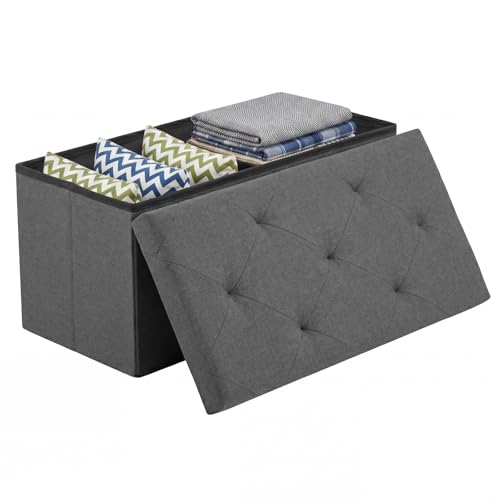
Heavy-Duty Support: Built with thick MDF panels for strong structural support, this storage ottoman bench holds up to 660 lbs. The cushioned top features high-density foam and breathable linen fabric, providing a comfortable seating experience

Heavy-Duty Support: Built with thick MDF panels for strong structural support, this storage ottoman bench holds up to 660 lbs. The cushioned top features high-density foam and breathable linen fabric, providing a comfortable seating experience
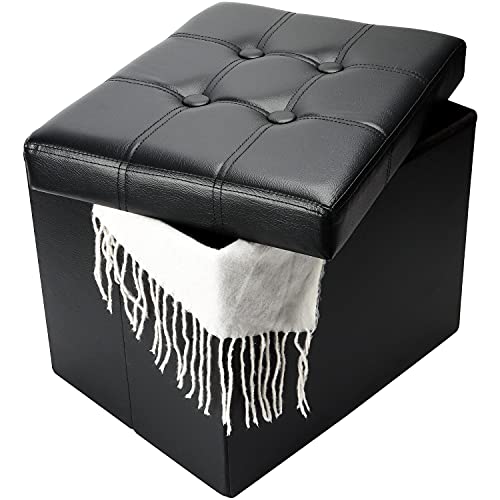
PERFECT FOOT REST STOOL: L17 x W13 x H13in, Specially designed size and high-quality thicker soft foam, bring more comfort for your foot rest. Spacious hidden storage room for sundries including clothes, blankets, children's toys or many other stuffs inside; organize your living room, bedroom and hallway.an
Make Snack Access Easy With Sofa Tables
A sofa table can turn the back of the couch into a snack and drink lane. This works especially well when the sofa floats in the room instead of sitting directly against a wall. Place bowls, napkins, coasters, and a small trash bowl on the sofa table so guests can grab what they need without leaning over the main coffee table.
- Use the coffee table for shared snacks. Keep it simple: chips, pretzels, popcorn, candy, or a board-game-friendly snack tray.
- Use the sofa table for drinks. Bottles, cups, coasters, and bottle openers belong here.
- Use the kitchen for messy foods. Keep chili, wings, dips, pizza boxes, and hot dishes away from game pieces and controllers.
Pro Tip: Put a roll of paper towels, stain remover wipes, and a small trash bag near the snack zone before guests arrive. Fast cleanup keeps one spill from becoming the whole night’s focus.
Set Up Lighting, Glare, and Sound
Lighting can make the room feel cozy or make every screen and card hard to see. Turn off harsh overhead lights if they create glare on the TV. Use lamps, dimmers, or warm accent lighting around the edges of the room so guests can still see snacks, cards, and game pieces.
- For TV or video games: Keep light behind or beside the seating area, not directly across from the screen.
- For board games: Add a lamp near the game table so cards and small pieces are easy to read.
- For sports nights: Use soft side lighting so people can move safely during breaks without washing out the screen.
- For sound: Keep tall furniture, pillows, and guests from blocking soundbars or speakers.
If you use multiple controllers, phones, or tablets, create one charging station with a power strip away from foot traffic. Use cord clips or cable sleeves so nobody catches a foot on a charging cable during the game.
Create Kid-Friendly Spaces for Game Night
When kids are part of game night, give them a defined zone that is close enough for supervision but far enough from hot food, breakable decor, and crowded walkways. A corner with bean bags, floor cushions, coloring books, puzzles, or simple games keeps them included without taking over the main seating area.
Use low tables, soft ottomans, and washable rugs where spills are likely. Keep small game pieces, sharp skewers, glass cups, and choking hazards away from toddlers. If the TV, media console, bookshelves, or storage furniture are within reach of kids, secure them before hosting. The U.S. Consumer Product Safety Commission’s Anchor It campaign recommends anchoring furniture and TVs to help prevent tip-over injuries and deaths.
Warning: A soft rug helps with bumps, but it does not prevent furniture or TV tip-overs. Anchor tall or climbable furniture, secure loose cords, and keep heavy items off unstable surfaces.
Make the Room Work for Board Games and Card Games
If your game night includes cards, tabletop games, puzzles, or party games, the table matters as much as the TV. Clear the coffee table completely before guests arrive, then add back only what the game needs: coasters, napkins, a small snack bowl, and a container for pieces or dice.
- Card games: Give each player enough elbow room and avoid placing the snack station behind anyone’s hand.
- Board games: Use a table large enough for the board, player pieces, cards, and score pads.
- Party games: Leave an open space for standing, acting, drawing, or team play.
- Long games: Add seat cushions and keep water nearby so people do not have to leave every few minutes.
A great game-night layout gives every guest three things: a clear view, a comfortable seat, and a safe place to set something down.
Quick Game-Day Reset Before Kickoff
Before guests arrive, do one fast reset so the room feels ready instead of improvised. You do not need to redecorate the whole space. Focus on sightlines, surfaces, snacks, and pathways.
Last-Minute Seating Adjustments
- Move the main seats so the TV or game table is easy to see.
- Angle loose chairs toward the group instead of lining every seat straight at the TV.
- Pull ottomans and poufs into open corners for flexible overflow seating.
- Clear the path to the kitchen, bathroom, and entryway.
- Place a small table, tray, or stool near any seat that does not have a surface.
Snack and Drink Setup
- Put shared snacks on the coffee table or central game table.
- Keep drinks on side tables, sofa tables, or a separate drink station.
- Use coasters, napkins, and trays before the first drink is poured.
- Move messy foods to the kitchen or a buffet surface.
- Set out a small trash bowl for wrappers, bottle caps, toothpicks, and used napkins.
Troubleshoot Common Game Night Layout Problems
If the room still feels awkward, use the problem you notice first as your guide.
| Problem | Fast Fix |
|---|---|
| Guests keep standing in front of the TV | Move the snack station away from the screen and toward the side or back of the room. |
| No one can reach the coffee table | Bring in nesting tables, trays, or a sofa table instead of pushing the main table closer to everyone. |
| The room feels crowded | Remove one bulky accent piece and replace it with poufs, stools, or folding chairs. |
| Board game pieces get lost | Use small bowls, ramekins, or trays to separate dice, cards, tokens, and score items. |
| Kids keep crossing the main path | Create a visible kid zone with cushions and activities away from the kitchen traffic lane. |
Frequently Asked Questions
How do you turn a living room into a game room for one night?
Start by choosing one main focus: the TV, the coffee table, or a larger game table. Then arrange seating around that focus, clear walkways, add surfaces for drinks, create a snack station, and remove fragile clutter. Use temporary pieces like poufs, folding chairs, trays, and baskets so the room can return to normal after guests leave.
How should seating be arranged in a living room for game night?
For TV-based game night, use an L-shaped or curved seating layout aimed toward the screen. For board games or cards, use a U-shaped or circular layout around a table. In both cases, keep side tables or trays within reach and leave enough space for guests to move to the kitchen or bathroom without stepping over furniture.
How far should the couch be from a 65-inch TV for game night?
A good main-seat target for a 65-inch TV is around 8–9 feet for mixed use. If you are playing detailed 4K video games or reading small on-screen text, a closer chair can work. If the night is more about conversation and casual sports viewing, slightly farther seating may still feel comfortable.
What snacks work best for living room game night?
Choose low-mess snacks like popcorn, pretzels, trail mix, sliders, cut fruit, cookies, and bite-size cheese or crackers. Keep saucy foods, dips, chili, and wings on a kitchen counter or buffet table so game pieces, controllers, and upholstery stay cleaner.
How do you make a small living room work for game night?
Use flexible seating instead of bulky furniture. Poufs, stools, folding chairs, and floor cushions can add seats without permanently crowding the room. Use nesting tables or trays for drinks, move the snack station to the kitchen, and keep the center path clear so guests can move without bumping into the coffee table.
Conclusion
A strong living room game night setup is not about having the biggest sofa or the fanciest TV. It is about making the room easy to use. Give guests a comfortable seat, a clear view, a nearby drink surface, safe walkways, and simple snack access. Once those basics are in place, your living room becomes a relaxed, practical space for sports, video games, board games, cards, and everything in between.
Sources
- RTINGS TV Size to Distance Calculator — supports field-of-view guidance and the 65-inch mixed-use viewing distance.
- Sony Recommended Viewing Distance for Watching TV — supports 4K viewing-distance context and the 65-inch 4K reference distance.
- U.S. Consumer Product Safety Commission Anchor It Campaign — supports TV and furniture anchoring safety guidance.

Hello, thanks for this helpful perspective concerning hospice support.
From my experience at Mountainside On-Site Massage Therapy—the long-term NJ Massage specialist owned by Mountainside Diversified dating back to 2002—I’ve noticed how specialized NJ Massage
work aids circulation among the aged. I always advocate to emphasize
gentle bodywork for keeping the limbs loose. Should you be desiring the original NJ Senior Massage By Mountainside Diversified Massage Therapy expertise within the state, the specialists at NJMassage.info who specialize in concierge expertise.
Be aware that nutrition is crucial post-therapy. Kind regards,
representing NJMassage.info.