
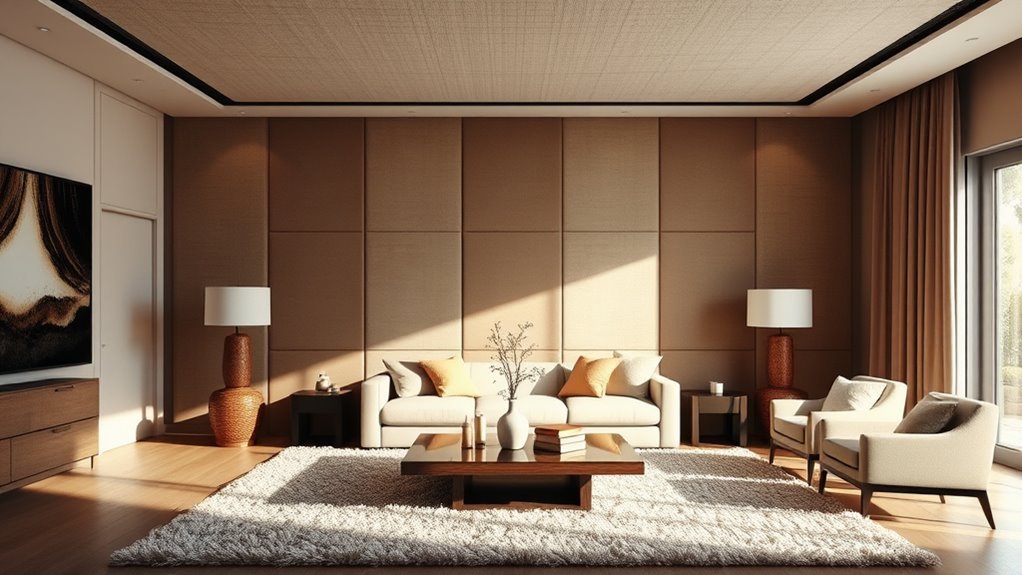
To reduce echo in your living room, focus on acoustic materials like panels with a high NRC value, which absorb sound effectively. Incorporate thick rugs and heavy curtains to combat hard surfaces that reflect sound waves. Use upholstered furniture, as it absorbs noise while adding comfort. Consider bass traps for low-frequency control, and arrange bookshelves with uneven items to further diffuse sound. There’s more to explore about optimizing your space for better acoustics.
Understanding Echo in Living Rooms: Causes and Identification?
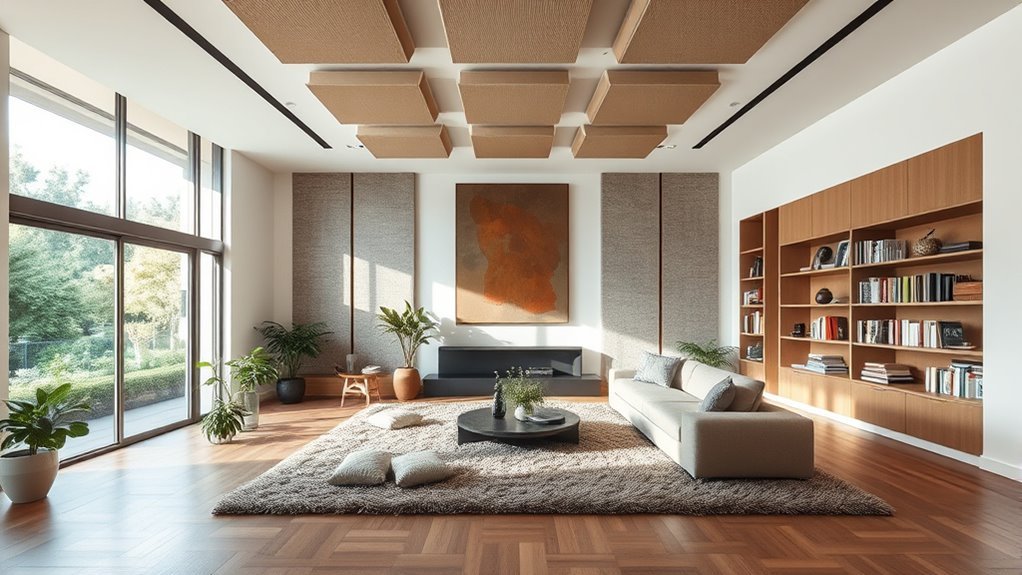
Have you ever wondered why sound in your living room seems to bounce around, making conversations difficult to follow? The echo you experience is caused by sound waves reflecting off hard surfaces like hardwood floors, glass windows, and drywall. In modern homes, open-concept designs often exacerbate this issue due to minimal soft furnishings that are vital for sound absorption. It’s essential to distinguish between echo and reverberation; while echo refers to distinct, repeated sounds, reverberation is the prolonged blur of sound resulting from multiple reflections. High ceilings and expansive spaces increase travel distance for sound waves, making them more likely to reflect back at you. Identifying echo involves recognizing these delayed repetitions, which can impede speech intelligibility and overall audio clarity.
Best Acoustic Materials to Cut Down Echo
To effectively reduce echo in living rooms, selecting the right acoustic materials is vital. Here’s a concise overview of the best options:
| Material | Key Features |
|---|---|
| Acoustic Panels | NRC value of ~0.7, absorbing 70% of sound energy |
| Acoustic Foam | Budget-friendly, ideal for mid-to-high frequencies |
| Thick Rugs | Absorb ~40% of sound, effective against hard floors |
| Bass Traps | Target low frequencies, necessary for large rooms |
| Heavy Curtains | Enhance control by absorbing sound from windows |
Using a combination of these materials will help you minimize reverberation time and achieve a more pleasant auditory experience, transforming your living space into a quieter haven.
How Soft Furnishings Absorb Sound and Reduce Echo
Soft furnishings play an essential role in absorbing sound and reducing echo in living rooms. Upholstered sofas, armchairs, and thick area rugs utilize porous materials to effectively absorb sound, dampening sound energy that would otherwise contribute to echo. The addition of throw pillows and blankets, with diverse fabric textures, enhances acoustic absorption by disrupting sound reflections in your living spaces. Heavy curtains made from materials like velvet act as sound barriers, greatly reducing echoes generated by hard surfaces. Incorporating soft decor items, such as fabric wall hangings or woven baskets, not only improves sound quality but also adds aesthetic appeal. By strategically selecting these elements, you can create a harmonious environment free from bothersome echo.
Using Acoustic Panels and Foam for Better Sound
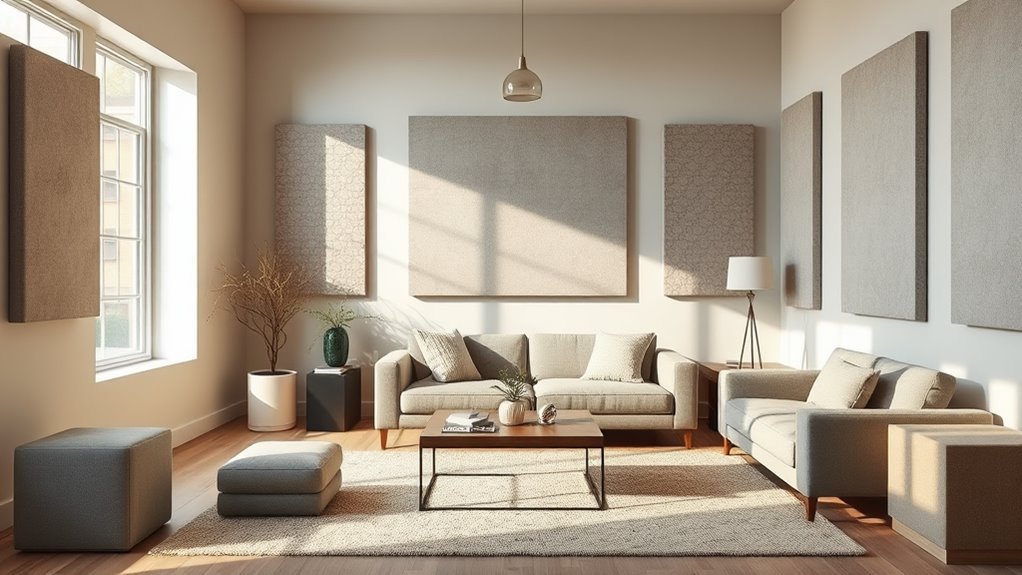
While incorporating soft furnishings can greatly enhance sound absorption, using acoustic panels and foam offers a targeted solution for managing echo in living rooms. Acoustic panels effectively absorb mid-to-high-frequency sound waves, leading to significant echo reduction and improved speech clarity. With a Noise Reduction Coefficient (NRC) ranging from 0.3 to 0.95, these panels demonstrate varying effectiveness, with higher values indicating superior sound absorption. Acoustic foam, available in various shapes, serves as an affordable option for managing sound reflections, particularly in home studios and living spaces. When installed strategically, acoustic panels can lower reverberation time (RT60), enhancing overall sound quality. Combining these solutions with soft furnishings creates a thorough strategy for ideal acoustic performance.
Tips for Creating a Balanced Acoustic Environment in Your Living Room
Creating a balanced acoustic environment in your living room involves a strategic blend of elements that work together to minimize echo and enhance sound quality. Start by incorporating soft furnishings like plush sofas and fabric-covered chairs, which absorb sound effectively. Use area rugs with sound-absorbing pads to cover hardwood floors, as these can reflect sound and increase noise levels. Install acoustic panels with a high Noise Reduction Coefficient (NRC) of around 0.7 on walls to absorb significant sound and reduce reverberation. Heavy curtains made from materials like velvet can also absorb sound, while bookshelves filled with uneven objects serve as natural diffusers, disrupting sound waves and further controlling noise in your living space.
Frequently Asked Questions
How to Make a Living Room Less Echoey?
To make your living room less echoey, incorporate strategic soundproofing techniques. Use wall treatments, ceiling panels, area rugs, and soft furnishings like fabric curtains and acoustic cushions to enhance sound absorption and optimize furniture arrangement.
What Is the 38% Rule Room Acoustics?
The 38% rule suggests treating 38% of your room’s surface area with acoustic panels to enhance sound absorption and noise control, improving frequency response and echo reduction while considering room dimensions and layout for effective sound diffusion.
How to Improve Acoustics in a Living Room?
To improve acoustics in your living room, explore sound absorption techniques like acoustic panels, optimize furniture placement strategies, select thick rugs, consider wall treatments, utilize plants, and enhance window treatments for effective soundproofing.
How to Make Room With Hardwood Sound Less Echo?
To make your hardwood room sound less echoey, focus on sound absorption through carpet installation, area rugs, soft furnishings, and furniture arrangement. Additionally, consider wall panels, ceiling tiles, and acoustic curtains for effective soundproofing techniques.
Conclusion
In crafting your living room’s acoustic landscape, remember that sound behaves like a river, flowing and bouncing off surfaces. By strategically incorporating soft furnishings, acoustic panels, and foam, you can channel that flow, reducing echo and creating a serene environment. Embrace the art of sound absorption, and transform your space into a harmonious retreat. With these techniques, you’ll not only enhance auditory comfort but also elevate the overall aesthetic, much like a well-composed symphony in a grand hall.

Leave a Reply