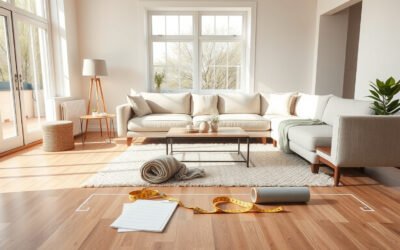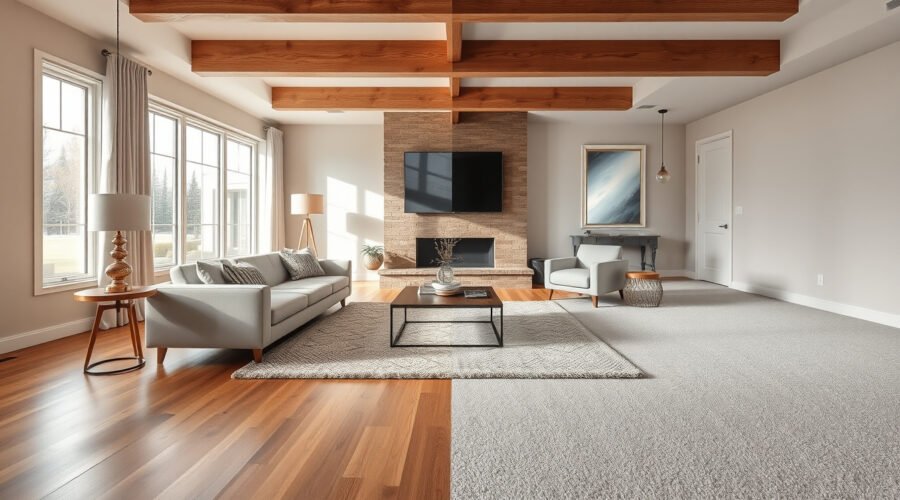
Choosing between area rugs vs. wall-to-wall carpet for your living room comes down to how your household uses the space every day. Area rugs give you design flexibility, easier off-site cleaning, and a protective layer over hardwood, tile, or vinyl. Wall-to-wall carpet delivers continuous underfoot warmth and superior sound absorption across the entire room. Your best option depends on your existing subfloor, budget, pets, kids, and how often you update your decor.
Quick Answer
Choose an area rug if you want lower upfront commitment, easy replacement, and visible hard flooring around your seating zone. Choose wall-to-wall carpet if you want wall-to-wall softness, quieter acoustics, and warmer floors across the entire room, and you are comfortable paying for professional installation and periodic extraction cleaning.
Last checked: October 14, 2026. Dates and figures were verified against official sources.
Key Takeaways
- Upfront and long-term cost: Wall-to-wall carpet averages $2 to $8 per square foot installed (about $600 to $2,400 for a 300-square-foot living room), whereas a standard 8×10-foot or 9×12-foot area rug plus pad requires zero installation labor and moves with you.
- Sizing and layout: Most living rooms need an 8×10-foot or 9×12-foot area rug with 12 to 18 inches of bare floor visible along the walls and at least the front legs of sofas and chairs resting on the rug.
- Pets, kids, and traffic: Solution-dyed nylon, triexta, and wool handle heavy foot traffic best. High-pile plush mats down quickly in walkways, while looped Berber can snag pet claws.
- Padding matters for both: Area rugs need a non-slip felt-and-rubber pad to prevent falls, while residential wall-to-wall carpet performs best over a 3/8-inch to 7/16-inch rebond pad rated at 6 to 8 pounds of density.
- Moisture caution: Avoid installing carpet or placing natural-fiber rugs in damp rooms or spaces with recurring moisture problems, because wet porous backing and padding can develop mold within 24 to 48 hours.
Key Factors for Choosing Between Rugs and Carpets
When deciding between area rugs and wall-to-wall carpet, start with your existing floor condition, room layout, and daily foot traffic. Formal living rooms with light traffic suit plush wool rugs or cut-pile carpet, while busy family rooms need stain-resistant, low-pile fibers that clean easily. Your ownership status and timeline in the home also weigh heavily on the decision.
Area rugs work best when you already have attractive hard flooring—such as oak hardwood, porcelain tile, laminate, or luxury vinyl plank (LVP)—and want to add color, texture, and a defined seating zone. In open-concept homes, a single 9×12-foot rug visually anchors a sofa, armchairs, and coffee table without physically dividing the room.
Wall-to-wall carpet makes more sense when you want every square foot covered for lounging, children playing on the floor, or insulating a chilly room over an unheated basement or crawlspace. Carpet also conceals minor subfloor blemishes and reduces echo in two-story homes or media rooms with high ceilings.
Note: If your living room already has finished hardwood, tile, laminate, or luxury vinyl, an area rug preserves that resale asset while adding warmth. If you only have bare plywood or particleboard subflooring, installing wall-to-wall carpet is often cheaper upfront than installing new hardwood plus buying a large rug—though any loose, squeaky, or uneven subfloor panels must still be repaired before carpet installation.
Area Rugs vs. Wall-to-Wall Carpet: Side-by-Side Comparison
Comparing area rugs vs. wall-to-wall carpet side by side highlights a clear trade-off between portability and full-room coverage. Area rugs win on design flexibility, allergen control, and easy replacement, while installed carpet leads on acoustic dampening, thermal insulation, and edge-to-edge cushioning. Review the core differences below to match the right format to your living room.
| Feature | Area Rugs | Wall-to-Wall Carpet |
|---|---|---|
| Best For | Renters, open-plan layouts, allergy households, and showcasing hard floors | Full-room warmth, sound reduction, playrooms, and covering unfinished subfloors |
| Typical Cost (Living Room) | $150–$1,500+ for an 8×10 or 9×12 rug, plus $50–$200 for a non-slip rug pad (no labor) | $2–$8 per sq. ft. installed ($600–$2,400 for a 300 sq. ft. room, including pad and labor) |
| Average Lifespan | 3–5 years (machine-made synthetics) to 20–50+ years (hand-knotted wool) | 8–15 years depending on fiber density, pad quality, and traffic maintenance |
| Cleaning & Hygiene | Can be rotated every 6–12 months, lifted to mop underneath, machine-washed, or sent out | Requires vacuuming 1–2 times weekly and restorative extraction every 12–18 months |
| Design Flexibility | High; swap colors, patterns, or rooms in minutes without tools | Low; changing style requires tearing out carpet, tack strips, and padding |
| Comfort & Acoustics | Targeted cushioning under seating; absorbs echo when paired with a dense pad | Consistent softness wall to wall; blocks maximum footstep and impact noise |
| Safety Considerations | Requires a non-slip pad and flat edges to eliminate tripping hazards | No loose edges, but must be power-stretched to prevent ripples and secured at transitions |
Top Benefits of Area Rugs for Living Room Design
Area rugs let you transform the look and comfort of a living room in under an hour without altering the structural floor. They introduce color, pattern, and warmth over cold tile or hardwood while leaving a clean border of hard flooring around the room. Because rugs are portable, you can swap them seasonally, move them to another bedroom, or take them with you when you move.
In open-concept layouts, area rugs act as visual room dividers. Placing an 8×10-foot or 9×12-foot rug beneath your main seating group separates the living zone from an adjacent kitchen or dining table without blocking sightlines. Rugs also shield high-wear pathways—such as the floor directly in front of the sofa or under coffee table legs—from scratches, dents, and UV fading.
Pro Tip: Size your living room rug so it extends at least 6 to 8 inches past both ends of your sofa, with at least the front two legs of the sofa and accent chairs resting on the rug. Leaving a small 5×7-foot rug floating strictly under the coffee table makes the room look smaller and disconnected.
Challenges of Area Rugs to Consider
While area rugs offer unmatched versatility, they introduce practical challenges around slippage, room proportions, and fiber-specific cleaning. Choosing a rug that is too thin, poorly sized, or lacking a proper pad can make a living room feel awkward or create a fall hazard. Understanding these drawbacks before you buy helps you avoid costly sizing and maintenance mistakes.
Slippage and Movement Issues
Unsecured rugs slide on smooth hardwood, tile, or vinyl, bunch up under coffee tables, and curl at the corners. To reduce fall risks, the National Institute on Aging room-by-room fall prevention guide advises avoiding loose throw rugs or securing area rugs firmly with non-slip backing and double-sided grip strips. For households with older adults, toddlers, or mobility aids, choose a large, low-pile rug anchored by furniture legs and a 1/8-inch to 1/4-inch dual-surface felt-and-natural-rubber pad trimmed 1 to 2 inches smaller than the rug perimeter.
Warning: Never place a loose area rug on hardwood, tile, laminate, vinyl, or polished concrete without a floor-safe non-slip pad. Avoid cheap PVC or adhesive-backed pads on hardwood and luxury vinyl plank, as plasticizers can chemically stain or strip floor finishes—use 100% natural rubber and felt instead, and verify that entry doors clear the combined height of the rug and pad.
Size Limitations in Rooms
Area rugs are sold in fixed rectangular dimensions—most commonly 5×8, 6×9, 8×10, 9×12, and 10×14 feet—which can complicate long, narrow, or L-shaped living rooms. A rug that is too small makes furniture look crowded, while an oversized rug that touches the baseboards looks like poorly fitted wall-to-wall carpet and can block floor vents or door swings.
Follow the standard interior design clearance rule: leave 12 to 18 inches of bare floor between the edges of the rug and the room walls (or 8 to 12 inches in compact apartment living rooms). Always center the rug on your seating arrangement rather than the exact geometric center of the room, leaving 30 to 36 inches of clear walkway around major traffic paths.
Cleaning and Maintenance Challenges
Although area rugs are easier to remove than installed carpet, each rug fiber demands a specific cleaning method. Machine-washable polyester or polypropylene rugs handle frequent spills well, though their thin profile offers less cushioning. Thick wool rugs naturally resist crushing and light moisture, but new wool sheds loose fibers for the first 3 to 6 months and requires wool-safe neutral cleaners.
Plant fibers like jute, sisal, and seagrass add organic texture, but they absorb water rapidly and can develop permanent brown water rings if spot-cleaned with wet shampoo. Vacuum both sides of an area rug periodically, sweep and mop the hard floor beneath the pad every few months, and rotate the rug 180 degrees every 6 to 12 months to equalize sun fading and foot traffic wear.
Advantages of Wall-to-Wall Carpeting
Wall-to-wall carpeting provides unbroken softness, thermal insulation, and acoustic quiet from baseboard to baseboard. Because it covers 100% of the floor over a dedicated cushion, every step feels warm and padded. It is an especially practical choice for cold climates, upstairs living rooms, basement family rooms with dry subfloors, and households that lounge or play directly on the floor.
From a layout standpoint, wall-to-wall carpet removes all rug-sizing math. You can rearrange sofas, sectionals, or recliners at any time without worrying about whether furniture legs line up with a rug border. Properly power-stretched carpet also eliminates curled rug corners and step-up transitions within the seating area, creating a flat, continuous walking surface.
Modern wall-to-wall carpet goes far beyond plain builder-grade beige. Tightly twisted frieze, cut-and-loop geometric patterns, fleck tones, and tailored low-pile wool or nylon weaves bring subtle texture to a living room while hiding footprints and vacuum tracks.
What to Watch Out for With Wall-To-Wall Carpets?
Wall-to-wall carpet is a semi-permanent structural finish with a typical lifespan of 8 to 15 years. Once tacked down and seamed, you cannot easily swap its color, take it with you when you move, or lift a corner to clean the subfloor underneath. Poor padding choices or improper installation will also shorten the carpet’s life and void manufacturer warranties.
- Spills penetrate into the cushion and subfloor: Liquid spills that soak through the carpet backing into the pad can resurface as “wicking” stains after drying or leave lingering pet odors that require professional hot-water extraction or pad replacement.
- Traffic lanes mat and crush unevenly: Primary paths from the hallway to the sofa flatten faster than corners behind furniture, and you cannot rotate installed carpet to balance wear.
- Padding specs must match warranty rules: Thicker padding is not better—according to the Carpet Cushion Council minimum residential cushion guidelines, residential carpet cushion should never exceed 1/2 inch in thickness (typically 3/8 inch to 7/16 inch at 6 to 8 pounds per cubic foot of density) so the carpet backing does not flex excessively and delaminate.
- Moisture and humidity risks: Installed carpet traps moisture against concrete slabs or damp subfloors, making it unsuitable for flood-prone rooms.
Best Materials for Living Room Rugs and Carpets
Fiber selection determines up to 80% of how your rug or carpet handles stains, foot traffic, and cleaning over time. Nylon and wool lead in long-term resilience—meaning the fibers bounce back after being compressed by heavy furniture or footsteps—while triexta and polypropylene excel at repelling liquid stains. Compare the five primary fibers below before choosing either format.
| Fiber Material | Durability & Crush Resistance | Stain & Moisture Resistance | Best Living Room Use |
|---|---|---|---|
| Wool | Excellent; natural crimp springs back for decades | Moderate; naturally repels light soil but absorbs standing water | Long-lasting heirloom area rugs and premium dry living rooms |
| Nylon | Excellent; highest synthetic resilience against heavy traffic | High when solution-dyed or treated with stain protectant | Busy family rooms, stairs, and high-traffic wall-to-wall carpet |
| Triexta (PTT) | Very good; softer than nylon with strong bounce-back | Excellent; permanent hydrophobic stain resistance built into fiber | Wall-to-wall carpet in households with pets, kids, and frequent spills |
| Polyester (PET) | Moderate; can mat in walkways unless densely tufted | Very good against water-based stains; holds onto oily soils | Budget-friendly living rooms, washable rugs, and low-traffic lounges |
| Polypropylene (Olefin) & Jute | Low to moderate; olefin crushes in high pile; jute is coarse | Olefin is moisture-resistant; jute/sisal stain easily when wet | Low-pile indoor/outdoor area rugs (olefin) or dry layering bases (jute) |
Recommended Products
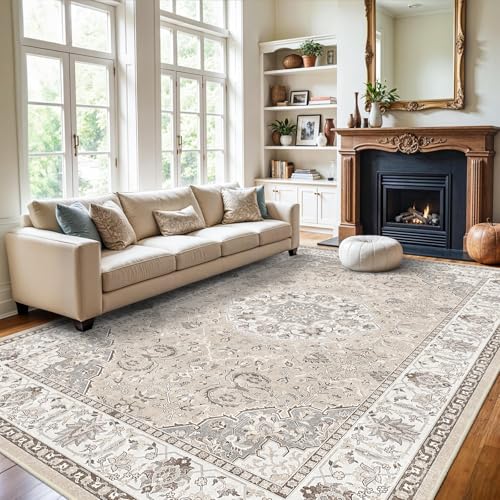
Great Value & Chic Style: This 9x12 area rug adds a vibrant touch to your living room with its beautiful colors and subtle pattern that complements your furniture and decor. It's soft to the touch and looks as elegant as more expensive entryway rugs, offering excellent value for its quality.

[KEY ATTRIBUTES]: Size: 5' x 6'6" (5' x 7') | Thickness: 0.2 in. | Color: Seafoam Green

STYLISH DESIGN: This trendsetting brushstroke inspired striped area rug design in a versatile color palette combination can be perfectly paired with a variety of home décor styles.
Area Rug Materials
When shopping for an area rug, match the weave and fiber to how easy it is to clean. Hand-tufted or hand-knotted wool rugs offer the best combination of plush comfort, flame resistance, and decades-long durability, while flatweave synthetic rugs work best under rolling chairs or snack zones.
- Wool: Soft, naturally soil-resistant, and highly resilient under heavy sofa legs. Expect higher upfront cost ($400 to $2,500+ for an 8×10-foot rug) and professional washing for deep stains.
- Nylon and printed polyester: Practical for busy living rooms; thin printed polyester rugs often fit in large home washing machines.
- Polypropylene (olefin): Budget-friendly ($100 to $400 for an 8×10-foot rug) and colorfast in sunny rooms, though high-pile shag styles flatten quickly in walkways.
- Jute, sisal, and seagrass: Great for coastal or organic layering—you can even layer a smaller patterned wool rug on top of a large 9×12-foot jute rug—but keep them out of wet or pet-accident zones.
Wall-to-Wall Carpet Materials
Because wall-to-wall carpet cannot be rotated or lifted, prioritize fiber resilience and twist density over initial showroom softness. Look for a tightly twisted cut pile or dense low-profile loop that resists crushing along sofa walkways.
- Nylon ($2.50–$9.00+ per sq. ft. material): The gold standard for high-traffic living rooms and stairs because the fibers recover their height after vacuuming and steam cleaning.
- Triexta ($2.00–$7.00 per sq. ft. material): Combines permanent, non-topical stain protection with a soft hand, making it popular for active family rooms.
- Polyester ($1.00–$5.00 per sq. ft. material): Soft and economical, but select a high face weight and tight twist so traffic paths do not pack down within a few years.
- Wool ($5.00–$20.00+ per sq. ft. material): A luxury natural insulator that ages gracefully when maintained with wool-approved vacuums.
Maintenance and Cleaning: Area Rugs vs. Carpets
Both floor coverings require consistent vacuuming to prevent gritty dirt from sawing at fibers, but area rugs give you the advantage of complete floor resets. You can roll up a rug to deep-clean the hard floor underneath, whereas wall-to-wall carpet must be cleaned in place. Following manufacturer care schedules also protects your carpet warranty.
Recommended Products
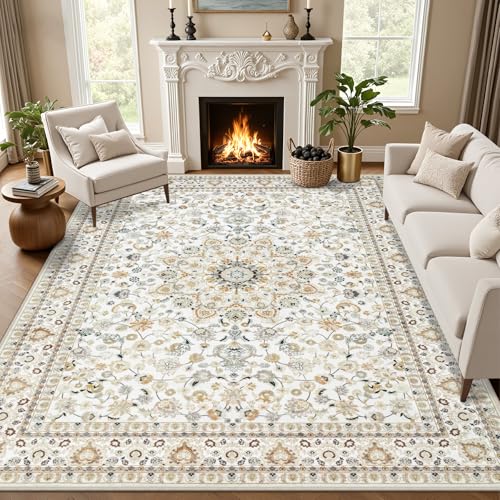
Timeless Classic Design Rug: Featuring an elaborate traditional pattern and harmonious color palette, these 5x7 area rugs bring artistic elegance to the interior. The versatile design works with various decor styles from vintage and bohemian to contemporary, making it suitable for living room, bedrooms, dining room, hallway, kids' playrooms, or home offices. Built to withstand daily use while maintaining its visual appeal, these rugs for living room 5x7 combines durability with timeless beauty

MACHINE WASHABLE: Our rug can be washed directly in washing machine in cold water and dried without heat. Daily maintenance is simple and convenient

[Striking Abstract Design]: Our abstract modern rug stands out with a striking mix of bold color blocks and eye-catching organic textures. It brings a touch of cutting‑edge elegance to living rooms, bedrooms, kids’ rooms and more, and fits right in with minimalist styles without even trying.
Cleaning Methods Comparison
To keep fibers intact and warranties valid, the Carpet and Rug Institute Carpet and Rug Care Guide recommends vacuuming high-traffic zones at least once or twice weekly and scheduling restorative deep cleaning every 12 to 18 months before severe matting appears.
- Area rugs: Vacuum weekly (turn off the beater brush on looped, braided, or hand-knotted wool rugs, and never vacuum fringe), rotate every 6 to 12 months, and mop the hard floor underneath. Send wool, silk, or antique rugs to an immersion rug wash facility rather than using rental steam cleaners.
- Wall-to-wall carpet: Vacuum entry paths and sofa walkways multiple times a week with a Seal of Approval vacuum, blot spills immediately with a white cloth, and hire hot-water extraction professionals every 12 to 18 months.
- Spill response for both: Scrape up solids gently, blot liquids from the outer edge inward without scrubbing, and avoid over-wetting the backing.
Stain Resistance Factors
Stain performance depends on dye method, fiber porosity, pile height, and color pattern. Solution-dyed fibers—where color pigment is locked into the liquid polymer before extrusion rather than dyed on the outside—resist bleaching from sunshine, pet urine, and harsh spot cleaners far better than piece-dyed carpets. Medium-toned heathered, fleck, or patterned weaves also disguise lint, crumbs, and pet fur between vacuuming sessions much better than solid ivory or charcoal floors.
Cost Comparison: Area Rugs vs. Wall-to-Wall Carpeting
Comparing sticker prices per square foot can be misleading unless you calculate the full project total. An area rug has a straightforward, all-inclusive price tag (rug plus pad), while wall-to-wall carpet involves materials, cushion, labor, waste allowance, and disposal fees. Over a 15-year period, replacing or refreshing a single area rug is typically less disruptive and less expensive than re-carpeting a whole room.
For a standard 15×20-foot (300-square-foot) living room, compare these realistic 2026 cost ranges:
- Area rug + pad setup ($200 to $1,700+ total): A machine-made 8×10-foot or 9×12-foot synthetic rug runs $150 to $500, while a quality tufted or woven wool rug typically runs $500 to $1,500+. Add $50 to $200 for a dense felt-and-rubber rug pad. Installation cost is $0.
- Wall-to-wall carpet installation ($600 to $2,400+ total): Installed carpet averages $2 to $8 per square foot ($3.00/sq. ft. for basic polyester, $4.50/sq. ft. for mid-grade nylon or triexta, and $6.00–$8.00+/sq. ft. for luxury nylon or wool). That rate covers carpet material ($1.00–$5.00/sq. ft.), padding ($0.25–$1.00/sq. ft.), and basic installation labor ($0.50–$1.50/sq. ft.).
- Extra carpet line items: Budget an additional $0.70 to $1.60 per square foot if tearing out and disposing of old carpet, $25 to $75 per room for moving heavy furniture, $1.75 to $4.70 per square foot for subfloor repairs, plus 5% to 10% extra carpet yardage for roll-width waste and seam matching.
Recommended Products

Upgraded Cushioning and Grip: Unlike other pure felt pads, our pad has a durable natural rubber backing to increase gripping and durability. 1/4" thick felt forming a dense, cushioned surface, aims to make your rugs cozier and provide extra comfort underfoot, even the thinnest rugs can feel soft and comfortable. Dense fibers surface securely holds rugs in place without bunching, while offering noise reduction and insulation

Non-Slip Gripper Pad: Our rug pads’ powerful grip can keep your rugs firmly in place to prevent dangerous slips, bunches, and wrinkles. Make your home safer while adding cushion comfort underfoot. Great for homes with kids and pets! Bonus Use: Also works as a drawer liner or shelf mat
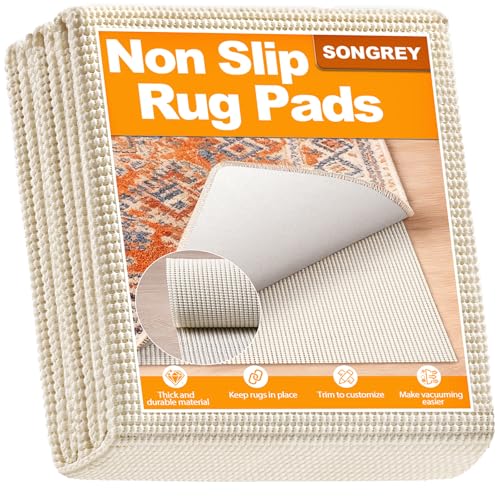
Superior Non-Slip Grip & Safety:Our dual-sided grip rug pad firmly locks onto both your rug and hard floor, effectively preventing slipping, bunching, and shifting. The ultimate choice for homes with kids, pets, and high-traffic areas, it ensures a safer living environment.
Which Option Creates a Cozier Living Room: Rugs or Carpets?
If your definition of cozy is physical warmth and wall-to-wall softness, wall-to-wall carpet wins. A 7/16-inch rebond pad paired with cut-pile carpet provides a combined thermal resistance (R-value) of roughly R-2.0 to R-2.5, taking the chill off concrete slabs or drafty floors and absorbing echoes across the entire living room.
If your definition of cozy is visual warmth and layered texture, area rugs deliver a tailored designer look without covering prized hardwood floors. Pairing a plush wool or Moroccan-style rug over a 1/4-inch felt pad with floor-length curtains and upholstered seating gives you comparable comfort and acoustic warmth right where you sit, while keeping surrounding walkways sleek and easy to sweep.
Best Choice for Pets, Kids, Renters, and High-Traffic Living Rooms
Every household stresses living room floors differently. Matching your floor covering to pets, children, lease rules, and foot traffic prevents premature replacement.
For Pets
Winner: Area rugs over waterproof hard flooring. If a dog or cat has a repeat accident, urine can soak through wall-to-wall carpet into the pad and wood subfloor, requiring enzymatic saturation or pad cutout repairs. An area rug can be lifted immediately so you can sanitize the hard floor underneath, or replaced individually. For either option, choose cut-pile solution-dyed nylon, triexta, or polypropylene—and avoid looped Berber weaves, which can catch claws and unravel.
For Kids
Winner: Tie (depends on age). For crawlers and toddlers learning to walk, wall-to-wall triexta or nylon carpet over a moisture-barrier pad creates a soft, slip-resistant play zone across the whole room. For older kids with juice boxes, art supplies, and muddy shoes, a machine-washable or stain-resistant area rug over LVP or hardwood is much easier to keep sanitary.
For Renters
Winner: Area rugs. Renters rarely have permission to install tack strips or alter flooring. A large area rug with a floor-safe pad conceals worn rental floors, dampens downstairs neighbor noise, protects your security deposit against floor scratches, and rolls up when your lease ends.
For High-Traffic Rooms
Winner: Low-pile nylon or wool in either format. In living rooms that serve as the main front-door entry path, bare hard flooring along the walkway paired with an area rug in the seating zone avoids dirty carpet lanes altogether. If you prefer wall-to-wall carpet in a high-traffic room, choose a dense, low-pile nylon or textured loop over an 8-pound rebond pad.
Indoor Air Quality, Allergies, and Moisture
Hard flooring paired with a cleanable area rug is generally easier to manage for severe dust mite or pet dander allergies, because you can mop the exposed floor and wash or remove the rug. However, well-maintained low-pile carpet can also work in dry living rooms when vacuumed weekly with a HEPA-filter vacuum and kept between 35% and 50% relative humidity.
When buying new carpet or synthetic rugs, chemical off-gassing is an important consideration. The U.S. Environmental Protection Agency notes that new carpet, padding, and adhesives can emit volatile organic compounds (VOCs), and recommends selecting lower-emitting materials and ventilating the room during and for up to 72 hours after installation. The EPA also explains that VOCs can come from many household products and building materials. To minimize chemical odor, look for products certified under the CRI Green Label Plus certification program, which independently tests carpets, cushions, and adhesives to ensure very low VOC emissions.
Warning: Never install wall-to-wall carpet in living rooms with recurring leaks, unsealed below-grade concrete slabs, or high humidity. According to the EPA’s mold cleanup guidance, wet carpet and backing that are not completely dried within 24 to 48 hours often develop mold growth that is impossible to remove fully, requiring the carpet and pad to be discarded.
How to Make the Right Choice
Before ordering an area rug or scheduling a carpet measure, run through this quick living room decision checklist:
- Choose an area rug if you already have quality hardwood, tile, or LVP, rent your home, suffer from dust mite allergies, have pets prone to accidents, or enjoy refreshing your room’s color palette every few years.
- Choose wall-to-wall carpet if you have unfinished subflooring, want maximum warmth and quiet across the entire floor, use the living room for floor lounging and toddler play, and are ready for a 10-to-15-year installation commitment.
- Layer an area rug over wall-to-wall carpet if you have existing low-pile neutral carpet that is still in good condition, and you want to anchor your coffee table or protect a high-wear seating zone (use a carpet-to-carpet non-slip pad underneath to prevent buckling).
- Fix moisture first if the room has foundation leaks, dampness, musty odors, or relative humidity consistently above 60%.
Frequently Asked Questions
Is carpet or an area rug better for a living room?
An area rug is better if you want design flexibility, easier cleaning, and visible hardwood, tile, or vinyl flooring. Wall-to-wall carpet is better if you want continuous underfoot warmth, maximum sound absorption, and a soft play surface across the entire living room.
What are the disadvantages of wall-to-wall carpet?
Wall-to-wall carpet requires professional installation ($2 to $8 per square foot total), cannot be rotated to even out traffic wear, and traps dust and pet dander deeper than hard floors. Spills can also soak into the padding underneath, and changing the style requires tearing out the entire floor.
What is the best flooring to put in a living room?
Hardwood, engineered wood, or luxury vinyl plank paired with an 8×10-foot or 9×12-foot area rug is the most versatile living room setup for resale value and easy cleaning. If maximum warmth and quiet are your top priorities, solution-dyed nylon or triexta wall-to-wall carpet over a 6-to-8-pound pad is best.
Do area rugs make a living room look bigger or smaller?
A properly sized area rug makes a living room look larger by visually unifying the sofa and chairs into one cohesive zone. Leaving 12 to 18 inches of bare floor around the room edges and placing at least the front legs of all seating on the rug prevents the space from feeling chopped up.
Do I need a rug pad under an area rug?
Yes, a non-slip rug pad is essential in almost every living room. A 1/8-inch to 1/4-inch felt-and-natural-rubber pad prevents slipping, cushions footsteps, absorbs sound, and stops coarse rug backings from scratching hardwood or staining vinyl planks. Trim the pad 1 to 2 inches smaller than the rug on all sides.
Can you put an area rug over wall-to-wall carpet in a living room?
Yes, you can layer an area rug over low-pile or loop wall-to-wall carpet to define a seating area, add color, or cover worn walkways. Use a dedicated carpet-to-carpet gripping pad underneath and anchor the rug with heavy furniture legs so the top rug does not creep or ripple when walked on.
Conclusion
Choosing between area rugs and wall-to-wall carpeting comes down to whether your living room benefits more from easy-clean flexibility or edge-to-edge warmth. Measure your seating zone first: if you go with an area rug, mark out an 8×10-foot or 9×12-foot footprint with painter’s tape to check wall and doorway clearances; if you choose wall-to-wall carpet, request itemized quotes that include CRI Green Label Plus carpet, a 6-to-8-pound pad, and power-stretching installation.
Sources
- National Institute on Aging: Preventing Falls at Home: Room by Room: Supports home fall-prevention guidance on loose rugs and non-slip backing.
- Carpet Cushion Council: Minimum Recommendations for Residential Applications: Supports residential carpet cushion thickness (maximum 1/2 inch) and density guidelines.
- The Carpet and Rug Institute: Carpet and Rug Care Guide: Supports weekly vacuuming, restorative deep cleaning every 12 to 18 months, and post-installation ventilation up to 72 hours.
- U.S. Environmental Protection Agency: Indoor Air Pollution — An Introduction for Health Professionals: Supports guidance on new carpet emissions, lower-emitting materials, and ventilation during and after installation.
- U.S. Environmental Protection Agency: Volatile Organic Compounds’ Impact on Indoor Air Quality: Supports VOC and indoor-air-quality guidance for household materials.
- The Carpet and Rug Institute: Green Label Plus Testing Program: Supports third-party low-VOC certification standards for carpet, cushions, and adhesives.
- U.S. Environmental Protection Agency: Mold Cleanup in Your Home: Supports the 24-to-48-hour drying window and mold disposal cautions for porous materials like carpet.