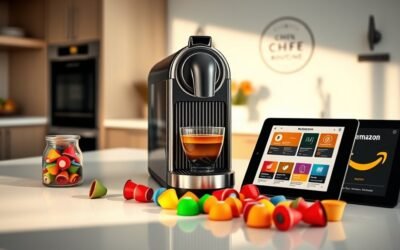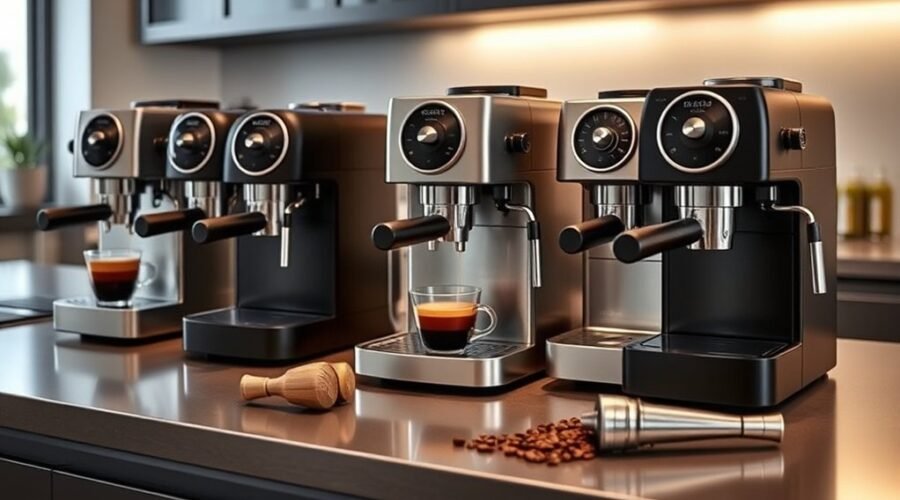
Looking for one of the best espresso machines for everyday use in 2026? The right choice depends on how much work you want to do yourself. The Breville Barista Touch combines a built-in grinder, touchscreen controls, and automatic milk texturing for an all-in-one experience. The Mr. Coffee Café Barista focuses on easy cappuccinos and lattes with an automatic milk system, while the Café Bellissimo adds a built-in grinder and smart customization. If counter space and fast heat-up matter most, the compact Breville Bambino gives you more hands-on control with a manual steam wand.
Affiliate disclosure: This article contains affiliate links. We may earn a commission from qualifying purchases made through these links, at no extra cost to you.
Quick Verdict: Which Espresso Machine Should You Choose?
Choose the Breville Barista Touch if you want the most complete all-in-one setup with grinding, touchscreen drink controls, and automatic milk texturing. The Mr. Coffee Café Barista is better suited to buyers who mainly want simple espresso, cappuccinos, and lattes with minimal milk-frothing skill. The Café Bellissimo makes sense if built-in grinding and app-connected customization appeal to you. Pick the Breville Bambino if you already have a grinder and want a compact machine with fast heat-up and hands-on milk steaming.
Quick Comparison
| Espresso Machine | Best For | Built-In Grinder | Milk System | Amazon |
|---|---|---|---|---|
| Breville Barista Touch | Best all-in-one everyday pick | Yes | Automatic steam wand | Check Availability |
| Mr. Coffee Café Barista | Easy cappuccinos and lattes | No | Automatic milk frother | Check Availability |
| Café Bellissimo | Smart features and fresh grinding | Yes | Manual steam wand | Check Availability |
| Breville Bambino | Compact kitchens and manual control | No | Manual steam wand | Check Availability |
Breville Barista Touch Espresso Machine (BES880BSS)
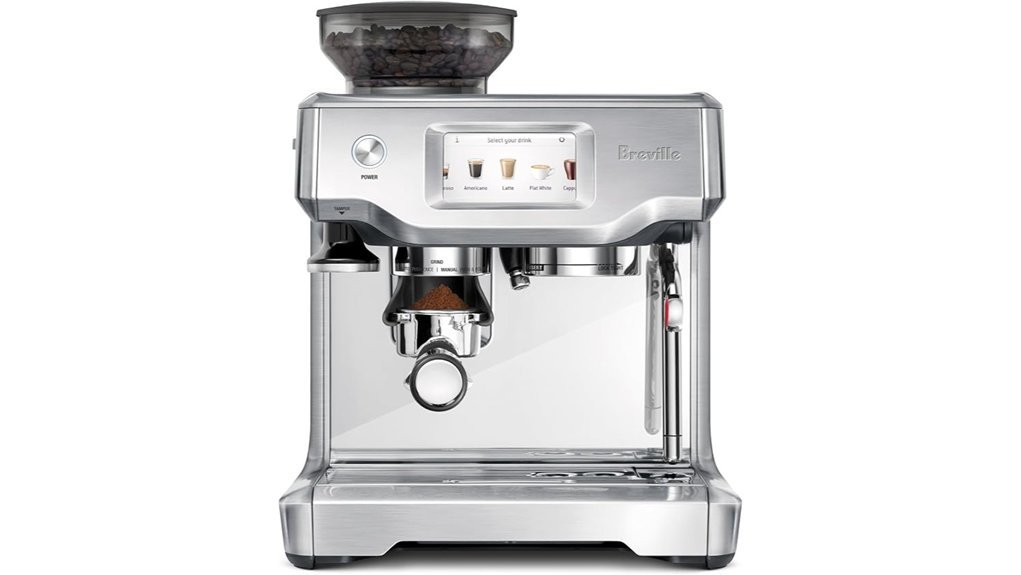
The Breville Barista Touch Espresso Machine (BES880BSS) is a strong option if you want to reduce the number of separate tools needed for everyday espresso. It combines an integrated conical-burr grinder, touchscreen drink controls, a 54mm stainless steel portafilter, and automatic milk texturing in one machine. Its adjustable grinder lets you dial in different beans, while the touchscreen helps simplify drink preparation and customization.
The Barista Touch also uses Breville’s ThermoJet heating system for quick start-up. Low-pressure pre-infusion is followed by controlled espresso extraction, while the automatic steam wand lets you adjust milk texture and temperature. This combination makes the machine especially useful for households that regularly switch between straight espresso and milk-based drinks.
Best For: Buyers who want an all-in-one espresso setup with built-in grinding and automatic milk texturing.
Why You’ll Like It: It reduces the amount of manual work involved in grinding, drink setup, and milk steaming while still offering meaningful adjustments.
Pros:
- Built-in conical-burr grinder provides freshly ground coffee without requiring a separate grinder.
- Touchscreen interface makes drink selection and customization easier to manage.
- Automatic milk texturing is convenient for frequent lattes, cappuccinos, and flat whites.
Cons:
- Costs more than simpler espresso machines without integrated grinding and automation.
- Still requires dialing in grind size and dose when changing coffee beans.
- Takes up more counter space than compact machines such as the Bambino.
Mr. Coffee Espresso and Cappuccino Machine
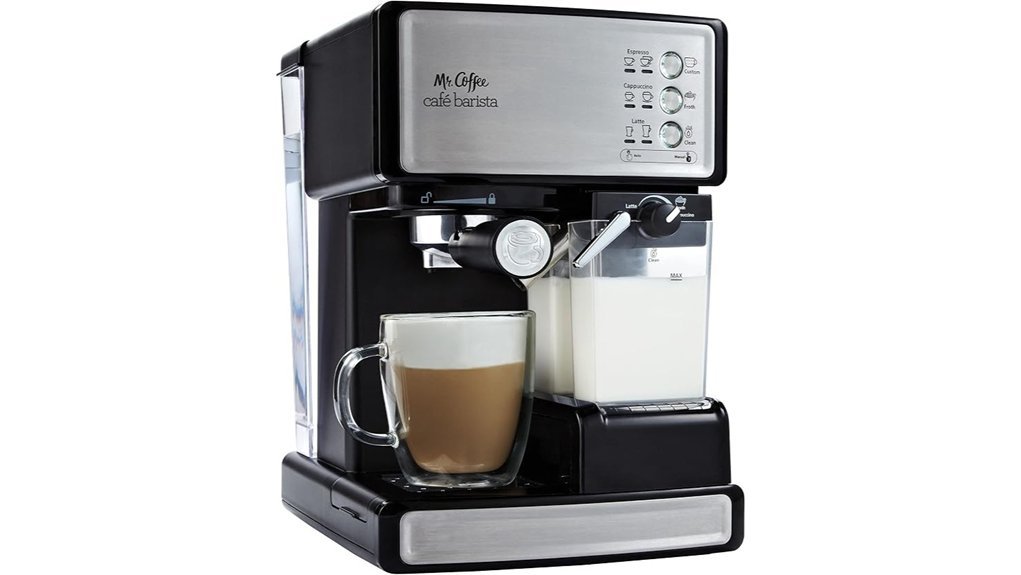
The Mr. Coffee Café Barista is designed for people who want espresso-based milk drinks without learning manual steam-wand technique. Its semi-automatic 3-in-1 functionality covers espresso, cappuccino, and latte preparation, while a 15-bar pump supplies the pressure system used for brewing.
The standout feature is the automatic milk frother. Instead of holding a pitcher and manually introducing air into the milk, you fill the removable milk reservoir and select the desired drink. The one-touch controls and single- or double-shot filter choices make this one of the easier options in the group for everyday milk drinks.
Best For: Home users who prioritize easy cappuccinos and lattes over hands-on milk-texturing control.
Why You’ll Like It: The automatic milk system removes one of the more technical parts of preparing milk-based espresso drinks.
Pros:
- 3-in-1 design prepares espresso, cappuccino, and latte drinks.
- Automatic milk frother requires less technique than a manual steam wand.
- One-touch controls simplify everyday drink preparation.
Cons:
- Does not include a built-in coffee grinder.
- Automatic frothing gives you less hands-on control over microfoam texture than a manual steam wand.
- The removable milk reservoir and frothing path require careful, regular cleaning.
Café Bellissimo Semi Automatic Espresso Machine
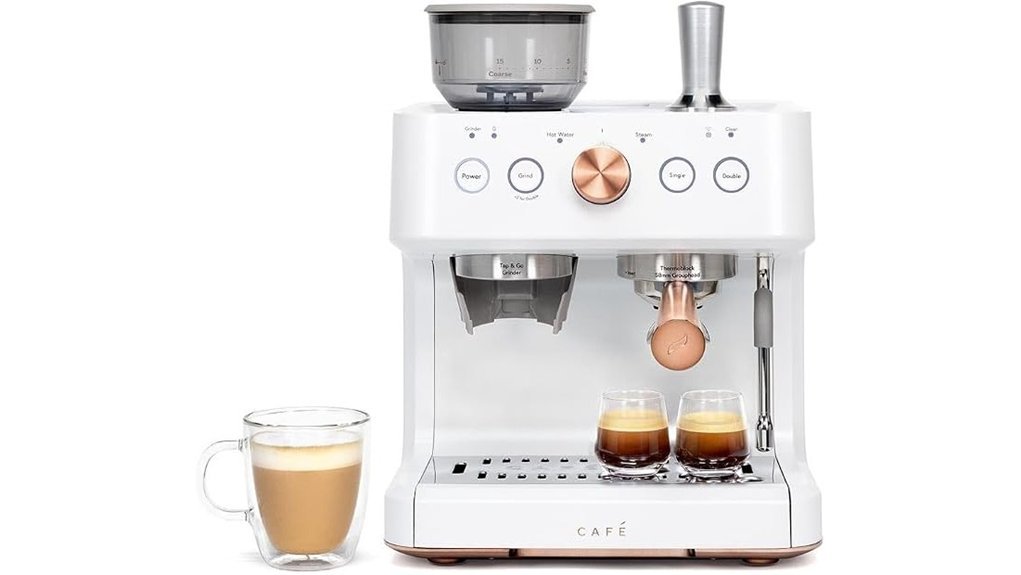
The Café Bellissimo Semi Automatic Espresso Machine combines built-in grinding, manual milk steaming, and connected features for buyers who want more control over their daily espresso routine. Its integrated conical-burr grinder provides 15 adjustable grind settings, allowing coffee to be ground directly into the portafilter.
The machine uses an Italian-made 15-bar pump and includes a 95-ounce removable water reservoir. Its steam wand rotates through a wide range of motion to help you texture milk manually for lattes, cappuccinos, and other drinks. WiFi connectivity works with the SmartHQ platform for compatible drink customization and software features.
Best For: Buyers who want a built-in grinder, manual milk control, a large water reservoir, and connected features.
Why You’ll Like It: It combines fresh grinding and espresso preparation in one machine while leaving milk texture under your control.
Pros:
- Integrated conical-burr grinder offers 15 grind settings.
- Large 95-ounce removable water reservoir can reduce how often you need to refill it.
- Manual steam wand gives you more control over milk texture than a fully automatic frother.
Cons:
- Its larger body requires more counter space than compact espresso machines.
- Manual milk steaming takes practice if you are new to espresso preparation.
- WiFi and app features may add little value if you prefer simple physical controls.
Before You Buy: Product availability can change over time, so confirm the exact model, color, included accessories, and current seller information before ordering.
Breville Bambino Espresso Machine, Brushed Stainless Steel
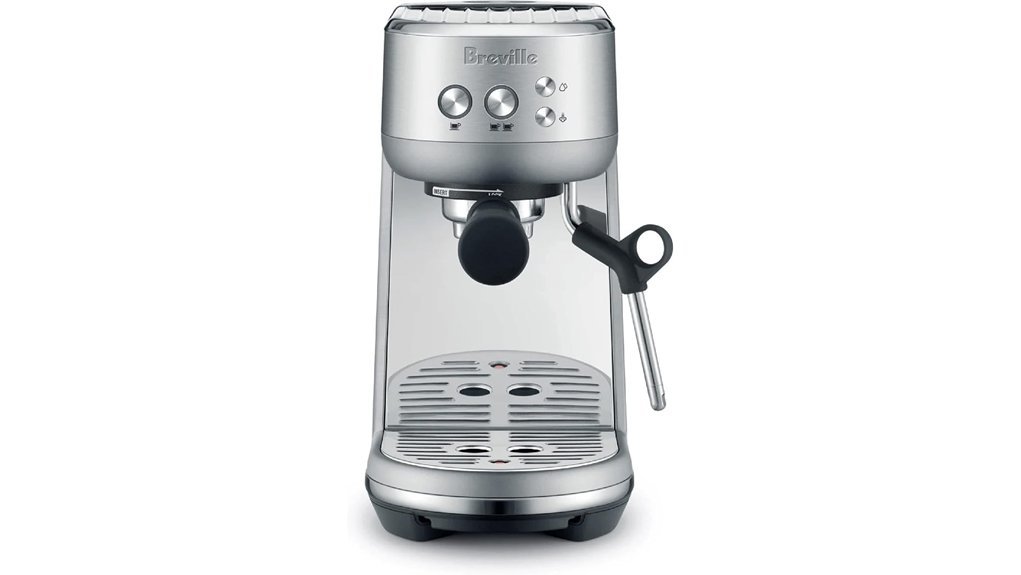
The Breville Bambino Espresso Machine is a compact choice for buyers who want fast start-up and traditional hands-on milk steaming without giving up valuable counter space. Its ThermoJet heating system reaches operating temperature in about three seconds, making it convenient when you regularly prepare espresso before work or between other kitchen tasks.
The Bambino uses a 54mm portafilter designed around an 18-gram coffee dose. Low-pressure pre-infusion is followed by 9-bar espresso extraction. Unlike the Bambino Plus, this standard Bambino uses a manual steam wand, giving you direct control over stretching and texturing milk for lattes and cappuccinos.
Best For: Buyers with limited counter space who want fast espresso preparation and are comfortable learning manual milk texturing.
Why You’ll Like It: Its compact footprint and rapid heat-up make it practical for frequent daily use, especially if you already own a capable coffee grinder.
Pros:
- Fast heat-up: ThermoJet technology prepares the machine for use in about three seconds.
- Compact footprint: Easier to fit into smaller kitchens than larger grinder-equipped machines.
- Manual milk control: The steam wand lets you practice and control microfoam texture yourself.
Cons:
- Does not include a built-in grinder, so freshly ground coffee requires a separate grinder.
- Manual milk steaming involves more technique than an automatic milk system.
- Its simple interface offers fewer automated drink features than the Barista Touch.
Factors to Consider When Choosing Espresso Machines for Everyday Use in 2026
When selecting an espresso machine for everyday use, focus on how much manual work you enjoy, whether you already own a grinder, the type of milk drinks you prepare, available counter space, and how much cleaning you are willing to do. Pump specifications are worth understanding, but a larger advertised pressure number does not automatically mean better espresso.
Machine Type Considerations
Start by deciding how much control you want. A more hands-on semi-automatic espresso machine lets you manage dosing, tamping, extraction, and milk steaming yourself. Machines with automated milk systems or touchscreen drink programs reduce the amount of technique needed for everyday preparation.
A built-in grinder can save counter space and make freshly ground coffee easier to incorporate into your routine. However, a machine without a grinder can still be a better choice if you already own a high-quality burr grinder or want the flexibility to upgrade the grinder separately.
Brewing Pressure Importance
Do not choose an espresso machine simply because its advertising lists a high maximum pump pressure. Espresso extraction commonly occurs around 9 bars at the coffee puck, while many home machines use pumps rated for a higher maximum pressure. The way the machine controls water temperature, flow, pre-infusion, grind size, dose, and extraction matters more than the maximum pump number printed on the box.
If you are comparing machines, pay attention to repeatable extraction, temperature control, grinder adjustment, and your ability to dial in the coffee rather than assuming a 15-bar machine automatically produces better espresso than another design.
User-Friendly Features
The most useful convenience features depend on your routine. Automatic milk frothers make cappuccinos and lattes easier for beginners, while manual steam wands offer more control once you learn the technique. Integrated grinders reduce the need for separate equipment, and programmable shot controls can make repeat drinks more consistent.
A removable water reservoir, easy-access drip tray, clear controls, and readily removable milk components also matter because these are parts you interact with almost every day.
Size and Design
Measure your counter before buying an espresso machine, including the space under upper cabinets. Grinder-equipped machines usually need additional height for the bean hopper and more room around the machine for refilling and maintenance. Compact models such as the Bambino are easier to place in small kitchens but require a separate grinder if you want freshly ground beans.
Also consider water-reservoir access. A large reservoir can reduce refill frequency, but it offers little benefit if you have to pull a heavy machine away from the wall each time you need to remove it.
Milk Frothing Options
If you mainly drink straight espresso or Americanos, an elaborate milk system may not be worth paying for. For frequent lattes and cappuccinos, decide between automatic and manual frothing. Automatic systems prioritize convenience and repeatability, while a manual steam wand gives you more control over temperature, aeration, and microfoam texture.
Remember that automatic milk reservoirs and internal milk pathways also require careful cleaning. A traditional steam wand still needs to be purged and wiped after use, but its milk-contact surfaces are generally easier to access.
Maintenance and Accessories
Routine cleaning is essential for both flavor and machine reliability. Empty and rinse the drip tray as needed, clean the portafilter and baskets, and remove coffee residue from the group area according to the manufacturer’s instructions. Steam wands should be wiped and purged promptly after milk use, while automatic milk systems require the cleaning procedure specified for that machine.
Descaling frequency depends on the machine, water hardness, and manufacturer guidance, so avoid using one universal schedule for every model. If the machine uses a replaceable water filter, follow the specified replacement interval. Before buying, also check the availability of cleaning supplies, filters, gaskets, baskets, and other replacement parts.
Before You Buy: Quick Checklist
- Grinder: Decide whether you need one built into the machine or will use a separate burr grinder.
- Milk drinks: Choose automatic frothing for convenience or a manual steam wand for more control.
- Counter space: Measure width, depth, height, and room needed to refill the reservoir or bean hopper.
- Daily cleaning: Consider how easy the drip tray, portafilter, steam wand, and milk components are to clean.
- Water: Check the manufacturer’s recommendations for filtration and descaling.
- Availability: Confirm the exact model and included accessories before buying, especially when shopping older product lines.
Frequently Asked Questions
How Do I Clean and Maintain My Espresso Machine?
Clean the parts that contact coffee and milk frequently. Rinse the portafilter and baskets, wipe the group area, empty the drip tray, and clean or purge the steam wand after milk use. Automatic milk systems need their own cleaning routine. Descale and replace water filters according to the instructions for your specific machine and local water hardness rather than following a single schedule for every espresso maker.
What Type of Coffee Beans Are Best for Espresso?
There is no single bean that is best for everyone. Fresh coffee and the correct grind setting usually matter more than choosing one species or roast level. Medium and medium-dark roasts are popular for traditional espresso because they can be easier to dial in, while lighter roasts can work well if you prefer brighter flavors and your grinder and machine can handle the required adjustments.
Can I Use Pre-Ground Coffee in These Machines?
Portafilter espresso machines can generally use appropriately ground pre-ground coffee when the correct basket and dose are used. However, coffee begins losing aroma after grinding, so grinding shortly before brewing can provide more control over flavor and extraction. Always follow the basket and dosing instructions supplied with your machine.
What Is the Average Lifespan of an Espresso Machine?
There is no reliable lifespan that applies to every espresso machine. Longevity varies with construction, frequency of use, water hardness, cleaning habits, replaceable-part availability, and whether the machine can be economically repaired. Regular cleaning and manufacturer-recommended maintenance give an espresso machine a better chance of performing reliably over time.
Are These Machines Suitable for Beginners?
Yes, but they require different levels of involvement. The Barista Touch offers more guided automation, and the Mr. Coffee Café Barista simplifies milk drinks with an automatic frother. The Café Bellissimo requires more hands-on milk steaming, while the Bambino is straightforward but expects you to grind separately and learn manual milk texturing. Beginners who enjoy learning espresso technique may prefer the more manual machines, while convenience-focused buyers may prefer greater automation.
Do I Need a 15-Bar Espresso Machine?
No. A 15-bar pump rating is common on home espresso machines, but the maximum pump rating does not tell you the actual pressure at the coffee puck throughout extraction. Consistent temperature, appropriate grind size and dose, controlled pre-infusion, and extraction around the intended espresso pressure are more useful indicators than choosing the machine with the largest advertised pressure number.
Is a Built-In Grinder Worth It?
A built-in grinder is convenient if you want one appliance and a simpler morning workflow. It also reduces the need to buy and store a separate grinder. A separate grinder can be better if you want more upgrade flexibility, already own a good grinder, or prefer a compact espresso machine such as the Bambino.
Conclusion
The best everyday espresso machine depends on the balance you want between convenience and hands-on control. The Breville Barista Touch is the strongest all-in-one option here for buyers who want grinding, touchscreen drink control, and automatic milk texturing in one machine. The Mr. Coffee Café Barista is appealing if easy cappuccinos and lattes are your priority, while the Café Bellissimo combines built-in grinding with manual steaming and connected features. The Breville Bambino is the most compact choice for buyers who already have a grinder and are willing to texture milk manually.
Before ordering any espresso machine for 2026, confirm the exact model, current seller information, included accessories, warranty terms, and availability. Matching the machine to your daily drink habits, available counter space, cleaning preferences, and desired level of automation will usually lead to a better purchase than choosing based on pump pressure or feature count alone.