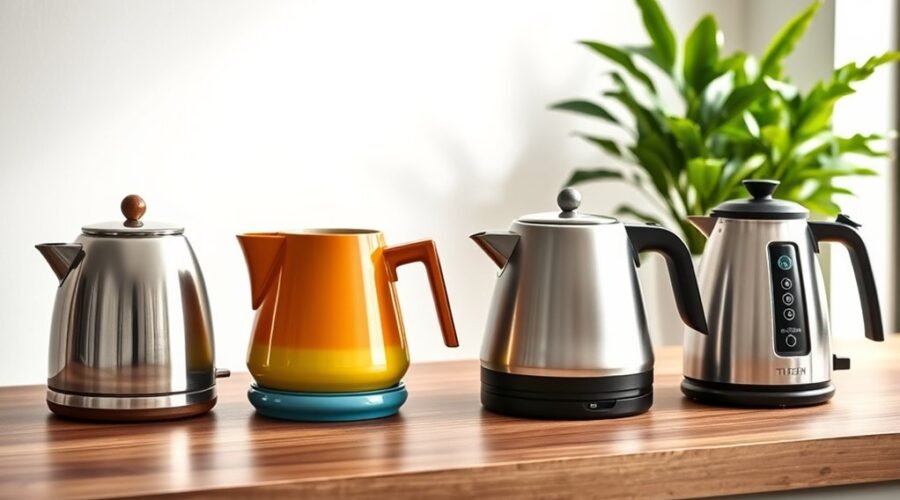
In 2026, three strong stovetop kettle choices stand out for different needs. The All-Clad Stainless Steel 2 Qt Tea Kettle is a durable, induction-compatible option with a polished stainless steel build. The Medelco 12-Cup Glass Whistling Kettle is a clear borosilicate-glass choice for shoppers who want to see the boil. The SUSTEAS Whistling Tea Kettle offers a larger 2.64-quart maximum boiling capacity, an ergonomic trigger handle, and broad cooktop compatibility. Use the quick comparison below to decide which design best matches your stove, serving size, and handling preferences.
Affiliate disclosure: This article contains Amazon affiliate links. If you buy through them, we may earn a commission at no extra cost to you.
Quick Comparison
| Product | Best For | Capacity | Cooktop Fit | Amazon |
|---|---|---|---|---|
| All-Clad Stainless Steel 2 Qt | Best Overall | 2 qt | Gas, electric, ceramic, induction | Check Price |
| Medelco 12-Cup Glass | Best Glass Kettle | 48 oz / 12 × 4-oz cups | Gas and electric; not induction | Check Price |
| SUSTEAS Whistling Tea Kettle | Best for Larger Batches | 2.64 qt max boiling capacity | Gas, electric, induction, halogen, radiant | Check Price |
Quick verdict: Choose All-Clad for durable stainless steel and induction use, Medelco for a transparent glass design, or SUSTEAS when you want the largest boiling capacity of these three picks.
All-Clad Stainless Steel 2 Qt Tea Kettle
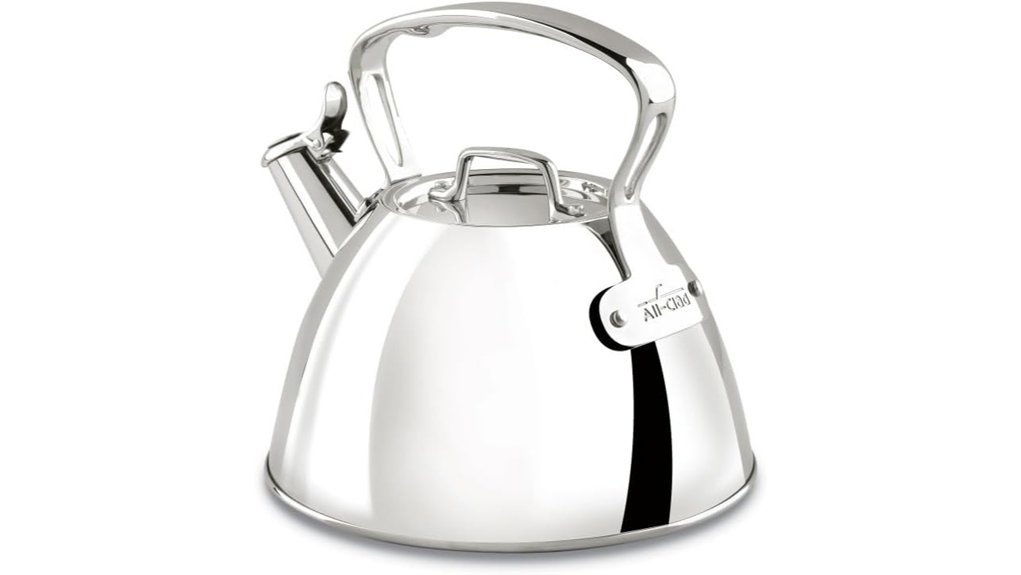
Best Overall. The All-Clad Stainless Steel 2 Qt Tea Kettle is a strong fit for shoppers who want a traditional whistling kettle with durable stainless steel construction and broad stovetop compatibility. Its heavy-gauge stainless steel body and bonded base are designed to resist warping, and the kettle works on gas, electric, ceramic, and induction cooktops. A visible fill line helps reduce overfilling, while the whistle alerts you when the water reaches a boil. The stainless steel handle is permanently secured, and the kettle is listed as dishwasher safe. It is also sold with a limited lifetime warranty, making it the most premium, durability-focused choice in this roundup.
Best For: Tea enthusiasts and home cooks who appreciate a combination of style, durability, and functionality in their kitchen.
Who Should Avoid It: Buyers who want the lightest or lowest-cost kettle may prefer a simpler alternative.
Pros:
- Durable Construction: Heavy gauge stainless steel ensures long-lasting use and resistance to warping.
- Whistling Feature: Alerts users when water has reached a boil, enhancing safety and convenience.
- Easy to Clean: Dishwasher safe design simplifies maintenance and cleanup.
Cons:
- Size Limitations: The 2 Qt capacity may not be sufficient for larger gatherings.
- Price Point: Often costs more than basic stovetop kettles, so it may not suit a tight budget.
- Weight: At about 3 pounds empty, it is heavier than many simpler kettles and may be less comfortable for some users.
Medelco 12-Cup Glass Whistling Kettle
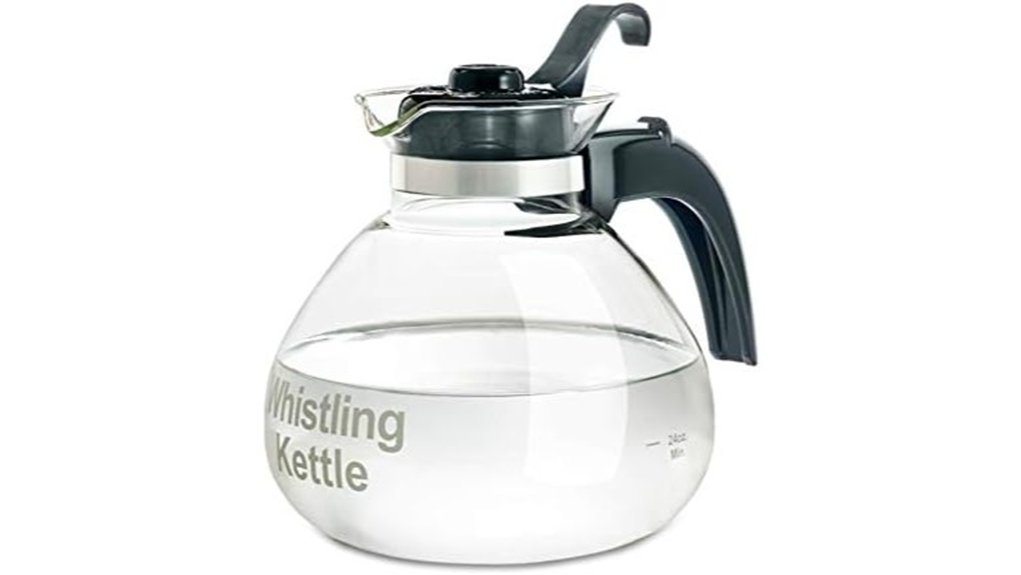
Best Glass Kettle. The Medelco 12-Cup Glass Whistling Kettle is a useful alternative to metal kettles for buyers who prefer a clear body and want to watch the water heat. It uses heat-resistant Schott DURAN borosilicate glass and is marketed at 48 ounces, or 12 small 4-ounce cups. The whistling lid provides an audible boil alert. It is intended for gas and electric cooking surfaces, and a heat-diffusing trivet is commonly included for electric coil ranges; it is not an induction kettle because the glass body is non-magnetic. The glass construction is dishwasher safe, although careful handling remains important because glass can break if dropped or exposed to severe thermal shock.
Best For: Buyers who want a clear, whistling stovetop kettle for gas or electric cooking and prefer glass over stainless steel.
Who Should Avoid It: Induction users and anyone who prefers a more impact-resistant metal kettle.
Pros:
- Clear glass lets you monitor the water as it heats while adding a distinctive look.
- Schott DURAN borosilicate glass is designed for stovetop heat when used as directed.
- Whistling lid gives an audible alert when water reaches a boil.
Cons:
- Not compatible with induction stovetops, limiting its use on certain cooktops.
- Glass and hot water require careful handling; keep the kettle away from children while in use.
- Glass is more vulnerable to impact damage than stainless steel.
SUSTEAS Whistling Tea Kettle (2.64QT Max Boiling Capacity, Black)
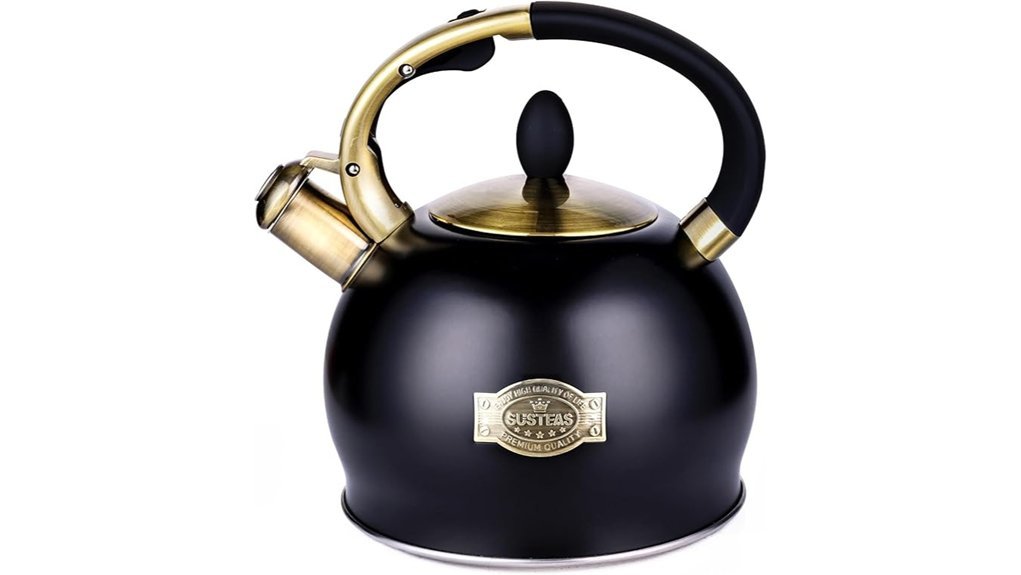
Best for Larger Batches. The SUSTEAS Whistling Tea Kettle is a practical option for households that want more boiling capacity without moving to an electric kettle. Current product information lists a 2.64-quart maximum boiling capacity, an ergonomic nylon handle, and a push-button spout mechanism for easier pouring. Its five-layer encapsulated base is designed to improve heating performance, and the kettle is compatible with induction, gas, electric, halogen, and radiant cooktops. A loud whistle provides a boil alert. Because the kettle body can become very hot, follow the maker’s low-to-medium heat guidance and handle it cautiously after boiling.
Best For: Households that want a larger whistling kettle with induction compatibility and one-handed spout control.
Who Should Avoid It: Buyers with limited stovetop or cabinet space, or anyone who finds a full large-capacity kettle difficult to lift.
Pros:
- Ergonomic nylon handle and push-button spout mechanism support easier pouring.
- Loud whistle gives an audible alert when the water reaches a boil.
- Compatible with induction, gas, electric, halogen, and radiant cooktops.
Cons:
- The kettle’s larger size may take up more space on stovetops.
- Some users may find the weight of the kettle cumbersome when full.
- The maker recommends low to medium heat to reduce overheating and finish damage.
Factors to Consider When Choosing a Kettle in 2026
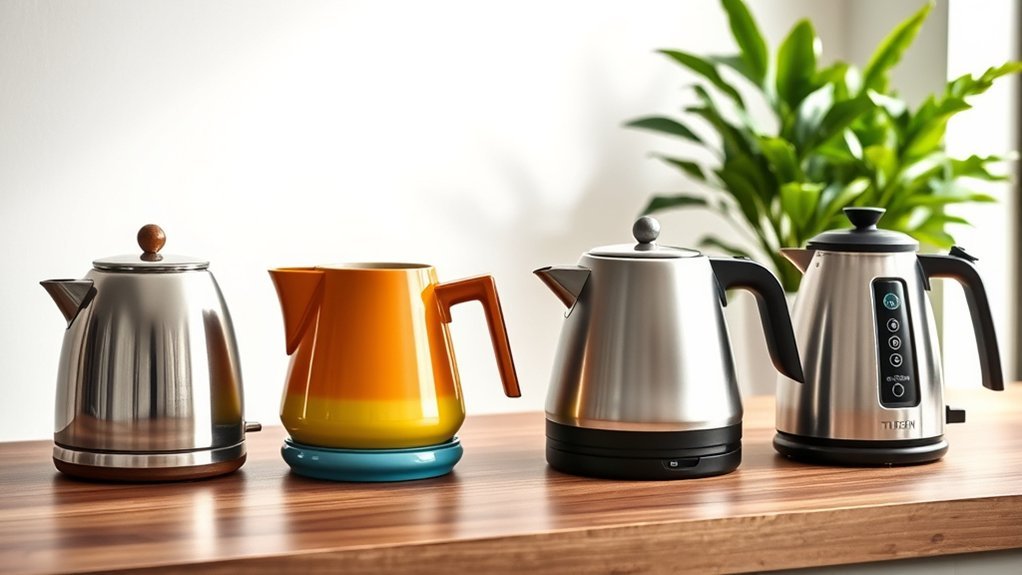
When selecting a kettle, various factors play an essential role in ensuring a satisfying purchase. Material quality, capacity, heating compatibility, design, and features like a whistling mechanism all contribute to the overall user experience. Understanding these elements can guide consumers toward the best choices for their needs.
Material Quality and Safety
Material quality affects durability, heat tolerance, cleaning, and handling. Stainless steel is impact-resistant and works well for many stovetop kettles, while heat-rated borosilicate glass provides visibility but needs more careful handling. Check the complete product—not just the main body material—for heat-safe handles, secure lids, stable bases, and manufacturer-approved cooktop use. Claims such as lead-free or BPA-free should be relied on only when the maker specifically provides them for the relevant components.
Capacity and Size Options
Capacity should match how much hot water you normally prepare at once. A 2-quart kettle is a practical everyday size for many households, while a larger model such as the SUSTEAS can reduce repeat boiling when serving several people. Be careful with cup-based marketing: the Medelco’s 12-cup claim is based on small 4-ounce servings and corresponds to about 48 ounces. Also distinguish total vessel size from maximum safe boiling capacity. Leaving the recommended headroom helps reduce splashing and over-boiling.
Heating Compatibility Types
Heating compatibility is one of the first things to check before buying a stovetop kettle. Gas and conventional electric ranges work with many kettle materials, while induction requires a magnetic base. That is why the stainless steel All-Clad and SUSTEAS models can work on induction, while the glass Medelco is intended for non-induction cooking surfaces. Some glass kettles also use a heat-diffusing trivet on electric coil ranges. Always follow the specific manufacturer’s stovetop and heat-setting instructions rather than assuming every kettle works on every surface.
Design and Aesthetic Appeal
How does one balance functionality with aesthetic appeal when choosing a kettle? The material of a kettle plays a vital role in its visual impact; polished stainless steel and borosilicate glass offer sleek designs that enhance kitchen aesthetics. Clear glass kettles not only provide a modern look but also allow users to monitor the boiling process, adding a layer of visual interest. Ergonomic handles guarantee comfortable pouring while contributing to a stylish appearance. Unique design features, such as non-dripping spouts, further enhance visual appeal without sacrificing practicality. Additionally, the color and finish of a kettle can seamlessly complement kitchen decor, making it a standout piece on the stovetop or countertop. Consequently, design and functionality can harmoniously coexist in kettle selection.
Whistling Feature Importance
A whistling mechanism gives an audible signal when water reaches a boil, which is useful if you are working elsewhere in the kitchen. It should be treated as a reminder rather than a substitute for supervision. Whistle volume varies by model, and mineral buildup or residue can affect performance over time. Keep the lid and whistle area clean, avoid overfilling, and follow the kettle’s heat guidance for safer everyday use.
Ease of Cleaning
Choosing a kettle that is easy to clean can greatly enhance the overall cooking experience. Consumers should look for models that are dishwasher safe, as this feature considerably simplifies maintenance. Kettles made from stainless steel or glass are preferable due to their resistance to staining and ease of cleaning. Additionally, selecting kettles with smooth surfaces and minimal crevices helps reduce residue accumulation, making them simpler to wipe down. Models that include removable components, such as infusers or lids, provide easier access to hard-to-reach areas, further streamlining the cleaning process. Finally, kettles with visible fill lines help prevent overfilling, which can lead to spills and extra cleanup, ensuring a more efficient experience overall.
Durability and Warranty
Durability depends on material, construction, heat exposure, and handling. Heavy-gauge stainless steel and well-made borosilicate glass can both last well when used correctly, but they fail in different ways: metal may discolor or warp if overheated, while glass is more vulnerable to impact and thermal shock. Warranty coverage can add value, but terms vary by manufacturer, so check the current warranty before purchase rather than assuming every kettle has the same protection.
Ergonomic Handle Design
A comfortable handle can make a major difference when lifting and pouring a full kettle. Look for a secure grip, enough clearance from the hot kettle body, and a spout-control mechanism that is easy to operate without awkward wrist movement. Nylon or other heat-resistant handle components may reduce heat transfer, while exposed metal parts can still become hot. A kettle should be lifted and poured according to the manufacturer’s safety instructions, especially after prolonged heating.
Frequently Asked Questions
Are Electric Kettles More Energy-Efficient Than Stovetop Kettles?
Electric kettles often transfer energy to the water efficiently because the heating element is built into the appliance, but real-world energy use depends on the kettle, stove type, batch size, and how much water you heat. If efficiency is your priority, boil only the amount of water you need.
How Do I Clean a Stainless Steel Kettle Effectively?
For mineral scale inside a stainless steel kettle, use a diluted vinegar-and-water solution, let it work on the deposits, then rinse thoroughly with clean water. For the exterior, follow the manufacturer’s care directions and avoid harsh abrasives that may scratch polished finishes.
What Materials Are Safest for Kettle Construction?
Stainless steel and heat-rated borosilicate glass are common kettle materials. Safety depends not only on the material but also on the product’s construction, heat compatibility, condition, and correct use. Avoid using a kettle that is cracked, badly damaged, or not approved for your cooktop.
Can Kettles Be Used on Induction Cooktops?
Only induction-compatible kettles should be used on induction cooktops. They need a magnetic base that the induction surface can heat. The All-Clad and SUSTEAS picks in this guide are compatible with induction; the glass Medelco is not.
How Long Does a Kettle Typically Last?
There is no fixed lifespan for a stovetop kettle. Longevity varies with construction quality, heat exposure, mineral buildup, cleaning habits, and handling. Stainless steel models generally tolerate impact better than glass, while glass kettles require more care to avoid chips, cracks, and thermal shock.
Conclusion
The best kettle depends on your cooktop and daily routine. The All-Clad Stainless Steel 2 Qt Tea Kettle is the strongest all-around choice for buyers who value durable construction and induction compatibility. The Medelco 12-Cup Glass Whistling Kettle suits shoppers who prefer a clear glass body and use gas or electric heat. The SUSTEAS Whistling Tea Kettle is the better fit when you want a larger maximum boiling capacity and broad cooktop compatibility. Check your stove type, preferred capacity, lifting comfort, and cleaning needs before choosing.