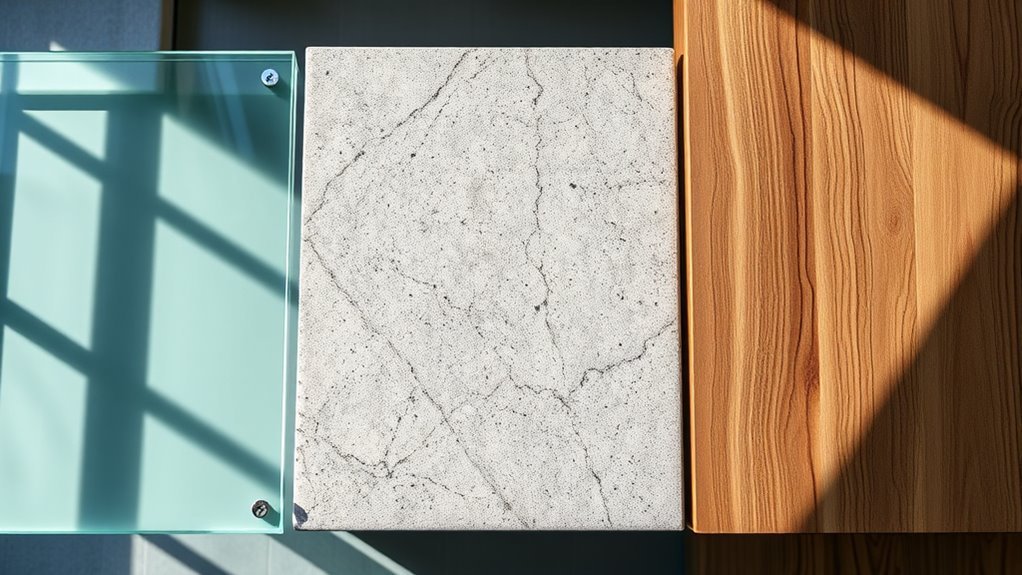
When choosing between glass, stone, and wood tabletops, consider durability, maintenance, and aesthetics. Glass offers a modern look but needs frequent cleaning and is prone to scratches. Stone, like marble and granite, is heat and scratch resistant, requiring occasional sealing. Wood adds warmth and character but demands more care due to moisture sensitivity. Each material has its unique qualities, aligning with various styles. To make the best choice, explore how each option can complement your space further.
Key Considerations for Choosing the Right Material
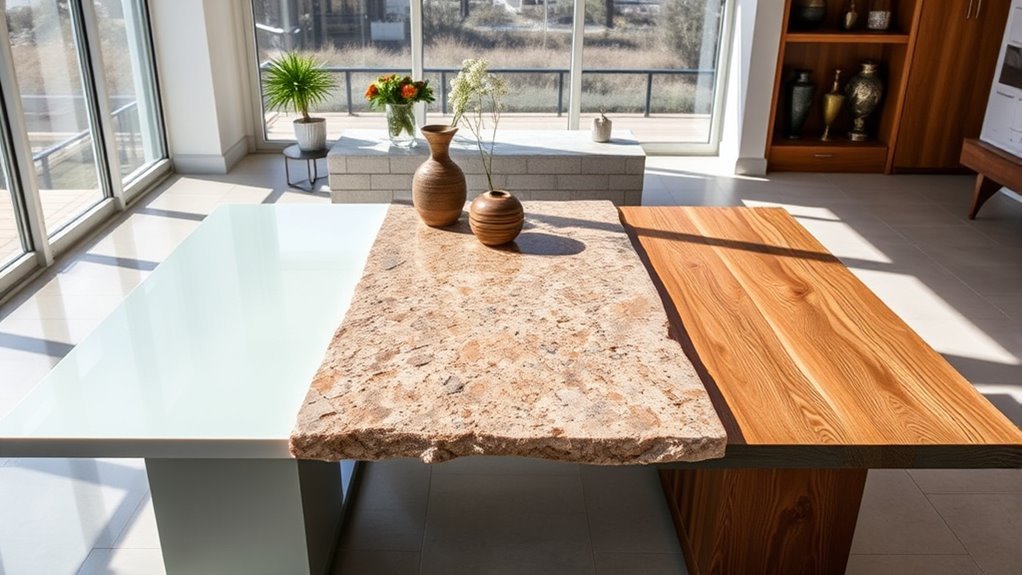
When you’re choosing a tabletop material, it’s crucial to assess how it fits your lifestyle and aesthetic preferences. Durability plays a significant role—glass tabletops, while modern and spacious, are prone to breakage and require constant cleaning to maintain their sleek appearance. In contrast, a wood dining table offers warmth with unique grain patterns but demands protective measures against moisture and scratches. Marble vs. granite presents another choice; stone is highly durable and heat-resistant yet requires proper sealing to prevent staining. Your lifestyle should guide your decision—busy households may lean towards engineered wood or sintered stone for low maintenance, whereas those seeking elegance might opt for the timeless allure of solid wood or marble, blending beauty with function.
Comparing the Benefits of Glass, Stone, and Wood Tabletops
When choosing between glass, stone, and wood tabletops, you’ll want to weigh durability against maintenance needs. Each material offers a distinct aesthetic appeal, from the sleek, modern look of glass to the timeless warmth of wood. Understanding how these factors align with your lifestyle will help you make an informed decision that enhances your space.
Durability And Maintenance Needs
While each tabletop material boasts unique aesthetics, their durability and maintenance needs considerably influence your decision-making process.
- Glass tabletops offer a sleek style but need regular cleaning to avoid fingerprints.
- Stone tabletops like marble and granite are highly durable yet require periodic sealing to prevent stains.
- Wood tables exude warmth but demand immediate attention to spills to avoid warping.
- Engineered wood, especially sintered stone, combines durability with minimal maintenance, making it ideal for busy homes.
Understanding these aspects guarantees you choose a surface that complements your lifestyle. Whether you prioritize the elegant glass table top or the robust nature of stone tabletops, knowing the maintenance requirements helps you maintain your chosen tabletop’s beauty and functionality over time.
Aesthetic Appeal And Style
Choosing the right tabletop material not only impacts functionality but also greatly influences the overall aesthetic of your dining space. Glass tabletops create an airy feel, maximizing natural light and making smaller areas appear larger. In contrast, marble stone surfaces exude luxury with their unique veining and color variations, while wood offers natural warmth and character through its unique grain patterns.
| Material | Aesthetic Appeal |
|---|---|
| Glass | Airy, spacious |
| Marble | Luxurious, unique |
| Wood | Warm, characterful |
Each material brings its own style: glass fits modern designs, marble adds opulence, and wood complements both contemporary and traditional decor, allowing you to choose what resonates with your vision.
What Are the Unique Features of Glass Tabletops?
Glass tabletops offer an elegant aesthetic appeal that effortlessly enhances your space, reflecting light and creating an airy atmosphere. Their easy maintenance requirements make them a practical choice, as you can wipe away spills without worry. Plus, their versatile design options allow them to fit seamlessly into any decor style, from sleek modern to rustic industrial.
Elegant Aesthetic Appeal
Elegance permeates the aesthetic appeal of glass tabletops, making them a popular choice for modern interiors. The transparent surface not only amplifies natural light but also creates an airy atmosphere, especially in compact spaces. Here are some unique features that elevate their charm:
- Complements various interior styles, from contemporary to industrial designs
- Highlights bold table bases and decorative elements beneath
- Offers a durable and safe glass table top with a refined look
- Provides easy to clean surfaces, minimizing maintenance needs
With their ability to blend seamlessly with other dining table materials, glass tabletops invite a sense of liberation and sophistication, making them a striking choice for those seeking visual appeal in their dining settings.
Easy Maintenance Requirements
While many tabletop materials require extensive upkeep, glass tabletops stand out for their easy maintenance requirements. You’ll appreciate how effortlessly you can wipe spills away without worrying about stains. A microfiber cloth and a suitable glass cleaner will help you achieve that coveted streak-free shine, minimizing fingerprints and dust. Plus, tempered glass is durable, designed to resist impacts and scratches, making it a low-maintenance choice. However, it can occasionally show water streaks or mineral deposits, so professional polishing might be necessary for ideal maintenance. Overall, a glass tabletop not only simplifies cleaning but also enhances your space, reflecting light and creating an airy feel, especially beneficial in compact homes. Embrace the liberating ease of glass tabletops!
Versatile Design Options
When considering tabletop options, few materials match the versatility of glass, which effortlessly adapts to various design aesthetics. A glass tabletop enhances the airy feel of a space, allowing natural light to flow and making rooms appear larger. Its unique appeal lies in:
- Clear or frosted designs that complement both modern and traditional styles
- Durable tempered glass, resistant to breaking, perfect for busy dining tables
- Lightweight construction, making rearrangement a breeze in modular setups
- Easy to wipe surfaces, simplifying maintenance and keeping your space pristine
These versatile design options not only highlight bold table bases but also offer a rejuvenating alternative to stone or wood, embodying a contemporary spirit that liberates your space.
The Benefits of Stone Tabletops
Stone tabletops, known for their remarkable durability and aesthetic charm, can transform any dining or kitchen space into a stunning focal point. Their unique veining and color variations create one-of-a-kind stone surfaces that enhance your decor. Here are some key benefits of stone tabletops:
| Benefit | Description |
|---|---|
| Heat Resistant | Withstand hot pots and pans without damage. |
| Scratch Resistant | Ideal for high-traffic areas, maintaining appearance. |
| Stain Resistant | Sintered stone offers minimal maintenance needs. |
Whether you choose granite or marble, you’ll appreciate the blend of beauty and resilience. While marble requires sealing, granite provides a more stain-resistant option. Embrace the strength and elegance of stone for your tabletop surfaces!
Why Wood Tabletops Remain a Popular Choice
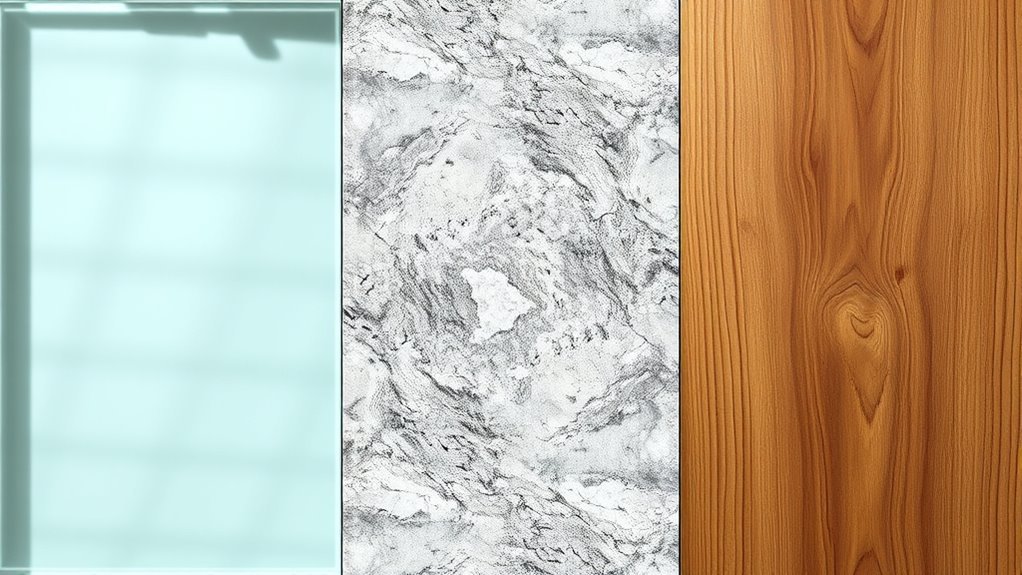
Wood tabletops have long captivated homeowners with their classic charm and organic warmth, making them a staple in dining spaces. Their enduring appeal lies in a few key factors:
- Aesthetics: The unique grain patterns and rich colors enhance any décor.
- Durability: High-quality wood can withstand years of wear and tear without losing its integrity.
- Maintenance: With regular polishing and oiling, wood retains its beauty over time.
- Refinished Value: Unlike other materials, wood can be easily refinished or repaired, ensuring long-term enjoyment.
Choosing wood means embracing a timeless choice that balances functionality and beauty. The distinct varieties, like oak and walnut, offer options to match your style, ensuring your dining space reflects your personal touch.
Comparing Durability: Glass vs. Stone vs. Wood
While each material offers unique advantages, understanding the durability of glass, stone, and wood tabletops is essential for making an informed choice.
| Material | Durability | Vulnerabilities |
|---|---|---|
| Glass Surfaces | Moderate | Breaks easily, scratches |
| Stone Tabletops | High | Requires sealing, heavy use |
| Solid Wood | High | Moisture damage, scratches |
Glass surfaces, especially tempered glass, enhance durability but still show wear. Stone tabletops excel in durability, resisting scratches and heat, though they may need sealing. Solid wood offers longevity but is prone to moisture and heat damage, requiring regular upkeep. Ultimately, your choice depends on your lifestyle and how you’ll use your tabletop.
Which Material Needs the Most Care?
When considering which tabletop material demands the most care, it’s clear that wood takes the lead. Its beauty comes with significant care requirements that can be demanding.
- Wood’s susceptibility to scratches and moisture means spills need immediate attention.
- Regular polishing and oiling are vital to maintain its luster.
- Stone tabletops, especially marble, require sealing to prevent stains and specific cleaning products to preserve their unique patterns.
- Meanwhile, a glass surface is easy to clean but shows fingerprints, needing frequent touch-ups for that pristine look.
Ultimately, while glass offers a straightforward maintenance routine, wood and stone demand more consistent efforts to guarantee their longevity and aesthetic appeal, making them the true high-maintenance choices in the tabletop world.
How to Match Tabletops With Your Home Decor
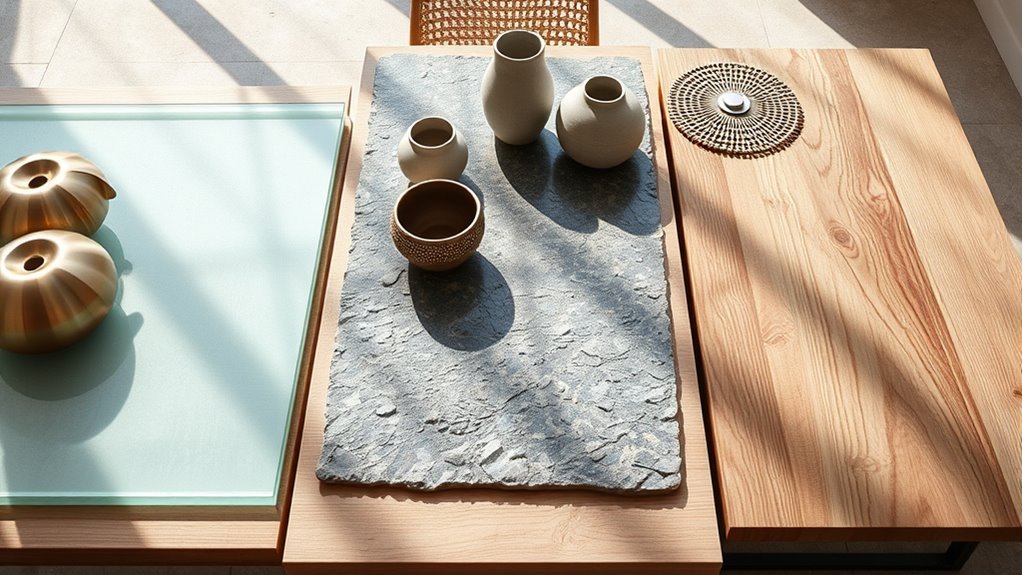
Matching tabletops with your home decor can transform a space, as the right material not only enhances aesthetics but also reflects your personal style. Consider wood for its warm aesthetic, perfect for traditional and rustic designs. A glass tabletop, on the other hand, complements modern interiors, amplifying natural light and creating openness. Stone tabletops, like marble, add elegance but require maintenance. Mixed-material designs offer versatility, allowing you to blend styles effortlessly.
| Material | Aesthetic | Ideal Setting |
|---|---|---|
| Wood | Warm & Inviting | Rustic & Traditional |
| Glass | Modern & Minimalist | Contemporary Spaces |
| Stone | Elegant & Luxe | Formal Dining Environments |
Choose wisely to create harmony in your space.
Making Your Final Decision: Choosing the Right Tabletop for You
How do you determine the perfect tabletop for your space? Your choice hinges on lifestyle, aesthetics, and maintenance. Consider these factors:
- Wood: Timeless warmth, easily refinished, ideal for traditional settings.
- Glass table top: Modern look, creates space illusions, but requires frequent cleaning.
- Marble table tops: Luxurious and durable, yet heavy and needs sealing for stain prevention.
- Durability vs. Maintenance: Families may prefer engineered materials for resilience, while those valuing elegance might choose wood or stone.
Ultimately, think about your dining space’s needs and how each material aligns with your daily life. This thoughtful approach will lead you to a tabletop that not only complements your decor but also enriches your everyday experiences.
Frequently Asked Questions
Which Is Better, a Glass or Wood Dining Table?
Choosing between a glass or wood dining table depends on your style. Wood aesthetics provide warmth, while glass offers design versatility. Consider durability, maintenance, heat resistance, and cost factors to find your ideal match.
Which Material Is Best for Table Top?
For your tabletop, consider glass for modern design aesthetics and easy cleaning, stone for durability and heat resistance, or wood for warmth and charm. Each has unique maintenance tips, costs, and environmental impacts worth exploring.
What Is the Most Durable Surface for a Dining Table?
For durability, sintered stone outperforms others, offering excellent scratch resistance and heat tolerance with minimal maintenance. While it may come at a higher cost, its aesthetic appeal justifies the investment for a long-lasting dining experience.
Is It a Good Idea to Put a Glass Top on a Wood Table?
Placing a glass top on your wood table can enhance its beauty while offering protection. However, consider glass maintenance tips and heat resistance issues; balance aesthetics with practicality to guarantee durability and visual harmony in your space.
Conclusion
Ultimately, choosing the right tabletop material hinges on your lifestyle and aesthetic preferences. Glass offers a sleek, modern look, while stone boasts durability and elegance. Wood, with its warmth, remains a timeless favorite. But which of these surfaces aligns best with your daily needs and decor vision? By weighing the unique features and care requirements of each option, you can confidently select a tabletop that not only enhances your space but also complements your way of life.

Leave a Reply