
Curtains and drapes are your secret weapon for controlling room temperature. They insulate against heat in summer and retain warmth in winter, cutting down your energy bills considerably. By choosing thermal fabrics and hanging them properly, you can block drafts and enhance comfort. Make sure your curtains extend beyond the window frame for maximum efficiency, and consider layering for even better results. Keep going to discover more tips on how to make your space as cozy as possible!
Struggling With Room Temperature? Discover How Curtains Can Help
If you’re struggling to maintain a comfortable room temperature, curtains might just be your secret weapon. The right curtains can transform your space, acting as powerful insulators against the elements. Blackout curtains are especially effective, blocking sunlight and reducing heat buildup in the summer, which can lower your cooling costs by up to 25%. Lined curtains enhance energy efficiency by trapping air and minimizing drafts, creating a stable indoor environment. Remember, the color and fabric matter too; lighter hues reflect sunlight, while darker fabrics absorb heat. By hanging curtains that extend beyond the window frame, you’ll prevent air leaks and maximize comfort. Embrace the liberation that comes with the perfect curtains, and let your home shine in thermal harmony!
The Science Behind Thermal Insulation in Curtains
When it comes to keeping your home comfortable, understanding the types of thermal fabrics can make all the difference. These materials aren’t just about looks; they play a key role in insulation, blocking drafts and regulating indoor temperatures. By choosing the right curtains, you can boost your energy efficiency and save on those heating and cooling bills.
Types of Thermal Fabrics
Choosing the right thermal fabric for your curtains can make a significant difference in your home’s comfort and energy efficiency. These thermal fabrics contain insulating layers that minimize heat transfer, keeping your space cozy. With options like heavy polyester, velvet, and tightly woven cotton, you can enjoy both style and functionality. Many curtains also feature blackout lining, providing extra insulation against temperature fluctuations.
| Fabric Type | Insulating Layers | R-Value Range |
|---|---|---|
| Heavy Polyester | Yes | 3-5 |
| Velvet | Yes | 3-5 |
| Tightly Woven Cotton | Yes | 3-5 |
Insulation Properties Explained
Understanding the insulation properties of curtains and drapes can transform your approach to home comfort and energy efficiency. By choosing the right curtains, you can considerably reduce heat loss—studies show up to 25% in winter. Opt for heavier fabrics like velvet or those with thermal backing, as they provide superior thermal insulation compared to lighter options. Adding blackout linings not only enhances light control but also boosts insulation, helping maintain ideal room temperatures year-round. In summer, insulated curtains reflect sunlight, cutting reliance on air conditioning and lowering energy bills by 10% or more. Embrace the power of curtains to liberate your living space from uncomfortable temperatures while saving on energy costs.
Energy Efficiency Benefits
While it might seem like a simple decor choice, the right curtains can dramatically impact your energy bills and home comfort. Energy-efficient curtains, like thermal and blackout options, are game changers. They can reduce heat loss in winter by up to 25%, keeping your room feel cozy and warm. By blocking sunlight, blackout curtains help lower cooling costs during summer, letting you embrace natural light without the heat. The color of your curtains matters too—darker shades absorb warmth when it’s chilly, while lighter ones reflect sunlight in the heat. By investing in these smart choices, you not only enhance your home’s aesthetic but also liberate yourself from soaring energy costs, creating a more comfortable living environment.
Selecting Thermal Curtains for Optimal Temperature Control
When you’re looking to enhance your home’s energy efficiency and comfort, selecting the right thermal curtains can make all the difference. Opt for curtains made with insulating materials and a minimum weight of 300 grams per square meter (GSM) for peak performance. Dark-colored thermal curtains are particularly effective, as they absorb heat during the day, helping maintain a cozy atmosphere in colder months. These curtains can block up to 99% of harmful UV rays, protecting your furniture while enhancing temperature control. By minimizing reliance on heating and cooling systems, you could save up to 30% on energy costs annually. Choose wisely, and you’ll enjoy a liberated, comfortable living space year-round.
Measuring Windows for Optimal Curtain Coverage
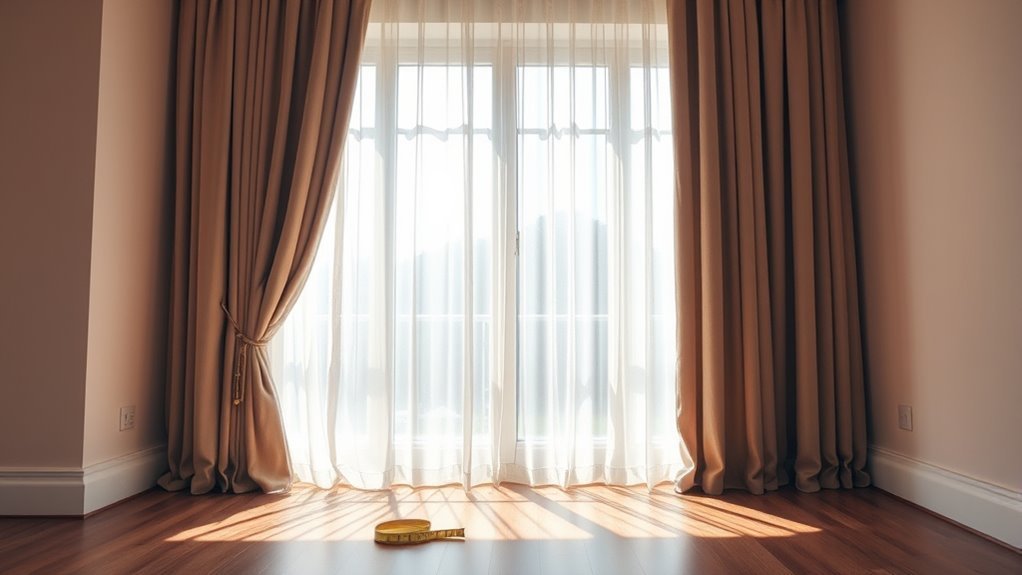
Getting the right fit for your curtains starts with accurate measurements, ensuring they cover your windows effectively and enhance energy efficiency. Begin by measuring the width of your window frame, adding 4 to 10 inches for ideal rod placement. For ideal fullness, aim for curtain panels that are 2 to 2.5 times the window width. Next, determine the proper height by measuring from the floor to where you want the rod, keeping curtains hovering about ½ inch above the ground for a polished look. Use a measuring tool for precision and round up to the nearest standard curtain length, like 84” or 96”. With these steps, your curtains will hang beautifully, creating a liberating atmosphere while regulating temperature.
Hang Curtains Right to Boost Energy Efficiency
To maximize the energy efficiency of your home, the way you hang your curtains plays a pivotal role. When you hang curtains close to the ceiling, they create the illusion of height while trapping air to improve insulation. Opt for curtains that extend beyond the window frame by 6 to 12 inches to block drafts and shield your indoor climate from external temperatures. Layering curtains with thermal linings can dramatically reduce heat transfer, keeping your space cozy in winter and cool in summer. Choose heavier fabrics like velvet to enhance insulation further. Remember, floor-length curtains that graze the floor can effectively prevent cold drafts, ensuring your energy efficiency soars and your bills stay low.
The Impact of Curtain Length on Temperature Regulation
When it comes to regulating your room’s temperature, the length of your curtains plays a vital role. Short curtains might leave you battling drafts and temperature fluctuations, while long curtains can create a cozy barrier against the elements. By choosing floor-length options, you not only enhance energy efficiency but also transform your space into a more comfortable haven.
Short Curtains, Higher Temperatures
Short curtains might seem like a stylish choice, but they can considerably raise indoor temperatures, especially during those sweltering summer months. Here are three reasons why you should reconsider:
- Increased Sunlight: Short curtains let more sunlight flood in, driving up indoor temperatures during peak hours.
- Poor Insulation: They fail to effectively block heat, leading to a greater reliance on air conditioning, which isn’t energy-efficient.
- Temperature Fluctuations: The lack of insulation can make your rooms colder in winter, resulting in uncomfortable living conditions.
If you’re looking for a more comfortable and energy-efficient home, longer curtains could be your best ally in creating a barrier against external temperature changes. Embrace the freedom of a well-regulated indoor climate!
Long Curtains, Energy Efficiency
Long curtains can be a game-changer for your home’s energy efficiency, transforming not just aesthetics but also comfort. By acting as thermal insulators, these window treatments keep your space cozy in winter and cool during summer. With the right material, you can reduce heat transfer considerably, enhancing energy efficiency by up to 25%.
Here’s a quick look at how different factors contribute to energy savings:
| Curtain Length | Insulation Quality | Energy Savings |
|---|---|---|
| Floor-Length | High | Up to 25% |
| Mid-Length | Moderate | 10-15% |
| Short | Low | Minimal |
| Heavier Fabrics | Best | Ideal Savings |
| Lighter Fabrics | Low | Minimal |
Investing in long curtains is a simple yet effective way to liberate your home from high energy costs.
Layering Techniques for Improved Insulation
While many overlook the impact of window treatments on energy efficiency, layering curtains can be a game-changer for your home’s insulation. Embracing this technique not only enhances comfort but also liberates you from skyrocketing energy bills. Here are three effective layering techniques:
- Combine sheer curtains with heavier drapes: This balance allows light diffusion while ensuring insulation, effectively regulating temperature.
- Add thermal or blackout liners: These liners considerably reduce heat loss in winter and keep your space cooler in summer, enhancing overall energy efficiency.
- Opt for double-layered designs: This approach provides extra air insulation, minimizing drafts and outdoor temperature impact.
With the right layering, you’ll enjoy a cozy home while saving up to 25% on heating and cooling costs.
Tips for Maintaining Effective Curtains
To guarantee your curtains remain effective in regulating room temperature, it’s essential to maintain them properly. Start by choosing blackout curtains to block sunlight and keep your space cooler. For winter, opt for thermal-lined drapes that enhance insulation. Regularly clean your curtains to prevent dust buildup that can hinder their performance. When hanging, place your curtain rods several inches above the window and extend the rod beyond the frame to maximize coverage and block drafts. Use sturdy curtain brackets to secure them effectively. Finally, make sure your curtains touch the floor to minimize any gaps that let cold air seep in or warm air escape. With these tips, you’ll create a cozy, energy-efficient haven in your home.
Current Trends in Energy-Efficient Curtain Designs
As you explore the latest trends in energy-efficient curtain designs, you’ll discover a range of innovative options that not only enhance your home’s aesthetics but also contribute to significant energy savings. Here are three exciting trends to contemplate:
- Thermal Lining: These curtains reduce heat loss by up to 25%, keeping your space cozy in winter and cool in summer.
- Blackout Curtains: By blocking sunlight, they help lower indoor temperatures, making them perfect for sunny climates.
- Eco-Friendly Materials: Designs using organic cotton and recycled fabrics not only boost energy efficiency but also support sustainable living.
Investing in insulated drapery can lead to impressive energy savings, potentially slashing your heating and cooling costs by 10-15%. Embrace these designs for a more comfortable, eco-conscious home!
Frequently Asked Questions
What Is the Correct Way to Put Curtains?
To put up curtains, choose your fabric and type, then hang them using rods positioned above the frame. Opt for lengths that touch the floor and style them with fullness for a chic, liberated look!
What Is the Current Trend for Curtains?
Modern fabric trends embrace energy efficiency through sustainable materials, featuring earthy color choices. Layering techniques with diverse curtain styles offer versatility, inviting you to transform your space into a sanctuary of comfort and elegance.
What Are the Common Mistakes in Hanging Curtains?
Avoid common mistakes like incorrect curtain length, poor fabric choice, and improper rod placement. Confirm your mounting height complements your style coordination for an inviting window treatment that liberates your space and enhances its elegance.
How Many Curtains for a 72 Inch Window?
For a 72-inch window, you’ll need two curtain panels, ideally 84 inches long. Choose fabrics with insulation properties, vibrant colors, and easy maintenance. Explore diverse hanging styles for a liberated, stylish space that feels uniquely yours.
Conclusion
Incorporating the right curtains can be like wrapping your room in a cozy blanket, transforming your space into a temperature-controlled haven. By understanding how thermal insulation works and choosing the right materials, you can greatly enhance your home’s energy efficiency. With a few smart choices in curtain length and layering, you’ll not only stay comfortable but also reduce energy costs. So go ahead, harness the power of curtains and drapes to create the perfect atmosphere in your home!

Leave a Reply