
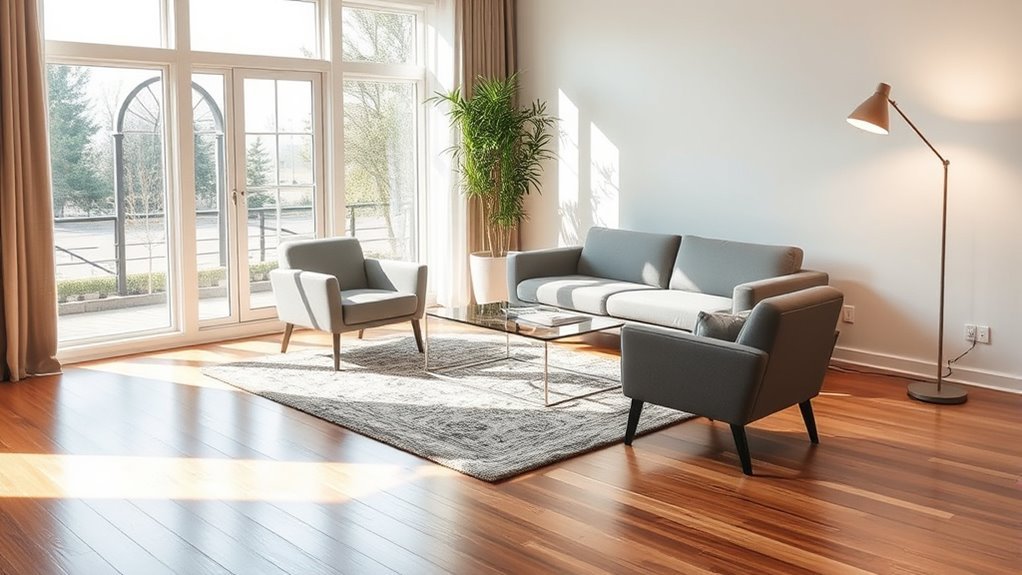
To arrange your furniture without pushing everything against the wall, start by choosing a focal point, like a fireplace or artwork. Arrange your seating around it for intimacy and conversation. Consider floating your couch, leaving 30-36 inches for smooth traffic flow. Keep coffee tables within 18 inches of seating and guarantee there’s enough room for movement. Layer your lighting for ambiance and use area rugs to define spaces. Discover more insightful tips to enhance your living room’s appeal.
Understanding the Importance of Furniture Placement
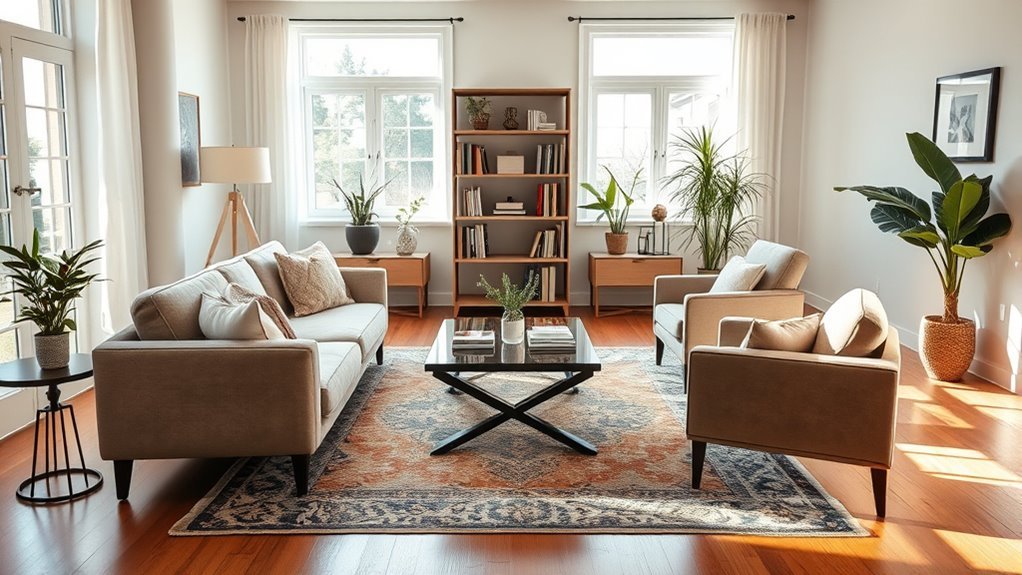
When you consider how much time you spend in your living spaces, it becomes clear that furniture placement is more than just an aesthetic choice; it’s an important element that shapes your daily experiences. Thoughtful arranging of furniture can transform your living space into a cozy retreat. By pulling pieces away from walls, you foster intimacy, encouraging connections and conversations. A well-planned furniture layout enhances traffic flow, creating clear pathways that invite movement and accessibility. Positioning your furniture around a focal point unifies the design, giving purpose to the arrangement. Remember, balancing the scale of your pieces is vital; larger items should anchor the space while smaller ones add charm. Embrace the power of intentional furniture placement to elevate your environment.
Common Mistakes to Avoid in Furniture Arrangement
When arranging your furniture, it’s tempting to push everything against the walls, but this can make your space feel flat and uninviting. Don’t overlook the natural flow of movement; ignoring how people navigate through the room can lead to awkward obstacles and discomfort. By considering these common missteps, you can transform your room into a more functional and welcoming environment.
Furniture Against Walls
Arranging furniture against the walls is a common mistake that can leave your living space feeling flat and uninviting. This layout limits your seating area and reduces functionality, creating a waiting-room vibe instead of a cozy retreat. Instead, consider floating furniture away from the walls to encourage conversation and define distinct zones within your living room layouts. By doing so, you’ll create a clear path for movement and enhance the room’s openness. Maintaining a few inches of space behind your pieces promotes air circulation and adds depth to the room. Don’t forget to use area rugs to anchor your floating furniture, visually defining those inviting seating areas and fostering a warm, engaging ambiance.
Ignoring Traffic Flow
Ignoring traffic flow in your furniture arrangement can create a surprisingly detrimental impact on your living space. When you overlook how people navigate through your room, you risk creating congestion that stifles comfortable movement. Guests may feel subconsciously tense, detracting from your space’s inviting feel. To guarantee clear movement and maximum usability, consider these key points:
- Maintain 30 to 36 inches between major furniture pieces for comfortable movement.
- Support natural pathways from entrances to seating areas, enhancing accessibility.
- Avoid overcrowding to preserve an open atmosphere and usable space.
Choosing a Focal Point for Your Living Room
A well-defined focal point can transform your living room from a mere collection of furniture into a cohesive and inviting space. Look for natural features like a fireplace or window, or create one with a standout piece, such as an eye-catching artwork or an impressive media console. This focal point should guide your furniture arrangement, ensuring that everything aligns purposefully around it. By doing so, you maintain visual interest and avoid chaotic layouts. Remember, selecting appropriately scaled furniture is essential; oversized items can overshadow your focal point, while too-small pieces may lack impact. A well-chosen focal point not only anchors your room but also elevates your design, making your living space feel harmonious and liberated.
The Benefits of Floating Your Couch for Space
Floating your couch transforms your living space into an inviting haven that encourages interaction. By moving it away from the wall, you not only create a better flow but also craft a more functional seating arrangement that feels open and airy. This simple shift helps define zones in the room, making it easier for guests to engage and relax.
Enhanced Room Flow
When you choose to float your couch instead of pushing it against the walls, you instantly transform the atmosphere of your room into something more inviting and spacious. This arrangement not only enhances room flow but also fosters intimacy. Here are three key benefits:
- Defined Seating Area: Ground your floating furniture with a well-sized area rug to visually separate the seating zone, making it feel more cohesive.
- Increased Light Distribution: By avoiding the walls, you allow natural light to penetrate deeper into the space, creating a brighter environment.
- Enhanced Conversation Areas: Face your seating towards one another, promoting engaging interactions and a vibrant atmosphere.
Embrace the freedom of movement and breathe new life into your home’s layout!
Improved Seating Arrangement
Transforming your living space begins with a simple yet powerful shift: floating your couch. This strategic move enhances your seating arrangement by creating an inviting atmosphere, perfect for intimate conversations. By grounding your floating couch with a rug, you effectively define the space while adding visual depth, making the room feel larger and more open. Maintaining a few inches behind the couch promotes better airflow, granting your space the breathing room it craves. Consider adding decorative throws to the back of your couch; they not only enhance its appearance but also contribute to the overall design. Whether in an indoor or outdoor living room, floating furniture pieces can alleviate heaviness, creating a harmonious, liberated layout that welcomes connection.
How to Ensure Smooth Traffic Flow in Your Living Room?
How can you create a living room that feels open and inviting, while still being functional? Ensuring smooth traffic flow is key to a liberated living space. Here’s how you can achieve that:
Creating an open and inviting living room requires careful arrangement for smooth traffic flow and easy access.
- Maintain walking space: Keep 30 to 36 inches between major furniture pieces, allowing comfortable movement.
- Create clear paths: Arrange furniture to facilitate easy access from entrances to seating areas, avoiding any obstacles.
- Position tables wisely: Place coffee tables and side tables at least 18 inches from seating to enable effortless access without obstruction.
Choosing the Right Rugs for Your Space
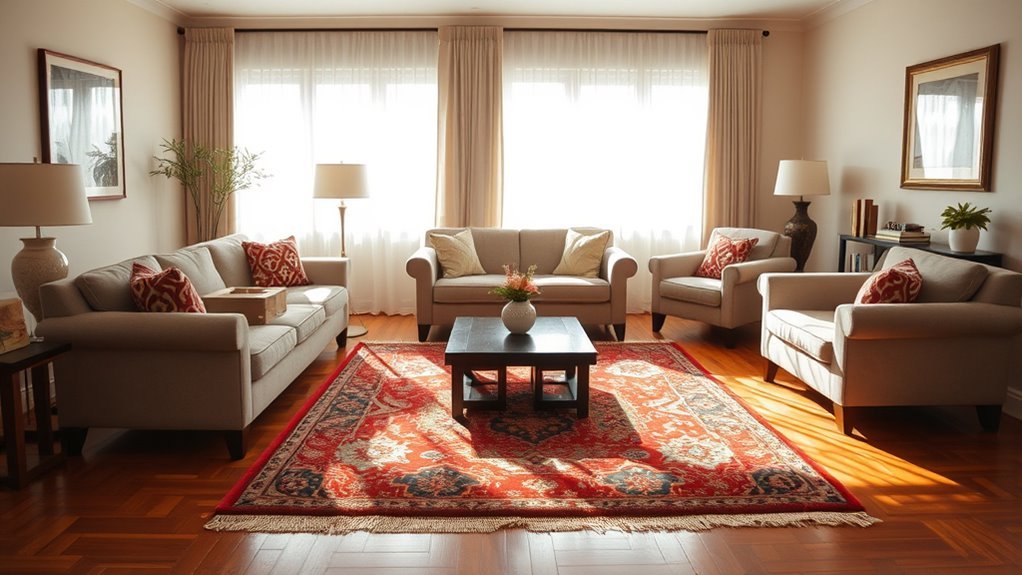
Creating an inviting living room goes beyond just furniture arrangement; the right rugs play a significant role in defining your space. To achieve a cohesive look, select rugs that fit under all your furniture in the seating area or at least allow the front legs of larger pieces to rest on them. The size of the room dictates the rug’s dimensions, anchoring your seating area visually. Pay attention to thickness and texture, as they enhance comfort and style. In larger spaces, complementary rugs can delineate functional zones, improving organization. Make certain your rugs allow for smooth traffic flow, keeping walkways clear to prevent accidents and enhance the overall inviting atmosphere of your home.
Effectively Use Coffee Tables and Side Tables
When arranging your living space, coffee tables and side tables play a pivotal role in both functionality and aesthetics. You’ll want to choose a coffee table that not only complements your seating but also serves as a practical anchor for your gathering area, while side tables should be easily accessible for your guests. Consider options that offer storage or a stylish display, ensuring every piece supports the overall flow and comfort of your room.
Coffee Table Size Matters
Finding the perfect coffee table can transform your living space, making it not just functional but also visually appealing. A well-chosen table enhances your seating area and creates a harmonious flow. Here are three key considerations:
- Distance Matters: Keep your coffee table about 18 inches from your seating for ideal accessibility and comfort.
- Size Balance: Aim for a coffee table that’s two-thirds the length of your sofa. This balance enhances the visual effect and makes your arrangement feel cohesive.
- Multi-Functional Design: In a small space, opt for coffee tables with built-in storage. This adds functionality without cluttering your environment, allowing for a clean, liberated aesthetic.
Side Table Accessibility Tips
Having a well-placed side table can greatly enhance your living space’s functionality and comfort. Make sure every seat has a side table or coffee table within arm’s reach, ideally no more than 18 inches away. Select tables that match your seating height, ranging from 20 to 30 inches, for easy access. Consider multifunctional furniture like nesting tables or ottomans—they provide surfaces and extra seating while keeping your space flexible.
Here’s a quick reference to optimize your side table setup:
| Tip | Details | Purpose |
|---|---|---|
| Clear Pathway | Maintain 30 inches between tables | Facilitate movement |
| Organize Items | Use decorative trays | Keep surfaces tidy and appealing |
| Height Compatibility | Match with seating | Enhance accessibility |
With these tips, you’ll create a welcoming, organized environment.
Multi-Functional Table Options
Arranging your living space with furniture that serves multiple purposes can greatly enhance both its functionality and aesthetic appeal. Multi-functional tables provide not just utility but also style. Consider these options to elevate your space:
- Multi-functional coffee tables: These can double as storage units, hiding blankets or magazines while serving snacks and drinks.
- Stacked nesting tables: Perfect for additional seating, they can be compactly stored when not in use, maximizing your area’s efficiency.
- Ottomans with removable tops: They offer extra seating and clever storage for items like toys or remotes.
When selecting these pieces, make sure they’re appropriately scaled to your overall layout, creating harmony and balance in your living space. Embrace the freedom of versatility!
Layering Lighting for Better Furniture Arrangement
When you layer lighting in your space, you not only enhance the functionality of your furniture arrangement but also create an inviting atmosphere that draws people in. Incorporate ambient, task, and accent lighting to establish a well-lit environment that highlights your furniture’s beauty. Strategically positioned floor lamps and wall sconces near seating areas enhance usability, making it easy for guests to read or engage in conversation. Consider how natural light can complement your design, adding to the spacious feel. Don’t forget to include dimmers; they allow you to adjust the mood, shifting from bright and energetic to soft and cozy. This layered lighting approach helps create a versatile atmosphere that welcomes everyone into your home.
Make Your Space Feel Like Home With Personal Touches
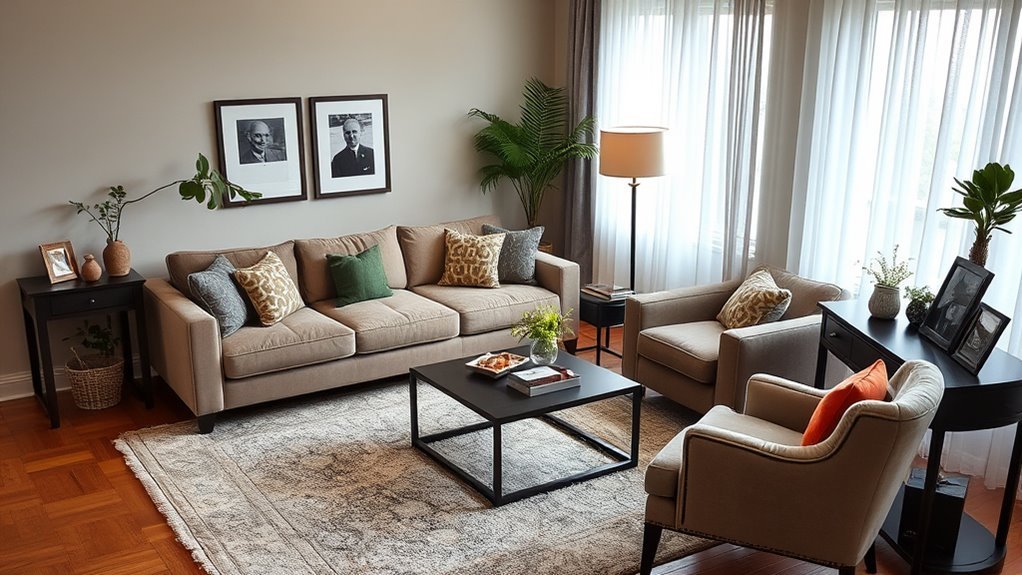
Creating a warm and inviting atmosphere in your home goes beyond just furniture arrangement and lighting; it’s about infusing your personality into the space. To make your home feel uniquely yours, consider these personal touches:
- Incorporate personal items: Family photos, souvenirs, and meaningful artwork enhance your unique style while making the space feel intimate.
- Balance functional decor: Choose decorative items that serve a purpose, ensuring they align with your overall design and color palette.
- Refresh your decor: Regularly update your space with new personal items or seasonal accents to keep it engaging and vibrant.
Creating Defined Zones to Enhance Functionality
To truly enhance the functionality of your living space, it’s essential to define distinct zones that cater to various activities, from relaxation to socializing. Start by creating zones using area rugs to visually separate each space, ensuring an open flow while maintaining a cohesive feel. Consider your furniture arrangements—place sofas facing each other to encourage conversation, or use console tables as dividers between areas. Multi-functional furniture, like storage ottomans or nesting tables, maximizes efficiency across these defined areas. Finally, establish focal points within each zone, such as striking artwork or unique lighting, to draw attention and elevate the room’s aesthetic. This thoughtful approach transforms your living space into a harmonious, functional retreat.
Frequently Asked Questions
What Is the 2/3 Rule Furniture?
The 2/3 rule in furniture arrangement helps you create visual balance by utilizing two-thirds for functional spaces and one-third for flow. This enhances focal points, lighting effects, and texture variety, reflecting your personal style beautifully.
How to Keep Furniture From Moving When Not up Against a Wall?
To keep furniture stable, use non-slip pads and weighted bases. Furniture anchors create a solid foundation while thoughtful room layouts enhance aesthetic balance, ensuring your arrangements remain vibrant and free from unwanted movement.
What Is the 3-5-7 Rule of Decorating?
The 3-5-7 rule enhances your space by arranging three focal points, incorporating five varied elements for visual balance, and layering seven design aspects to guarantee style cohesion, color harmony, and effective space utilization for ideal room flow.
What Is the 2 3 Rule for Walls?
The 2-3 rule for walls encourages clever furniture placement, enhancing interior design. By leaving 2-3 inches between walls and furnishings, you promote space utilization, visual balance, and comfort, creating a welcoming and functional room layout.
Conclusion
As you step back and admire your newly arranged space, you might just feel a spark of inspiration. Everything is in its place, yet it’s only the beginning. What if each piece tells a story? What if the way you’ve arranged your furniture transforms not just your room, but your entire experience at home? Embrace this fresh perspective, and let your creativity flow—because the real magic lies in discovering how each element can deepen your connection to your space.

Leave a Reply