
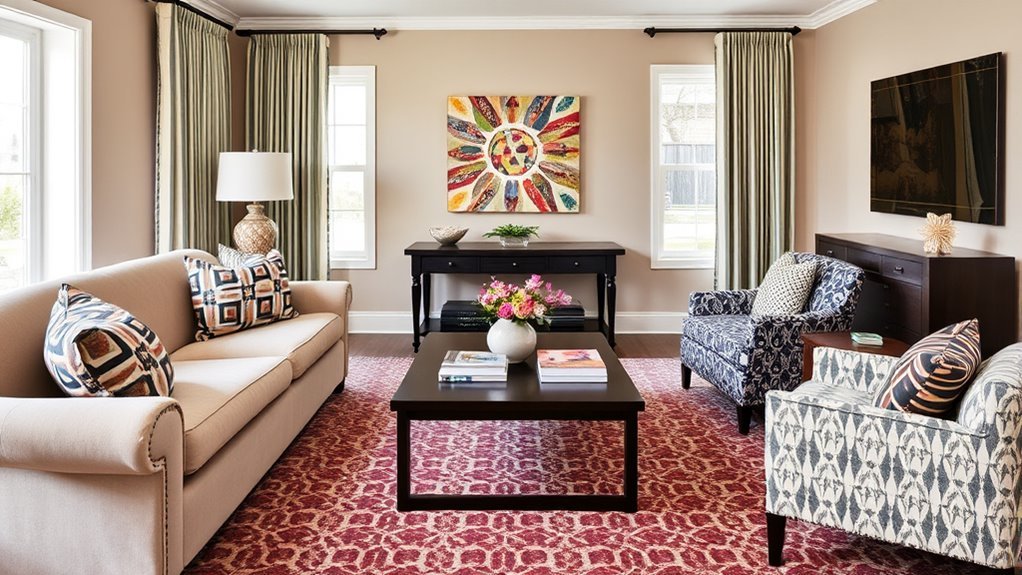
To balance patterns with solids in your living room, start with a neutral base that sets a calm tone. Choose a dominant pattern, like a bold rug or sofa, to anchor the space. Then, select solid colors that complement this pattern, keeping it cohesive. Mix in patterns of different scales to create visual interest, and don’t forget to incorporate textures for added depth. Finally, sprinkle in smaller patterns to bring everything together, and keep exploring for even more creative ideas.
Start With a Neutral Base for Your Living Room
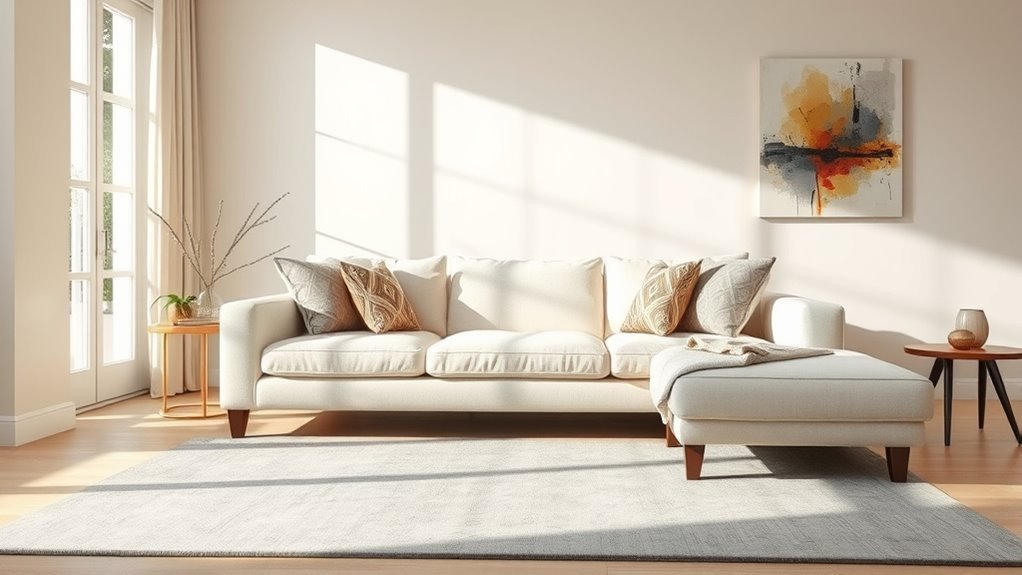
When you start with a neutral base for your living room, you create a canvas that invites creativity and versatility. Shades like white, beige, or gray serve as a backdrop, allowing vibrant patterns in a room to take center stage without overwhelming your space. This balanced foundation fosters visual interest, making it easy to mix different textures and designs. You’ll find that the calming effect of neutral colors maintains cohesion, enabling bolder patterns to shine while contributing to an inviting atmosphere. With this approach, you liberate your design choices, transforming your living room into a harmonious blend of elegance and excitement. Embrace the freedom a neutral palette offers, and watch your patterned elements come alive!
Select a Dominant Pattern as Your Focal Point
A striking pattern can transform your living room, serving as an enchanting focal point that draws the eye and sets the tone for the entire space. Choose a dominant pattern for larger elements like furniture or rugs to establish a visual anchor. This pattern should reflect your desired mood—bold for energy or soft for serenity.
| Aspect | Considerations |
|---|---|
| Scale | Larger patterns suit spacious areas; smaller ones fit tighter spaces. |
| Proportion | Balance bold patterns with subtle designs for contrast. |
| Cohesion | Guarantee complementary patterns share a common color palette. |
Choose Solid Colors That Enhance Your Dominant Pattern
To enhance your dominant pattern effectively, select solid colors that resonate with the hues already present in the design. Immerse yourself in your color palette and pick shades that speak to your patterns and prints, creating a seamless visual symphony. Neutrals like whites, beiges, or grays can beautifully offset bold designs, allowing your dominant pattern to shine without overpowering the space. Use a color wheel to uncover complementary or analogous colors that maintain a cohesive look. Limit your solid pieces to just two or three to avoid chaos and guarantee harmony. These chosen hues can serve as a tranquil backdrop, enriching accent items like throw pillows or artwork, weaving them into a unified aesthetic that liberates your living room’s spirit.
Mix Patterns With Different Scales for Visual Interest
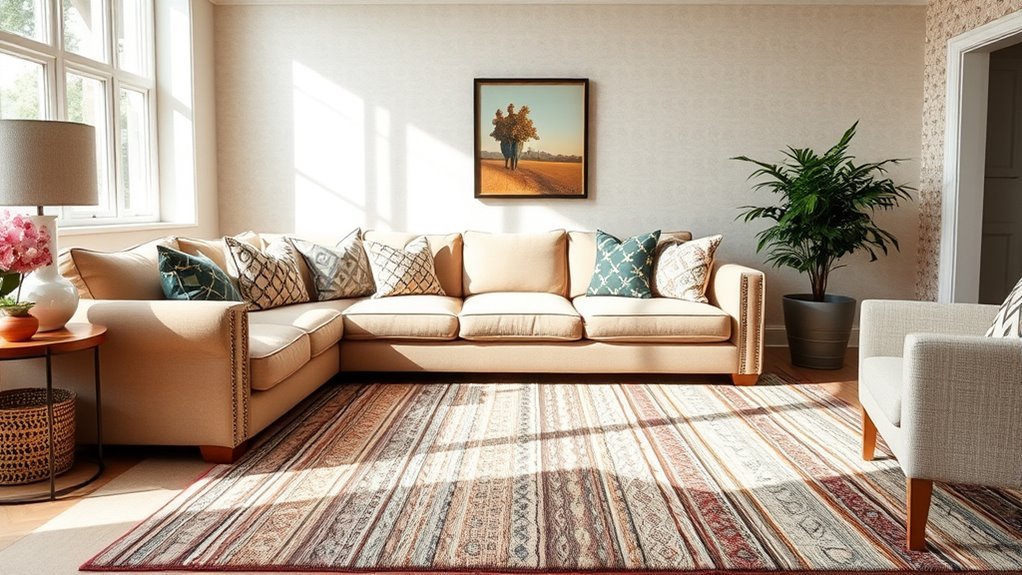
Mixing patterns of different scales can transform your living room into an enthralling visual experience, drawing the eye and sparking curiosity. By thoughtfully combining various sizes, you create a dynamic space that feels layered and sophisticated. Here’s how to master the art of mixing:
- Use large patterns on statement pieces, like your sofa or area rug.
- Incorporate smaller patterns through accessories, such as throw pillows or blankets.
- Choose one dominant “showstopper” fabric, then add smaller patterns that share similar colors for harmony.
- Varying the scale will maintain cohesion while preventing clutter.
This approach invites exploration, ensuring your living room captivates and inspires every guest. So, embrace the rhythm of mixing patterns and let your creativity flow!
Use Textures to Make Your Design Pop
While patterns can captivate the eye, it’s the textures that truly bring your living room to life. By incorporating textures like chunky knits, luxurious velvet, or smooth leather, you add visual interest without overwhelming bold patterns. Textured accessories—think throw pillows and cozy blankets—keep the eye engaged while maintaining harmony. Layering different textures alongside solid colors balances busy designs, ensuring your space feels inviting and layered.
| Texture Type | Effect on Design |
|---|---|
| Chunky Knits | Adds warmth and coziness |
| Luxurious Velvet | Introduces elegance and depth |
| Smooth Leather | Offers modern sophistication |
| Boucle | Enhances comfort with neutrality |
| Textured Pillows | Provides subtle visual intrigue |
Embrace textures as your “non-pattern patterns” for a liberated, cohesive look!
Add Smaller Patterns for Depth
Adding smaller patterns can transform your living room by introducing layers of depth and intrigue. When you weave in subtle designs, like delicate florals or gentle stripes, you create a fascinating ambiance without overwhelming your space. Here’s how to seamlessly integrate smaller patterns for that layered look:
Transform your living room by layering in smaller patterns for depth and a captivating ambiance.
- Use small-scale patterns on accessories: throw pillows, curtains, or area rugs.
- Confirm the patterns share a common color palette with your larger solids for cohesion.
- Limit your selection to two or three distinct designs to avoid chaos.
- Embrace the contrast; smaller patterns can soften the boldness of solid pieces, enhancing visual depth.
With these steps, you’ll craft an inviting atmosphere that invites exploration and comfort.
Trust Your Instincts and Experiment With Your Space
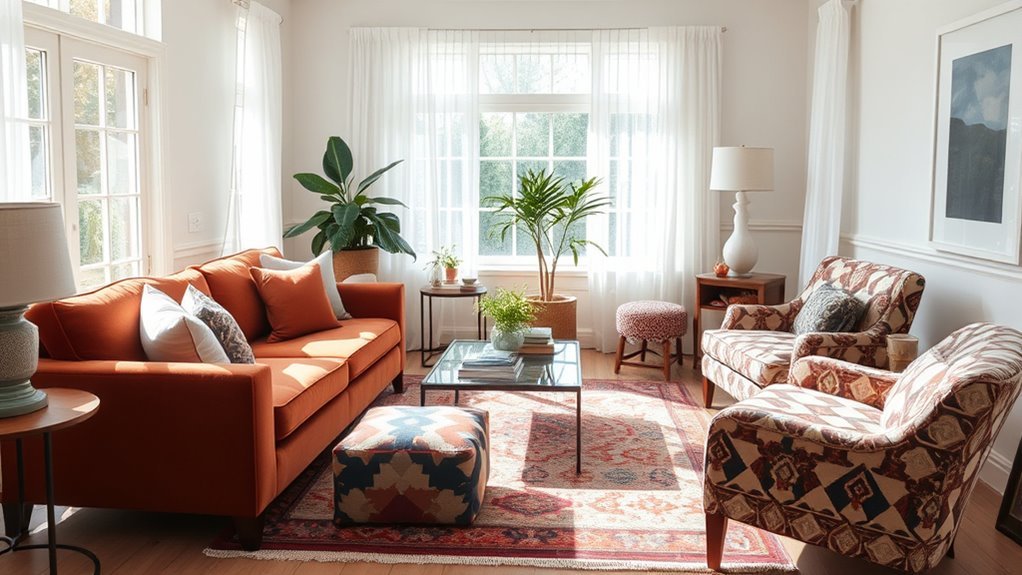
Trust your gut when it comes to patterns; your unique style is what makes your space truly yours. Experiment with different combinations, mixing bold prints with softer textures to see what resonates. Remember, this is your canvas—don’t be afraid to play around until it feels just right.
Embrace Your Creative Vision
As you immerse yourself in the world of design, let your instincts guide you in selecting patterns that resonate with your personal style. Embrace your creative vision by allowing your space to reflect your personality. Consider these tips to ignite your inspiration:
- Start with one dominant pattern and build around it with complementary solids.
- Mix larger patterns with smaller solids for a visually harmonious balance.
- Use a neutral color scheme to let your chosen patterns shine without overwhelming the room.
- Regularly evaluate your living room’s aesthetic, adjusting as necessary to maintain cohesion.
Trust your instincts, experiment boldly, and watch your living room transform into an inviting haven that celebrates your unique taste.
Test Various Combinations
While exploring the potential of your living room, you might discover that testing various combinations of patterns can lead to delightful surprises. Start by selecting a few patterned pieces, like throw pillows or a rug, and mix them with solid-colored furniture. This balance allows your patterns to pop without overwhelming your space. Don’t hesitate to experiment with different combinations; pair bold floral prints with a neutral sofa for visual interest. Trust your instincts—sometimes the most enchanting looks arise from unexpected pairings. Use a sample board to visualize how your mix patterns in interior harmonize, and continually reassess your choices as you introduce new elements. This journey will help you find a cohesive, inviting aesthetic that feels uniquely yours.
Frequently Asked Questions
How to Mix Patterns in a Living Room?
To mix patterns in your living room, experiment with bold pattern combinations and layering techniques. Embrace color coordination to create harmony, allowing each piece to shine while celebrating your unique style and personal expression.
What Is the 3-5-7 Rule in Decorating?
The 3-5-7 rule guides your decorating by blending three patterns, five colors, and seven textures. This approach embraces color theory, offers texture contrast, and achieves visual balance, allowing your space to feel vibrant yet harmonious.
What Is the 70/20/10 Rule in Interior Design?
Ever wondered how to create a harmonious space? The 70/20/10 rule in interior design balances color theory, space planning, and texture contrast, guiding you to blend dominant, secondary, and accent elements effortlessly.
What Is the 2/3 Rule for Living Rooms?
The 2/3 rule for living rooms suggests that two-thirds of your color scheme should feature solid hues, while one-third embraces patterns, guiding your furniture selection towards a harmonious balance that liberates your creative spirit.
Conclusion
By balancing patterns with solids, you create a living room that feels cohesive yet dynamic. Remember, it’s all about finding harmony—how can you express your personal style while still achieving that balance? Trust your instincts, mix in textures, and allow smaller patterns to add depth to your space. Embrace the journey of experimentation, and soon, your living room will reflect not just design principles, but also a piece of you. Let your creativity shine!

Leave a Reply