
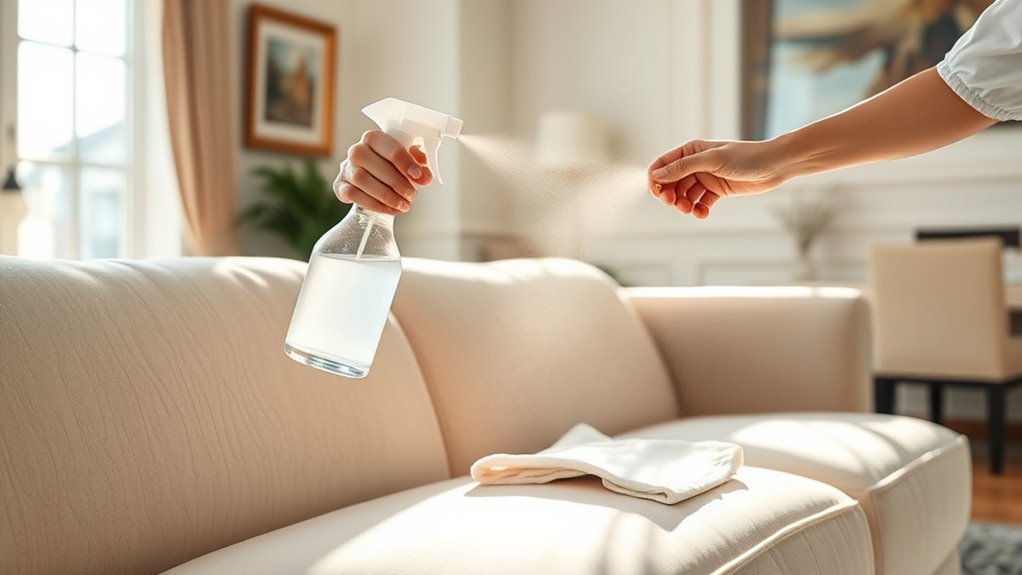
To clean your microfiber couch without leaving water stains, first, vacuum thoroughly to remove debris. Check the fabric code: “S” means use rubbing alcohol on a microfiber cloth, while “W” allows water-based cleaners. Always spot test in a hidden area. For stains, blot carefully rather than scrub, and use a baking soda paste for tougher marks. Regular maintenance helps prevent deep stains. Stick around to explore advanced stain removal techniques and long-term care tips for your couch!
How to Clean Your Microfiber Couch: A Step-by-Step Guide
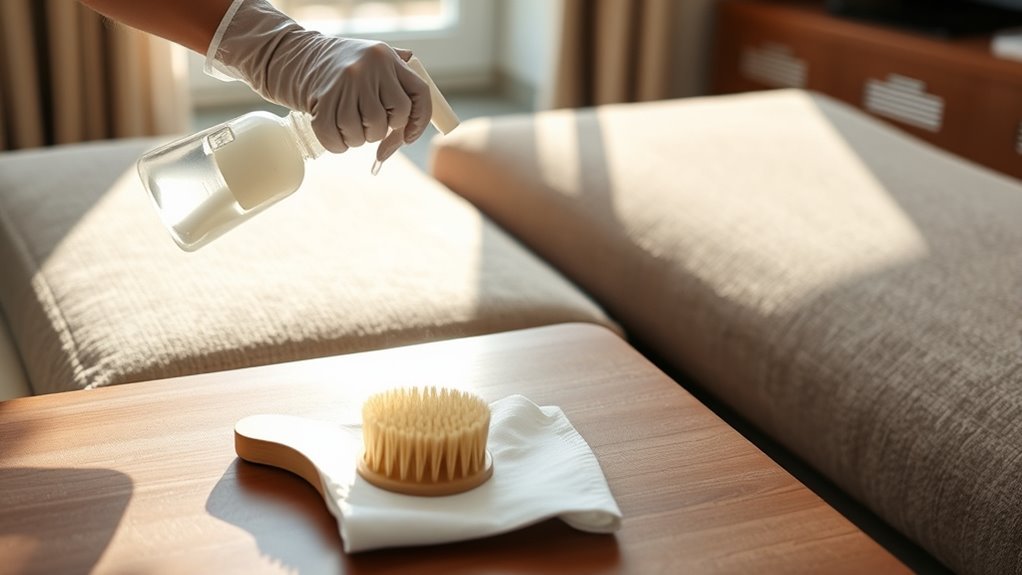
When you’re ready to tackle the cleaning of your microfiber couch, start by vacuuming it thoroughly to get rid of loose dirt, pet hair, and any debris that may have settled in the seams. Next, check the care tag for the cleaning code; this will help you choose the appropriate cleaner. If it’s an “S” code, use clear rubbing alcohol to avoid water stains. Before applying any cleaner, do a spot test on a hidden area to verify it won’t damage the fabric. For visible stains, spray the cleaner and gently blot with a clean cloth. Allow your couch to air dry completely, then use a soft-bristled brush to fluff the fabric, enhancing the overall cleaning results.
Gather Your Cleaning Supplies
Before you start the cleaning process, gather all the necessary supplies to assure a smooth and effective job. You’ll need a vacuum with an upholstery attachment to remove debris. Rubbing alcohol is essential for solvent-based cleaning, while microfiber cloths will help tackle stains without scratching the surface. A spray bottle is useful for evenly distributing your cleaning solution. Opt for distilled water in your mixtures to avoid water stains. Don’t forget baking soda; it’s great for deodorization and can absorb grease stains when made into a paste. Finally, always check the care tag on your microfiber couch for the recommended cleaning methods to assure you’re using the safest products for your fabric.
Decoding Your Couch’s Fabric Codes
How can you guarantee your microfiber couch gets the best care possible? Start by decoding the fabric codes on the care tag. Understanding these codes is essential for effective cleaning and maintaining your couch’s appearance. Here’s what to look for:
- “W”: Water-based cleaners are safe to use.
- “S”: Only solvent-based cleaners should be used.
- “SW”: Both cleaning methods are acceptable.
- “X”: Professional cleaning only, no liquids.
Using the appropriate cleaning methods corresponding to your microfiber types helps preserve fabric integrity and extend lifespan. Regularly check the care tag to avoid damaging your couch and guarantee it stays looking great for years to come.
Stain Removal Techniques After Cleaning
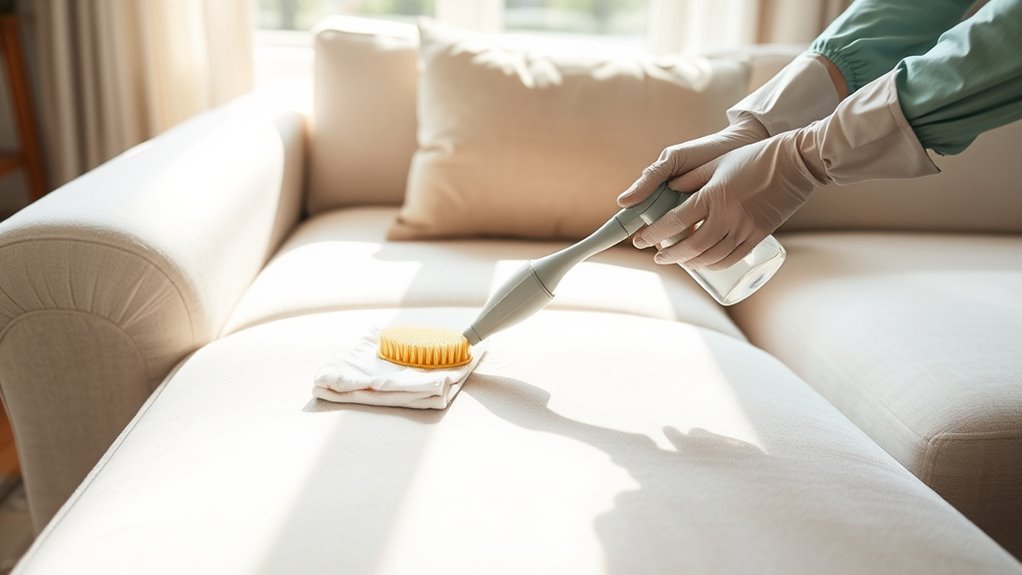
Even after a thorough cleaning, stains can still linger on your microfiber couch, requiring specific techniques for effective removal. For stubborn stains, remedies include a baking soda or cornstarch paste to absorb the stain before cleaning. This method draws out grease and odors effectively. When tackling ink stains, apply rubbing alcohol on a clean cloth, gently blotting from the outside in to avoid spreading. For pet stains, act quickly by blotting spills and using a light detergent solution, followed by sprinkling baking soda to neutralize odors. Remember, avoid scrubbing or rubbing the fabric to prevent damage. Always test any cleaning solutions on a hidden area first to verify they won’t cause water stains or harm the fabric.
Safe Disinfection and Deodorization Methods for Your Microfiber Couch
Maintaining a clean microfiber couch goes beyond just removing stains; it also involves keeping the fabric fresh and free from germs. Here are some safe disinfection and deodorization methods you can use:
- Baking Soda: Sprinkle a generous layer over the couch, let it sit for 15-30 minutes to absorb odors, and then vacuum it up.
- White Vinegar Solution: Mix equal parts white vinegar and water in a spray bottle, apply lightly with a microfiber cloth, and avoid oversaturation.
- Enzymatic Cleaners: Use these for tough pet odors, following the manufacturer’s instructions to protect the fabric.
- Air Circulation: Improve airflow in the room to prevent moisture buildup and odors.
Always remember to spot test any cleaning solutions first!
Maintenance Strategies to Keep Your Microfiber Couch Looking New
To keep your microfiber couch looking new, establish a regular vacuuming schedule to remove dirt and debris before they settle in. When stains occur, treat them promptly to prevent lasting damage to the fabric. Additionally, consider using protective covers to shield your couch from spills and wear, ensuring it stays pristine for years to come.
Regular Vacuuming Schedule
Regularly vacuuming your microfiber couch is crucial for keeping it looking new and fresh. Establish a regular vacuuming schedule by following these steps:
- Vacuum Weekly: Aim to vacuum at least once a week to remove dirt, dust, and pet hair that cause dirt buildup and wear.
- Use Upholstery Attachment: Always vacuum with an upholstery attachment to effectively clean all surfaces, including crevices where debris hides.
- Increase Frequency in High-Traffic Areas: If you have pets or a busy household, vacuum more often to maintain appearance and prevent allergens.
- Fluff Cushions: Rotate and fluff cushions weekly to guarantee even wear and avoid pushing dirt deeper, which can lead to stains or damage.
With this routine, you’ll keep your couch looking fabulous!
Prompt Stain Treatment
Even with a consistent vacuuming routine, accidents happen, and knowing how to address spills quickly can save your microfiber couch from lasting damage. When a spill occurs, promptly blot the area with a clean, dry cloth to absorb moisture and prevent stains from setting in. For wet stains, mix equal parts white vinegar and water, applying it to the stain to break down substances without leaving water marks. For dry stains, use a soft bristle brush after applying a baking soda paste to absorb oils and odors. Regularly vacuum your upholstery to eliminate dust and pet hair. Finally, consider applying a fabric protector designed for microfiber to create a barrier against future spills and stains, maintaining your couch’s pristine appearance.
Protective Covers Usage
A protective cover can be a game-changer for keeping your microfiber couch looking new and fresh. By shielding your couch from spills and stains, you’ll enhance its longevity and maintain its appearance. Here are some key strategies to take into account:
- Choose Quality Fabric Protectors: Invest in high-quality protectors that repel liquids and prevent stains.
- Use Machine-Washable Slipcovers: Simplify maintenance with covers that are easy to clean without damaging the microfiber.
- Rotate and Fluff Cushions: Regularly rotate and fluff cushions to guarantee even wear and maintain shape.
- Limit Sun Exposure: Protect your couch from direct sunlight to reduce fading and fabric deterioration.
With these tips, your microfiber couch will stay vibrant and inviting for years to come!
What to Do About Stubborn Stains on Your Microfiber Couch?
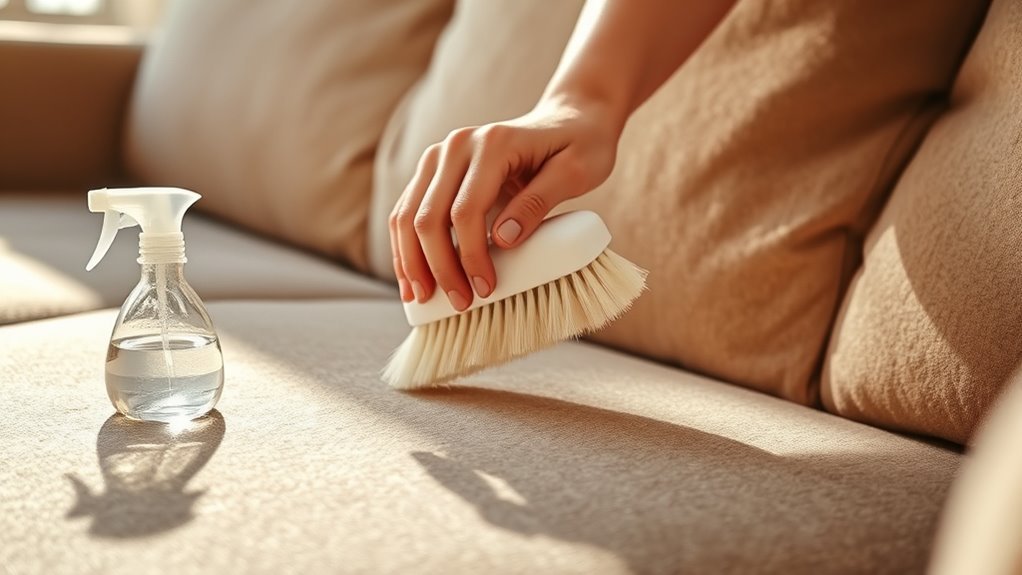
When stubborn stains mar your microfiber couch, it’s vital to act quickly and use the right approach to avoid permanent damage. First, identify the fabric code to choose the appropriate cleaning method. Immediately blot wet stains with a clean cloth to absorb excess moisture. For oil-based stains, sprinkle baking soda or cornstarch to absorb grease before vacuuming. For ink stains, use rubbing alcohol on a clean cloth, gently dabbing from the outside toward the center. For pet stains, apply a light detergent solution, blot the area, then sprinkle baking soda to neutralize odors. Always test any cleaning solution on a hidden area of the sofa first to verify it won’t damage the fabric or alter its color.
When to Seek Professional Cleaning for Your Microfiber Couch?
How can you tell when it’s time to call in the professionals for your microfiber couch? Here are four key signs to take into account:
- Persistent Stains: If home cleaning methods fail to lift stains, professional cleaning can effectively restore appearance.
- Cleaning Code “X”: Couches marked with this code shouldn’t be cleaned with liquids. Professionals have the right tools to handle them safely.
- Mold and Musty Smells: In humid climates, mold can develop. If you notice any signs, professional cleaning is essential for health and maintenance.
- Heavily Soiled: If your couch is heavily soiled, specialized equipment can thoroughly clean and revitalize your fabric.
Don’t hesitate—seeking professional help can prolong the life of your beloved couch!
Frequently Asked Questions
How to Properly Clean a Microfiber Couch?
To properly clean a microfiber couch, vacuum thoroughly, apply suitable cleaning techniques for stains, and maintain upholstery with fabric protectors. Regular care prevents pet stains, odor elimination, and color fading, ensuring lasting beauty and comfort.
How to Clean a Couch That Says No Water?
When it comes to cleaning a couch that says no water, you’ve got to use solvent-based cleaners. For stubborn pet stains, try isopropyl alcohol with DIY solutions—always test first for fabric protection and effective stain removal.
Can I Use a Little Green Machine on a Microfiber Couch?
Yes, you can use a Little Green Machine on a microfiber couch. Just make certain you choose pet-friendly, water-safe cleaning solutions, prioritize stain removal, and practice upholstery maintenance to enhance fabric protection and furniture longevity.
What Cleaner Is Safe on Microfiber?
For safe microfiber care, use clear rubbing alcohol for spot cleaning or eco-friendly cleaners designed for upholstery maintenance. Always check your couch’s fabric type, ensuring you protect it while promoting longevity with regular cleaning frequency.
Conclusion
To sum up, keeping your microfiber couch in top shape doesn’t have to be a Herculean task. By regularly maintaining it and using the right cleaning techniques, you can avoid stains and odors that could turn your comfy seating into a sad relic. Remember, a little effort goes a long way in preserving your couch’s beauty. So, grab those cleaning supplies and treat your couch like the treasure it is—after all, nobody wants a dingy sofa ruining their living room vibe!

Leave a Reply