
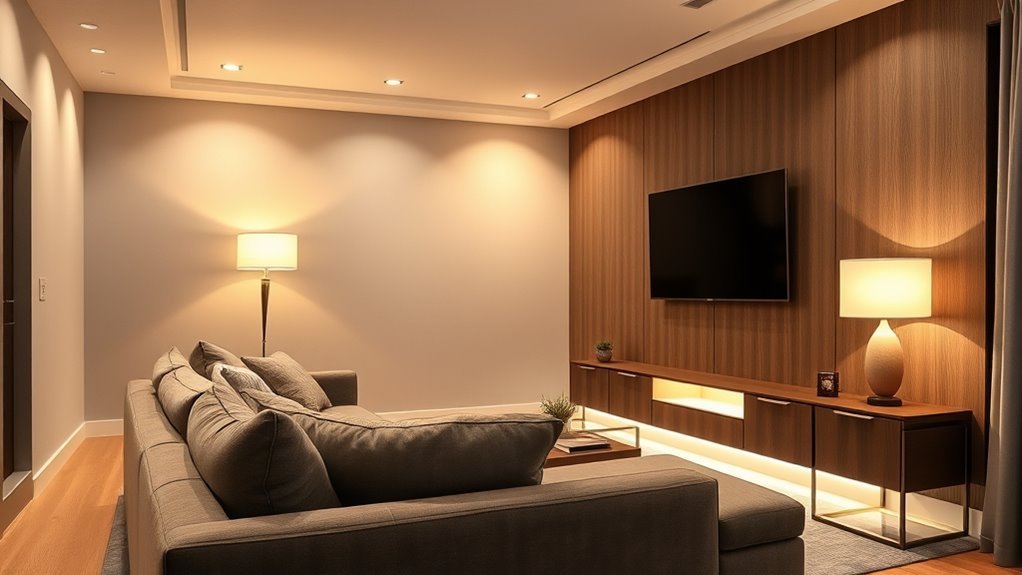
Creating a lighting plan for your living room with a TV is all about balance and functionality. Start by determining essential lighting types: ambient for a cozy glow, task for specific activities like reading, and accent to highlight artwork. Map your space and identify key zones. Choose flexible fixtures, like dimmable options, to cater to various moods. Don’t forget to maximize natural light with mirrors and airy curtains. Continue exploring for more tips on refining your lighting design!
Why a Lighting Plan Matters for Your Living Room
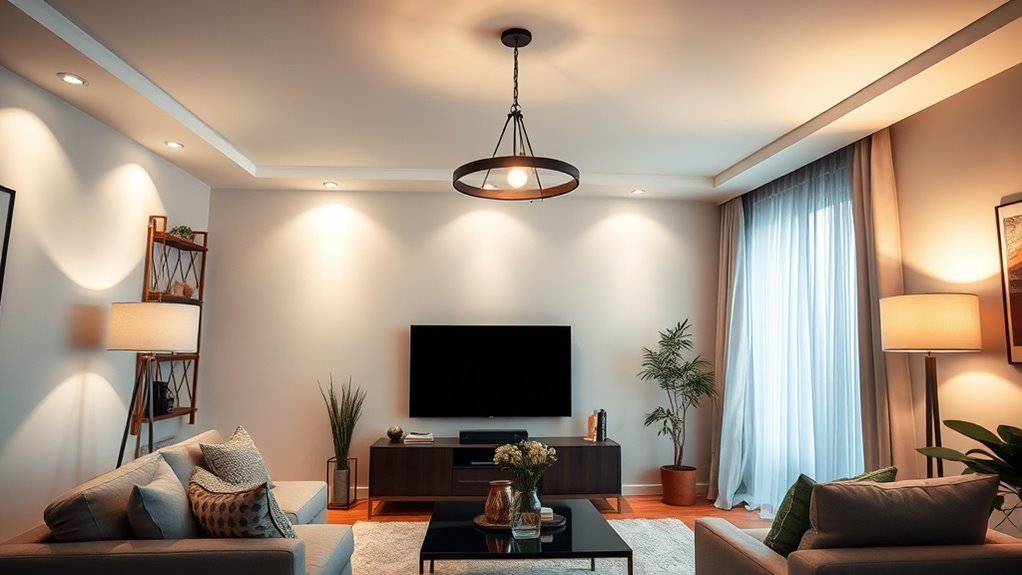
A well-crafted lighting plan is the cornerstone of a functional and inviting living room. This plan is essential for achieving even distribution of light, ensuring every corner is well-lit without harsh glare or distracting shadows. By mapping out ambient lighting for a warm atmosphere, you create a cozy backdrop for relaxation. Task lighting is vital for specific activities like reading or enjoying a movie, allowing you to focus without straining your eyes. A carefully designed lighting plan helps you seamlessly shift between different modes, whether you’re hosting friends or enjoying a quiet night in. Ultimately, it transforms your space, creating a balanced environment that enhances comfort and energy efficiency, liberating you to fully enjoy every moment in your living room.
Identifying Essential Lighting Types: Ambient, Task, and Accent
When crafting your living room’s lighting plan, understanding the three essential lighting types—ambient, task, and accent—can greatly elevate the space. Ambient lighting serves as the foundation, filling the room with a warm glow that creates a cozy atmosphere for conversations and relaxation. Task lighting becomes your ally for those bright tasks like reading or working, directing focused light to reduce eye strain. Accent lighting adds drama, illuminating artwork or architectural features that reflect your unique style. By layering these types of light, you gain versatility, adapting to different moods and activities. Consider dimmable options to adjust brightness levels, ensuring the perfect ambiance for everything from movie nights to vibrant gatherings.
How to Map Your Living Room for Effective Lighting Placement
To effectively illuminate your living room, start by identifying key activity zones like reading nooks or entertainment areas. Measure your space dimensions to guarantee that lighting fixtures are proportionate and positioned correctly. Finally, consider the natural light sources and how they interact with your planned layout to enhance both functionality and ambiance.
Identify Key Activity Zones
Mapping your living room for effective lighting placement involves understanding how you use the space and identifying key activity zones. Start by sketching your floor plan, marking the TV, seating, and furniture. Consider these essential activity zones:
- TV Viewing: Use soft ambient lighting to create a cozy atmosphere.
- Reading Nook: Install task lighting for focused illumination.
- Social Area: Incorporate warm, inviting lights for gatherings.
- Natural Light: Assess window placements to balance artificial lighting with daylight.
Measure Space Dimensions
Understanding the layout of your living room is key to effective lighting placement. Start by taking accurate measurements—length, width, and height—to create a trusty floor plan. Mark the positions of windows and doors, as they impact natural light and fixture arrangements. Don’t forget to note existing light fixtures and electrical outlets; these elements will guide your lighting plan.
Here’s a handy table to visualize your measurements:
| Element | Measurement | Notes |
|---|---|---|
| Length | [Your Value] | |
| Width | [Your Value] | |
| Height | [Your Value] |
Consider where your furniture will be, especially the TV and seating areas, to guarantee your lighting complements these spaces beautifully.
Consider Light Sources
While planning your living room lighting, start by drafting a detailed floor plan that highlights key elements like the TV’s location and seating arrangement. To create an inviting atmosphere, identify three essential light sources:
- Ambient lighting: Guarantee even illumination that avoids TV glare and harsh shadows.
- Task lighting: Position adjustable reading lamps near seating areas for focused light during activities without disrupting the viewing experience.
- Accent lighting: Strategically place fixtures around the media wall to enhance visual appeal, keeping it subtle for movie nights.
With thoughtful light placement, you’ll transform your living room into a sanctuary of relaxation and entertainment, liberating your space from dullness while celebrating its unique features.
Choosing Fixtures for TV Viewing and Reading
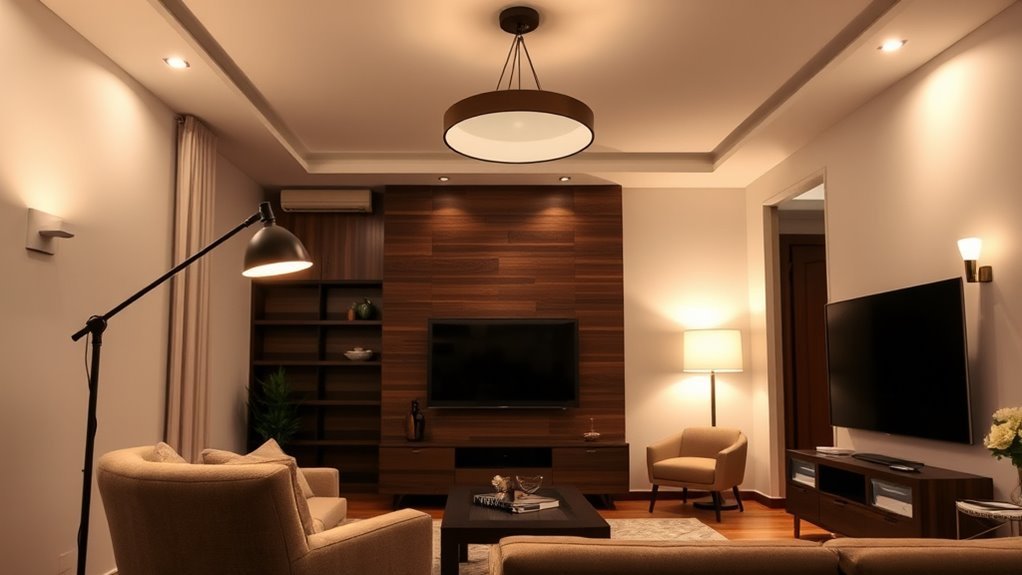
Creating the perfect lighting setup for TV viewing and reading can transform your living room into a cozy, multifunctional space. Start with dimmable ambient lighting fixtures to create a comfortable atmosphere, minimizing glare on your screen. Position task lighting, like stylish reading lamps, behind seating areas, ensuring they illuminate without distracting from your favorite shows. Adjustable reading lamps are a must; they let you focus light precisely where you need it for those late-night reading sessions. Be cautious with accent lighting; use it sparingly to enhance your space without overwhelming it. By layering ambient, task, and accent lighting, you’ll craft a versatile environment that beautifully caters to both your entertainment and reading needs.
Implementing Dimmable Lighting for Flexible Use
To truly maximize the versatility of your living room’s lighting, implementing dimmable options can make all the difference. With dimmable lighting, you can create a sanctuary for any occasion. Here’s how to enhance your space:
- Adjust ambient lighting for cozy movie nights or lively gatherings.
- Utilize dimmable task lighting, like reading lamps, to illuminate without overwhelming the room.
- Incorporate dimmable LED bulbs for energy efficiency while enjoying various brightness levels.
- Fit accent lights with dimmers to subtly showcase art pieces or architectural features.
How to Maximize Natural Light in Your Living Room?
How can you transform your living room into a sunlit haven? Start by positioning mirrors across from windows; they’ll reflect natural light, amplifying that bright glow throughout your space. Choose light-colored curtains or sheer fabrics that let sunlight filter in while keeping your privacy intact. Opt for shades you can easily pull up to bask in the sun’s warmth. Arrange your furniture to face these light sources, creating inviting focal points that celebrate the views. Incorporate glass and other reflective surfaces—think coffee tables and decorative accents—to enhance light dispersion. Finally, keep windows clean and unobstructed, allowing the maximum amount of natural light to flood your living area, making it feel open and liberating.
Evaluating Your Lighting Plan for Comfort and Functionality
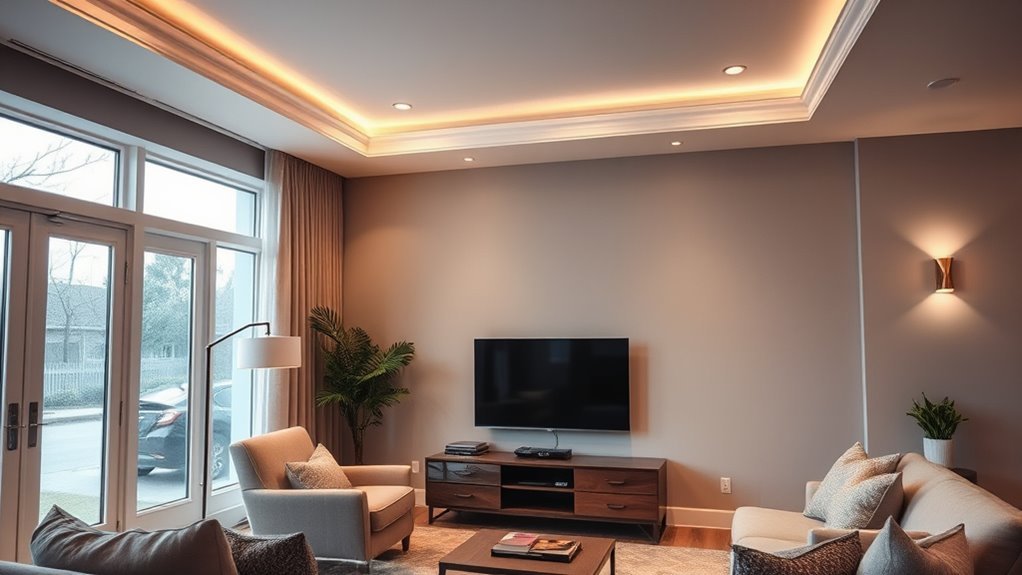
To truly enjoy your living room, you need to regularly assess how well your lighting meets your comfort and functionality needs. Adjust your setup based on activities, whether you’re winding down with a book or hosting movie night, ensuring every corner shines just right. By fine-tuning brightness and placement, you can create an inviting atmosphere that adapts seamlessly to your daily life.
Assess Lighting Effectiveness Regularly
As you settle into your living room, it is essential to regularly assess the effectiveness of your lighting plan, ensuring that every corner of the space meets your needs for comfort and functionality. To achieve this, consider the following:
- Test your lighting at various times to identify shadows or glare.
- Gather feedback from family and friends about their comfort level.
- Monitor brightness levels and adjust dimmable lights based on activities, like TV watching or reading.
- Evaluate fixture placement, making changes if certain areas feel too dim or too bright.
Adjust Based On Activities
While enjoying a cozy evening in your living room, you might find that the lighting needs to adapt based on the activity at hand. To create a lighting plan that’s both bright and inviting, regularly assess how your ambient lighting sets the mood, adjusting it with dimmers for comfort. Position task lighting strategically to illuminate reading areas without causing glare, ensuring you have the right brightness for every occasion. Gather feedback from family and friends about their comfort and functionality preferences—this will help you fine-tune your setup. Periodically evaluate the balance among ambient, task, and accent lighting, so your space remains versatile, easily shifting from relaxing movie nights to lively gatherings, enhancing your living experience.
Frequently Asked Questions
How to Light a Living Room With a TV?
To light your living room with a TV, combine ambient lighting for overall warmth, task lighting for focused activities, and minimal accent lighting. Adjust light positioning and color temperature to create a cozy, glare-free environment.
How to Design Lighting for a Living Room?
Designing lighting for your living room is like composing a symphony. Use ambient lighting for warmth, task lighting for focus, and accent lighting to highlight features. Choose versatile fixtures with adjustable color temperatures for ultimate flexibility.
How to Create a Lighting Layout Plan?
To create a lighting layout plan, explore diverse lighting styles, balance ambient brightness, and thoughtfully consider fixture placement. Choose appropriate color temperatures and integrate dimming options for versatile, liberated atmospheres tailored to your living space’s needs.
What Is the 5 7 Lighting Rule?
The 5-7 lighting rule helps you achieve balanced ambient, task, and accent lighting by ensuring fixtures are spaced 5-7 feet apart, providing adjustable fixtures and proper lighting temperature for comfort and versatility in your living space.
Conclusion
By crafting a thoughtful lighting plan, you’re not just illuminating your living room; you’re setting the stage for unforgettable moments. Picture cozy nights with friends, the glow of your favorite movie, and the perfect reading nook bathed in soft light. Remember, it’s not just about brightness; it’s about creating an atmosphere that welcomes you home. So, embrace this opportunity to transform your space, and let your living room shine with personality and warmth.

Leave a Reply