
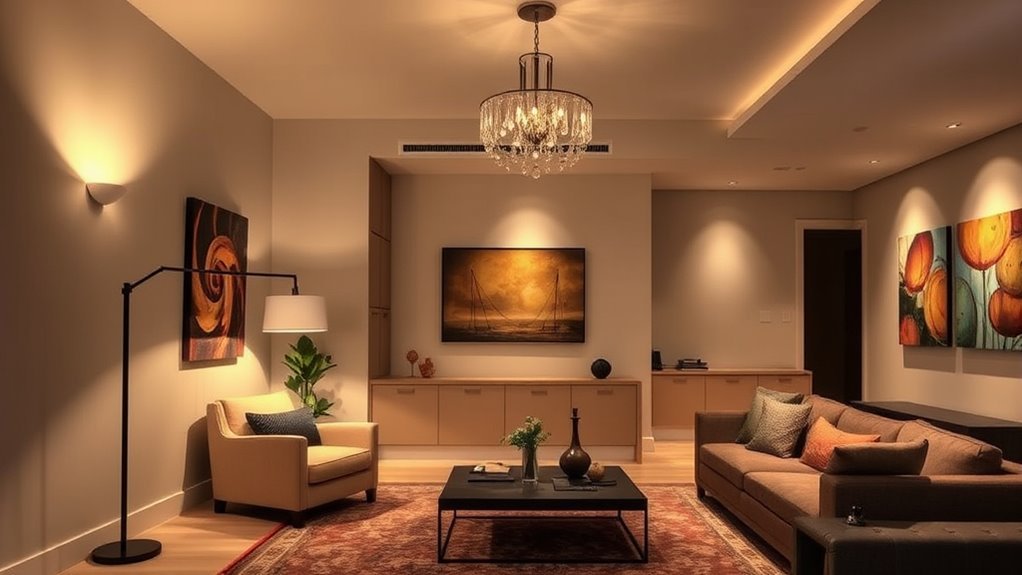
To create effective lighting zones in your living room, start by evaluating your layout and identifying key areas like reading nooks and entertainment zones. Use a layered approach with ambient lighting for overall brightness, task lighting for specific functions, and accent lighting to highlight decor. Position fixtures based on room dimensions and guarantee you balance warmth with brightness. Integrating smart technology can personalize your experience, making it easier to adjust mood and function. Discover more tips to elevate your space!
Creating Effective Lighting Zones in Your Living Room
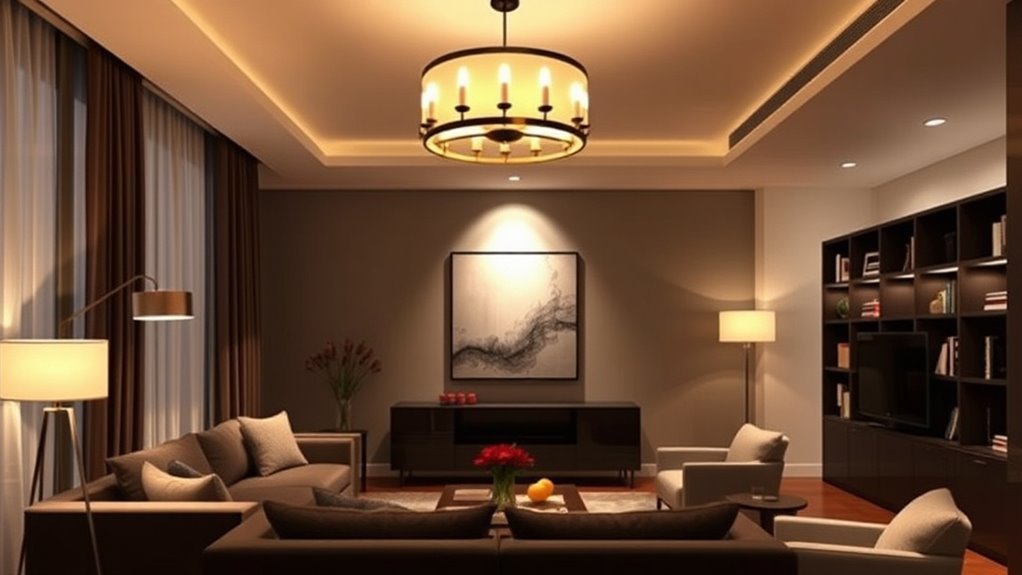
When you step into your living room, it should feel inviting and functional, and creating effective lighting zones is key to achieving that ambiance. Start by identifying areas like seating, reading nooks, and entertainment zones. Use ambient lighting for overall illumination, task lighting for specific activities, and accent lighting to highlight your favorite artwork. A layered approach with two to three lighting fixtures in each zone helps eliminate harsh shadows and guarantees uniformity. Consider adding a dim switch or smart technology for flexibility, allowing you to create a cozy atmosphere that adapts to your needs. Regularly assess your setup to maintain visual interest and enhance comfort, guaranteeing each zone serves its intended purpose beautifully.
Assessing Your Living Room Layout for Optimal Lighting
How can you transform your living room into an inviting space that balances light and function? Start by measuring the room’s dimensions, including ceiling height and reflective surfaces, to grasp its volume and light distribution needs. Identify the primary functions, like reading or entertaining, to establish where your lighting zones should be. Map out natural light sources, noting windows and skylights, to enhance them with artificial lighting. Create a rough sketch of your space, marking key focal points such as furniture arrangements and architectural features. This visualization will help you determine where to place ambient, task, and accent lighting, ensuring the flow of the room remains comfortable and inviting without overly dark or glaring areas.
Identifying Key Areas for Lighting in Your Living Room
To create a cozy reading nook, you’ll want focused task lighting that brightens pages without harsh glare. In contrast, your entertainment area calls for softer ambient lighting to enhance movie nights and gatherings without overwhelming brightness. By pinpointing these key zones, you can tailor your lighting choices to elevate both functionality and atmosphere in your living room.
Reading Nooks Lighting Needs
Creating a cozy reading nook in your living room hinges on the right lighting choices, as effective illumination can transform a simple corner into a haven for book lovers. Start with dedicated task lighting like a floor lamp or a table lamp, ensuring it emits around 300-500 lumens to prevent eye strain. Position the light fixture at 42-48 inches high to optimize light direction for comfortable reading. Adjustable lamps are great, allowing you to modify intensity based on your mood or the time of day. Don’t forget to incorporate ambient lighting, as it enhances the cozy atmosphere, making your reading nook a warm retreat where you can escape into your favorite stories.
Entertainment Areas Illumination Requirements
After setting the mood for your cozy reading nook, it’s time to focus on illuminating the entertainment areas of your living room. Identify key spots like the media zone and seating arrangement to tailor your lighting effectively. For the media zone, opt for dimmable ambient lighting to cultivate a cozy atmosphere while preventing glare during movie nights. Strategically place task lighting, like floor or table lamps, near seating areas for focused illumination perfect for reading or playing games. Use accent lighting to highlight artwork or architectural features, enhancing the space’s visual appeal. Integrate all these elements into a layered lighting plan, combining ambient, task, and accent lights to create an inviting, versatile environment that liberates your entertaining experience.
Choosing Ambient Lighting as Your Base Layer
Ambient lighting is the heartbeat of your living room, setting the tone for comfort and safety. To create a cozy atmosphere, choose fixtures like chandeliers, recessed downlights, or flush mounts, ideally with a color temperature between 2700K to 3000K. This warm glow invites relaxation and connection. Strategically place your fixtures in key locations to eliminate dark corners and guarantee even light distribution throughout the space. Consider incorporating natural light sources, such as skylights or large windows, to enhance your ambient lighting, especially on foggy days. Remember, the goal is to achieve overall illumination that transforms your living room into a welcoming haven, where you can unwind and gather with loved ones, free from harsh shadows and discomfort.
Adding Task Lighting for Functionality and Comfort
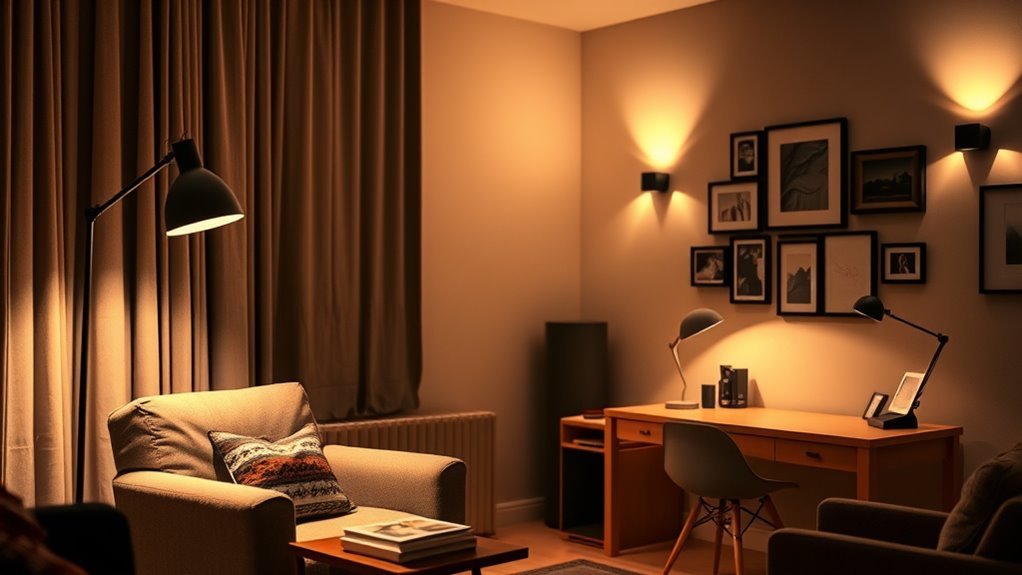
Task lighting plays an essential role in enhancing both functionality and comfort in your living room. It provides focused light for specific activities, making your space more versatile. Here are three effective options to evaluate:
Task lighting enhances your living room’s functionality and comfort, providing focused illumination for various activities.
- Table lamps: Perfect for reading nooks, position them at a height that illuminates without glare.
- Floor lamps: Use these to brighten larger areas, ensuring they’re close to seating for easy access.
- Adjustable wall sconces: These offer flexibility and can be tailored to direct light precisely where you need it.
Integrate a dimmer switch to control brightness levels, enhancing your experience. Aim for a color temperature of 2700K to 3000K, creating a warm, inviting glow that complements your ambient lighting.
Accent Lighting Techniques to Enhance Aesthetics
To elevate the visual appeal of your living room, accent lighting techniques can play a pivotal role in creating an enchanting atmosphere. Wall grazing brings textured surfaces to life, casting dramatic shadows that intrigue the eye. If you prefer a softer touch, wall washing offers even illumination over smooth walls, enhancing the room’s overall features beautifully. Uplighting adds depth, revealing silhouettes of large plants or furniture, making your space feel more dynamic. Aim for a visual hierarchy by ensuring your accent lighting is three times brighter than ambient lighting, drawing attention to your favorite elements. Finally, consider adjustable track lighting for versatility; it allows you to spotlight changing art or furniture arrangements, effortlessly enhancing aesthetics in your living room.
Using Smart Tech to Control Your Lighting Zones
While creating distinct lighting zones can transform your living room into a versatile space, using smart technology makes this process even more seamless and enjoyable. Here’s how to harness smart lighting systems effectively:
Transform your living room with distinct lighting zones and smart technology for a seamless, enjoyable experience.
- Voice Control: Integrate voice assistants to command your lighting zones effortlessly, letting you adjust settings without lifting a finger.
- Mobile Apps: Utilize mobile apps for remote control, enabling you to change brightness levels and create the perfect ambiance, even from afar.
- Energy Efficiency: Program your lights to adapt automatically based on time of day or activity, optimizing energy efficiency while enhancing your living experience.
With smart tech, you’ll enjoy tailored illumination that aligns with your lifestyle, bringing liberation to your living space!
Customizing Your Lighting Experience With Dimmers and Scenes
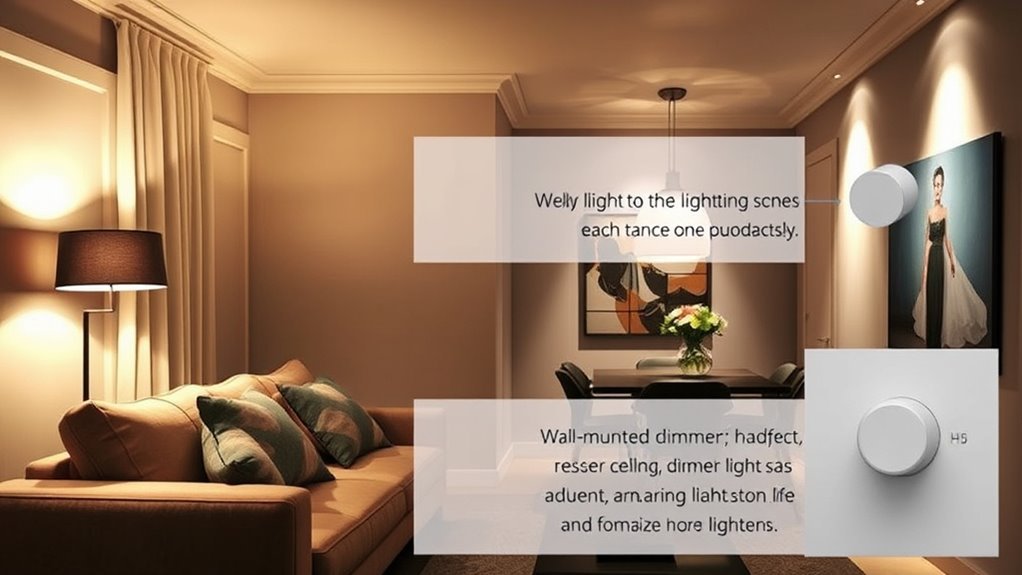
Smart technology not only simplifies control over your lighting zones but also enhances your experience through customization. Dimmers let you adjust brightness, transforming your space to fit your mood—whether it’s cozy ambient lighting for a quiet evening or bright illumination for lively gatherings. With smart dimmers, you can control your lights effortlessly through mobile devices or voice commands. Imagine programming smart scenes like “Movie Night” to instantly set the perfect atmosphere with a single command. This customizable lighting not only caters to your personal preferences but also boosts energy efficiency, helping reduce your electricity bills. Embrace the liberation of tailored lighting, allowing you to create inviting spaces that adapt to your daily routine and enhance your living experience.
Tips for Selecting and Placing Fixtures
When you’re choosing fixtures for your living room, think about how each piece can enhance your space’s style while serving a purpose. Position your ambient, task, and accent lights thoughtfully to create a harmonious blend of illumination that highlights key areas and activities. By layering light sources and selecting complementary styles, you’ll craft an inviting atmosphere that reflects your unique taste.
Fixture Style Considerations
Choosing the right lighting fixtures can transform your living room into a stylish and functional space. By focusing on fixture style considerations, you can create a cohesive design that enhances your ambiance. Here are three key points to remember:
- Match Your Aesthetic: Choose lighting fixtures that reflect your room’s style—modern for contemporary spaces, vintage for traditional settings.
- Layer Your Lighting: Incorporate ambient lighting like chandeliers for general illumination, task lighting such as table lamps for usability, and accent lighting like wall sconces to highlight features.
- Opt for Flexibility: Use adjustable fixtures like track lighting to easily direct light and adapt to changes in your living arrangement, ensuring effective light distribution throughout the room.
Optimal Placement Strategies
Creating the perfect lighting zones in your living room requires a thoughtful approach to fixture placement. To achieve an inviting atmosphere, consider these strategies for ideal placement:
| Lighting Type | Placement Tips |
|---|---|
| Ambient | Position fixtures centrally for even illumination. |
| Task | Place near reading nooks and work areas to eliminate glare. |
| Accent | Direct light onto artwork or architectural features for depth. |
| Layering | Mix different heights and styles for visual interest. |
| Functionality | Guarantee each zone serves its specific purpose effectively. |
Layering Light Sources
To achieve a well-balanced and inviting atmosphere in your living room, layering light sources is essential. By combining ambient, task, and accent lighting, you can enhance both functionality and aesthetics. Follow these tips for a harmonious lighting scheme:
- Ambient Lighting: Use recessed lighting or a statement chandelier to establish overall illumination, creating a warm foundation.
- Task Lighting: Incorporate floor or table lamps in specific zones, ensuring you have adequate light for reading or hobbies.
- Accent Lighting: Highlight architectural features or artwork with wall grazing or uplighting, adding depth and visual interest.
Place your fixtures at varying heights around the room’s perimeter to eliminate shadows and craft a dynamic experience that adapts to your mood.
Adjusting Your Lighting Plan for Best Results
Adjusting your lighting plan can transform your living room into a versatile space that caters to different activities and moods. Start by evaluating the three layers of lighting: ambient, task, and accent. This combination guarantees every lighting zone serves its purpose effectively. Pay attention to fixture placement, using natural light to your advantage and minimizing shadows. Dimmers and smart controls let you adjust lighting intensity, creating the perfect atmosphere for relaxation or entertaining. Incorporate adjustable fixtures like track lighting to dynamically shift focus as your space evolves with new furniture or decor. Regularly reassess your lighting zones to make certain they align with your changing needs and preferences, finding the best lighting solutions to liberate your living space.
Frequently Asked Questions
What Is the 5’7″ Lighting Rule?
The 5’7″ lighting rule suggests you install light fixtures at seven feet high, balancing ambient, task, and accent lighting. It enhances natural light flow, supports dimmer switches, and guarantees ideal color temperature in your lighting design.
What Are the 4 C’s of Lighting?
The 4 C’s of lighting—contrast, consistency, color, and control—help you harmonize ambient, task, and accent lighting. By adjusting color temperature and using dimmer switches, you create inviting spaces that embrace both natural light and diverse lighting styles.
How to Layout Can Lights in Living Room?
Imagine stars twinkling in your living room. For can light placement, respect light spacing guidelines, ceiling height considerations, and room function. Embrace dimmer switch benefits and choose fixtures that harmonize with your style and color temperature.
What Is the 3 Lighting Rule?
The 3 Lighting Rule combines ambient lighting tips, task lighting options, and accent lighting ideas. Use dimmer switch benefits, consider color temperature effects, and integrate natural light for energy-efficient, stylish lighting fixture styles that liberate your space.
Conclusion
By creating distinct lighting zones in your living room, you can transform the space from ordinary to extraordinary. Remember, lighting isn’t just about brightness; it’s about setting the mood and enhancing functionality. With the right blend of ambient, task, and smart lighting, you’ll craft an inviting atmosphere that dances with warmth and comfort. So, embrace the art of illumination and let your living room shine in its best light—because every corner deserves its moment to glow.

Leave a Reply