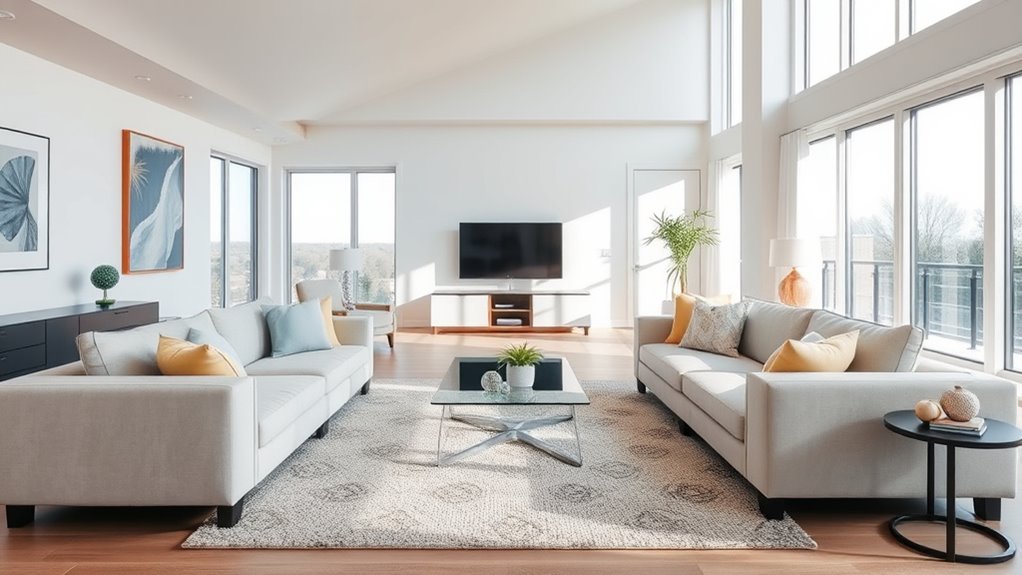
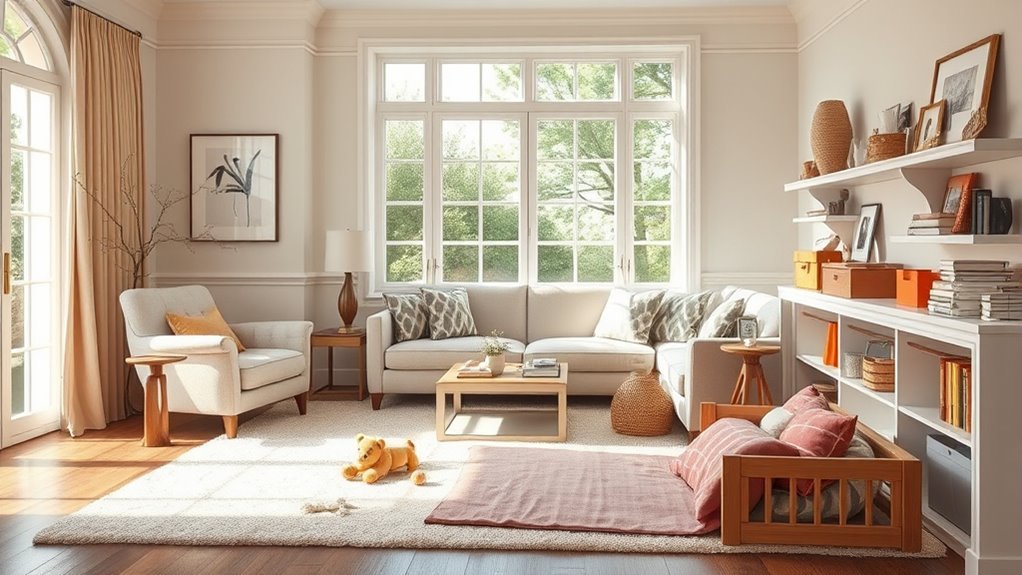
Creating a living room for aging in place starts with ensuring clear pathways at least 36 inches wide, allowing for easy movement. Enhance lighting with multiple fixtures and motion sensors to eliminate shadows. Install grab bars for support, positioned at 33 to 36 inches from the floor. Choose comfortable and accessible furniture with firm cushions and adjustable heights. Finally, organize your space to maintain a clutter-free, inviting atmosphere. There’s much more to explore to make your home truly supportive.
Assess Your Living Room for Mobility and Safety
When you assess your living room for mobility and safety, start by envisioning a space that’s easy to navigate, especially if you or a loved one uses a walker or wheelchair. Guarantee clear pathways of at least 36 inches wide, allowing for smooth movement. Focus on space utilization by arranging furniture to create a 5 x 5 area for unrestricted mobility, adhering to ADA standards. Remove loose rugs and replace them with low-pile, non-slip options to minimize tripping hazards. Clear clutter and sharp-edged furniture, and tuck away electrical cords to enhance safety. By thoughtfully considering your furniture arrangement and environment, you’ll create a liberating space that promotes independence and comfort for everyone.
Enhancing Lighting for Visibility and Safety
To create a safe and inviting living room, think about how you can enhance your lighting. By strategically placing multiple light sources and incorporating smart lighting solutions, you’ll eliminate shadows and guarantee every corner is well-lit. This not only boosts visibility but also contributes to a more pleasant atmosphere, making navigation easier and safer.
Optimal Light Placement Strategies
Effective lighting transforms your living room into a safe haven, especially for those aging in place. Start with ambient light fixtures like ceiling-mounted lights to provide even illumination, minimizing shadows that can lead to falls. Enhance specific activities with task light—think floor or table lamps positioned conveniently for reading or hobbies. Install motion sensors in hallways and entryways, ensuring lights activate as you approach, making nighttime navigation safer. Position light switches at a height of about 48 inches, and opt for rocker or touch controls for effortless use. Finally, choose LED bulbs; they deliver brighter light, last longer, and save on energy costs, reducing the hassle of frequent replacements. Embrace these strategies for a liberating living space!
Smart Lighting Solutions
Smart lighting solutions can transform your living room into a safer, more adaptable space for aging in place. By integrating these technologies, you can greatly reduce fall risks and enhance comfort.
- Motion Sensors: Install these in entryways and hallways to automatically light up paths as you approach, ensuring visibility and safety.
- Layered Lighting: Utilize ambient, task, and accent lights to illuminate all areas effectively, accommodating various activities and improving overall safety.
- Smart Controls: Automate your lighting with remote scheduling, allowing you to set brightness levels that suit your routine and enhance energy efficiency.
With LED benefits like low heat output and adjustable fixtures, you can create a cozy, glare-free environment that promotes independence and security.
Adding Grab Bars for Extra Safety
When you think about adding grab bars, consider where they’ll offer the most support—like near the entrance or in your favorite seating areas. You’ll find a variety of stylish options that blend seamlessly with your decor while keeping safety a top priority. Remember, proper placement and secure installation are key to ensuring these bars provide the stability you need.
Placement Considerations
While enhancing safety in your living room, consider strategic placement of grab bars to support easy changes between sitting and standing. Here are some key placement tips:
- Location: Install grab bars near entrances and seating areas, ensuring they’re within easy reach during shifts.
- Height: Position grab bars at 33 to 36 inches from the floor for best accessibility, accommodating most users comfortably.
- Stability: Securely install grab bars into wall studs, not just drywall anchors, to maximize strength and durability.
Opt for decorative grab bar styles that blend seamlessly with your decor while ensuring they meet safety standards. With careful planning and thoughtful installation tips, you can create a safer, more liberating living space.
Design Options Available
Adding grab bars to your living room doesn’t have to compromise style for safety; in fact, you have a wealth of design options at your fingertips. Consider decorative styles that seamlessly blend with your existing decor—think sleek chrome finishes or elegant matte black designs that enhance your space. Choose materials like rust-resistant stainless steel for durability and easy maintenance, ensuring your grab bars withstand the test of time. Position them at a height of 33 to 36 inches near seating areas and entry points for ideal accessibility. With a weight capacity of at least 250 pounds, you’ll provide secure support, empowering everyone to move with confidence and grace in their own home.
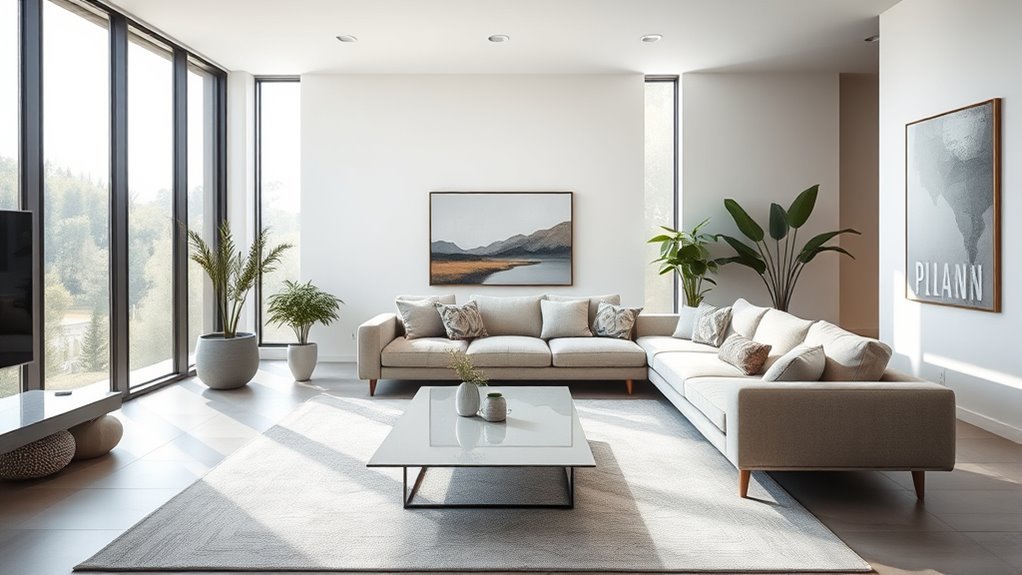
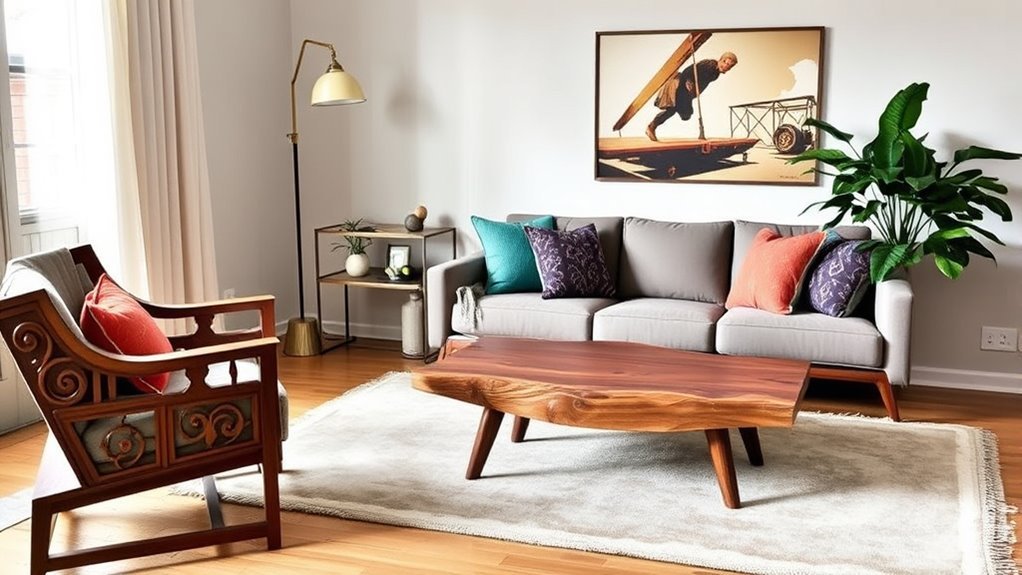
Selecting Comfortable and Accessible Furniture Options
Creating a comfortable and accessible living room starts with choosing the right furniture to meet your needs. Focus on pieces that enhance your mobility and comfort:
- Adjustable Seating: Look for recliners or sofas that allow height adjustments, catering to various preferences and making it easier to get up and down.
- Firm Cushions: Select sofas and chairs with firm cushions and sturdy armrests. They provide essential support for standing and sitting changes.
- Lift Chairs: Consider power-assisted lift chairs that help you rise with ease, addressing different mobility challenges.
Organizing Your Living Room for Clear Pathways
A well-organized living room can greatly enhance mobility and safety for those aging in place. Start by ensuring a clear 5 x 5 space for easy access, adhering to ADA standards. Remove trip hazards like clutter, loose rugs, and electrical cords to prevent falls. Next, focus on your furniture arrangement; position seating and tables to create logical pathways between key areas. Consider using space-saving furniture to minimize loose items, enhancing accessibility. Don’t forget your pathway markers—these can be visual cues or even textured mats that guide movement. Regularly reassess your layout to adapt to changing mobility needs, ensuring your living room remains a liberating space where everyone can navigate freely and confidently.
How Smart Technology Enhances Safety and Convenience
While managing daily life can present challenges as we age, smart technology offers innovative solutions that enhance both safety and convenience in the living room. Embracing smart home automation can transform your space into a haven of independence. Consider these enhancements:
- Automated Lighting: Install motion-sensor lights to illuminate pathways, drastically reducing fall risks.
- Voice Assistant Integration: Use voice-activated devices for hands-free access to information and services, making daily tasks effortless.
- Smart Monitoring Systems: Enable family members to check in remotely, ensuring peace of mind and enhancing your safety.
With these tools, you’ll navigate your living space with confidence, enjoying both freedom and security. Smart technology not only simplifies tasks but also enriches your living experience.
Frequently Asked Questions
How to Design for Aging in Place?
To design for aging in place, embrace universal design principles. Choose ergonomic furniture that’s easy to use, create spacious pathways, and guarantee proper lighting. This transforms your home into a safe, liberating haven for all.
What Are the 5 Pillars of Aging in Place?
The five pillars of aging in place are safety features, accessibility options, comfort zones, social connections, and technology integration. Embrace these elements, and you’ll create a nurturing environment that fosters independence and well-being.
How to Prepare a Home for Aging in Place?
To prepare your home for aging in place, focus on essential home modifications. Add accessibility features like grab bars, widen doorways, and use non-slip flooring. These changes empower you, ensuring safety and comfort as you age gracefully.
Conclusion
By embracing these steps, you can create a living room that feels like home while ensuring safety and comfort. Remember, it’s better to be safe than sorry, so don’t overlook those little details that make a big difference. With thoughtful adjustments, you’ll foster an inviting space that supports aging in place, allowing you or your loved ones to enjoy life’s moments without worry. Now, roll up your sleeves and turn your vision into reality!