
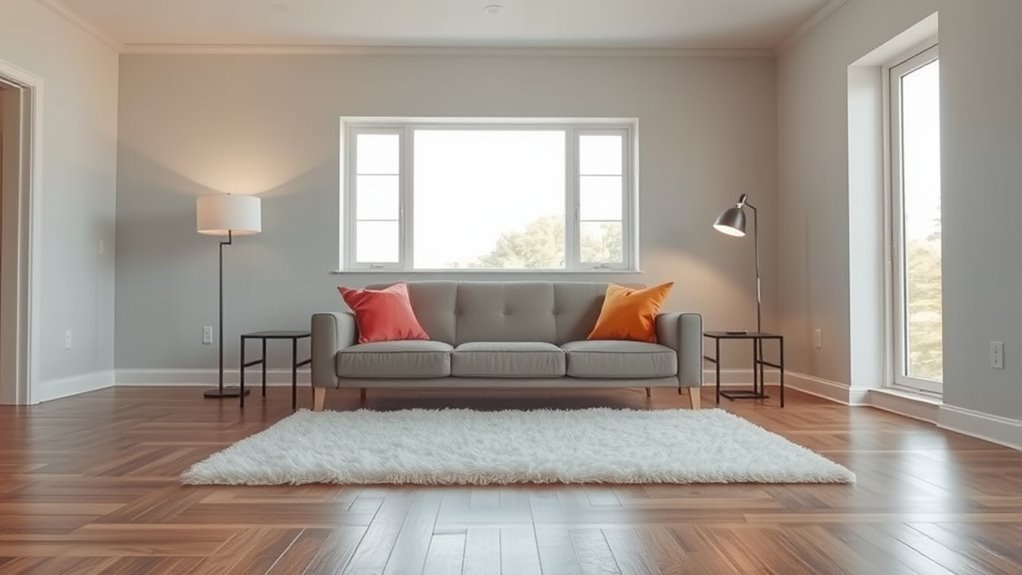
To decorate your living room in the right order, start by measuring your space to understand dimensions. Next, define its purpose—entertaining, relaxing, or both. Identify your unique aesthetic style and create a mood board for inspiration. Choose a harmonious color palette that reflects your vision, then shop for essential furniture pieces. Don’t forget the right-sized area rug and layer textures to enhance comfort. Personalize your space with meaningful touches, and discover more tips on transforming your living area beautifully.
Measure Your Space for Optimal Living Room Decor
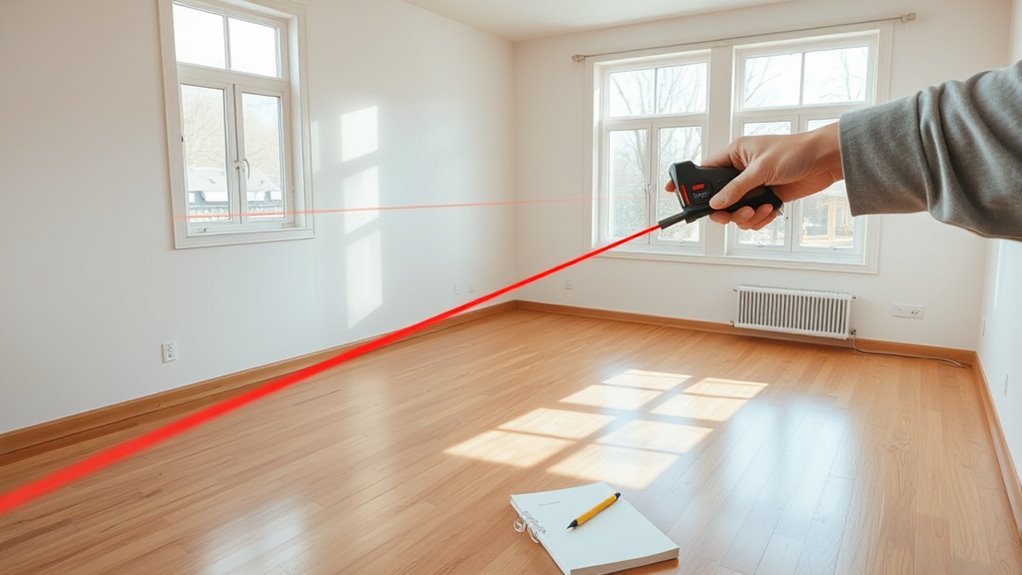
To create a stunning living room that feels both inviting and functional, start by measuring your space accurately. Grab a measuring tape and document the dimensions of your walls, windows, and doorways. This’ll help you determine the appropriate size for furniture, rugs, and window treatments, ensuring a harmonious layout. Don’t forget to account for architectural features like built-ins or radiators, as these can impact your design decisions and furniture placement. Create a detailed floor plan with your measurements to visualize how different pieces will fit together, preventing any costly misorders. Remember to allow 30-36 inches of circulation space between large furniture pieces, ensuring comfort and accessibility throughout your beautiful new space.
What Will You Use Your Living Room For?
What activities will your living room host? Understanding the primary functions of your space is essential for an effective design. Whether it’s entertaining guests, family gatherings, or a cozy reading nook, your lifestyle dictates the furniture and layout. Consider how many people typically use the area and their activities; this will guide your choices. In smaller living rooms, multi-functional furniture can maximize utility and style without cluttering the space. Don’t overlook existing fixtures like fireplaces or built-in shelving, as they can influence your arrangement and decor. Ultimately, aim for a design that balances comfort and practicality, ensuring your living room reflects your unique lifestyle while serving its intended functions beautifully.
Identify Your Unique Aesthetic Style for Home Decor
How do you envision your living room? Revealing your unique aesthetic style starts with understanding your preferences and how they align with your lifestyle needs. Here are key steps to guide you:
- Analyze favorite outfits and decor pieces for common themes.
- Create a mood board to collect inspiration images.
- Define your style using 2-3 descriptive words.
- Evaluate your current space for functionality and necessary improvements.
- Incorporate personal touches like artwork and family photos.
Create a Mood Board to Guide Your Decor Choices
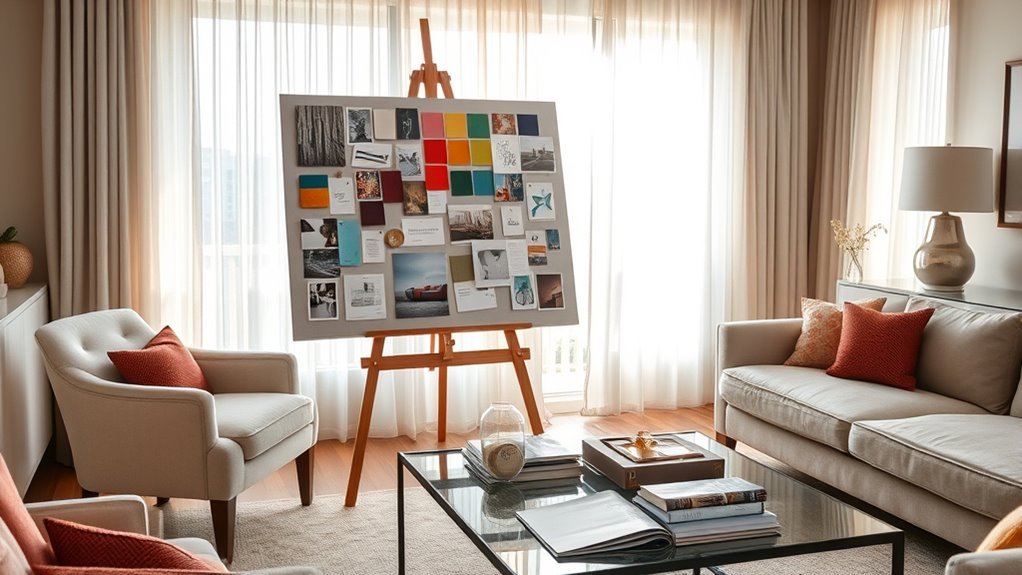
Creating a mood board is your first step in visualizing the perfect living room. Start by gathering inspirational images that resonate with your style, then assess how these visuals interact to create a cohesive look. As you refine your selections, you’ll establish a clear guide that keeps your decorating journey focused and intentional.
Gather Inspirational Images
Ever wondered how a simple collection of images can transform your living room decor journey? By gathering inspirational images, you create a mood board that serves as your visual guide. This board captures your desired aesthetic and helps maintain a cohesive design. Here’s how to craft it:
- Utilize platforms like Pinterest or Instagram for inspiration.
- Select at least 10 images that resonate with your design vision.
- Assess images for compatibility and potential design errors.
- Communicate your style effectively with family or contractors.
- Regularly update your mood board to reflect your evolving tastes.
With this approach, you’re not just decorating; you’re liberating your creativity and shaping a living space that speaks to you.
Assess Visual Interactions
What elements come together to create a harmonious living space? Start by crafting a mood board that encapsulates your design direction. Gather at least ten inspiring images from design magazines, Pinterest, or Instagram, reflecting your personal style and aesthetic preferences. This visual collage allows you to assess how different design elements interact, ensuring visual harmony before you purchase anything. A mood board serves as an essential communication tool, enabling you to share your vision with family members or contractors involved in the decorating process. By identifying potential design mistakes early on, you can avoid competing patterns or styles. Embrace this creative exercise; it’s the key to a liberated and cohesive living room design.
Refine Your Selections
A well-crafted mood board can transform your decorating experience, guiding you through the intricate dance of colors, textures, and styles. This visual guide helps you refine your décor selections, ensuring a cohesive aesthetic for your living room. Here’s how to create one:
- Collect at least 10 inspiring images from design resources.
- Incorporate swatches of fabrics, paint colors, and materials.
- Visualize how various elements interact within your space.
- Use your mood board to identify and eliminate pieces that don’t align with your theme.
- Regularly update it as new inspirations arise.
Let this mood board liberate your design process, keeping you aligned with your goals and fostering a harmonious atmosphere in your living room.
Choose a Harmonious Color Palette
Creating a harmonious color palette is essential for transforming your living room into a cohesive sanctuary. Start by selecting a dominant color that covers about 60% of the space, complemented by a secondary hue at 30%, and an accent color for that extra pop at 10%. Neutral colors often serve as a solid foundation, fostering a calming atmosphere while allowing bolder shades to shine through. Use color swatches to visualize how these hues interact with your existing furniture and decor, ensuring a seamless blend. Don’t forget to reflect on the impact of natural light—shades can shift dramatically throughout the day. A well-chosen color scheme not only enhances aesthetic appeal but also elevates the overall mood of your space.
Shop Wisely for Essential Living Room Furniture
Shopping wisely for essential living room furniture can set the tone for your entire space. Start with a high-quality sofa, the focal point of your design. Prioritize these key elements to enhance functionality and style:
- Coffee table that complements your sofa
- Side tables to balance the layout
- Multifunctional furniture like storage ottomans
- Unique finds from thrift stores or sales
- Accurate measurements to guarantee proper fit
Select the Right-Sized Area Rug for Your Space
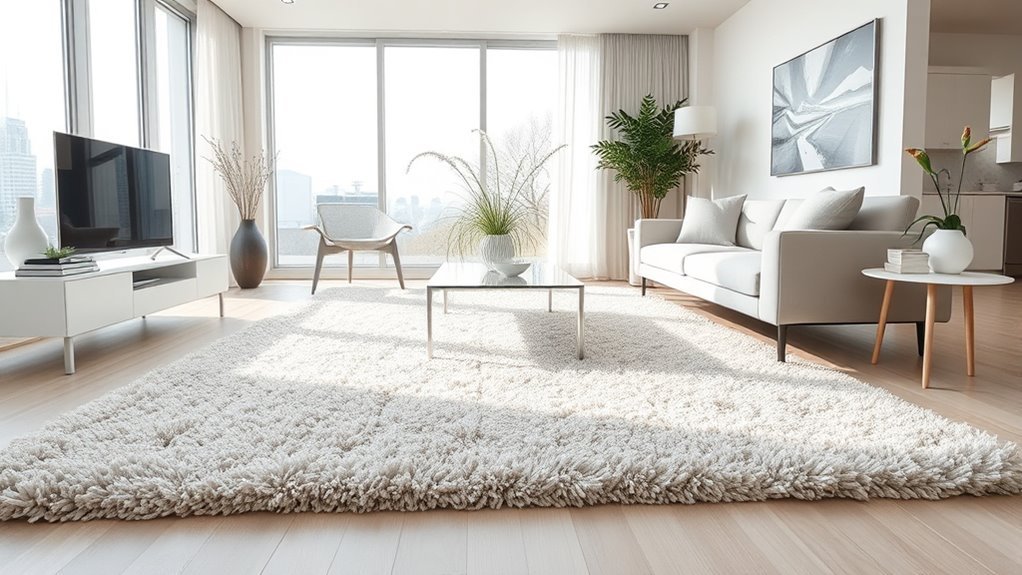
Choosing the right-sized area rug can transform your living room, anchoring your space and enhancing its overall aesthetic. Start by using painter’s tape to outline the desired rug area, ensuring it accommodates the front legs of your furniture for a cohesive look. This simple step helps you visualize the perfect fit and prevents the common pitfalls of selecting a rug that’s too large or too small.
Determine Optimal Rug Size
How can you guarantee your area rug enhances the overall aesthetic of your living room? To determine the ideal rug size, focus on creating a harmonious flow with your furniture. Here are some key tips:
- Make sure at least the front legs of large furniture pieces rest on the rug for a cohesive look.
- Use painter’s tape to outline your desired rug size, helping visualize its interaction with existing furniture.
- Leave 24 inches between the rug and walls in larger rooms; 10-18 inches in small spaces.
- Avoid rugs that are too small, as they can disconnect your furniture.
- Consider the room layout to enhance both design and functionality, adding visual interest to your seating area.
Visualize Placement With Tape
Visualizing your rug placement is an essential step in achieving a well-designed living room. Use painter’s tape to outline the desired rug dimensions on your floor. This allows you to see how the rug interacts with your furniture and the overall flow of the space. Aim for a cohesive look by ensuring the front legs of your main furniture pieces rest on the rug.
| Rug Size | Recommended Distance from Walls |
|---|---|
| Small (5×7 ft) | 10-18 inches |
| Medium (8×10 ft) | 24 inches |
| Large (9×12 ft) | 24 inches |
Avoid choosing a rug that’s too small, as it can disrupt the visual harmony of your living room.
Layer Textures Specifically for Living Room Decor
While creating a cozy and inviting living room, layering textures can transform your space into a dynamic haven. To achieve this, consider incorporating various materials and elements that enhance both comfort and style. Here’s how:
Layering textures in your living room can create a warm and inviting atmosphere, enhancing both comfort and style.
- Choose a well-placed area rug to anchor your decor styles.
- Mix soft textiles like cushions and throws with harder surfaces, such as wooden decor.
- Introduce different fabric types—think velvet, linen, and knits—to create a cozy look.
- Add natural elements, like plants, to bring warmth and energy.
- Play with the arrangement of these textures to foster an inviting atmosphere.
Personalize Your Space With Meaningful Touches
What makes a living room feel truly yours? It’s the personal items that tell your story. Incorporate family photos, travel souvenirs, and unique art pieces that resonate with your memories. These meaningful touches create a warm, inviting atmosphere, making your space feel alive. Balance these personal elements with your overall design theme to maintain a cohesive look. Stick to your established color palette, ensuring each piece enhances the decor rather than overwhelms it. Consider using heirlooms or cherished gifts to add depth and significance. Don’t hesitate to rotate your decor regularly; this keeps the space feeling fresh and dynamic, allowing your evolving style to shine. Embrace these details, and watch your living room transform into a true reflection of you.
Frequently Asked Questions
How to Decorate a Living Room Step by Step?
Start by defining your color palette, then arrange furniture for flow. Select lighting choices, add wall decor, textiles, and area rugs. Incorporate plants, accent pieces, and personal touches to create a vibrant, inviting space.
What Is the 3-5-7 Rule of Decorating?
The 3-5-7 Rule of decorating guides you to blend three textures, five colors, and seven patterns, enhancing your space planning. This approach enriches your color palettes, accent pieces, and wall art, fostering a dynamic, intentional design.
In What Order Should I Decorate a Room?
Start with budget planning and room function, then choose your color scheme. Next, tackle furniture placement, lighting options, and wall treatments. Finally, layer in flooring choices and accessory selection to showcase your personal style.
What Are the 7 Layers of Decorating?
The seven layers of decorating include flooring choices, wall treatments, furniture placement, lighting options, texture mixing, accessory selection, and art displays, allowing you to create a cohesive space that evolves with seasonal updates and personal flair.
Conclusion
By following these steps, you’ll transform your living room into a space that truly reflects your personality and lifestyle. Remember, decorating is more than just arranging furniture; it’s about creating an inviting atmosphere where memories unfold. So, why not take the plunge? Your dream living room is just a few thoughtful decisions away. Embrace the journey, and watch as your vision comes to life, turning your house into a home filled with warmth and character.

Leave a Reply