
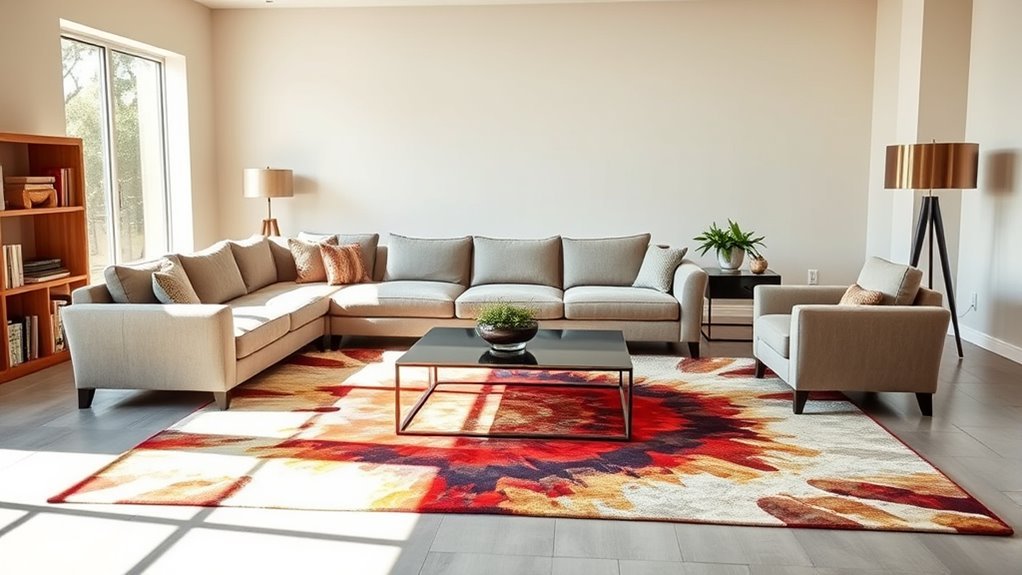
To achieve the perfect furniture scale in your living room, start by measuring the dimensions accurately, allowing for walkways of 30-36 inches. Use painter’s tape to outline potential furniture sizes on the floor, ensuring all pieces fit proportionately. Choose rugs that accommodate your furniture and maintain a balanced look with accessories. Keep furniture arranged for easy movement and visual appeal. Want to create a truly harmonious space? Discover more tips and tricks to elevate your living room design!
Understanding the Importance of Furniture Scale in Your Living Room
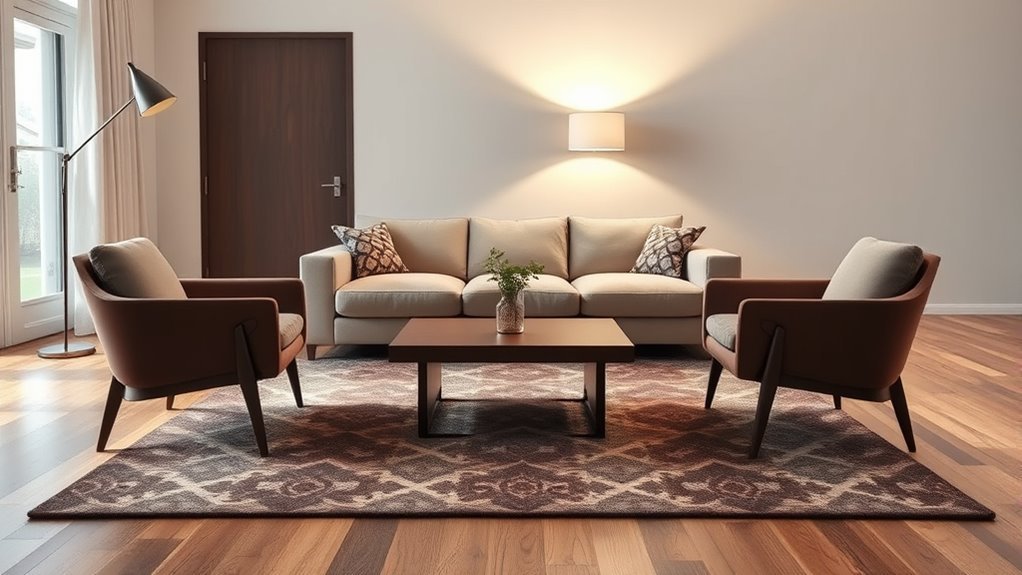
When you consider how to arrange your living room, remember that the scale of your furniture can make or break the space. Proper furniture scale guarantees each piece complements your room’s dimensions, creating visual harmony that feels liberating. By using proportionate furniture, you avoid a cluttered appearance and promote comfort. For instance, your coffee table should ideally occupy two-thirds the length of your sofa, enhancing both functionality and aesthetic appeal. Rugs, too, must be large enough to accommodate your furniture, preventing that “floating” effect that disrupts flow. Don’t forget about lighting—choose fixtures that resonate with the room’s measurements, like a chandelier that’s at least half the width of your dining table. Embrace these principles, and watch your living room transform.
Key Architectural Features Impacting Furniture Scale
When it comes to choosing the right furniture for your living room, the architectural features surrounding you can’t be ignored. Consider how your ceiling height, window placements, and any nooks or alcoves shape the space—these elements guide you toward the perfect scale and proportions. Aligning your furniture with these features guarantees a harmonious flow that elevates both comfort and style.
Ceiling Height Considerations
Ceiling height plays an essential role in shaping the overall aesthetic of your living room, influencing not just how spacious the area feels, but also how your furniture interacts with the architecture. In spaces with standard 8-foot ceilings, opt for furniture that stays within 30-36 inches high to maintain visual balance. Conversely, if your ceilings soar over 10 feet, incorporate taller pieces like bookshelves or floor lamps to draw the eye upward and enhance that liberating sense of space. Don’t forget about large light fixtures; they should match the ceiling height, ideally one inch for every foot. Ultimately, guarantee your furniture scale resonates with the proportions of windows and doorways for a harmonious, inviting design.
Window Placement Effects
Your living room’s atmosphere is not just shaped by ceiling height; window placement plays a pivotal role too. Larger windows invite openness, but your furniture must match that scale to maintain balance. Remember to measure the distance between furniture and windows; a 12-inch clearance is key to avoid a cramped look and enhance movement.
| Window Feature | Measurement Consideration | Furniture Recommendation |
|---|---|---|
| Height | Measure from floor to sill | Opt for taller furniture |
| Width | Measure the span | Choose wider items for balance |
| Sill Dimensions | Measure depth & style | Select pieces that complement |
| Treatment Style | Measure fabric length | Match drapes to window size |
Architectural Nooks Integration
Integrating furniture with architectural nooks can elevate the aesthetic and functionality of your living room, provided you pay attention to the dimensions of these unique features. Start by measuring your space, especially around recessed walls or built-in shelves, as they create visual boundaries that define your design. Consider the height and depth of architectural features like fireplaces or window ledges when selecting pieces; balance is key. Choose the scale of furniture that complements these elements—tall pieces for lofty ceilings and low profiles for cozy corners. Prioritize flow and accessibility to guarantee your living area remains inviting. Thoughtful integration of furniture with these architectural features transforms your space into a harmonious haven.
Measuring Your Living Room Dimensions Effectively
To create a harmonious living room, accurately measuring your space is crucial. Start with a tape measure to capture your room’s length and width from wall to wall. Don’t forget to factor in architectural features that could influence furniture placement. Here’s how to measure effectively:
- Measure ceiling height at multiple points for lighting options.
- Sketch your layout, marking windows, doors, and fixed elements.
- Allow clearance space: 30-36 inches for walkways and 16-18 inches between coffee tables and sofas.
- Double-check measurements, especially for larger pieces like sectionals.
These steps guarantee your furniture fits seamlessly into your living room, enhancing both comfort and style while liberating your creative vision!
How to Choose Furniture That Fits the Scale of Your Living Room
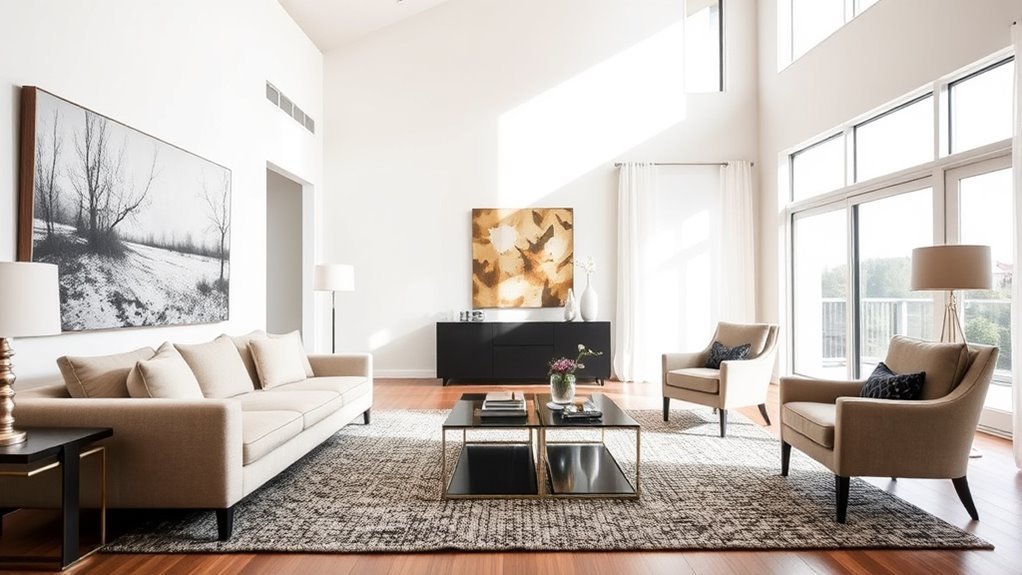
Finding the right furniture scale for your living room can transform the space into a cozy retreat or a stylish gathering spot. Start by measuring the width and depth of your room, considering both horizontal and vertical dimensions. When choosing furniture, make certain that larger pieces fit comfortably, allowing for streamlined designs in smaller areas. Use painter’s tape to outline potential dimensions on the floor; this helps you visualize the space and how different sizes will interact. Opt for area rugs that accommodate all major furniture pieces, letting the front legs sit on them for a cohesive look. Finally, select lighting fixtures that match the scale, creating an inviting atmosphere without overwhelming your beautifully curated space.
Allowing for Proper Walking Space and Traffic Flow
As you design your living room, it’s essential to prioritize walking space and traffic flow, guaranteeing your space feels open and inviting. To create a liberating atmosphere, here are key measurements to take into account:
- Allow 30 to 36 inches of clearance for major walkways to facilitate smooth movement.
- Keep a minimum of 24 inches between smaller furniture pieces, like accent chairs and walls, to prevent cramped conditions.
- Position coffee tables 16 to 18 inches away from sofas for comfortable access.
- In dining areas, guarantee at least 36 inches of clearance between tables and other furniture.
Use Painter’s Tape to Visualize Your Layout
Visualizing your living room layout can transform your design process from overwhelming to exhilarating. Grab some painter’s tape and start marking the dimensions of your potential furniture directly on the floor. This simple technique helps you see how each piece fits within your space, ensuring you maintain proper walking space. As you lay down the tape, you can measure distances to keep furniture proportions harmonious, preventing that cramped feeling. Experiment with different arrangements, adjusting the tape outlines until you discover a layout that feels both functional and visually appealing. By doing this, you’ll not only avoid overcrowding but also create a balanced and inviting atmosphere, making your living room a true reflection of your style.
Arranging Furniture for Balanced Aesthetics and Functionality
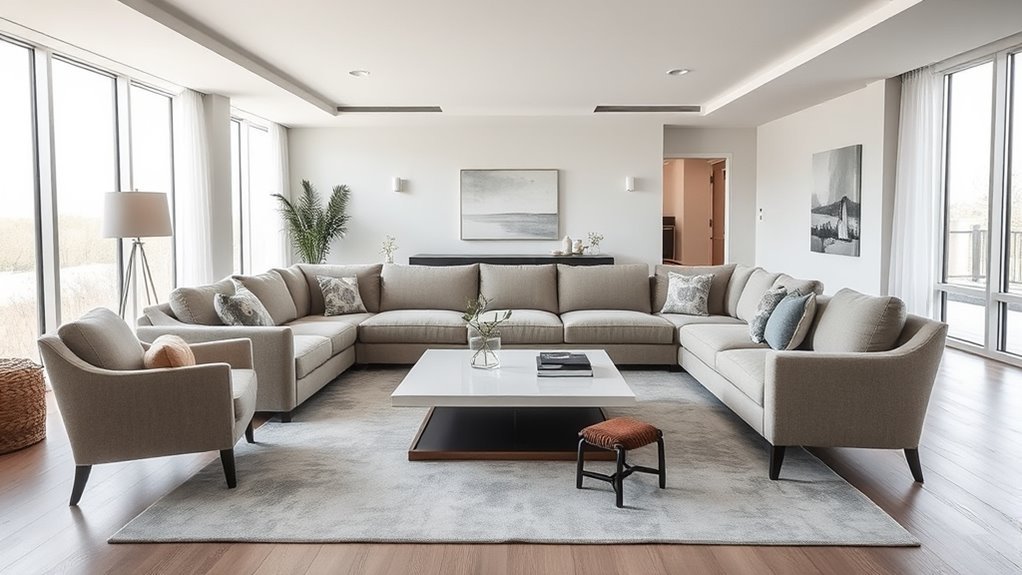
When you arrange your furniture thoughtfully, you create a living room that’s not just beautiful but also functional. To achieve balance, keep these tips in mind:
- Your coffee table should occupy about 2/3 the length of your sofa.
- Make sure major walkways allow for 30-36 inches of clear flow.
- Measure furniture carefully and visualize dimensions with painter’s tape.
- Choose rugs large enough for all front legs of your furniture to sit on.
Common Mistakes to Avoid When Scaling Furniture
When it comes to scaling furniture, it’s easy to make a few missteps that can throw off your entire living room’s vibe. You might overlook room dimensions or forget to measure clearance space, leading to cramped pathways and awkward layouts. Let’s explore these common pitfalls so you can create a harmonious and inviting space.
Ignoring Room Dimensions
One of the biggest missteps you can make in furniture planning is overlooking your room’s dimensions. Ignoring these crucial measures can lead to a living room that feels cramped or chaotic. To guarantee a harmonious space, keep these tips in mind:
- Measure both width and depth to avoid surprises during delivery.
- Consider vertical space; high ceilings can make low furniture feel lost.
- Account for architectural features like windows and doorways to prevent obstructions.
- Confirm pathways allow for 30-36 inches of clearance for smooth movement.
Overlooking Clearance Space
While it might be tempting to focus solely on the aesthetics of your living room, neglecting clearance space can quickly turn your design dreams into a cramped reality. To create a liberating environment, aim for 30 to 36 inches of clearance along major walkways. When you measure a room, don’t forget that coffee tables should sit 16 to 18 inches from your sofa, allowing for effortless movement. Remember, a tight width of the room can make you feel boxed in. Also, maintain 36 inches between dining tables and walls to guarantee smooth flow. By prioritizing these essential inches of space, you’ll enhance your living room’s functionality and aesthetic, transforming it into a welcoming oasis rather than a cluttered zone.
Misjudging Furniture Proportions
Misjudging furniture proportions can easily derail your living room’s design, leaving it feeling disjointed and uncomfortable. To avoid this, keep these common pitfalls in mind:
- Choosing pieces too small can create an empty, uninviting space.
- Pairing low sofas with tall bookshelves disrupts visual balance.
- Overcrowding with oversized furniture limits movement; aim for 30 to 36 inches of clearance in major walkways.
- Neglecting accessory scale makes them appear lost; artwork should occupy 1/2 to 2/3 of the wall space above furniture.
Properly scaling furniture guarantees large pieces dominate bigger rooms while smaller elements maintain harmony. By measuring how far each piece fits together, you’ll create a liberated, welcoming environment that feels just right.
Essential Tips for Ensuring Your Furniture Fits Perfectly in Your Living Room
To create a living room that feels inviting and functional, you need to guarantee your furniture fits just right. Start by measuring your space—length and width matter. Allow for 30-36 inches of clearance for easy movement. When choosing a coffee table, it should take up about two-thirds the length of your sofa to maintain balance. Rugs should extend 12-18 inches beyond your furniture legs for a cohesive look. If you have a dining area, make sure overhead lighting is at least half the table’s width for ideal appeal. Finally, select artwork that fills 50-66% of the wall above your furniture to avoid a disjointed appearance. Perfectly scaled furniture transforms your living room into a welcoming sanctuary.
Frequently Asked Questions
What Is the 2/3 Rule for Living Rooms?
The 2/3 rule guides you in achieving decor balance by ensuring furniture proportions enhance your living room layout. Optimize space with art and rugs, creating visual harmony that liberates your style and elevates your home’s ambiance.
What Is the 4 Inch Rule for Seating in a Living Room?
The 4-inch rule optimizes your seating arrangement by ensuring a comfortable gap between cushions, enhancing furniture proportions and flow. This thoughtful spacing transforms your living room layout into a cozy haven for conversation and connection.
What Is the 2/3 Rule for Couches?
The 2/3 rule for couches elegantly harmonizes your seating arrangements, suggesting your couch dimensions should occupy two-thirds of the wall. This design principle optimizes room proportions, ensuring your space feels liberated and inviting.
Is There an App That Helps You Arrange Furniture?
Yes, there are fantastic furniture arrangement apps like IKEA Place and RoomPlanner. These virtual room planners use augmented reality tools and online space simulators, letting you envision your interior design dreams before making any commitments.
Conclusion
To sum up, finding the right furniture scale for your living room not only enhances its aesthetic appeal but also elevates its functionality. Did you know that properly scaled furniture can make a room feel up to 30% larger? By taking the time to measure and visualize your space, you’ll create an inviting atmosphere that reflects your style. Don’t underestimate the power of proportion—your living room deserves furniture that fits just right, creating harmony and comfort for you and your guests.

Leave a Reply