
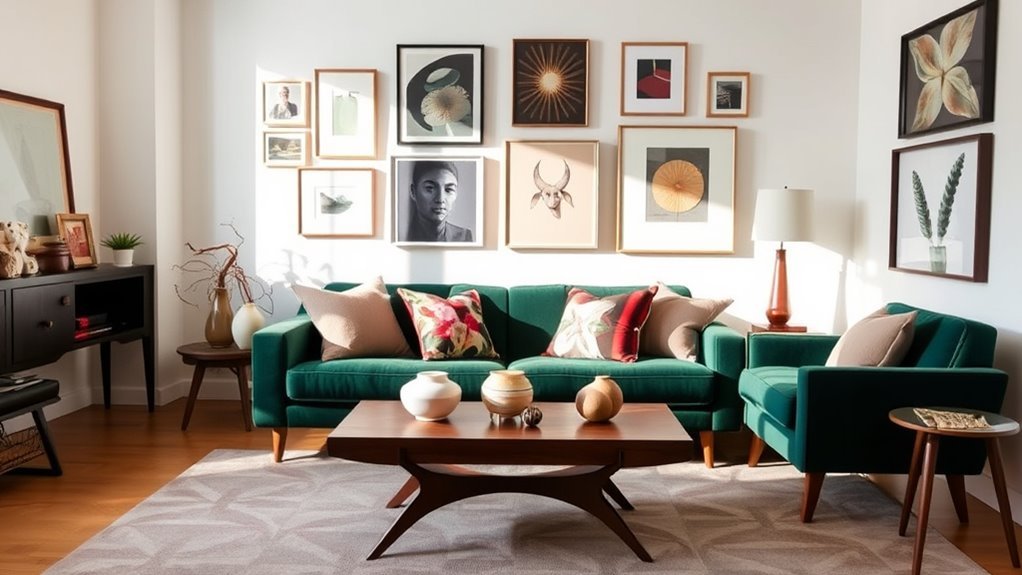
Mixing patterns in your living room starts with selecting a cohesive color palette that harmonizes vibrant hues and neutral tones. Choose a standout fabric as your showstopper, then balance it with smaller, subtler patterns that share color themes. Use solid colors as anchors to provide visual breaks. Pay attention to pattern scale, mixing large designs with smaller ones for harmony. Avoid common pitfalls by ensuring all patterns work together. Keep going to uncover more tips for a stylish space!
Understanding the Basics of Mixing Patterns
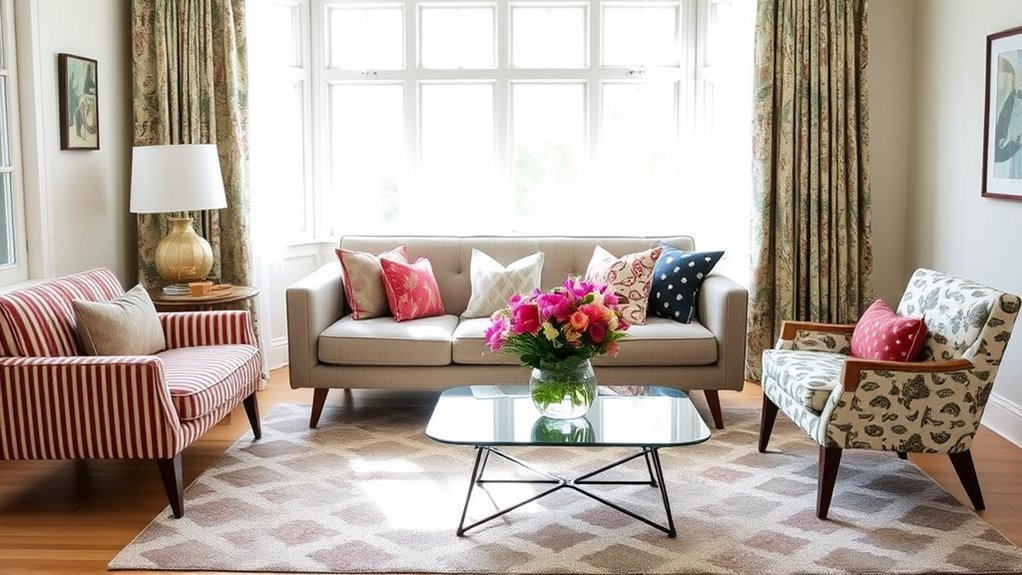
When you immerse yourself in mixing patterns in your living room, understanding the basics is key to creating a harmonious space. Start by exploring different patterns—florals, stripes, and geometrics can all coexist beautifully. Pay attention to the scale of patterns; larger designs can dominate, while smaller ones add subtlety. A successful mix relies on a cohesive color palette, ensuring that each element complements rather than clashes. Stripes are particularly versatile, acting as a unifying force among various patterns. Trust your instincts and embrace your unique style—confidence in your choices elevates your design game. By balancing these elements, you’ll craft a room that feels liberating and visually engaging, inviting creativity into your everyday life.
Picking a Cohesive Color Palette
Mixing patterns can be an exciting venture, but without a cohesive color palette, your living room might feel chaotic instead of charming. Start by selecting two or three colors that harmonize well; this foundation creates cohesiveness among your patterns and fabrics. Incorporate a neutral base to contrast with bolder hues, achieving visual balance and preventing overwhelming patterns. Thoughtfully add bright accent colors to energize those neutrals, crafting focal points that draw the eye. As you choose your palette, consider your existing furniture and decor; everything should relate for a unified look. Use the color wheel as your guide to identify complementary shades that enhance your design, ensuring your mix of patterns sings in perfect harmony.
Choosing Your Showstopper Fabric for Mixing Patterns
How do you find the perfect showstopper fabric that sets the tone for your living room? Start by selecting a fabric with a bold pattern or striking color that can serve as your focal point. This piece will anchor your design and inspire your overall color choices. Opt for a large-scale design to draw attention, allowing smaller patterns to mix in harmoniously. Remember, versatility is key; your showstopper fabric should complement various textures and patterns without overwhelming the space. Finalize your choice before diving into paint and decor decisions, as this will guide your design journey and guarantee a cohesive look. Embrace the freedom to express your style while creating a stunning, inviting atmosphere!
How to Balance Bold and Subtle Patterns in Your Space?
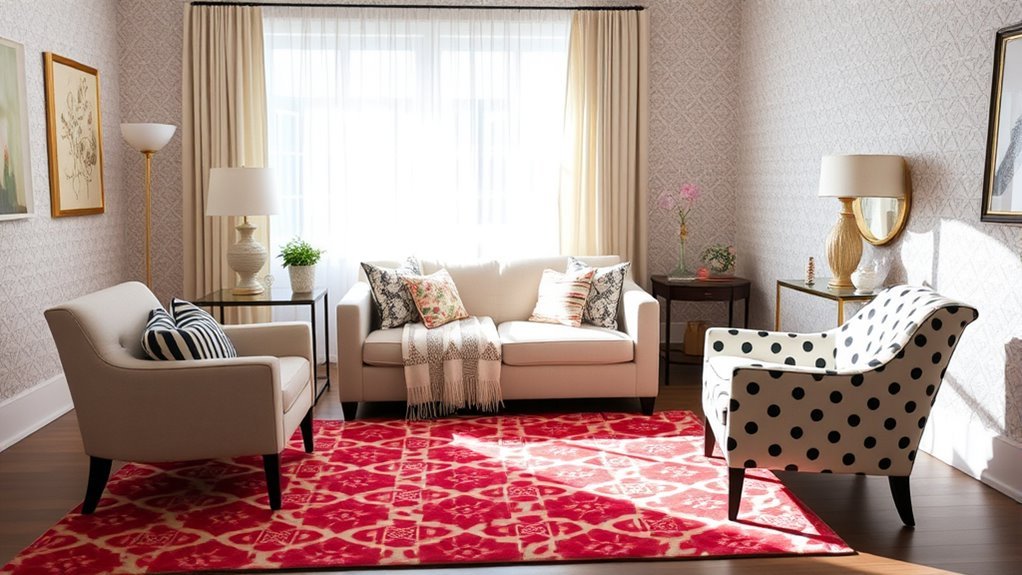
To create a harmonious living room, start by pairing bold patterns with subtle ones that share a similar color palette, ensuring they complement rather than compete. Solid colors act as anchors, providing a visual break and grounding your design amidst the lively patterns. Layering textures with accessories like throw pillows and rugs can enhance the overall aesthetic, allowing your space to breathe while still making a statement.
Pairing Scale and Color
Balancing bold and subtle patterns in your living room can transform the space into a cohesive and inviting environment. Start by prioritizing scale: pair a large-scale “showstopper” pattern with smaller designs to create visual harmony. This approach prevents overwhelming your space while allowing each pattern to shine. Next, choose a color palette of two to three complementary colors. This guarantees that both bold and subtle patterns work together seamlessly, avoiding any clash. Mix different types of patterns—think floral, geometric, and stripes—while keeping them within that unified color scheme. Regularly assess the overall visual impact, adjusting the proportions of bold versus subtle patterns to achieve the perfect balance and cohesion in your design. Embrace the art of mixing!
Using Solid Anchors
Incorporating solid anchors into your living room design creates a harmonious foundation that beautifully balances bold and subtle patterns. These elements, like a neutral sofa or a solid rug, break up busy designs, allowing each pattern to shine without overwhelming your space. It’s essential to choose a cohesive color palette that ties your solids and patterns together. To layer your patterns effectively, pair large, striking designs with smaller, subtle ones for visual harmony.
| Solid Anchors | Purpose |
|---|---|
| Neutral Sofa | Provides a visual foundation |
| Solid-Colored Rug | Breaks up busy patterns |
| Cohesive Color | Ties patterns together |
| Patterned Pillows | Adds interest without chaos |
Embrace these tips, and watch your living room transform into a sanctuary of style!
Layering Textures Effectively
Layering textures in your living room can transform the space into a mesmerizing visual experience. Start with a neutral rug to anchor the room, allowing bold patterns to shine without overwhelming the atmosphere. Balance striking designs, like large florals, with subtle patterns, such as small stripes, to achieve visual harmony. Incorporate varying scales; pair a large print on your sofa with smaller patterns on throw pillows for a cohesive look. Rich materials like velvet contrast beautifully with lighter fabrics like linen, adding depth without competing for attention. Remember to step back regularly and assess the overall impact of your layering textures and patterns in the room, ensuring every element contributes to a liberated, harmonious design.
Using Solid Colors for Visual Balance
While mixing patterns can add excitement to your living room, solid colors play an essential role in achieving visual balance. They provide a grounding effect, allowing your bold patterns to shine without overwhelming the space. Consider using solid-colored furniture, like sofas or chairs, as anchors amidst the mixed patterns, ensuring they harmonize with your overall color palette. Incorporate solid accent pieces, such as throw pillows or blankets, to break up visual clutter and create a cohesive look. A neutral rug can also unify various colors and patterns, enhancing the room’s flow. By strategically incorporating solid colors, you enhance the impact of your patterned elements, allowing them to stand out beautifully without clashing, achieving a liberating space you’ll love.
Understanding Scale: Layering Patterns Effectively
When you’re mixing patterns, understanding scale is essential for creating that perfect visual balance. Pairing a bold, large-scale design with smaller, subtler patterns not only enhances the overall aesthetic but also keeps the space feeling cohesive. Remember, layering textures and patterns thoughtfully can transform your living room into a stylish haven without overwhelming it.
Scale Matters in Mixing
Mixing patterns in your living room can transform the space into a vibrant and inviting retreat, but understanding scale is essential for achieving that perfect balance. Pair larger designs with smaller or medium-scale patterns to maintain visual balance. A good rule of thumb is to use one “showstopper” fabric, allowing smaller patterns to complement without competing.
| Scale Type | Example |
|---|---|
| Large Scale | Bold floral print on sofa |
| Medium Scale | Subtle stripes on curtains |
| Small Scale | Tiny geometric on pillows |
Utilizing different scales creates dynamic visual interest while ensuring design harmony. Always assess your patterns together under intended lighting to see how they interact. Happy mixing!
Balance Bold and Subtle
To create a harmonious living room that balances bold and subtle patterns, it’s essential to layer your designs thoughtfully. Start with one large-scale pattern as your “showstopper”—maybe a vibrant floral or an oversized geometric. Then, mix and match patterns by incorporating smaller-scale designs that add visual interest without overwhelming the space. Pair those bold patterns with subtle textures or solid colors to maintain balance and harmony. Stick to a consistent color palette to unify your selections, ensuring they complement rather than clash. Regularly assess your arrangements, adjusting as needed to preserve that delicate balance. By mindfully layering patterns, you’ll craft a living room that feels cohesive, inviting, and effortlessly stylish.
Layering Textures and Patterns
While crafting a living room that feels dynamic yet cohesive, understanding the scale of your patterns is essential. Start by layering textures with a mix of sizes: pair a larger floral pattern with smaller geometric designs to create visual interest without overwhelming the space. Aim for a ratio of one “showstopper” pattern to several medium and small-scale options for balance. Consider the weight and texture of fabrics; combining lightweight materials with heavier ones enriches the layered effect. Incorporate solid colors or neutral elements to break up patterns within the space, maintaining order. Finally, experiment with various materials, like woven textiles alongside smoother fabrics, to add depth and richness to your design. Embrace the art of layering!
Incorporating Vintage Fabrics: Tips for Adding Texture and Character
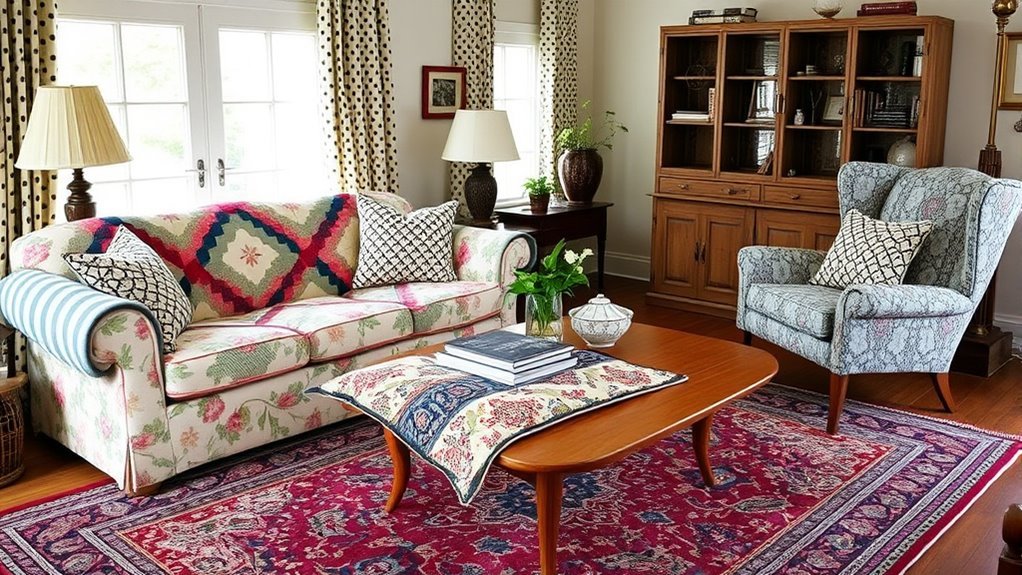
Incorporating vintage fabrics into your living room can transform the space, adding layers of texture and a sense of history that modern materials often lack. These unique fabrics introduce enchanting patterns in interior design, creating focal points that draw the eye. Use vintage throw pillows to contrast with sleek, contemporary furniture, or consider drapery that whispers stories of the past. When layering these textiles, be mindful of their delicacy and condition; verify they’re suitable for your intended use. You can also explore digital printing techniques to recreate vintage patterns on durable fabrics, merging old-world charm with modern resilience. This blend of styles creates a liberating atmosphere, celebrating both heritage and innovation in your decor.
Avoiding Common Mistakes in Pattern Mixing
Mixing patterns can elevate your living room’s design, but it’s easy to stumble into common pitfalls that can undermine your efforts. Here are some important mistakes to avoid:
- Limit yourself to one large-scale pattern as a showstopper; use smaller patterns to complement it.
- Establish a cohesive color palette—ensure all patterns share at least one common color to prevent clashing.
- Choose patterns selectively; avoid overloading surfaces like curtains, upholstery, and rugs to maintain harmony.
- Consider the scale of patterns; mix larger patterns with smaller ones for balance and visual interest.
Frequently Asked Questions
How to Mix Patterns Without Clashing?
To mix patterns without clashing, focus on pattern harmony and color balance. Consider scale, use texture variety, and establish focal points. Trust your instincts, and embrace experimentation to create a lively, cohesive space.
What Is the 3-5-7 Rule of Decorating?
Did you know that 70% of interior designers swear by the 3-5-7 rule? You’ll achieve visual harmony by utilizing three patterns, five color combinations, and seven textures, enhancing furniture styles and accessory layering for a balanced space.
What Is the 70/20/10 Rule in Interior Design?
The 70/20/10 rule in interior design promotes style cohesion, balancing color theory and texture through furniture arrangement. Use 70% dominant color, 20% secondary, and 10% accent to achieve visual harmony and a liberated atmosphere.
What Is the 2/3 Rule for Living Rooms?
In your living room layout, apply the 2/3 rule: two-thirds solid colors or muted patterns, one-third bold designs. This balance creates harmony in your color palette and furniture arrangement, making pattern selection feel effortless and liberating.
Conclusion
Mixing patterns in your living room can be an exhilarating challenge, but it doesn’t have to be a gamble. The theory that clashing patterns are a design faux pas is often overstated; when done right, they can create a vibrant, dynamic space. Trust your instincts, embrace the unexpected, and remember to balance bold with subtle. By thoughtfully layering patterns and colors, you’ll discover a harmonious look that reflects your unique style, turning your living room into a enthralling haven.

Leave a Reply