
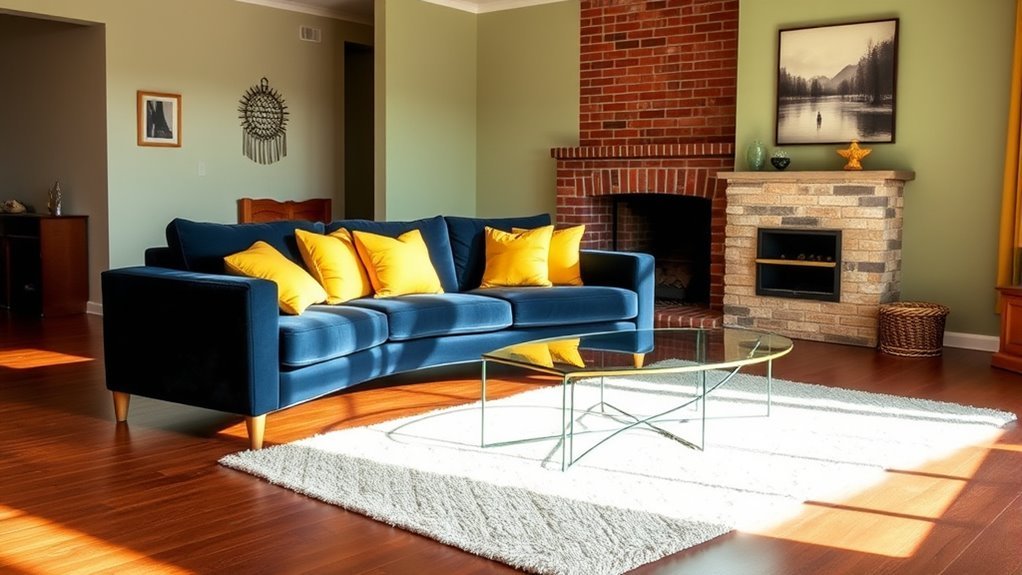
To mix warm and cool tones in your living room, start by identifying your existing elements, like wooden furniture or blue walls. Establish a neutral base, and add warmth with accents like throw pillows or art. Layer textures, combining soft fabrics and natural materials, for added depth. Warm-toned lighting can soften cool hues and enhance coziness. Place contrasting pieces strategically for balance. Curious about further tips for achieving a harmonious space? There’s much more to explore!
Why Understanding Warm and Cool Tones Is Essential for Color Mixing
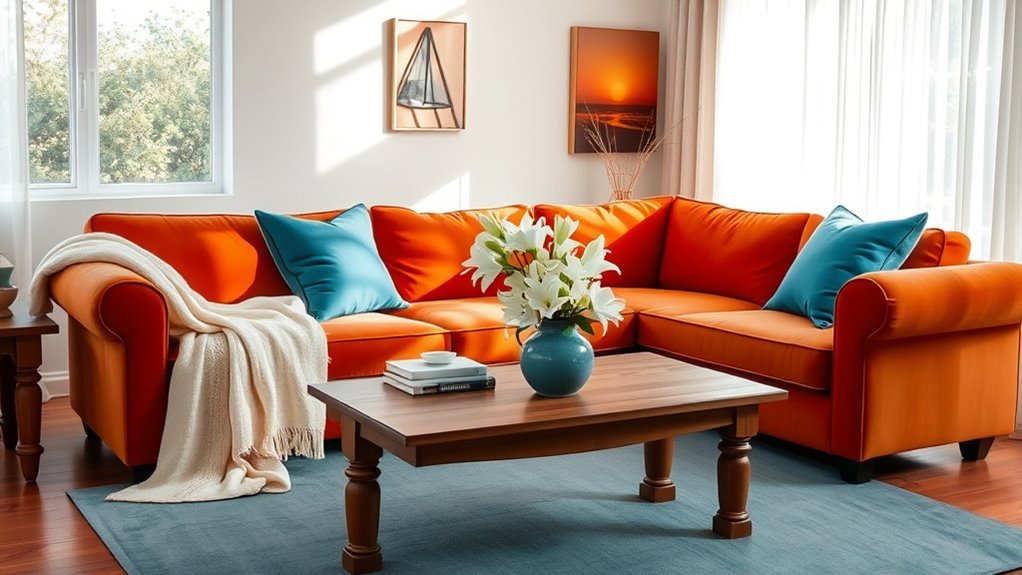
Understanding warm and cool tones is essential for creating a harmonious living space, as these colors can drastically influence the room’s overall feel. Warm colors, like fiery reds and sunny yellows, evoke feelings of coziness and togetherness, making you feel right at home. When you embrace these shades, you invite warmth and energy into your environment. However, balancing warm tones with cool hues—such as serene blues and calming greens—adds depth and sophistication. This contrast enhances visual interest, preventing your space from feeling flat or overly stark. By mastering the relationships between warm and cool colors, you can create a dynamic atmosphere that not only reflects your personality but also liberates your spirit, inviting comfort and creativity into your everyday life.
How to Mix Warm and Cool Tones in Your Living Room Palette
Mixing warm and cool tones in your living room palette can transform the space into a vibrant yet balanced retreat. Start by identifying existing warm elements, like wooden furniture, and cool features, such as blue walls. Create harmony with a neutral base, adding accents in warm hues. Here are some key ideas to get you started:
- Use a soft grey or beige as your backdrop.
- Introduce contrasting pieces, like a warm throw on a cool sofa.
- Experiment with various textures, combining soft fabrics with cool metal accents.
- Utilize warm-toned lighting to soften cool colors and enhance the ambiance.
Utilize Warm Colors as Accent Pieces Effectively
To make your living room pop, strategically choose warm-colored accents that draw the eye and create a sense of comfort. Incorporating textured elements like soft throws or vibrant pillows not only adds depth but also harmonizes the overall design. By blending these warm pieces with your cool-toned furniture, you’ll establish a balanced and inviting atmosphere.
Choose Strategic Accents
While cool tones create a serene backdrop in your living room, integrating warm colors as accent pieces can instantly elevate the space. By strategically placing these vibrant hues, you can achieve a balanced and inviting atmosphere. Here are some ideas to reflect on:
- Throw pillows in reds or oranges can provide a lively contrast on cool-toned sofas.
- Artwork featuring both warm and cool hues creates a visual harmony that ties the room together.
- Decorative items, like vases or rugs in warm tones, add depth and warmth to your color palettes.
- Light fixtures with warm-toned bulbs soften the cool colors and enhance the cozy vibe.
Let these accents liberate your living room, transforming it into a welcoming retreat.
Incorporate Textured Elements
Incorporating textured elements into your living room can truly elevate the impact of warm accent colors, creating a layered and inviting atmosphere. Use textured throw pillows in deep reds or oranges on your cool-toned furniture to create a striking contrast. Select artwork featuring both warm and cool hues to serve as a focal point, harmonizing the space. Decorative items like vases or rugs in warm tones will soften the overall cool feel, making the room feel cozy. Don’t forget warm-toned light fixtures; they enhance warmth in a primarily cool palette. Layer soft fabrics with natural materials like wood to complement your warm accents, ensuring your room feels inviting as you mix warm and cool for a beautifully balanced home decor.
Layer Textures to Enhance Color Combinations
As you mix warm and cool tones in your living room, layering textures becomes essential for creating a harmonious and inviting space. By incorporating various materials, you enhance the vibrant interplay of colors while inviting comfort. Consider these ideas to elevate your design:
- Natural wood or stone: Use warm-toned materials to ground cool elements.
- Soft fabrics: Add cotton or velvet in warm colors to soften cool surfaces.
- Mixed metals: Pair warm brass or gold with cool silver to create balance.
- Decorative accents: Introduce woven baskets or knitted blankets in warm hues for tactile variety.
These textures not only enrich the visual experience but also make your living room feel cozy and welcoming, beautifully blending warmth with coolness.
Use Lighting to Balance Warm and Cool Tones
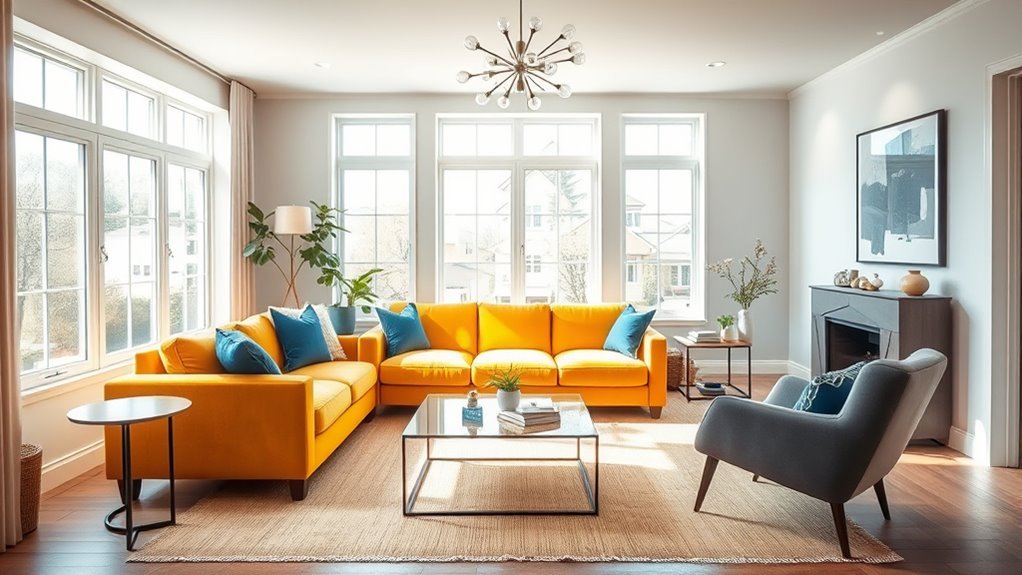
To create a balanced atmosphere in your living room, harnessing the power of lighting is key. Warm lighting, like soft yellow or amber bulbs, can beautifully soften cool-toned colors, inviting you into a cozy embrace. Use dimmers to adjust the intensity throughout the day, allowing you to find that perfect equilibrium. Embrace natural light, but remember that shaded areas benefit from warm lighting techniques to maintain harmony. Layer different light sources, such as floor and table lamps with warm-toned bulbs, to add depth and richness to your space. Avoid harsh overhead lighting that can accentuate cool tones. Instead, diffuse your light with multiple sources, crafting a warm and inviting ambiance that liberates your living room’s potential.
Start With Your Existing Elements: Assessing Existing Elements
Understanding the existing elements in your living room is the first step toward achieving a harmonious blend of warm and cool tones. Start with a thorough color assessment to identify the dominant tones in your furniture, flooring, and walls. Consider the textures and materials in your space to gauge their temperature:
Assess the colors and materials in your living room to create a harmonious blend of warm and cool tones.
- Furniture: Is it wood (warm) or metal (cool)?
- Flooring: What hue do your floors present?
- Natural Light: How do windows influence color perception?
- Decor Items: What accents (artwork, rugs, pillows) are present?
Take photos of your space to analyze how colors interact under different lighting. This visual inventory will empower you to curate a balanced palette that truly resonates with your style.
Add Dimension With Contrasting Furniture and Decor
When you mix warm and cool tones in your living room, incorporating contrasting furniture and decor can create a dynamic, inviting atmosphere. Think about layering textures: a sleek, cool-toned sofa paired with a warm wooden coffee table adds depth to your furniture arrangement. You might also introduce leather or warm-toned chairs in a cool-toned lounge area for visual warmth and contrast. In your kitchen, cool-toned barstools can refresh warm accents, maintaining balance. Don’t forget decorative elements! Throw pillows or rugs in warm colors can complement your cool-toned furniture beautifully. These thoughtfully chosen contrasts enrich your space, making it not only stylish but also inviting and liberated, inviting you to relax and enjoy your surroundings.
How to Ensure Your Space Feels Cohesive and Inviting
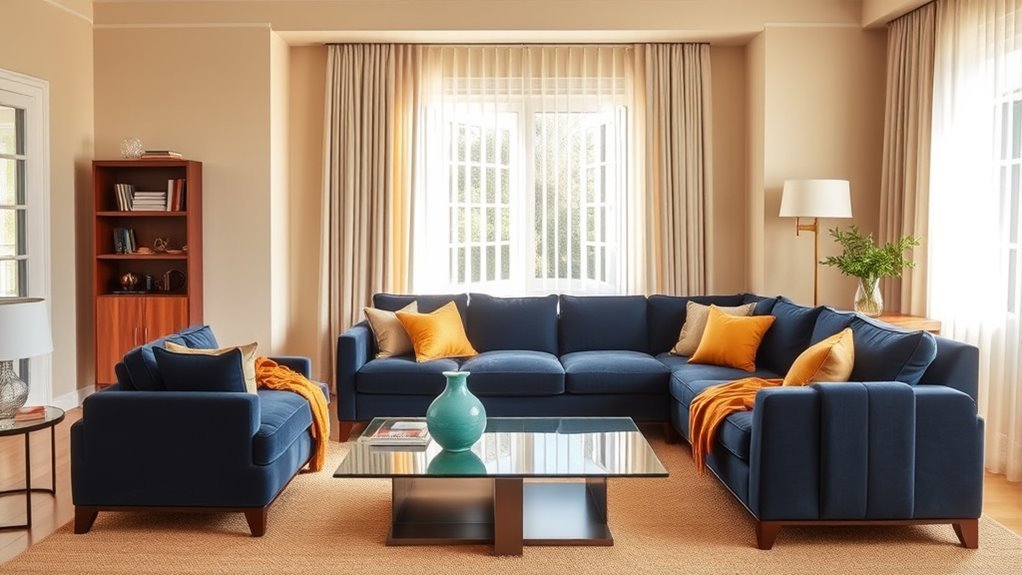
Creating a cohesive and inviting living room hinges on your ability to blend warm and cool tones seamlessly. Start by establishing a neutral base color that resonates with both tones. Here’s how to achieve color harmony:
- Balance warm and cool accents—think warm throw pillows on a cool sofa.
- Layer textures, combining soft fabrics and natural materials to enhance warmth.
- Use warm-toned lighting to soften cool colors, creating a welcoming atmosphere.
- Choose artwork and decor that incorporate both warm and cool hues for a unified look.
Frequently Asked Questions
How to Mix Warm Colors?
To mix warm colors, layer shades like reds and oranges with softer accents. Use color psychology to create energy and warmth, balancing vibrant hues with natural materials for a liberated, inviting atmosphere that feels harmonious.
What Is the 70 20 10 Rule in Decorating?
The 70 20 10 rule in decorating guarantees color harmony by allocating 70% for a dominant color, 20% for a secondary hue, and 10% for accents, creating a balanced, inviting space that feels liberated and harmonious.
What Colors Make Warm Colors?
Did you know warm colors can boost your mood by up to 60%? To create these energizing hues, mix reds and yellows, adding white for softness or deeper shades for richness, tapping into color psychology.
What Colors Make Warm Grey?
To create warm grey, blend medium grey with color combinations like beige, taupe, or soft brown. Add hints of yellow or peach to enhance warmth, crafting an inviting, cozy atmosphere in your space.
Conclusion
In the world of interior design, it’s often said, “Variety is the spice of life.” By thoughtfully mixing warm and cool tones, you can create a vibrant, inviting living room that reflects your personality. Remember to layer textures, utilize lighting, and assess your existing elements to guarantee harmony. With these tips, your space will not only feel cohesive but also alive with energy, making it a perfect retreat for both you and your guests.

Leave a Reply