
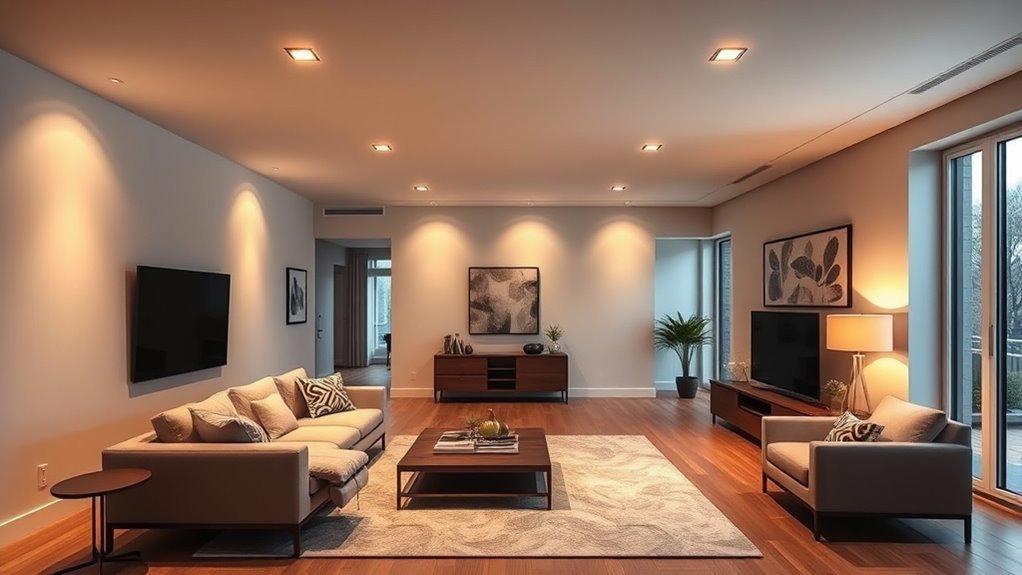
To place recessed lights in your living room, start by identifying key areas like seating and artwork. Space the lights 5-7 feet apart and keep them 2-3 feet from walls to minimize shadows. Aim for 20-30 lumens per square foot for balanced brightness. Use dimmable options for versatility and focus on creating focal points. Verify fixtures are secured and check their distribution. With these steps, your space will shine brilliantly; discover even more tips for a refined setup.
Why Recessed Lighting Is Ideal for Living Rooms
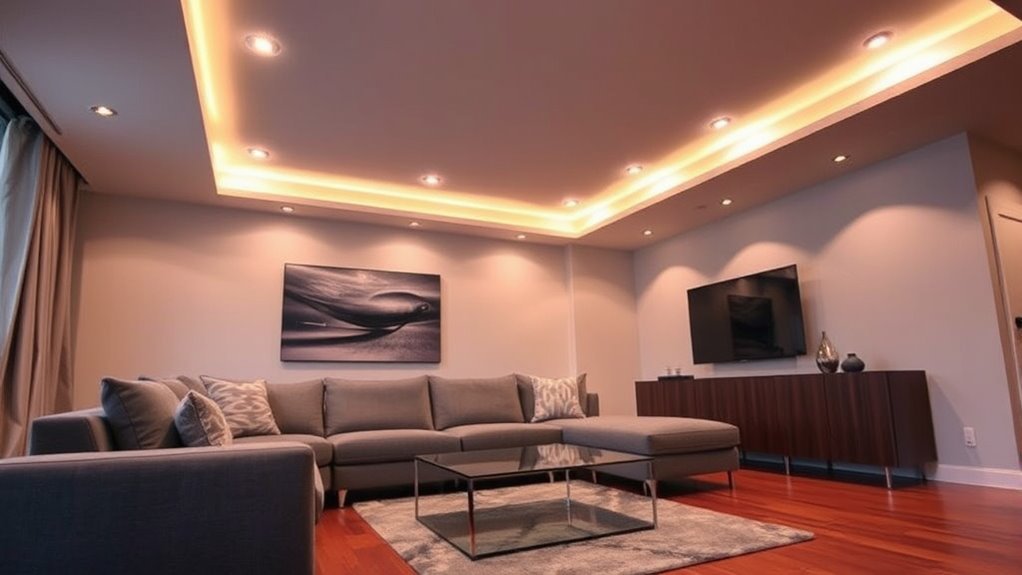
When you’re looking to create an inviting atmosphere in your living room, recessed lighting stands out as an ideal choice. Its sleek, unobtrusive design enhances your space’s aesthetic without cluttering visuals. With a thoughtful recessed lighting layout, you can explore various lighting options, tailoring the ambiance to suit your activities or moods. Dimmable LED recessed lights offer energy efficiency while allowing you to adjust brightness effortlessly. This flexibility lets you create warm ambient lighting or dramatic focal points that highlight specific architectural features and artwork, adding depth and character. By properly spacing recessed lights, you’ll achieve balanced illumination, reducing harsh shadows and ensuring your key areas shine just right, transforming your living room into a mesmerizing retreat.
Identify Key Areas for Recessed Lighting
After embracing the elegance of recessed lighting, it’s time to pinpoint where to place these fixtures for maximum impact. Start by identifying focal points like seating areas, artwork, or unique architectural features that deserve a spotlight. For task lighting, consider spaces such as reading nooks or desks where effective illumination enhances comfort and functionality. Make certain your lighting placement avoids direct glare on seating to create a welcoming atmosphere. Balance is key; evenly distribute lights around the room, ideally spacing them 5 to 7 feet apart. Position recessed lights 2 to 3 feet from walls to avoid shadows and guarantee even light distribution throughout the space, illuminating your living room beautifully and freely.
Best Spacing Guidelines for Recessed Lights
Spacing is essential when it comes to recessed lights in your living room. For an 8-foot ceiling, position your recessed lights about 5 to 7 feet apart for balanced illumination. Keep them 2 to 3 feet from walls to prevent harsh shadows and maximize light distribution. Center the first light over seating areas or focal points to enhance your space’s atmosphere. If you’re using multiple rows, stagger the fixtures for a more uniform spread. Remember, fewer, high-quality lighting fixtures can elevate your design without overcrowding the ceiling.
| Ceiling Height | Spacing Guidelines | Distance from Walls |
|---|---|---|
| 8 feet | 5-7 feet apart | 2-3 feet |
| 9 feet | 6-8 feet apart | 2-3 feet |
| 10 feet | 7-9 feet apart | 2-3 feet |
| 11 feet | 8-10 feet apart | 3-4 feet |
| 12 feet | 9-11 feet apart | 3-4 feet |
How to Avoid Shadows for Even Light
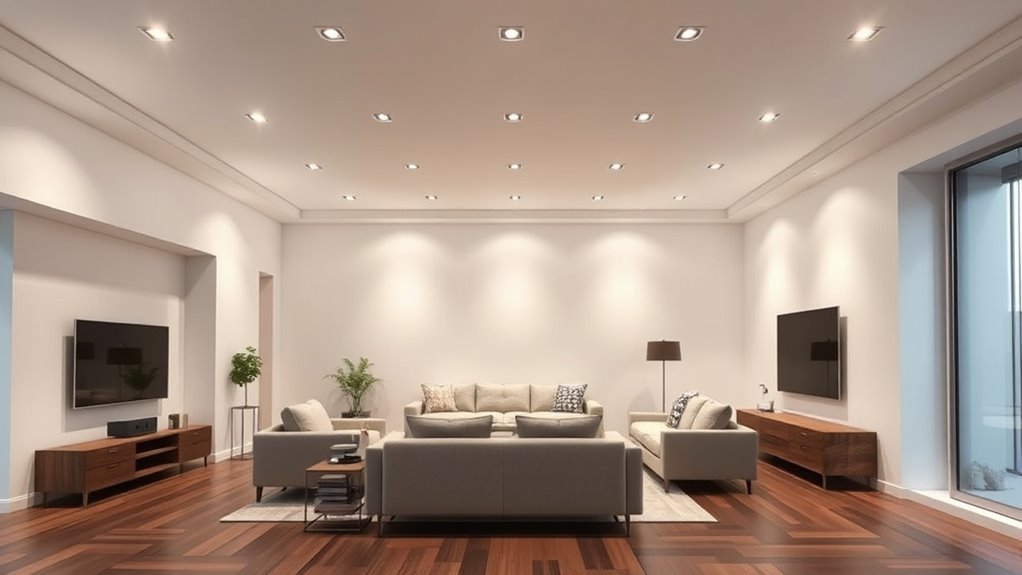
To achieve even light distribution and minimize shadows, keep your recessed lights 2-3 feet away from walls. This spacing not only enhances brightness but also helps eliminate dark corners. By strategically positioning your fixtures, you’ll create a warm, inviting atmosphere that showcases your living room beautifully.
Maintain Distance From Walls
When planning the placement of recessed lights in your living room, keeping a distance of 2 to 3 feet from the walls is essential. This distance helps avoid harsh shadows and guarantees a warm, inviting atmosphere. Here are some tips to take into account:
- Maintain 5 to 7 feet between recessed lights for balanced illumination.
- Avoid corners to minimize shadowing and enhance brightness.
- Opt for canless downlights or wider beam angle fixtures to expand light coverage.
Ensure Even Light Distribution
Properly positioning your recessed lights is key to achieving an inviting atmosphere in your living room. To guarantee even light distribution, keep your lights 2-3 feet away from walls and space them 5-7 feet apart. This layout minimizes shadows and harsh glare, creating a warm embrace of light. Installing recessed lights at a height of 7-8 feet enhances diffusion, further reducing dark spots. Center your lights over seating areas to maximize comfort and warmth. Additionally, consider using dimmable recessed lights. This flexibility in brightness levels allows you to tailor the ambiance for various activities, elevating your living experience. With thoughtful placement, you’ll illuminate your space beautifully, liberating it from unwanted shadows.
Select the Best Recessed Lights for Your Space
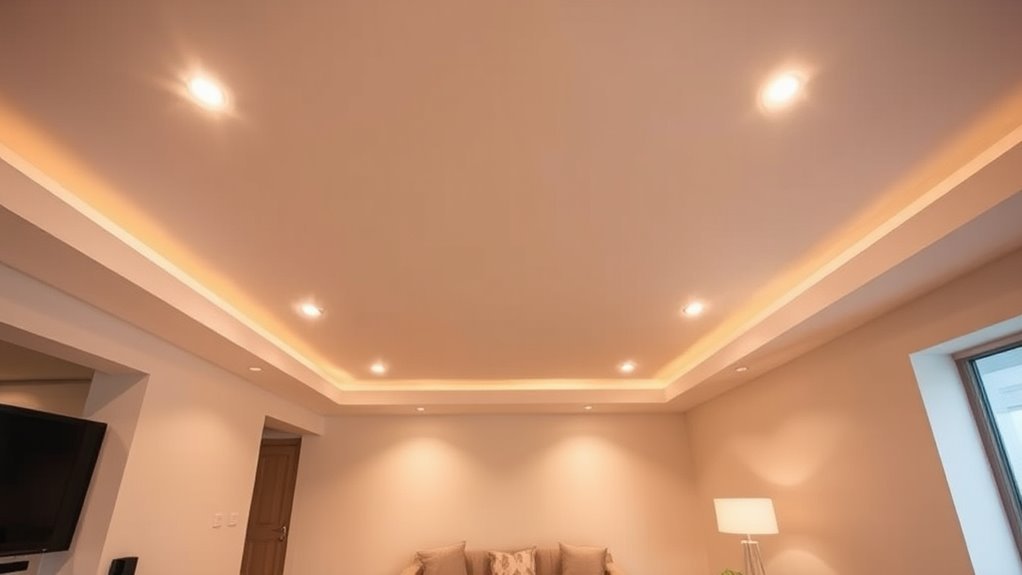
When selecting recessed lights, you’ve got options that can dramatically influence your living room’s ambiance. Consider the types of fixtures available and how their beam angles will affect the light distribution; a wider angle is perfect for general illumination, while a narrower one can highlight specific features. Choosing the right combination not only enhances the aesthetics but also optimizes functionality in your space.
Types of Recessed Lights
Choosing the right type of recessed lights can dramatically transform your living room’s ambiance and functionality. To elevate your space, consider these options:
- LED Bulbs: Energy-efficient and lasting, they use up to 90% less energy than incandescent bulbs.
- Adjustable Fixtures: Opt for gimbal or swivel features to direct light where it’s needed, perfect for showcasing art or architectural details.
- Dimmable Lights: Increase versatility by allowing you to set the perfect brightness for any mood or activity.
Consider Beam Angle
Understanding the beam angle of recessed lights is essential for achieving the desired lighting effect in your living room. The beam angle determines how wide or narrow the light spreads, with common ranges of 15 to 60 degrees. If you want to emphasize specific features like artwork, opt for a narrow beam angle (15-30 degrees) for impactful accent lighting. For general illumination, wider angles (40-60 degrees) create a more uniform glow across seating areas. Consider adjustable recessed lights for flexibility—this way, you can shift the focus based on activities or moods. Remember, the room’s height and ambiance shape how effective each beam angle will be, so choose wisely to liberate your space with perfect illumination.
How to Create Focal Points With Recessed Lighting
Creating enchanting focal points with recessed lighting can transform your living room into an inviting sanctuary. Start by identifying key areas that deserve attention. Here’s how to create a cozy atmosphere with recessed lights:
- Position the first recessed light centered over your primary seating area to establish a clear focal point.
- Use additional lights to accentuate architectural features like built-in shelves or unique wall textures, enhancing visual interest.
- Aim recessed lights at a 30-degree angle towards these focal points to optimize illumination.
Maintain a distance of 2 to 3 feet from walls to avoid harsh shadows, ensuring a balanced, well-lit environment. With these techniques, you’ll elevate your space while fostering warmth and charm.
How to Use Dimmers for Recessed Lighting
When it comes to enhancing your living room’s atmosphere, utilizing dimmers for recessed lighting can make all the difference. Dimmers let you control brightness levels, allowing you to create the perfect ambiance for any occasion. Installing dimmer switches is straightforward, often requiring just basic wiring skills, and they work seamlessly with most LED light bulbs. By opting for dimmable LED bulbs, you not only boost energy efficiency but also enjoy significant savings on your electricity bill. For a cozy movie night, consider setting dimming levels between 30-70% of full brightness. If you crave even more convenience, smart dimmers can be controlled via apps or voice commands, giving you ultimate freedom to personalize your living room lighting experience.
What to Watch Out For When Installing Recessed Lights?
Before you immerse yourself in installing recessed lights, there are several essential factors to take into account that can make or break your lighting design. Here’s what you should keep in mind:
- Spacing: Position lights 5 to 7 feet apart and 2 to 3 feet from walls to prevent harsh shadows.
- Obstructions: Check for ceiling fans or beams that can disrupt light flow, and avoid placing lights directly above task areas.
- Brightness: Aim for 20-30 lumens per square foot to achieve the right lighting levels for comfort and ambience.
Frequently Asked Questions
Can I Install Recessed Lights on Sloped Ceilings?
Yes, you can install recessed lights on sloped ceilings. Consider lighting angle and ceiling height impact for ideal recessed light placement, ensuring you achieve both functionality and aesthetic appeal in your unique space.
What Is the Best Wattage for Recessed Lights in Living Rooms?
In the age of disco, you’d want 6-12 watts per recessed light for ideal living room brightness. Consider energy efficiency and lighting ambiance; dimmable options can elevate your space, creating a liberated atmosphere for relaxation.
How Do I Choose the Right Trim for Recessed Lights?
Choose trim styles that complement your design aesthetics while considering light color and energy efficiency. Opt for finishes that enhance your space’s vibe, ensuring harmonious integration with existing decor and maximizing illumination’s impact on your living room.
Are There Specific Types of Bulbs Recommended for Recessed Lighting?
Isn’t it liberating to know LED options offer superior bulb brightness and energy efficiency? Choose bulbs with a warm color temperature for cozy vibes, or cooler tones for a vibrant atmosphere. Your living room deserves it!
How Can I Minimize Noise From Recessed Lighting Fixtures?
To minimize noise from recessed lighting fixtures, use effective soundproofing techniques. Proper fixture placement, along with lighting insulation and acoustic panels, can greatly reduce unwanted sound, creating a serene environment where you can truly unwind.
Conclusion
By strategically placing recessed lights in your living room, you can transform the space into a warm, inviting atmosphere. Did you know that well-designed lighting can increase a home’s appeal by up to 15%? With the right techniques, you can enhance focal points and eliminate shadows, making your living area not just functional but also aesthetically pleasing. So roll up your sleeves and create a beautifully lit environment that reflects your style and elevates your daily living experience.

Leave a Reply