
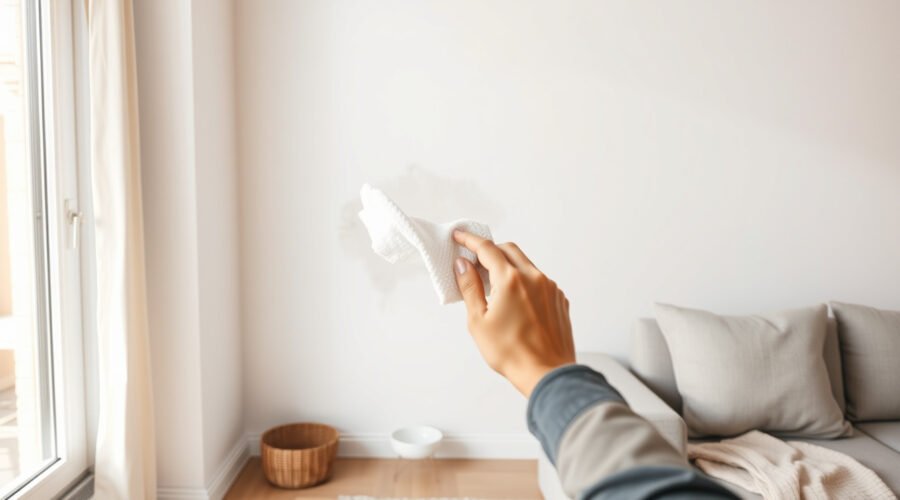
Spot cleaning painted walls is the safest way to remove small marks, fingerprints, scuffs, and stains without washing the entire living room. The key is to start with the gentlest method, test first, use very little moisture, and adjust your pressure based on the paint finish.
Quick Answer
To spot clean painted walls, dust the area first, test your cleaner in a hidden spot, then dab the mark with a soft cloth dipped in warm water and a few drops of mild dish soap. Rinse with a barely damp cloth and dry right away. Use extra care on flat or matte paint.
Key Takeaways
- Always dust first so loose dirt does not turn into muddy streaks.
- Test any cleaner on a hidden area before using it on a visible wall.
- Flat and matte paints need the lightest touch; satin, semi-gloss, and gloss finishes are usually easier to wipe.
- Use a damp cloth, not a wet one, and dry the wall immediately after rinsing.
- Never mix cleaning products, especially bleach with ammonia, vinegar, acids, or hydrogen peroxide.
At a Glance
| Time Required | 5–15 minutes per spot, plus drying time |
| Difficulty | Easy, as long as you test first and avoid scrubbing |
| Tools Needed | Microfiber cloths, soft sponge, two small buckets, warm water, mild dish soap, towel, optional baking soda |
| Cost | Usually $0–$10 if you already have basic cleaning supplies |
Importance of Regular Wall Cleaning
Keeping your living room walls clean helps the room look brighter and more cared for. Walls collect dust, fingerprints, pet marks, food splatters, and scuffs over time, especially around light switches, doorways, chair backs, baseboards, and the TV area.
Regular light maintenance also protects your paint. When you treat marks early, you are less likely to need heavy scrubbing later. Heavy scrubbing can dull the finish, lift paint, or leave a shiny patch called burnishing.
Wall cleaning can also remove settled dust and surface residue that may bother sensitive people. It should not be treated as a cure for indoor air problems, but it is a simple part of a cleaner living room routine. For broader indoor-air guidance, the U.S. Environmental Protection Agency’s indoor air quality resources are a useful reference.
Gather Your Cleaning Supplies
Before you spot clean painted walls, gather everything first so you can work quickly and avoid over-wetting the paint.
- Microfiber cloth or vacuum with a soft brush attachment
- Rubber gloves
- Two small buckets or bowls
- Warm water
- Mild dish soap
- Soft, non-abrasive sponge
- Clean white towels or white microfiber cloths
- Baking soda for tougher scuffs or greasy residue
- Drop cloth or old towel for the floor
Use white cloths when possible. Brightly colored rags can sometimes transfer dye to light walls, especially if the cloth is new or heavily dyed.
Note: If your wall was painted recently, check the paint can or manufacturer guidance before washing. Many paints feel dry long before they fully cure, and fresh paint can be easier to mark, dull, or lift.
Recommended Products

MULTI PURPOSE CLEANER: Effective on virtually any washable surface and safe for all paint finishes

CLEAN PAINTED WALLS IN SECONDS Make clean-up a breeze with the family-friendly wall cleaner for painted walls and baseboards. Remove fingerprints, scuffs, and dirt from everyday surfaces around your home. Activates instantly!

90°FLIPPED MOP PANEL: The panel can be flipped 90° to effectively pick up dust, pet hair and clean stains from the baseboard and door molding
Check Your Wall’s Paint Finish Before You Clean
Your wall’s paint finish affects how much cleaning it can handle. When in doubt, use the gentlest method and the least moisture.
- Flat or Matte Finishes: These hide wall flaws well but are the easiest to damage. Use a very light touch, blot more than you rub, and stop if paint transfers to your cloth.
- Eggshell and Satin Finishes: These are common in living rooms and usually handle gentle wiping better than flat paint. Avoid hard scrubbing.
- Semi-Gloss and Gloss Finishes: These are more washable and often used on trim, doors, and high-traffic areas. They can still scratch or dull if you use abrasive tools.
- Unknown Finish: Treat it like matte paint until a hidden spot test shows it can handle more cleaning.
Paint base matters too, but sheen, paint quality, age, and cure time often matter more for day-to-day cleaning. Always test your method behind furniture, low near a baseboard, or in another hidden spot before cleaning a visible area.
Recommended Products

Designed for grout clean-up during floor and wall tile installation

Eraser sponge: The eraser does not contain any chemical detergents. No detergent is needed during use, only water is needed. The super cleaning ability of the cleaning sponge makes the surface of the object cleaner and more beautiful.

Large sponge: 2.4 inches (6 cm) thick big sponge bulk, comfortable to hold. This giant bone sponge measures 9.1 x 4.3 x 2.4 inches (23 x 11 x 6 cm). This handheld sponge is a utility size, which means it produces better cleaning power
Before You Start: Prep the Area
A little prep prevents streaks and makes spot cleaning safer for the paint.
- Move furniture slightly away from the wall if needed.
- Place an old towel or drop cloth under the spot to catch drips.
- Remove loose dust with a microfiber cloth or a vacuum brush attachment.
- Mix your cleaning solution: warm water plus a few drops of mild dish soap. For a larger bucket, use about one teaspoon of dish soap.
- Fill a second bucket with clean water for rinsing.
- Wring your cloth or sponge until it is damp, not wet.
Warning: Never mix cleaning products. Do not combine bleach with ammonia, vinegar, acidic cleaners, hydrogen peroxide, toilet cleaners, or glass cleaners. Use one product at a time, rinse before switching products, and ventilate the room.
Recommended Products

10x GRIP-ROOT WEAVE - TRAP MORE, WORK LESS: Ultra-absorbent microfiber towels for car Grip Root weave works like PLANT ROOT FOLLICLES, sucking up & LOCKING AWAY 8x to 10x its weight in liquid, particulates, moisture, grime and dirt in far LESS TIME than traditional ‘Heavy Duty’ Cleaning Rags. Each towel features a 2.5mm thick design, providing enhanced durability and better grip during use.

SCRATCH-FREE CLEAN: Ultra-soft microfiber fabric gives a scratch-free clean and traps dirt and debris. Use these lint-free cleaning cloths dry for dusting furniture and wiping down surfaces, or for quick wipe-downs on glass and mirrors.

✔️ Universal Compatibility & Fit Reusable mop pads perfectly fit Sweeper Mop size 10 x 4.5''. Excludes Wet Jet, Sweeper Vacuum, Sweeper XL models. Ideal as pads refill or mop refills alternative.
How to Spot Clean Painted Walls: Step-by-Step Guide
Use this process for everyday marks, fingerprints, light scuffs, and small stains on painted living room walls.
- Dust the spot first. Wipe the area gently with a dry microfiber cloth. For textured walls, use a vacuum with a soft brush attachment.
- Test the cleaner. Dab your mild soap solution on a hidden area. Wait a few minutes, then dry it. If the paint looks dull, sticky, shiny, or comes off on the cloth, stop and use plain water only or plan for a paint touch-up.
- Blot the mark. Dip a soft cloth into the soapy water, wring it well, and blot the stain. Do not soak the wall.
- Wipe gently. If blotting is not enough, wipe in small circles from the outside of the mark toward the center. For drip-prone areas, work from the lower edge upward to reduce streaking.
- Rinse the area. Use a second cloth dampened with clean water to remove soap residue.
- Dry right away. Pat the area dry with a clean towel. Do not let moisture sit on the paint.
- Inspect in natural light. Once dry, check from different angles. If the mark remains, move to a stain-specific method instead of scrubbing harder.
Pro Tip: Clean a slightly larger area around the stain, not just the exact dot. Feathering the edges helps prevent one bright “clean spot” from standing out on an older wall.
Effective Methods for Removing Tough Stains From Painted Walls
If mild soap and water do not remove the mark, match the cleaning method to the stain. Always test first and stop if the paint starts to lift.
Scuff Marks
Start with a damp microfiber cloth and gentle pressure. If the scuff remains, make a thin paste with baking soda and water. Dab the paste on the scuff with a soft cloth, rub lightly, rinse with a clean damp cloth, and dry.
Use melamine foam erasers only with caution. They can work well on some scuffs, but they are mildly abrasive and may dull flat or dark paint.
Fingerprints and Handprints
Fingerprints usually respond well to warm water and a few drops of mild dish soap. Wipe lightly, rinse, and dry. Pay special attention to areas around light switches, door frames, stair rails, and sofa backs.
Grease or Food Splatters
For grease, dish soap is the best first choice because it is designed to cut oily residue. Apply a small amount of soapy water with a damp cloth, blot the grease, rinse, and dry. For stubborn residue, use a baking soda paste lightly, then rinse well.
Do not use a warm iron on grease stains on painted walls. Heat can soften paint, change the sheen, or make the damaged area more noticeable.
Crayon, Pencil, or Marker
For pencil, try a clean art eraser first. For crayon, use mild dish soap and water, then baking soda paste if needed. For marker, test carefully before using anything stronger. Some inks become permanent, and aggressive cleaning can remove the paint before it removes the stain.
Soot or Candle Smoke
Do not wet soot immediately. First, lift loose soot with a dry cleaning sponge or a soft dry cloth. Once the loose residue is gone, test mild soap and water. If the wall still looks gray, it may need primer and touch-up paint.
Water Stains
If a stain looks like a brown ring, yellow patch, or water mark, find and fix the moisture source before cleaning. Cleaning may lighten the stain, but water stains often bleed through paint unless sealed with a stain-blocking primer before repainting.
The safest rule for painted walls is simple: start with the gentlest cleaner, use the least water, and stop before you scrub through the finish.
What to Avoid When Cleaning Your Walls
Cleaning painted walls can be simple, but the wrong tool or cleaner can leave permanent damage. Avoid these common mistakes:
- Do not use harsh scrubbers. Steel wool, abrasive pads, and stiff brushes can scratch or burnish paint.
- Do not soak the wall. Too much water can cause streaks, bubbling, peeling, or wallpaper damage.
- Do not use glass cleaner as a default wall cleaner. Many glass cleaners contain ammonia or solvents that may affect paint.
- Do not use bleach on painted living room walls unless the paint or product label specifically says it is safe. For normal marks, soap and water are safer.
- Do not scrub one tiny spot aggressively. This can create a shiny patch that is more noticeable than the original stain.
- Do not ignore product labels. Follow the cleaner label, paint label, and any safety instructions from the manufacturer.
Troubleshooting Common Wall Cleaning Problems
Paint Comes Off on the Cloth
Stop cleaning. The paint may be uncured, low-sheen, low-quality, or already weakened. Let the area dry fully, then consider a gentle touch-up instead of more washing.
The Wall Looks Shiny After Cleaning
A shiny spot usually means the paint has been burnished by friction. Let it dry completely. If the sheen difference remains, the best fix is often touching up the area with the original paint and the same application method.
Soap Streaks Remain
Wipe the area again with a clean cloth dampened only with water, then dry with a towel. Next time, use less dish soap and wring the cloth more thoroughly.
The Stain Will Not Budge
If a stain remains after one or two gentle attempts, do not keep scrubbing. The mark may have soaked into the paint film. A small touch-up may be safer and cleaner than damaging the wall finish.
Maintaining Your Walls Between Cleanings
To keep painted walls looking their best, use a light maintenance routine instead of waiting for heavy buildup.
Simple Dusting Techniques
Dust painted walls every couple of months, or more often if you have pets, open windows often, burn candles, or notice cobwebs. Start at the top and work downward so dust falls onto areas you have not cleaned yet.
- Microfiber Cloths: Use a microfiber cloth or soft duster for smooth walls and corners.
- Vacuum with Brush Attachment: For textured walls, use a soft brush attachment to lift dust gently.
- High-Touch Checks: Look around light switches, doorknobs, entryways, sofa backs, and baseboards for early marks.
Immediate Stain Treatment
Treat stains as soon as you notice them. Blot wet stains first so they do not spread. Then use the mildest safe cleaner for the stain type. For most everyday spots, warm water and a few drops of dish soap are enough.
When spot cleaning, work from the outside edge of the stain toward the center. This helps keep the mark from spreading. Rinse with clean water and dry thoroughly so no soap film remains.
Regular Inspection Schedule
A quick monthly inspection can prevent small marks from becoming stubborn stains.
- Monthly Visual Inspection: Look for scuffs, fingerprints, dust buildup, and food splatters.
- Spot Clean Immediately: Clean new marks before they set into the paint.
- Focus on High-Traffic Areas: Check around switches, door frames, furniture, pet areas, and children’s play zones.
- Plan Touch-Ups: Keep leftover paint labeled with the room name, color, finish, and date so small repairs are easier later.
Frequently Asked Questions
How do you spot clean painted walls without removing paint?
Dust the area first, test in a hidden spot, then blot the mark with a soft cloth dampened with warm water and a few drops of mild dish soap. Rinse with a clean damp cloth and dry right away. Avoid scrubbing, soaking, or using abrasive pads.
How do you clean living room walls?
Start by dusting from top to bottom with a microfiber cloth or vacuum brush. Spot clean fingerprints, scuffs, and stains with mild soapy water, rinse with clean water, and dry the wall. Focus on high-touch areas such as light switches, doorways, and walls behind furniture.
Can I use a Magic Eraser on painted walls?
You can use a melamine foam eraser on some painted walls, but test first. It is mildly abrasive and can dull flat, matte, dark, or older paint. Use very light pressure and stop if the wall starts to look shiny or the paint transfers.
What is the safest cleaner for painted walls?
The safest first cleaner is usually warm water with a few drops of mild dish soap. Plain water may be enough for fresh marks. Avoid harsh degreasers, bleach, ammonia, glass cleaner, and abrasive powders unless the paint or product label says they are safe.
How do I remove grease from painted walls?
Blot grease with a damp cloth and mild dish soap, then rinse and dry. For stubborn residue, test a baking soda paste in a hidden spot, apply lightly, rinse well, and dry. Do not use heat, heavy scrubbing, or strong degreasers on delicate paint.
When should I touch up instead of cleaning?
Touch up instead of cleaning if paint comes off on the cloth, the stain remains after gentle cleaning, the wall has a shiny scrubbed patch, or the mark is from water damage, ink, smoke, or deep staining. Fix any moisture problem before repainting water-stained areas.
Conclusion
Spot cleaning painted walls works best when you move slowly and use a gentle method. Dust first, test first, clean with mild soap and water, rinse lightly, and dry right away. For tougher stains, choose a stain-specific method instead of scrubbing harder. With a simple monthly check and quick treatment of new marks, your living room walls can stay fresh without risking damage to the paint.
Sources
- U.S. Environmental Protection Agency: Indoor Air Quality — supports careful wording around dust, indoor air, and source control.
- Centers for Disease Control and Prevention: Cleaning and Disinfecting — supports general cleaning safety and product-label guidance.
- Poison Control: What Happens If You Mix Bleach and Ammonia? — supports the warning against mixing bleach and ammonia.
- Sherwin-Williams — manufacturer reference for checking paint product details and finish information before cleaning.
- Benjamin Moore Paint Sheen Guide — supports the importance of paint sheen when choosing a cleaning approach.






[…] How to Spot Clean Painted Walls in a Living Room: Step-by-Step Guide […]