Disclosure: As an Amazon Associate, we earn from qualifying purchases. If you click a link on this page and make a purchase, we may receive a small commission at no extra cost to you.
Picking an air purifier usually comes down to one question: will it actually clean the room you put it in, or just look busy while doing it. The KNKA APH3000 is a 3-stage HEPA purifier built for a single bedroom or living room, with a real-time air quality sensor that adjusts fan speed on its own. It works well if you want cleaner air in one main space, though it is not designed to replace whole-home filtration or connect to a smart home app. This review walks through what the APH3000 does well, where its coverage claims need context, and who it fits.
Quick Verdict
Rating: 8/10, Recommended for single-room use
Best For: Bedrooms and living rooms up to about 1,100 sq ft, and households managing pet dander or seasonal allergies
Bottom Line: The APH3000’s 3-stage HEPA filtration and live AQI display take the guesswork out of when to run it, but it is a single-room unit with no app control, so plan on one purifier per main living space rather than whole-home coverage.
Key Takeaways
- The KNKA APH3000 uses a 3-stage filtration system (washable pre-filter, H13 True HEPA filter, activated carbon) rated to capture 99.9% of particles down to 0.3 microns.
- It is built for rooms up to roughly 1,123 sq ft. per air exchange, which fits a bedroom or single living room better than an open floor plan.
- A built-in AQI sensor drives Auto mode, adjusting fan speed on its own instead of requiring manual changes.
- Sleep mode runs as low as 24dB, and the timer covers 1 to 12 hours, with a child lock on the touch panel.
- The pre-filter is washable, but the HEPA and carbon filters are sold separately as genuine 2-packs when it is time to replace them.
| Specification | Detail |
|---|---|
| Brand | KNKA |
| Model | APH3000 |
| Product Type | True HEPA plug-in air purifier |
| Coverage Area | Up to 1,123 sq. ft. per air exchange |
| Dimensions | 6.22″D x 11.73″W x 14.92″H |
| Weight | 7.9 lbs |
| Filtration System | 3-stage: washable pre-filter, H13 True HEPA filter, activated carbon filter |
| Particle Capture | 99.9% of airborne particles as small as 0.3 microns |
| CADR | 226 CFM (smoke/dust/PM2.5), 244 CFM (pollen) |
| Noise Level (Sleep Mode) | As low as 24dB |
| Fan Speeds | 3 speeds, plus a Turbo mode |
| Modes | Auto, Sleep, Turbo |
| Timer | 1 to 12 hours |
| Controls | Touch panel with child lock |
| Extra Feature | Aroma sponge compartment for essential oils (oils not included) |
| Certifications | CARB Certified, ENERGY STAR |
| Power Source | AC/DC |
| Package Note | Includes unit, pre-filter, HEPA and carbon filter, power adapter, manual, aroma sponge |
| Replacement Filters | Sold separately as genuine 2-packs |
What Is the KNKA APH3000?
The KNKA APH3000 is a plug-in True HEPA air purifier from KNKA, a company that has made dehumidifiers, humidifiers, and air purifiers since 2005. At 6.22 by 11.73 by 14.92 inches and 7.9 pounds, it is a mid-size tower unit meant to sit on the floor or a low table in a bedroom, home office, or living room, not a whole-home system tied into your ductwork.
Its main selling point is the combination of a 3-stage filter stack with a live air quality sensor. Instead of setting one fan speed and forgetting about it, the APH3000 reads the room and switches speed on its own in Auto mode, while the touch panel gives you manual control, a child lock, and a timer for the times you want to set it and walk away.
It is aimed at people dealing with everyday indoor air concerns, dust, pet dander, cooking smells, mild seasonal allergies, in a single main room. If you need coverage for an entire house or apartment, this is a purifier to pair with other units room by room rather than a one-and-done solution.
Who Should Buy It?
Best For
- Bedrooms, home offices, or living rooms around 1,000 sq ft or smaller
- Pet owners managing dander and odor in one main room
- Anyone who wants live AQI feedback instead of guessing when to run the fan higher
Skip If
- You need a single unit to cover a whole house or an open-plan floor
- You want app or smart-home control rather than on-unit touch controls
- You are only after basic filtration and do not need an AQI display
Filtration System and Air Quality Performance
The APH3000 runs air through three stages. A washable pre-filter catches larger particles like hair, lint, and coarse dust, which extends the life of the filters behind it. Next is an H13 True HEPA filter, rated to capture 99.9% of particles as small as 0.3 microns, the range that covers most pollen, dust, and pet dander. The final stage is an activated carbon layer, which targets odors and some volatile organic compounds rather than solid particles.
This layered setup means the pre-filter does the heavy lifting on visible debris so the HEPA filter is not clogging on things it does not need to catch. For most bedrooms and living rooms, that translates to steadier performance between filter changes instead of a sharp drop-off in airflow.
Real-Time Air Quality Monitoring and Auto Mode
A built-in sensor reads the room continuously and feeds a color-coded AQI display, so you can see at a glance whether the air is clean, moderate, or poor without checking a phone app. In Auto mode, the unit uses that reading to raise or lower fan speed on its own, ramping up during a dusty afternoon and quieting down once the air clears.
The practical benefit is that you are not stuck picking a single fan speed for the whole day. The tradeoff is that this feedback is only as good as the sensor’s placement, which is where positioning in the room actually matters.
Pro Tip: Give the unit at least a foot of clearance from walls and furniture, and place it in the room you spend the most time in rather than a hallway, so the AQI sensor is reading the air you actually breathe.
Noise Level and Sleep Mode
Sleep mode drops the fan down to as low as 24dB, quiet enough to run overnight in a bedroom without becoming background noise you notice. It steps up from there depending on the fan speed or Turbo mode you choose, so daytime cleaning bursts will be more audible than the sleep setting.
Fan Speeds, Turbo Mode, and Timer Controls
You get three adjustable fan speeds plus a Turbo mode for faster cleanup after cooking, cleaning, or a dusty project. The timer runs from 1 to 12 hours, which covers everything from a short burst before bed to a full workday while you are out of the room. A child lock on the touch panel keeps settings from getting bumped by curious hands.
Before You Buy: The advertised 1,123 sq ft coverage figure assumes one full air exchange per hour in an open room. In a space with a lot of furniture, partitions, or high ceilings, real-world coverage will run lower, so size your expectations toward a single bedroom or living area rather than an open-plan floor.
Design, Build, and Control Panel
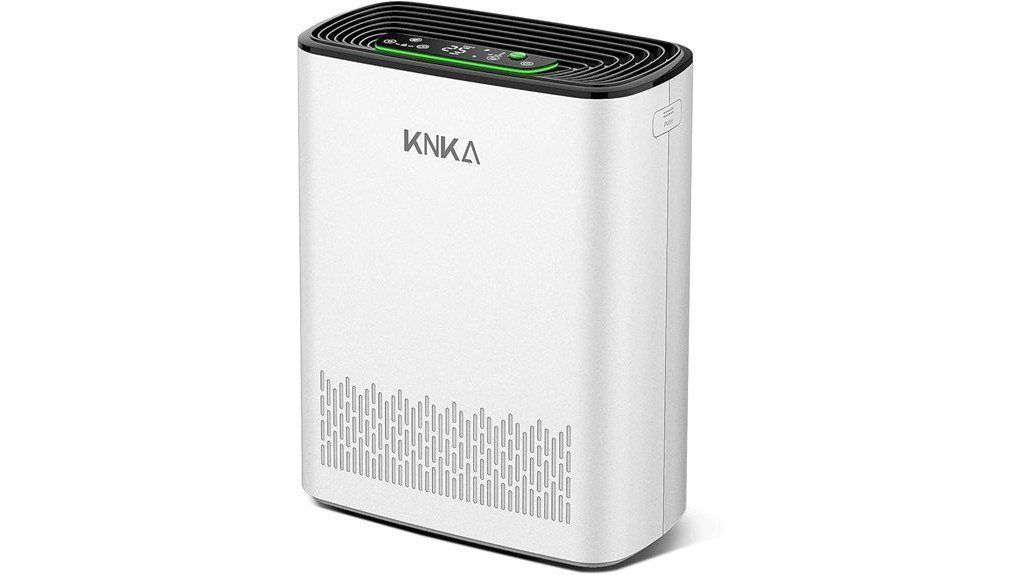
The APH3000 has a simple white tower design meant to blend into a bedroom or living room rather than stand out. At 7.9 pounds, it is light enough to move between rooms without much effort, and the touch panel keeps the front uncluttered compared to units with physical dials or buttons. The aroma sponge compartment is a small extra: you can add a few drops of essential oil to lightly scent the airflow, though the oils themselves are not included.
Filter Maintenance and Replacement Costs
The pre-filter is washable, so a monthly rinse and full dry before reinserting it is enough to keep it doing its job. The HEPA and carbon layer behind it are not washable and will need periodic replacement as they load up with particles and odors. Genuine KNKA replacement filters for the APH3000 are sold separately in 2-packs, which is worth factoring into the ongoing cost of the unit rather than treating it as a one-time purchase.
Placement Tips for Better Results
- Leave at least a foot of open space around the intake and outlet so airflow is not restricted by walls or furniture.
- Run it in the room where you spend the most time, bedroom overnight, living room during the day, rather than a hallway or closet.
- Keep it off soft surfaces like a rug or bed where the intake could pull in fibers.
- If pet dander is the main concern, place it near where your pet sleeps or spends most of its time rather than across the room.
How It Performs in Real Use
Daily Use in a Bedroom
In a standard bedroom, the APH3000 has room to spare relative to its rated coverage, so it can run on a lower speed or Auto mode most of the day and still keep up with normal dust and everyday air quality changes.
Managing Pet Dander and Odor
The HEPA stage handles airborne dander, and the activated carbon layer takes on pet odor, which is the combination most pet owners are actually looking for rather than particle filtration alone.
Overnight and Sleep Mode Use
Sleep mode’s 24dB noise level is the feature that matters most for overnight use, letting the unit keep running through the night without becoming a distraction the way a louder purifier can.
Larger or Open-Plan Rooms
Push the APH3000 into a large open-plan living and dining space and it will still run, but the practical coverage will fall short of a closed single room, so a second unit or a larger-capacity purifier is the better call for bigger footprints.
Air Quality and Health Considerations
The APH3000 is a consumer air purifier, not a medical device, and it does not diagnose, treat, or prevent asthma, allergies, or any other condition. If you or someone in your home has a respiratory condition, use it as a supplement to guidance from a doctor rather than a stand-alone treatment. Keep the unit and its cord out of reach of small children given the touch controls, and avoid blocking the intake or outlet vents, which can affect both performance and safe operation.
Pros and Cons
Pros
- 3-stage filtration (washable pre-filter, H13 HEPA, activated carbon) rated for 99.9% of particles down to 0.3 microns
- Live AQI sensor drives Auto mode instead of requiring manual fan adjustments
- Sleep mode as low as 24dB, quiet enough for overnight bedroom use
- Touch controls include a child lock and a 1-to-12-hour timer
- Washable pre-filter cuts down on how often you need to buy replacements
Cons
- Advertised 1,123 sq ft coverage is a best-case figure, not a guarantee in cluttered or open-plan rooms
- No app or smart-home connectivity, all adjustments happen at the unit
- Genuine HEPA and carbon replacement filters are sold separately and add to the ongoing cost
Is It Worth the Price?
The APH3000 sits in the mid-range tier for HEPA purifiers built around a single main room. You are paying for the 3-stage filter stack and the live AQI display, not for whole-home coverage or app-based smart features.
It is a smart buy for everyday use if you want dedicated air cleaning for one bedroom or living room and like being able to see air quality change in real time rather than guessing. It is not the best fit if you need to cover more than one room from a single unit or want remote control from a phone.
How It Compares to Alternatives
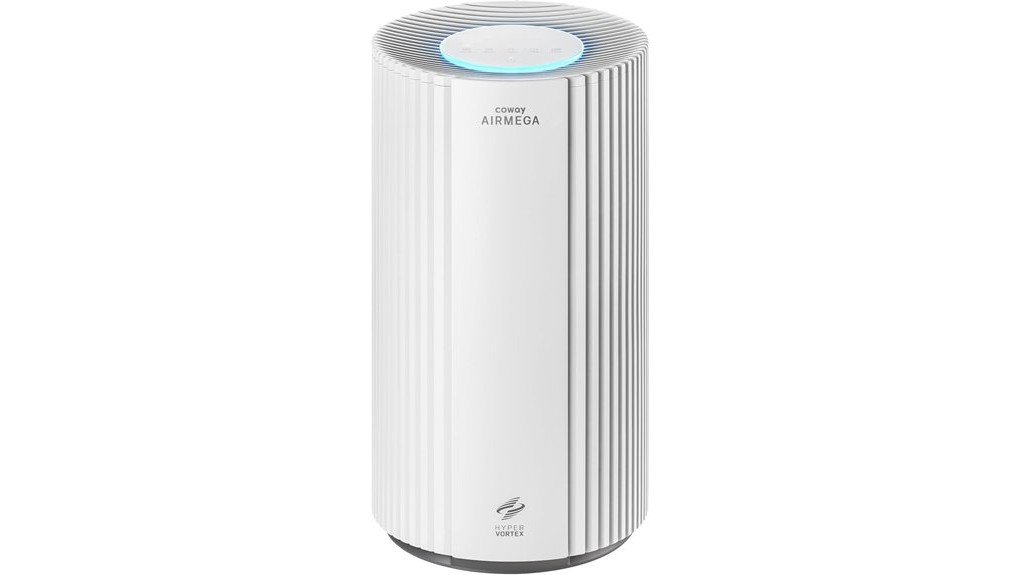
If app or smart-home control is a priority, purifiers in Levoit’s connected HEPA lines tend to offer that where the APH3000 does not. If you need to cover more square footage from one unit, large-room purifiers like the Coway Airmega or Honeywell HPA300 series are worth comparing. The APH3000 makes the most sense if you want dedicated single-room filtration with a live air quality readout and do not need app connectivity.
Frequently Asked Questions
Does the KNKA APH3000 really cover 1,123 sq ft?
That figure is based on one full air exchange per hour in an open room. In a space with furniture, partitions, or high ceilings, expect lower real-world coverage, so it is best suited to a single bedroom or living area.
What does H13 True HEPA actually mean?
H13 is a HEPA filter grade rated to capture 99.9% of particles as small as 0.3 microns, which covers most dust, pollen, and pet dander.
How loud is it on sleep mode?
Sleep mode runs as low as 24dB, quiet enough for most people to run overnight in a bedroom without it becoming a distraction.
Do I need to replace the filter, or can I just wash it?
Only the pre-filter is washable. The HEPA and activated carbon layer behind it need periodic replacement, and genuine replacements are sold separately in 2-packs.
Is it safe to run all night in a bedroom?
Sleep mode is designed for overnight use at a low noise level. If anyone in the home has a respiratory condition, treat it as a supplement to your doctor’s guidance rather than a replacement for it.
Does it connect to a phone app?
No. All settings, including fan speed, timer, and Auto mode, are controlled from the touch panel on the unit itself.
Will it help with pet odor and dander?
Yes. The HEPA filter targets airborne dander and the activated carbon layer is aimed at odor, which together cover the main concerns pet owners usually have.
What comes in the box?
The unit ships with the washable pre-filter, the HEPA and carbon filter installed, a power adapter, a printed manual, and an aroma sponge for the essential oil compartment.
The Bottom Line
The KNKA APH3000 is a solid pick if you want dedicated 3-stage HEPA filtration and live air quality feedback for a single bedroom or living room. Skip it if you need whole-home or open-plan coverage from one unit, or if app-based smart control matters to you. Its main strength is the combination of real filtration numbers and an Auto mode that actually responds to the room, and its main limitation is that the advertised coverage area assumes ideal, open conditions.