
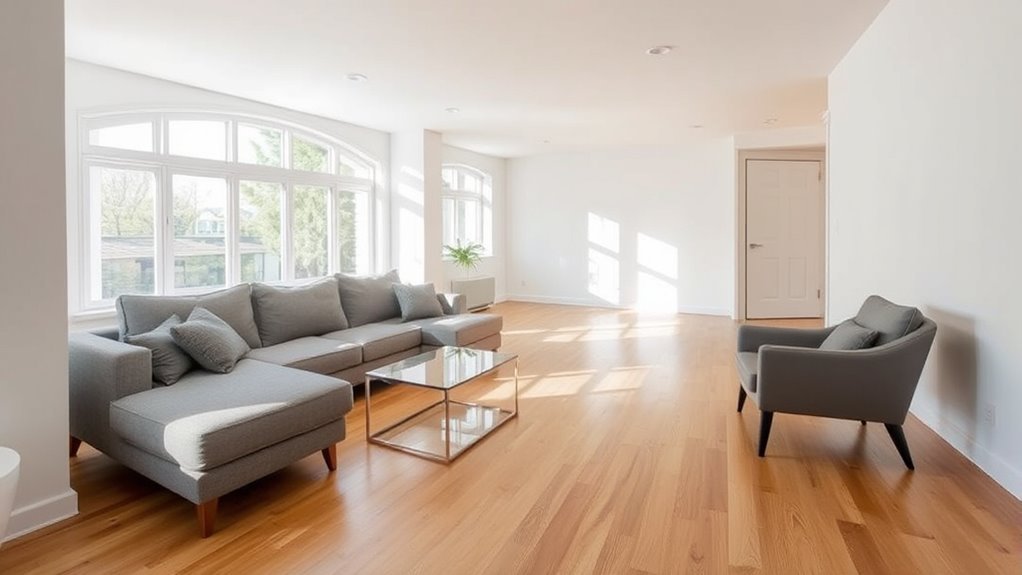
To create an inviting living room, guarantee walkways are 30 to 36 inches wide for easy navigation. Position coffee tables 18 to 24 inches from seating, and keep sofas 3 to 5 inches away from walls to enhance airflow. Aim for at least 3 feet of clearance in front of doorways to prevent clutter. Thoughtful spacing not only promotes comfort but also enhances connection among guests. Stick around to discover more ways to arrange your space flawlessly.
How to Arrange Living Room Furniture for Optimal Flow
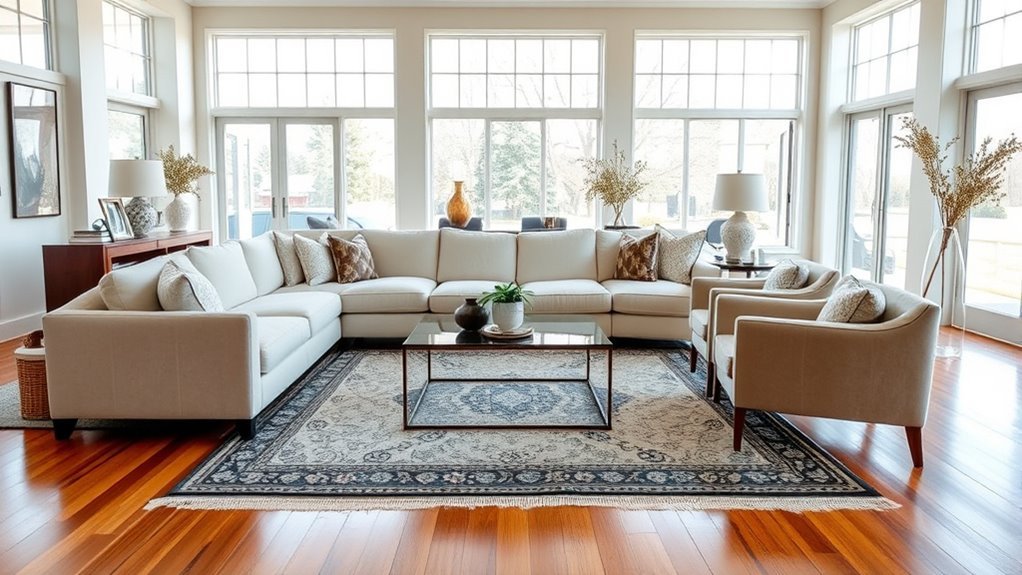
How can you transform your living room into a space that flows effortlessly? Start by carefully arranging your furniture pieces to enhance traffic flow. Maintain a walkway width of at least 30 to 36 inches between large items, guaranteeing you can navigate freely. Position coffee tables 18 to 24 inches away from seating; this space you should leave allows for easy access while you’re seated. Pull sofas 3 to 5 inches from the wall to create an inviting atmosphere. Additionally, guarantee at least 3 feet of clearance in front of doorways to avoid obstructions. By thoughtfully laying out your furniture around these guidelines, you’ll create a harmonious environment that invites connection and relaxation, liberating your living room from clutter and chaos.
Essential Clearance Measurements for Furniture
To create a living room that flows seamlessly, it’s vital to prioritize essential clearance measurements. You’ll want to maintain at least 30 to 36 inches of walkway between large furniture pieces, allowing everyone to navigate comfortably. Additionally, ensuring ample space around coffee tables and seating not only enhances usability but also elevates your overall living experience.
Minimum Walkway Width Requirements
Creating a comfortable living space starts with understanding walkway width requirements, and you’ll want to maintain a minimum of 30 to 36 inches between large furniture pieces for easy navigation. This space guarantees a fluid traffic flow, allowing you to glide effortlessly through your living area. In tighter spots, aim for at least 18 to 24 inches of clearance to prevent obstructions and promote accessibility. For coffee tables, a minimum of 18 inches around them enhances usability, letting you enjoy your space fully. If you’re embracing an open-concept layout, endeavor for 120 centimeters (about 47 inches) between distinct zones. Prioritizing these minimum walkway widths liberates your living area, transforming it into a harmonious sanctuary that invites relaxation and connection.
Clearance Around Furniture Pieces
When arranging your living room, having the right clearance around furniture pieces is essential for functionality and comfort. Aim for a minimum of 30 to 36 inches of walkway space between large furniture items, allowing for smooth navigation. For coffee tables, guarantee at least 18 inches of space, so you can move easily without feeling cramped. Position your sofa 3 to 5 inches from the wall to enhance airflow and balance. Maintain a 3-foot clearance in front of doorways for effortless access. When setting up dining chairs, leave 6 inches between those with arms and 4 inches for armless chairs. By prioritizing these clearances, you create a liberated, inviting atmosphere in your living rooms, making every moment enjoyable.
Smart Ways to Add Extra Seating Without Overcrowding
While you want to accommodate guests, it’s essential not to let your living room feel cramped. Here are some smart ways to add extra seating without sacrificing that open vibe:
- Use lightweight ottomans or benches that tuck away easily for a flexible layout.
- Incorporate side chairs that can be pulled into conversation areas, ensuring at least 3 feet of clearance.
- Layer smaller options like poufs or stools for added spots without visual clutter.
- Utilize corners for cozy reading nooks with a chair and side table.
- Choose multi-functional pieces, like storage ottomans, for seating and hidden storage.
How to Define Zones With Thoughtful Furniture Placement
Adding extra seating can enhance your living room’s functionality, but it’s just as important to define distinct zones for various activities. Create a focal point, like a stylish coffee table or a striking piece of art, to guide your furniture arrangements. Aim for a minimum clearance of 30 to 36 inches between larger items, ensuring easy movement. Area rugs are your secret weapon; place them under the front legs of sofas and chairs to visually delineate different areas. Use console tables or side tables to separate lounge spots from dining zones, improving usability. Mixing furniture styles and heights within each zone adds depth and charm, allowing your living room to flow harmoniously while catering to your lifestyle needs.
Common Pitfalls to Avoid in Living Room Furniture Layout
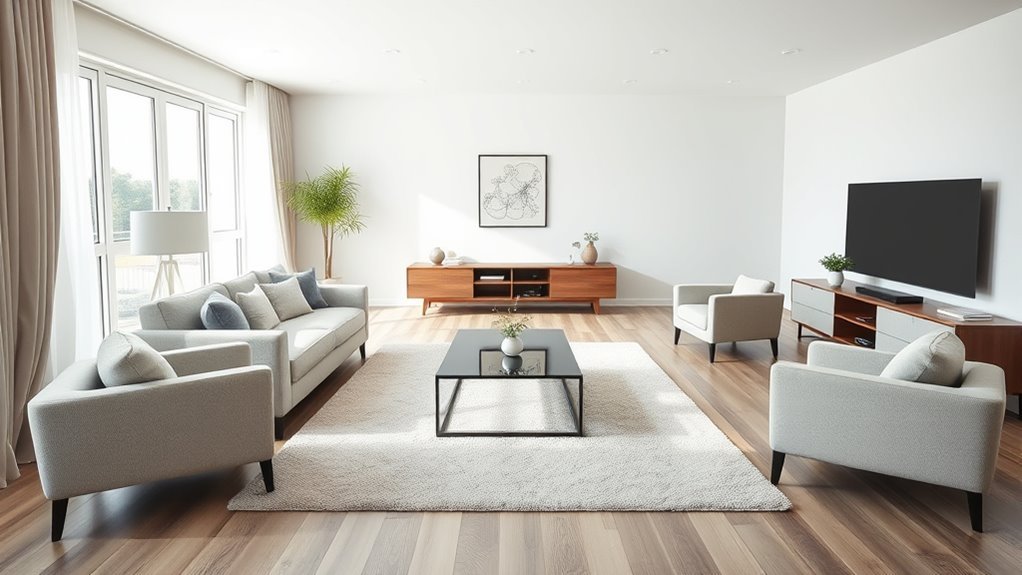
To create a warm and inviting living room, you’ll want to steer clear of common layout missteps that can stifle conversation and comfort. Here are some pitfalls to avoid:
To foster a cozy living room, avoid layout mistakes that hinder conversation and comfort.
- Pushing furniture against walls creates awkward layouts that kill conversation.
- Blocking natural pathways can lead to a cramped atmosphere; maintain 3 feet in clearances.
- Having too many focal points creates visual chaos; limit to one or two.
- Sticking to matching furniture sets can zap character; mix unique pieces for personality.
- Ensuring your furniture fits the space is essential; mismatched scales disrupt visual harmony.
Optimizing Walkways for Easy Navigation in Your Living Room
To create a living room that flows effortlessly, focus on optimizing your walkways for easy navigation. You’ll want to maintain a minimum width of 90 cm for those pathways, ensuring everyone can move comfortably without bumping into furniture. By strategically placing your furniture and allowing for ample clearance, you’ll enhance both functionality and the overall vibe of your space.
Minimum Walkway Width Requirements
When designing your living room, guaranteeing adequate walkway width can transform the space from cramped to inviting. A minimum walkway width of 90 cm (about 3 feet) is essential for comfortable navigation, allowing you to glide effortlessly between furniture and pathways. To enhance your living experience, consider these guidelines:
- Maintain at least 3 feet of clearance in frequently used passageways.
- Allow 45 cm (18 inches) around coffee tables for easy access.
- Keep 3.5 to 10 inches between seating to encourage conversation.
- Guarantee 3 feet of space in front of doorways for smooth entry and exit.
- Space your furniture thoughtfully to create a harmonious flow.
Furniture Placement Considerations
While arranging your living room, thoughtful furniture placement can make all the difference in guaranteeing smooth navigation throughout the space. To create liberating walkways, maintain a minimum width of 30 to 36 inches between large furniture pieces, allowing for comfortable movement. For frequently used areas, aim for at least 3 feet of clearance, facilitating easy passage. Surround your coffee table with 18 inches of space for effortless access. Position your sofas 3 to 5 inches away from the wall to enhance airflow and create an inviting layout. Finally, verify your coffee table is no more than 4 inches shorter or taller than the sofa seat cushions for a harmonious balance. With these tips, your living room will feel open and welcoming.
Enhancing Open Flow
Creating a welcoming atmosphere in your living room hinges on optimizing walkways for easy navigation. When you enhance the flow of your space, you invite freedom and comfort for everyone.
- Maintain a minimum walkway width of 90 cm for smooth movement.
- Guarantee at least 45 cm of space around coffee tables for easy access.
- Aim for a clearance of 3 feet in frequently used passageways to avoid congestion.
- Keep 3.5 to 10 inches between seating areas to foster conversation.
- Arrange furniture thoughtfully, considering doors and windows to maintain natural pathways.
Personalizing Your Space: Balancing Functionality and Style
Personalizing your living space not only reflects your unique style but also guarantees it meets your functional needs. Choose furniture that resonates with your personality while ensuring it serves practical purposes, like ample seating for gatherings. Embrace multi-functional pieces, such as ottomans that double as storage or coffee tables, to maximize utility without sacrificing aesthetics. Maintain a minimum of 3 feet between furniture items to create effortless movement and enhance the room’s flow, making it feel inviting and spacious. Layer in accent pieces like side tables and decorative cushions to add visual interest while adhering to spacing guidelines. A cohesive color palette and mixed textures can elevate your living room’s appeal, harmonizing functionality and style beautifully.
Frequently Asked Questions
How Much Space to Leave Between a Couch and a Walkway?
Leave at least 30 to 36 inches between your couch and walkway for smooth traffic flow. This thoughtful couch placement enhances your seating arrangement, respects room dimensions, and elevates design aesthetics, creating a liberating space for everyone.
What Is the 2/3 Rule for Living Rooms?
The 2/3 rule for living rooms means your furniture arrangement should fill two-thirds of the room, enhancing design aesthetics, ensuring room functionality, maintaining traffic flow, and maximizing comfort levels for an inviting atmosphere that frees your creativity.
What Is the 4 Inch Rule?
The 4-inch rule guarantees your furniture arrangement promotes comfort zones and aesthetic balance. By maintaining this spacing, you enhance traffic flow, making your living space inviting and functional, creating liberation in your home’s design.
How Wide Should a Walkway Be in a Living Room?
Your walkway dimensions should ideally span 90 cm for smooth traffic patterns, enhancing room flow. Thoughtful furniture arrangement guarantees liberation in space planning, allowing effortless movement and inviting a serene atmosphere in your living room.
Conclusion
In the grand circus of living room design, don’t let your furniture become the clowns that trip you up! By mastering space and flow, you’ll create an inviting arena where guests can mingle without dodging coffee tables like obstacles in an obstacle course. Embrace your inner architect and let your living room shine as both a functional haven and a stylish retreat. After all, who wants to navigate a furniture minefield when you could be basking in the glory of seamless design?

Leave a Reply