Disclosure: As an Amazon Associate I earn from qualifying purchases. If you click a link on this page and make a purchase, we may receive a small commission at no extra cost to you.
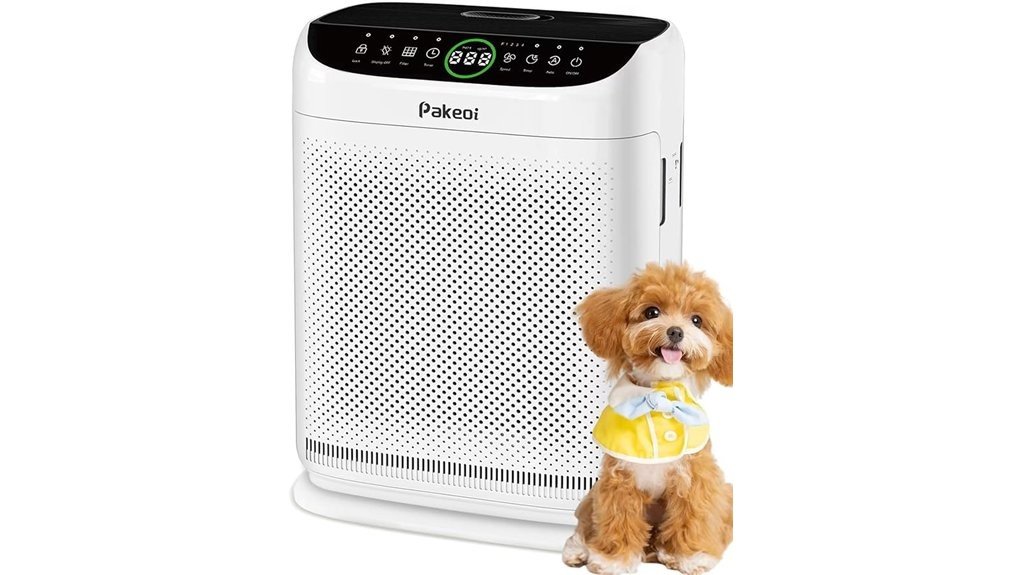
Large rooms make air-purifier shopping harder because a high coverage claim does not automatically tell you how fast a unit will clean your actual space. The PAKEOI ZX001 HEPA Air Purifier combines dual-side air intake, washable pre-filters, a PM2.5 sensor, remote and touch controls, and a listed 15 dB Sleep Mode. Its biggest strengths are simple operation and large-room positioning flexibility, while its main limitation is that the Amazon listing does not provide a verified CADR figure for direct performance comparison. This review helps you decide whether its feature set fits your room, pets, noise needs, and maintenance budget.
Quick Verdict
Rating: 8.8/10 – Recommended with caveats
Best For: Large bedrooms, open living areas, pet homes, and buyers who want PM2.5-based Auto Mode without relying on a phone app.
Bottom Line: PAKEOI gives you useful large-room features, washable pre-filters, quiet Sleep Mode, and both remote and touch controls. The tradeoff is that the 3,000 sq. ft. per hour coverage figure is a seller-listed claim, not a published AHAM CADR measurement, so compare room size conservatively.
| Specification | Detail |
|---|---|
| Brand | PAKEOI |
| Model | ZX001 |
| ASIN | B0GJ5TG9DL |
| Product Type | HEPA air purifier for home and large-room use |
| Color | White |
| Dimensions | About 7.28 D × 12.5 W × 16.15 H inches |
| Weight | About 6.7 lb |
| Power | 36 watts |
| Listed Coverage | Up to 3,000 sq. ft. per hour, seller-listed coverage claim |
| Air Intake | Dual-side intake |
| Filtration | 3-stage filtration listed, including two washable pre-filters and HEPA media |
| Particle Retention Size | 0.3 micron listed |
| Air Quality Sensor | PM2.5 sensor with red, yellow, and green status display |
| Controls | Touch controls and remote control |
| Fan Modes | Four adjustable fan speeds plus Auto and Sleep modes |
| Sleep Mode Noise | ≤15 dB listed |
| Convenience Features | 1-12 hour timer, child lock, display off, filter reminder, aromatherapy pad |
| Replacement Filter | PAKEOI recommends replacement every 6-8 months; replacement filter ASIN B0GJJZCTV6 is listed |
| Manufacturer | Zhongshan Turbos Technology Co. Ltd. |
| Listed Compliance | Amazon listing references CARB, ETL, EPA, and FCC compliance/certification claims |
What Is the PAKEOI HEPA Air Purifier?
The PAKEOI ZX001 is a compact floor or low-surface air purifier built around a dual-side intake design.
PAKEOI markets the ZX001 for spaces up to 3,000 square feet per hour and says the dual intake provides stronger airflow than a single-inlet design. That coverage number is useful as a broad positioning claim, but you should not treat it as the same thing as a published Clean Air Delivery Rate. Room shape, doors, ceiling height, fan setting, and pollution load can all affect how quickly a purifier changes the air in practice.
The feature set is straightforward: washable pre-filters catch larger debris, HEPA media handles finer airborne particles, the PM2.5 sensor drives Auto Mode, and you can control the unit from the top panel or included remote. It also includes a timer, display-off function, child lock, filter reminder, and an aromatherapy pad.
Who Should Buy It?
Best For
- You have a large bedroom, living area, office, or open-plan space and want dual-side intake.
- You have pets and want washable pre-filters that can collect larger hair and dust before they reach the main filter.
- You want PM2.5-based Auto Mode, a remote control, and a low-noise Sleep Mode without needing a smartphone app.
Skip If
- You want an AHAM-listed CADR number so you can compare verified airflow performance directly with other purifiers.
- You need Wi-Fi, app scheduling, voice-assistant control, or detailed historical air-quality graphs.
- You want a purifier with no recurring filter expense, because the HEPA filter is a replaceable part.
Key Performance Features Breakdown
Dual-Side Air Intake
The ZX001 pulls air through intake areas on two sides rather than relying on a single rear opening. PAKEOI markets this layout as providing stronger airflow than a single-inlet design. The practical advantage is placement flexibility in larger rooms, because the unit can draw air from more than one direction as long as both intake sides remain unobstructed.
Do not assume that dual intake automatically means twice the room-cleaning speed. The listing does not publish a verified CADR result that would let you make that calculation. Treat the design as an airflow feature, not a laboratory performance guarantee.
Washable Pre-Filters and HEPA Filtration
Two removable pre-filters sit ahead of the main HEPA media. They are intended to catch larger debris such as pet hair and visible dust, and PAKEOI says you can clean them with water or a vacuum. That can slow coarse buildup on the main filter and make routine maintenance easier in pet homes.
The Amazon specifications list HEPA filtration and a particle-retention size of 0.3 micron. The main HEPA filter is still a consumable part, and PAKEOI recommends replacement every 6 to 8 months depending on use.
Pro Tip: Check the washable pre-filters every few weeks in a pet or dusty home. Vacuuming loose debris first can be faster than washing, and if you do rinse them, let them dry completely before reinstalling them.
PM2.5 Sensor and Auto Mode
The built-in PM2.5 sensor gives you a simple real-time indication of fine-particle conditions. The display uses green for good, yellow for moderate, and red for poor air quality. In Auto Mode, the purifier changes fan speed in response to the sensor rather than making you adjust it manually.
This is useful after activities that can temporarily increase airborne particles, such as cooking, cleaning, opening windows during dusty weather, or pets moving through a room. A consumer PM2.5 sensor is best used as a trend indicator, not as a replacement for a calibrated indoor-air-quality instrument.
Controls, Timer, and Child Lock
You can operate the ZX001 through touch controls or the included remote. The listing also identifies four adjustable fan speeds, a 1-12 hour timer, display-off control, a child lock, and a filter replacement reminder. These are practical features if the purifier sits across the room, runs overnight, or is placed where children may reach the controls.
The filter reminder helps with routine care, but it cannot see how dirty the filter actually is. Check the filter condition yourself if you run the purifier around smoke, heavy dust, renovation debris, or multiple shedding pets.
Sleep Mode and Night Use
PAKEOI lists Sleep Mode at 15 dB or lower. That is the product’s lowest-noise setting and is designed for overnight operation. The display-off feature also helps if bright indicator lights bother you in a dark bedroom.
Remember that the quietest mode normally moves less air than higher fan settings. If the room has a fresh pollution source, you may get better results by running a higher speed before bedtime and then switching to Sleep Mode once conditions improve.
Before You Buy: Leave open space around both intake sides and do not wedge the purifier between a wall and heavy furniture. Also note that the 3,000 sq. ft. per hour figure is a seller-listed coverage claim, not a published AHAM CADR rating.
What to Expect in Everyday Use
In Open-Concept Living Areas
The dual-side intake makes the most sense when you can place the purifier where both sides have room to breathe. In an open living-dining area, a central or semi-central position is more useful than hiding the unit in a corner. Auto Mode can then react when cooking particles or outdoor dust raise the PM2.5 reading.
In Bedrooms Overnight
For bedrooms, the combination of Sleep Mode, display-off control, remote operation, and timer is the main attraction. The listed 15 dB Sleep Mode is especially relevant if you are sensitive to fan noise. Keep the intake clear of curtains, bedding, and furniture so the low-speed setting is not further restricted.
In Homes with Pets
The washable pre-filters are the most useful pet-focused feature because they can catch larger hair and dust before those materials load the inner filter. You still need to vacuum floors and soft furnishings because an air purifier does not remove settled hair from surfaces. Check the pre-filters more often during heavy shedding periods.
After Cooking, Dusting, or Smoke Events
Auto Mode is helpful when particle levels change quickly. If the PM2.5 display moves into yellow or red, the purifier can increase fan speed automatically. For heavy smoke or a strong indoor source, remove or control the source first and ventilate when appropriate rather than relying on the purifier alone.
Placement and Setup Tips
- Remove packaging first: The listing specifically warns you to remove the protective plastic bag from the filter before first use.
- Keep both intakes open: Avoid placing the unit flush against a wall, sofa, curtain, or cabinet.
- Use a higher speed for cleanup: After cooking, cleaning, or opening a dusty door, run a stronger fan setting first, then return to Auto or Sleep Mode.
- Use Auto Mode for changing conditions: Let the PM2.5 sensor adjust fan speed when particle levels rise and fall during the day.
- Do not hide it in a corner: A more open position gives the two-sided intake better access to room air.
- Follow the manual: Reset the filter reminder only after servicing or replacing the filter as directed.
Maintenance and Filter Costs
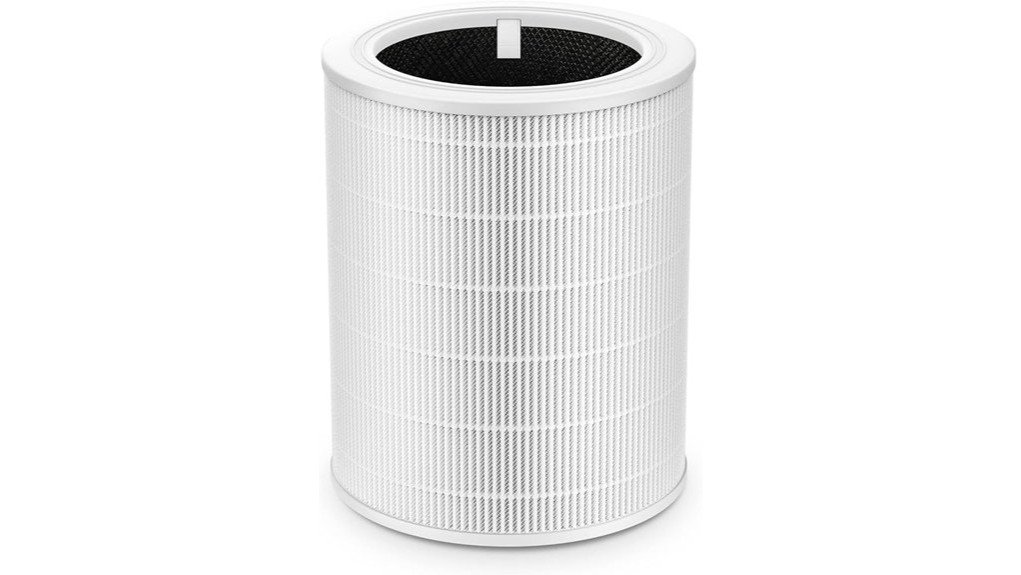
Routine maintenance is simple but not zero-cost. Vacuum or wash the two pre-filters as needed, let washed parts dry fully, and inspect the main filter periodically. PAKEOI recommends replacing the HEPA filter every 6 to 8 months, and the listing points buyers to replacement-filter ASIN B0GJJZCTV6.
The filter reminder is convenient for regular households, but your actual replacement interval can be shorter if the purifier runs around smoke, heavy dust, or frequent pet shedding. A dirty filter can restrict airflow, so do not wait for a calendar date if the filter is visibly loaded or performance drops.
Safety and Air-Quality Notes
The Amazon listing references CARB, ETL, EPA, and FCC compliance or certification language and says the unit has been tested for ozone-free operation and electrical safety. Because those claims are presented on the seller’s listing, this review treats them as listed compliance claims rather than independent proof of performance.
An air purifier is a particle-control appliance, not a medical treatment and not a substitute for source control or ventilation. If you use the aromatherapy pad, follow the product directions and the fragrance or oil manufacturer’s instructions, and avoid applying liquid directly to the HEPA filter or fan housing.
Pros and Cons
Pros
- Dual-side intake gives the unit more than one air-entry surface.
- Two washable pre-filters are practical for pet hair and larger dust.
- PM2.5 sensor, color display, and Auto Mode reduce manual fan adjustments.
- Remote control, timer, child lock, display-off, and filter reminder add useful daily convenience.
- Listed Sleep Mode noise of ≤15 dB is suited to buyers who prioritize quiet nighttime operation.
Cons
- No published AHAM CADR figure is shown on the Amazon listing, which makes direct verified performance comparison harder.
- No Wi-Fi or app control is listed, so remote operation is limited to the included handheld remote and touch panel.
- The main HEPA filter is replaceable, creating an ongoing maintenance cost every several months.
Is It Worth the Price?
The PAKEOI ZX001 is worth considering if you care more about practical controls, washable pre-filters, quiet operation, and dual-side intake than app features. Its feature list is strong for everyday use, especially in pet homes or larger rooms where you want Auto Mode to respond to changing PM2.5 levels.
The value is less clear if you want independently comparable performance data. Because the listing emphasizes a 3,000 sq. ft. per hour coverage claim without publishing an AHAM CADR figure, shoppers who compare purifiers by standardized airflow ratings may prefer a model with clearer test data.
How It Compares to Alternatives
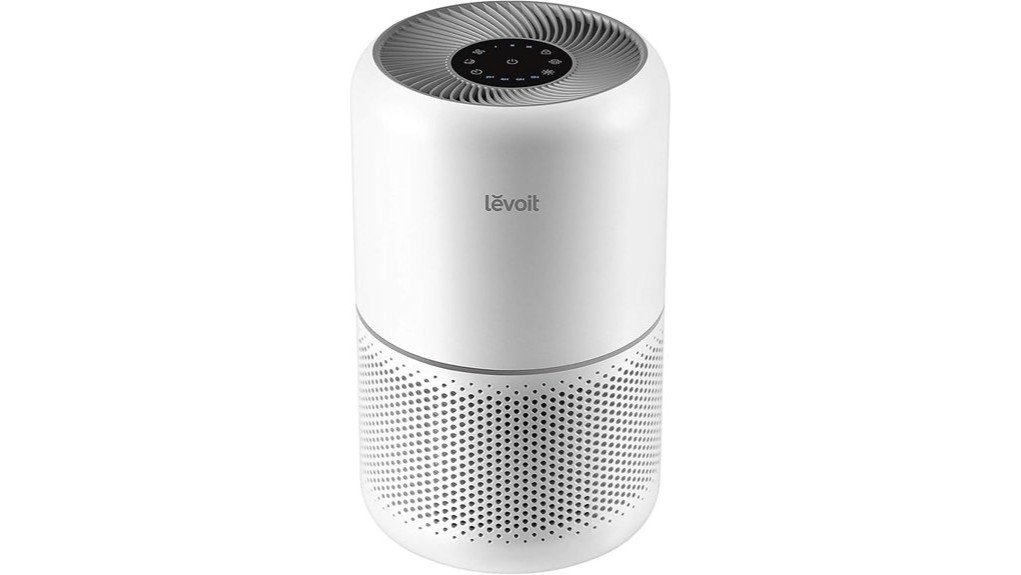
If you want connected controls, the Levoit Core 600S-P adds app-based monitoring and control for large rooms, while the Coway Airmega 250S adds Wi-Fi and voice-control features. Those models are better fits for smart-home buyers who want remote scheduling and more connected functionality.
The PAKEOI ZX001 makes more sense if you prefer simpler touch-and-remote operation, washable pre-filters, a listed 15 dB Sleep Mode, and dual-side intake without depending on an app. Compare each model’s published room-size method and standardized airflow data rather than relying on square-foot coverage claims alone.
Frequently Asked Questions
What does the 3,000 sq. ft. per hour coverage claim mean?
PAKEOI lists coverage of up to 3,000 square feet per hour. The listing does not provide a published AHAM CADR figure, so you should treat that number as a seller coverage claim rather than a standardized air-cleaning rate.
Are the PAKEOI pre-filters washable?
Yes. The unit has two removable pre-filters that PAKEOI says can be cleaned with water or a vacuum. If you wash them, let them dry completely before reinstalling them.
How often should you replace the HEPA filter?
PAKEOI recommends replacement every 6 to 8 months. Heavy dust, smoke, or pet shedding can shorten that interval, so inspect the filter instead of relying only on the reminder light.
Which replacement filter fits the ZX001?
The Amazon listing directs buyers to PAKEOI replacement-filter ASIN B0GJJZCTV6. Confirm compatibility on the current replacement-filter listing before ordering because product listings can change.
Does the PAKEOI ZX001 have app or Wi-Fi control?
No Wi-Fi or smartphone app control is listed. You control the purifier through the touch panel or the included remote, which is simpler but less flexible for off-site control and advanced scheduling.
How quiet is Sleep Mode?
PAKEOI lists Sleep Mode at 15 dB or lower. That is the lowest-noise operating mode, but it may also move less air than a higher fan setting, so use faster speeds when you need quicker particle reduction.
Where should you place a dual-intake air purifier?
Place it where both intake sides have open access to room air. Avoid pressing either side against walls, furniture, curtains, or bedding, and keep the purifier on a stable surface where the airflow path stays clear.
Can you use essential oils with the aromatherapy pad?
The listing includes an aromatherapy feature and fragrance sponges. Follow the product and fragrance instructions, use only the dedicated pad or sponge, and do not apply oil directly to the HEPA filter or fan housing.
The Bottom Line
The PAKEOI ZX001 is a strong fit if you want dual-side intake, washable pre-filters, PM2.5 Auto Mode, remote control, and quiet nighttime operation in a larger room. Skip it if app connectivity or a published AHAM CADR figure is a priority, because those are the clearest gaps in the current listing.
Ready to Buy?
Check current pricing, filter availability, and product details before you decide.