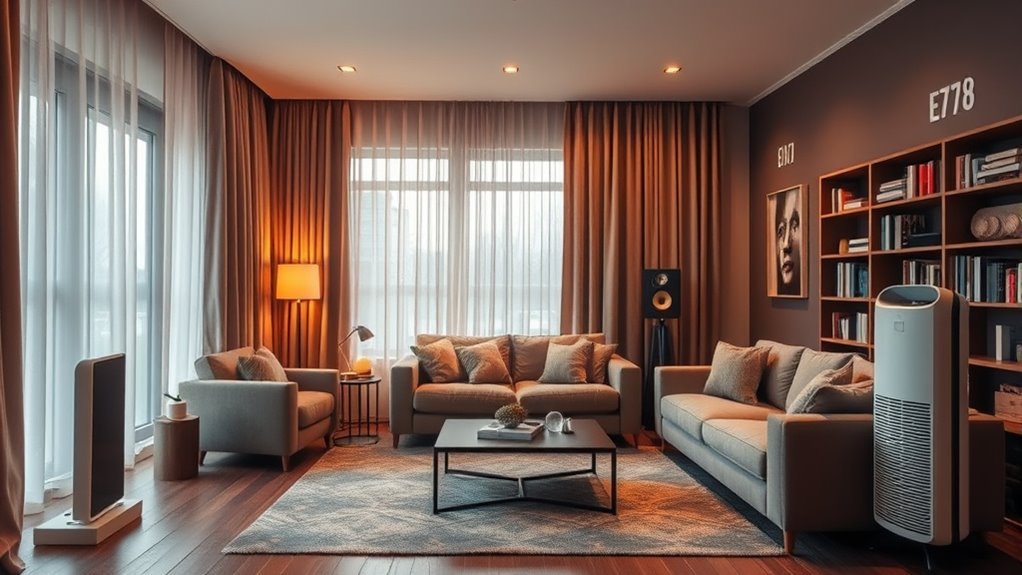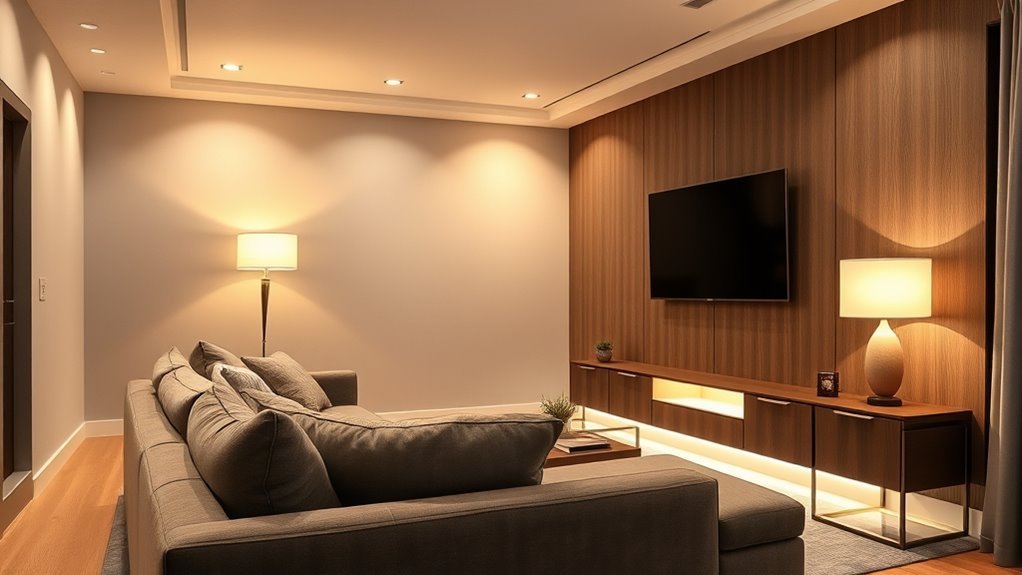
Choosing between recessed and track lighting for your living room comes down to how you use the room, how much flexibility you want, and what your ceiling can support. Recessed lighting gives you a clean, built-in look, while track lighting gives you adjustable heads that can highlight art, shelves, seating areas, or architectural details. The best choice is often not one or the other, but the right mix of ambient, task, and accent lighting.
Quick Answer
Choose recessed lighting if you want a clean ceiling, soft overall illumination, and a more built-in look. Choose track lighting if you want adjustable, directional light for artwork, shelves, seating zones, or changing room layouts. For many living rooms, recessed lights handle general brightness while track lights add flexible accent lighting.
Key Takeaways
- Recessed lighting is best for a seamless, low-profile ceiling and even ambient light.
- Track lighting is best when you need adjustable light aimed at art, shelves, seating, or architectural features.
- Energy efficiency depends mostly on the LED product, lumens, controls, and dimmer compatibility, not just the fixture style.
- Recessed lights near insulation should be properly rated, airtight, and installed according to local electrical code.
- A layered plan often works best: recessed lights for overall light, track lights or lamps for focused task and accent light.
Comparing Recessed and Track Lighting: Which Is Right for You?
Recessed and track lighting solve different design problems. Recessed fixtures sit inside the ceiling, so they keep sightlines open and make a room feel less cluttered. Track lighting sits on the ceiling or wall, so it is more visible, but the adjustable heads make it easier to aim light exactly where you need it.
For a living room, start with the function of the space. If you watch TV, entertain, read, display art, and relax in the same room, you need layers of light. The U.S. Department of Energy explains that lighting design should match the amount and quality of light to the function being performed, and that more light is not always better. DOE lighting design guidance also recommends using efficient fixtures, controls, and task lights where needed.
| Best For | Recessed lighting: clean ambient light and low-profile ceilings | Track lighting: adjustable accent and task lighting |
| Visual Style | Minimal, built-in, and subtle | More visible, decorative, and directional |
| Flexibility | Low after installation; placement matters upfront | High; many heads can be aimed or moved along the track |
| Installation | More invasive because the ceiling must be cut and wired | Often less invasive when using an existing ceiling box |
| Best Living Room Use | General light, low ceilings, open sightlines, modern rooms | Artwork, bookshelves, reading corners, flexible furniture layouts |
Recommended Products
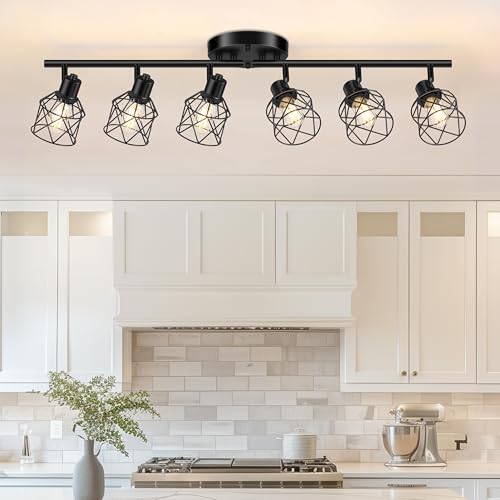
【Flexible Adjustable Ceiling Light】Two foldable lamp arms make it easy to adjust the semi flush ceiling light fixture to different shapes. The 6 track heads can be rotate 350° horizontally and 180°vertically, allow you to focus the light fixtures in different directions to get perfect accent lighting even large room or small.
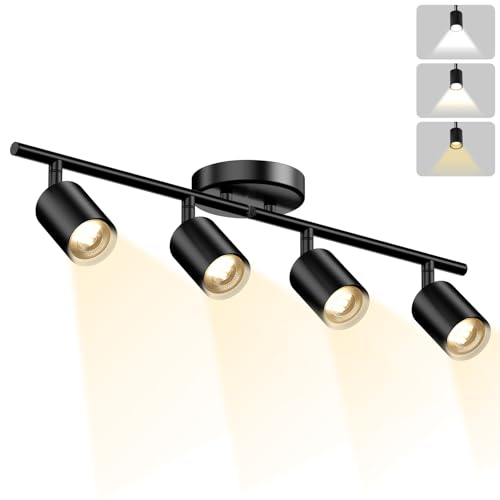
Modern Comfortable Design: The black modern track lighting is made of sturdy quality metal with matte nickel finish, no fading, corrosion resistance, Suitable for most decoration styles, can bring extremely comfortable lighting effects to your home

Sleek Industrial:The track lighting fixtures ceiling mount combines robust metal construction with a sleek black finish to create a stylish, contemporary look. With 6 adjustable light heads, it effectively illuminates any room, from kitchens to living rooms, adding a touch of industrial charm.
What Are Recessed Lights and How Do They Work?
Recessed lights, also called can lights or downlights, are installed into openings in the ceiling. A traditional recessed fixture has three main parts: the housing inside the ceiling, the trim visible from the room, and the bulb or integrated LED module that produces the light.
| Component | Purpose |
| Housing | Holds the fixture and wiring above the ceiling surface. |
| Trim | Creates the finished look and can affect glare, beam direction, and style. |
| Bulb or LED module | Provides the light output, color temperature, beam spread, and rated life. |
| Placement | Determines whether the room feels evenly lit or patchy with dark corners. |
Recessed lights work best when they are planned as part of the room layout. Too few fixtures can leave the living room dim. Too many can make the ceiling look like a grid or create glare. Adjustable trims can help aim light toward walls, art, or seating areas without making the room feel harsh.
Warning: Recessed lighting involves ceiling openings, wiring, heat management, and insulation clearance. If the fixture will sit below an attic or unconditioned space, use properly rated airtight, IC-rated fixtures where required, and follow local electrical code. Hire a licensed electrician if you are not fully comfortable working with electrical wiring.
Key Benefits of Recessed Lighting for Living Rooms
Sleek, Clutter-Free Ceiling
The biggest reason people choose recessed lighting is the clean look. Because the fixture sits flush with the ceiling, it does not compete with furniture, artwork, ceiling fans, beams, or window treatments. This is especially helpful in living rooms with low ceilings, where hanging fixtures can make the space feel crowded.
Good Ambient Lighting
Recessed lighting can provide broad ambient light when fixtures are placed thoughtfully. The Department of Energy defines ambient lighting as general illumination for daily activities, while task lighting supports specific activities and accent lighting highlights features. A living room usually needs all three, not just one bright overhead source. DOE lighting principles also explain that color temperature and glare affect how comfortable a room feels.
Enhanced Space Perception
Because recessed lights do not hang into the room, they can make a living room feel taller and more open. Wall-wash or adjustable trims can also bounce light off vertical surfaces, which often makes a room feel brighter than simply pointing all light straight down.
Compatible With Efficient LEDs
LED products are widely available for recessed fixtures. The Department of Energy notes that residential LEDs, especially ENERGY STAR-rated products, use at least 75% less energy and last up to 25 times longer than incandescent lighting. DOE LED guidance also notes that LEDs emit light directionally, which can be useful for recessed downlights and task lighting.
Drawbacks of Recessed Lighting to Consider
Recessed lighting is not the easiest or most flexible choice. It usually requires cutting ceiling openings, routing wiring, selecting the right housing, and planning the spacing before installation. Once installed, moving a recessed light can mean patching drywall and repainting the ceiling.
Another drawback is glare. If recessed lights are too bright, placed directly above seating, or installed with the wrong trim, they can feel uncomfortable when you are relaxing on the sofa. Poor placement can also create a “spotlight” effect where the floor is bright but walls and faces look shadowy.
Recessed lighting may also be limited by ceiling construction. Concrete ceilings, shallow joist cavities, ductwork, plumbing, insulation, or limited attic access can make installation more complicated. In ceilings with insulation or unconditioned space above, fixture ratings matter. DOE recommends UL-approved fixtures that are airtight, IC-rated, and meet ASTM E283 when recessed lights are used in a ceiling with an unconditioned space above it.
What Is Track Lighting and How Does It Work?
Track lighting uses a powered rail or track that holds multiple light heads. The track is mounted to the ceiling or wall, and the heads can often be aimed, repositioned, or swapped depending on the system. This makes track lighting useful when your living room layout changes or when you want to highlight specific areas.
Track lighting can be subtle or decorative depending on the design. Minimal white tracks can blend into a white ceiling, while black, brass, or industrial-style tracks can become part of the room’s look. LED track heads are available in many beam spreads and color temperatures, making them useful for both task and accent lighting.
Benefits of Track Lighting for Your Home
Adjustable Light Direction
Track lighting gives you control. You can aim one head at a painting, another at built-in shelves, and another toward a reading chair. This is harder to do with fixed recessed lights unless you choose adjustable trims and plan the angles carefully.
Great for Artwork, Shelves, and Feature Walls
If your living room has artwork, stonework, bookshelves, plants, or a textured wall, track lighting can help those details stand out. Accent lighting adds depth and makes the room feel more designed instead of flat.
Often Easier to Update
Track lighting is usually easier to adjust after installation because many systems allow you to change the position or angle of the heads. That flexibility is valuable if you rearrange furniture, add a gallery wall, or move your reading chair.
Useful When Recessed Lighting Is Not Practical
If your ceiling cannot easily accept recessed cans, track lighting may be a smarter option. It can often be installed from an existing ceiling electrical box, depending on the system and wiring conditions. A hardwired installation should still follow local code and may require an electrician.
Drawbacks of Track Lighting to Consider
Track lighting is more visible than recessed lighting. In a minimalist living room, the rail and heads may feel too busy. Track heads can also collect dust, and poorly aimed heads can create glare on TV screens, glass frames, or glossy artwork.
Compatibility is another consideration. Not every track head fits every track type, so replacement parts should match the system. If you want smart bulbs, dimmers, or low-voltage heads, confirm compatibility before buying.
Note: Track lighting is flexible, but it is not invisible. Choose it when you want adjustability or a design feature, not when your top priority is a completely clean ceiling.
Which Lighting Is More Energy-Efficient: Recessed or Track?
Recessed and track lighting can both be energy-efficient when they use quality LED products. The fixture style matters less than the bulb or integrated LED module, the number of fixtures, how long they are used, and whether they are paired with compatible dimmers or controls.
DOE states that LEDs use up to 90% less energy and last up to 25 times longer than traditional incandescent bulbs. DOE also notes that LED technology is available in reflector bulbs for recessed fixtures and in track lights, task lighting, undercabinet lighting, and outdoor lights. DOE lighting choices guidance recommends ENERGY STAR products and compatible controls for better savings.
Instead of choosing by watts, compare lumens. Lumens tell you how much light a bulb produces. The Lighting Facts label helps compare brightness, color, life, and estimated yearly operating cost.
For energy savings, the smarter question is not “recessed or track?” It is “Which LED product gives me the right lumens, color quality, beam spread, and dimmer compatibility for this room?”
Installation: Which Is Easier?
Track lighting is often easier to install than recessed lighting when there is an existing ceiling box in the right location. A track can sometimes be mounted to the ceiling and powered from that box, giving you several adjustable heads without cutting multiple ceiling holes.
Recessed lighting is usually more involved. It may require cutting openings, fishing wires, checking joist spacing, confirming insulation clearance, and choosing housings that match the ceiling conditions. In finished homes, this can mean more labor and more patching.
| Installation Factor | Track Lighting | Recessed Lighting |
| Ceiling cutting | Usually minimal | Often required for each fixture |
| Post-install flexibility | High | Low |
| DIY friendliness | Better for simple fixture replacement if wiring is already present | More complex, especially with insulation or attic spaces |
| Best reason to hire an electrician | New wiring, added switches, dimmers, or hardwired changes | Ceiling cuts, multiple fixtures, insulation, code, and circuit planning |
Recommended Products

Concise Design: The Unicozin led track lights has an industrial yet traditional design, the straight line of the track bar pairs with the exposed socket construction and is finished with matte black to complete the perfect minimalist design
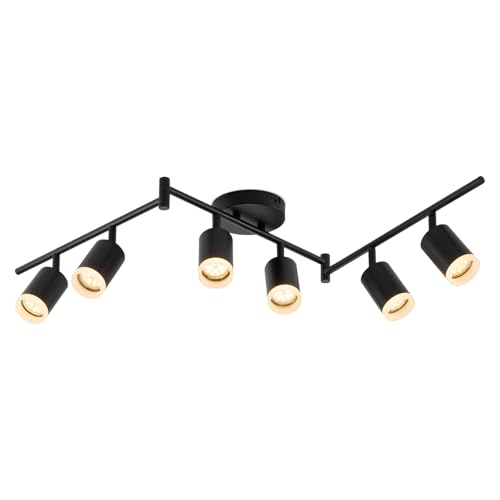
BRIGHTEN EVERY CORNER WITH PRECISION: With 6 rotatable light heads that swivel 350° horizontally and tilt 90° vertically, you gain total control over light direction (Recommended coverage: 110 - 170 sq ft / 10 - 16㎡). Precisely illuminate countertops, stovetops, kitchen islands, art displays, or deep closet corners. Transform a dim kitchen, a shadowy closet, or a dark workspace into a bright, open, and inviting area

🌻【Modern Black Track Lighting Fixture】Upgrade your home with this 2-light track lighting fixture ceiling mount, featuring a sleek matte black metal finish that complements modern, industrial, farmhouse, and contemporary interiors. Designed as a stylish ceiling light fixture for kitchen, living room, bedroom, hallway, entryway, bar, coffee shop, and gallery lighting applications.
Cost and Maintenance Considerations
Track lighting is usually simpler to update because you can often replace or aim heads without moving the entire system. Recessed lighting can look more built-in, but it may cost more to change later because the fixture locations are tied to ceiling openings.
For maintenance, check whether the fixture uses replaceable bulbs or an integrated LED module. ENERGY STAR explains that LED products usually do not burn out like incandescent bulbs; instead, they slowly lose light output over time, a process called lumen depreciation. ENERGY STAR LED guidance also notes that heat management affects LED performance and useful life.
Use dimmers only when the bulb, driver, and dimmer are compatible. Incompatible dimmers can cause flicker, buzzing, poor low-end dimming, or shorter product life.
Recommended Products

5 CCT-in-1: 5 color temperature(2700K, 3000K, 3500K, 4000K, 5000K) is selectable to you, which successfully eliminates the hassle of returning or exchange products due to inappropriate color temperature. Just slide the switch on the side of the J-box and you will get the most-desired color that best fit in your room type.

Night light Feature: 6 inch led recessed light in night light mode emits 2000K amber for very soft illumination and added ambiance. It also can provide no-glare lighting when you wake up at night which is very convenient.
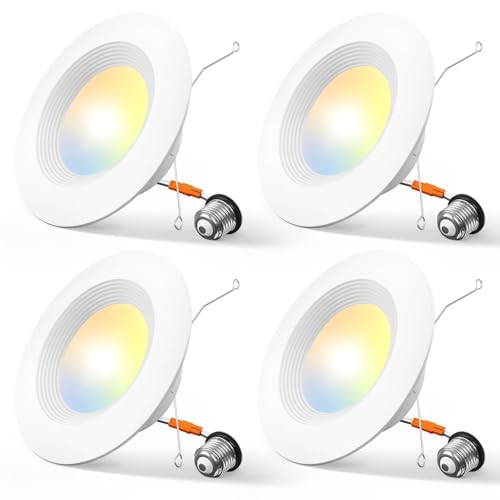
Eye protection: The brightness of the can lights can be smoothly adjusted from 10% to 100%, so you can choose the most comfortable brightness for your eyes. Note: This light is compatible with most dimmers on the market, except for the smart dimmer.
How to Choose for Your Living Room Layout
Use the room itself to guide your choice:
- Low ceiling: Recessed lighting usually keeps the room feeling taller because nothing hangs down.
- Artwork or gallery wall: Track lighting is often better because the heads can be aimed and adjusted.
- TV wall: Avoid aiming bright lights directly at the screen. Use dimmable ambient light and side or wall-wash lighting to reduce contrast.
- Reading corner: Track lighting can help, but a floor lamp or table lamp may feel warmer and easier to control.
- Open-plan living room: Recessed lighting can define general zones, while track lighting can highlight dining, shelves, or art.
- Rental or temporary space: Track lighting may still require hardwiring, but it is usually easier to adapt than a full recessed-lighting layout.
- Ceiling with insulation above: Recessed fixtures must be selected carefully for the ceiling conditions.
Choosing Lumens, Color Temperature, and CRI
For a living room, comfort matters as much as brightness. Choose lumens based on the amount of light you need, not just the wattage printed on the box. DOE recommends comparing lumens because they measure the amount of light a bulb provides.
For color temperature, warm white light is usually the safest choice for living rooms. DOE says 2700K to 3600K is generally recommended for most indoor general and task lighting. For color quality, look for a CRI of at least 80 for most living room uses; higher CRI can help artwork, wood tones, fabrics, and skin tones look more natural.
Pro Tip: Put recessed and track lighting on dimmers when compatible. A living room rarely needs full brightness all evening, and dimming helps shift the room from cleaning mode to movie night to entertaining.
Tips for Combining Recessed and Track Lighting in Your Living Room
Combining recessed and track lighting can give you the best of both styles. Recessed fixtures can create a soft base layer, while track lighting adds direction and drama where the room needs it.
Layering Lighting Effects
Use recessed lights for general illumination, then use track heads to highlight artwork, shelves, a fireplace wall, or architectural details. This keeps the room from feeling flat and avoids relying on one bright ceiling source.
Focal Point Accents
Track lighting is excellent for focal points. Aim the heads at a slight angle rather than straight down to create depth and reduce harsh shadows. If you are lighting art, avoid direct glare on glass frames.
Adjustable Lighting Solutions
Adjustable track heads are useful in living rooms that change over time. You can redirect light when you move furniture, add a new painting, or change the room’s main seating area. Recessed lights can also be adjustable if you choose gimbal or directional trims, but they still have fixed ceiling locations.
Common Mistakes to Avoid
- Using only ceiling lights: Add table lamps, floor lamps, sconces, or accent lights for a warmer room.
- Installing recessed lights in a grid without a purpose: Place lights around how the room is used, not just by equal spacing.
- Ignoring glare: Avoid bright downlights directly above sofas, recliners, or TV screens.
- Buying by watts instead of lumens: Lumens tell you brightness; watts tell you energy use.
- Mixing too many color temperatures: Keep living room lighting in a consistent warm range unless you have a specific design reason.
- Skipping dimmer compatibility: Make sure the LED product and dimmer are designed to work together.
- Forgetting ceiling conditions: Recessed fixtures must match the ceiling depth, insulation, and code requirements.
Frequently Asked Questions
What type of lighting is best for a living room?
The best living room lighting is layered. Use ambient lighting for general brightness, task lighting for reading or hobbies, and accent lighting for artwork, shelves, plants, or architectural features. Recessed lighting is strong for ambient light, while track lighting is strong for adjustable accent and task light.
Should you put recessed lights in a living room?
Yes, recessed lights can work very well in a living room if you want a clean ceiling and even ambient light. The key is placement. Avoid putting bright downlights directly over seating, choose dimmable LED products when compatible, and use the correct fixture rating for your ceiling conditions.
Is track lighting outdated?
Track lighting is not outdated when it is chosen intentionally. Modern track systems can look sleek, minimal, or decorative. It works especially well in living rooms with artwork, shelving, plants, or changing furniture layouts.
Can recessed and track lighting be used together?
Yes. This is often the strongest solution. Recessed lights can provide soft general illumination, while track lighting can highlight artwork, a fireplace, shelving, or a reading zone. Put each layer on separate switches or compatible dimmers for better control.
What color temperature is best for living room lighting?
Warm white light is usually best for living rooms. A range around 2700K to 3000K feels cozy, while 3000K to 3500K can feel a little cleaner and brighter. Try to keep the room’s main fixtures in a consistent color temperature so the lighting feels intentional.
Which is cheaper to install: recessed or track lighting?
Track lighting is often less invasive when an existing ceiling box can be used. Recessed lighting usually takes more labor because each fixture needs a ceiling opening and proper wiring. Actual cost depends on ceiling access, fixture type, wiring, local labor rates, and whether drywall repair is needed.
Conclusion
Recessed lighting and track lighting both have a place in a well-designed living room. Choose recessed lighting when you want a clean ceiling, subtle ambient light, and a built-in look. Choose track lighting when you want adjustable heads that can follow your furniture, artwork, and focal points. For the most comfortable result, layer the two carefully, choose efficient LED products by lumens and color quality, and use compatible controls so the room can shift from bright and practical to soft and relaxing.
Sources
- U.S. Department of Energy — LED Lighting — supports LED efficiency, lifespan comparisons, directionality, and recessed downlight use.
- U.S. Department of Energy — Lighting Choices to Save You Money — supports LED energy savings, fixture types, and lighting controls.
- U.S. Department of Energy — Lumens and the Lighting Facts Label — supports buying by lumens, brightness comparisons, color, life, and operating cost labels.
- U.S. Department of Energy — Lighting Principles and Terms — supports ambient, task, accent lighting, color temperature, CRI, glare, and light quantity guidance.
- U.S. Department of Energy — Lighting Design — supports energy-efficient lighting design, controls, task lighting, and IC-rated airtight recessed fixture guidance.
- ENERGY STAR — Learn About LED Lighting — supports LED lifetime, lumen depreciation, and thermal management guidance.