
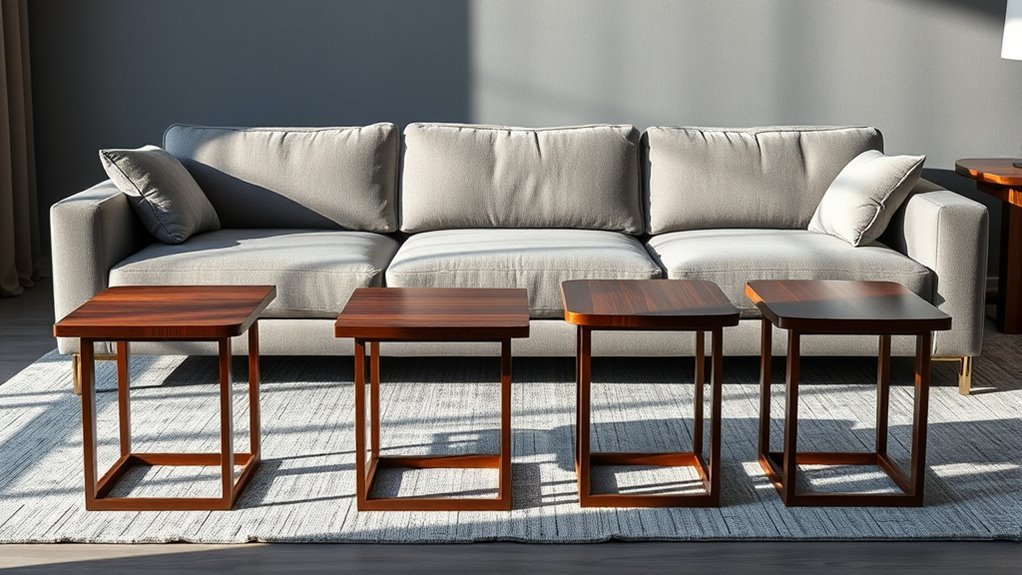
When choosing a side table for your living room, aim for a height that’s 1 to 2 inches higher than your sofa seat for ideal comfort. Measure your sofa and chairs carefully, ensuring the table complements the arm height without exceeding it by more than 4 inches. Keep the table about 12-18 inches from your seating for easy access. With thoughtful selections, your living space can feel both stylish and functional. Discover more insights to enhance your decor.
Understanding the Importance of Side Table Height
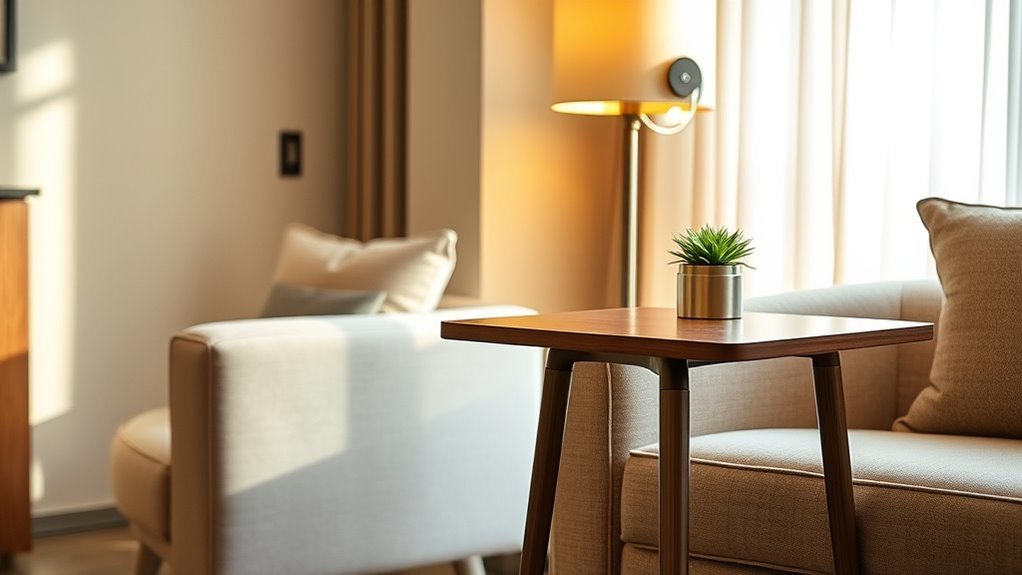
When it comes to creating a comfortable living space, the height of your side table plays an essential role. Ideally, you want the end table height to match closely with the height of the sofa. This alignment guarantees that reaching for your favorite book or drink feels effortless and natural. If you choose an end table that’s 1 to 2 inches higher than the sofa seat, you’ll strike the perfect balance between functionality and style. Avoid the common pitfalls of selecting tables that are too low or too tall, as they can disrupt the room’s flow and hinder usability. For accent chairs, consider the arm height too; tables should range from 18 to 26 inches for maximum ease of access.
How to Measure Your Sofa and Chair Heights
To guarantee your side table complements your sofa and chairs perfectly, it’s crucial to measure their heights accurately. Start with the sofa height by using a tape measure from the floor to the top of the seat cushion, accounting for any compression from regular use. Next, measure the arm height from the floor to the armrest’s top; this helps ascertain your side table height achieves a balanced look. Don’t forget to measure your chairs, checking both the seat cushion and armrest heights. Aim for a clearance of 1 to 2 inches between the side table and armrest for easy access. Typical sofa seat heights range from 17 to 20 inches, while arm heights vary between 22 and 26 inches, influencing your side table choice.
The Ideal Height Range for Living Room Side Tables
Finding the perfect height for your living room side table is essential for both aesthetics and functionality. The ideal height range for end tables typically falls between 18 to 24 inches, aligning comfortably with most sofa seat heights. Most sofas boast seat heights of 17 to 20 inches, making side tables of 18 to 22 inches the most common choice for visual balance. If you have accent chairs, aim for a height between 18 to 26 inches, depending on their arm heights. This careful selection guarantees easy access to drinks, lamps, and books, all without the strain of reaching. By adhering to this height range, you elevate both style and comfort in your living space, allowing you to fully enjoy your sanctuary.
Should Your Side Table Be Higher or Lower Than the Sofa Arm?
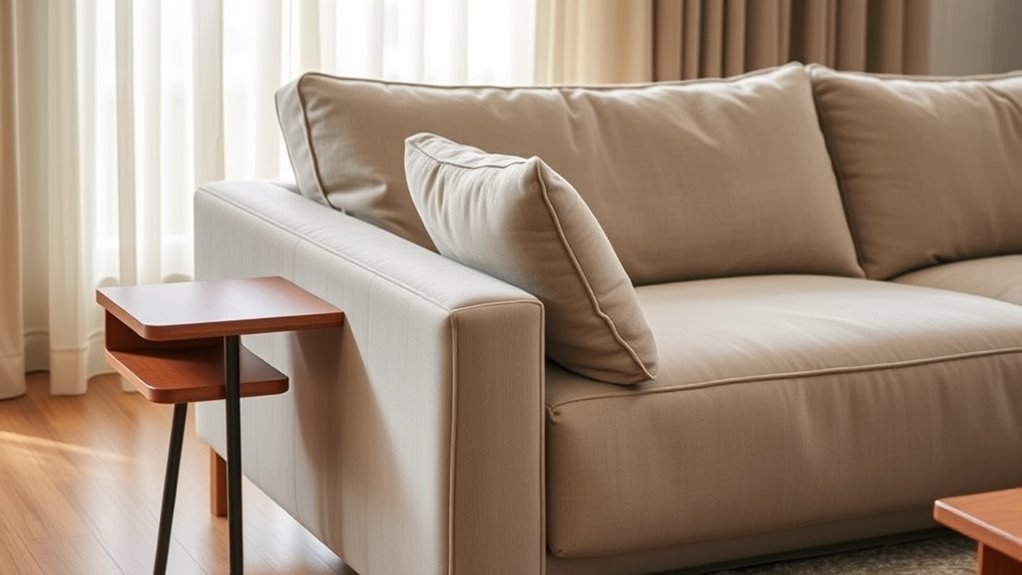
Choosing the right height for your side table in relation to your sofa arm is essential for both functionality and style. Ideally, you want the side table height to be within 1 to 2 inches of the sofa arm height. This guarantees comfortable access for placing drinks or lamps while maintaining visual balance. Here are three key points to take into account:
- If your sofa arm height is 24 inches, aim for a side table between 22 to 26 inches.
- For low-armed sofas, choose a side table height of 18 to 22 inches for aesthetic appeal.
- Avoid heights that exceed 2 inches above or below the sofa arm to keep a lower profile and prevent awkward reaches.
Choose the Right Width and Depth for Your Side Table
While selecting a side table, getting the width and depth right is essential for both functionality and aesthetics. The ideal width typically ranges from 12 to 28 inches, with narrower tables (12-16 inches) perfect for cozy spaces, while wider options (23 inches and above) can become striking focal points in larger rooms. Standard depths for side tables fall between 12 to 20 inches, ensuring usability without compromising movement around the table. Make sure the table depth doesn’t exceed that of your adjacent sofa or chair to maintain visual harmony. Finally, allow at least 12-18 inches of clearance around it for easy access, creating a seamless flow in your living space that invites liberation and comfort.
Avoid These Common Side Table Height Mistakes
When picking a side table, don’t let aesthetics overshadow functionality. Ignoring the height of your sofa’s armrest can lead to awkward reaches and uncomfortable use. Make sure your table aligns with both your seating and your lifestyle for a harmonious setup.
Ignoring Sofa Arm Height
Neglecting the height of your sofa’s arms can lead to significant discomfort and frustration when selecting the perfect side table. To guarantee your end tables are usually functional and stylish, keep these tips in mind:
- Aim for Compatibility: Choose a table that is within 1 to 2 inches of the sofa arm height for easy access.
- Avoid Excessive Height: Don’t select a table that exceeds the arm height by 4 inches or more, as it can block sightlines and create awkwardness.
- Consider Cushion Height: Measure the sofa’s seat cushion height for a more accurate reference when determining the right height for an end table.
Prioritizing Aesthetics Over Function
Many homeowners prioritize aesthetics in their side table selection, often overlooking the essential role of function. Choosing the wrong height can disrupt your comfort during daily activities, making it awkward to reach for items. Ideally, your side table should be within 1 to 2 inches of your sofa’s seat height, allowing for seamless interaction. If the table is excessively tall—more than 4 inches above arm height—it can obstruct sightlines, cluttering your space visually. Remember the Golden Rule: design your living area for both beauty and practicality. Also, consider how the combined height of the table and any lamps affects lighting. Striking a balance between aesthetics and function will elevate your space, creating harmony throughout your home.
The Functionality of Side Tables: What Will You Use It For?
How will you utilize your side table? Understanding its functionality is key to enhancing your living room. You might consider the following:
- Holding Drinks: Choose a height that allows for easy reach while seated, ideally lower (18-22 inches) for casual use.
- Lighting: If you’ll place a lamp, aim for a combined height of 54-60 inches when seated, ensuring the shade is at eye level.
- Display & Storage: Use it for books or decor—select a height that complements your seating arrangement and enhances overall accessibility.
Tips for Styling Your Side Table Alongside Your Furniture
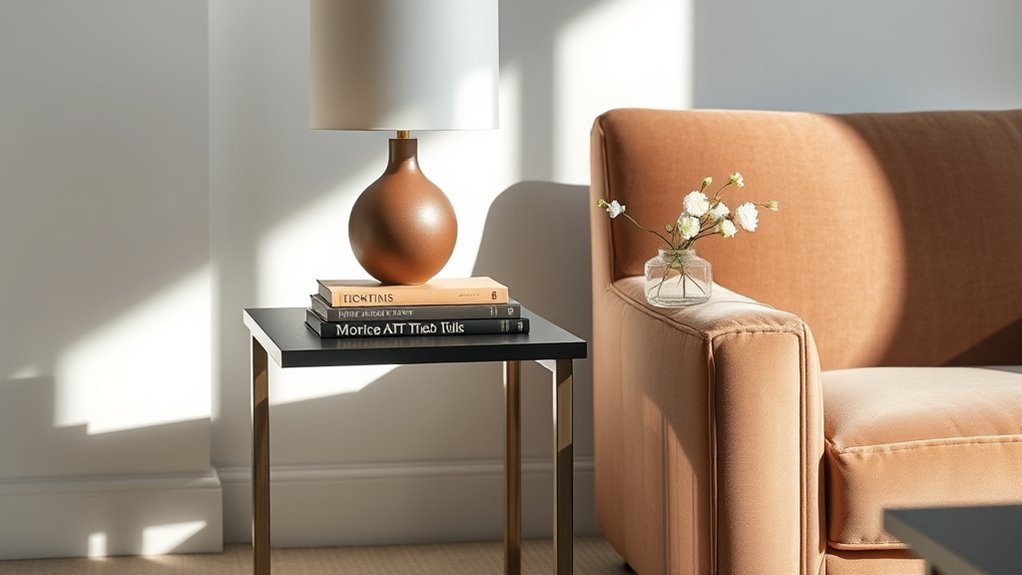
When styling your side table, aim to harmonize its height with the arm level of your sofa or chair for seamless accessibility. Balance is key, so incorporate decorative elements like small plants or books while ensuring they don’t obstruct essential items. This thoughtful arrangement not only enhances functionality but also elevates the overall aesthetic of your space.
Harmonize Heights With Furniture
In order to create a harmonious living space, it’s essential to take into account the height of your side table in relation to your existing furniture. A well-chosen side table enhances comfort and accessibility, making your living room feel cohesive. Follow these tips to harmonize heights:
- Match Your Sofa’s Arm Height: Your side table should be slightly lower than the armrests for ease of access.
- Consider Seat Cushion Height: Keep your table height within 1-2 inches of the sofa seat cushion for ideal use.
- Maintain Proportions: Choose a side table with depth and width that complements the surrounding furniture for visual balance.
Balance Decorative Elements Carefully
To create an inviting and well-styled side table, carefully consider the balance of decorative elements alongside your furniture. Aim for your side table to be within 1-2 inches lower than the height of your sofa’s armrest. This guarantees visual balance and easy access. Choose decorative elements that enhance your room’s color palette while varying their heights for intriguing layers. Avoid tall pieces that block sightlines. Incorporate a lamp that not only lights the space but also brings warmth; position the bottom of the lampshade at eye level when seated. Finally, confirm your side table’s dimensions harmonize with surrounding furniture, creating a cohesive flow that invites relaxation and connection.
What Shape Should Your Side Table Be?
Selecting the right shape for your side table can greatly impact both functionality and style in your living space. The shape you choose influences not only the aesthetics but also how well it integrates with your existing furniture. Here are three shapes to evaluate:
- Round/Oval: These soften the room’s lines and should have an 18-inch clearance for easy movement.
- Square: Ranging from 16×16 to 24×24 inches, square tables offer a balanced look that complements your sofa.
- Rectangular: With depths of 12-20 inches and lengths of 18-30 inches, these tables relate well to your seating arrangement.
When selecting, evaluate the overall layout and furniture scale to maintain visual harmony and functionality.
How to Position Your Side Table for Maximum Accessibility?
To make the most of your side table, position it close to your sofa or chair, ideally within 12-18 inches for effortless access. Guarantee the table height aligns with or is slightly higher than the seat cushion for maximum comfort. Don’t forget to maintain clear pathways around the table, allowing for easy movement and a tidy space.
Ideal Height Alignment
When positioning your side table for maximum accessibility, it’s essential to guarantee its height aligns closely with the seating arrangement. Aim for it to be within 1 to 2 inches of your sofa’s seat height, providing easy access and comfort. Follow these guidelines:
- Height Range: Choose a side table that falls between 18 to 24 inches, depending on your sofa’s height.
- Armrest Balance: Make sure the table doesn’t exceed the armrest height to avoid awkward reaching.
- Comfortable Reach: Position it close enough to allow for easy access to drinks, lamps, or decorative items without straining.
Clear Path Clearance
Creating an open and inviting space around your side table is essential for ensuring maximum accessibility. Aim for a clear path clearance of at least 12-18 inches around your end table, allowing for easy movement. Position the side table within easy reach of your seating, so you can grab a drink or book without straining. Make sure the height aligns with the arm height of your sofa or chair, creating a seamless shift for comfortable access. Avoid clutter by not placing the side table too close to your seating; this fosters a natural flow in the room. Finally, keep the table’s depth proportionate to adjacent furniture, ensuring ease and harmony in your living space.
Functional Placement Considerations
Positioning your side table effectively can transform your space into a highly functional area that enhances both comfort and accessibility. To guarantee you get the most out of your side table, consider these key placement tips:
- Proximity: Position your side table within 12-18 inches of your seating to allow easy access to drinks and remotes.
- Height Alignment: Align the side table height with the sofa armrest, ideally within 1-2 inches, for a comfortable reach.
- Knee Clearance: Ensure about 12 inches of knee clearance beneath the table for seamless movement.
Frequently Asked Questions
How High Should a Living Room Side Table Be?
Your living room side table should be between 18 to 24 inches high, balancing functional usage and design aesthetics. Consider material choices and space optimization to enhance comfort and style in your inviting space.
What Is the 2 3 Rule for Furniture?
The 2-3 rule guides you to maintain ideal spacing of 2 to 3 feet between furniture pieces. This enhances functionality, aligns furniture proportions, and elevates design aesthetics, ensuring a harmonious flow in your living space.
How Much Lower Should a Side Table Be Than a Couch?
Your side table should be the same height as your couch seat or up to 2 inches lower. This guarantees design balance and comfort factor, enhancing your space planning for a liberated, stylish living environment.
What Are the Rules for Sofa Side Tables?
For perfect side table styles, aim for 18-24 inches in height. Prioritize functional design and material considerations, ensuring decor coordination enhances your living room aesthetics while promoting easy movement and a clutter-free space.
Conclusion
In the grand design of your living room, the right side table height can be the unsung hero, much like a supporting actor in a classic film. By measuring your seating and understanding the ideal height, you’ll elevate both comfort and style effortlessly. Remember, it’s not just about aesthetics; it’s about creating a space where function meets flair. So go ahead, let your side table shine in its pivotal role, and watch your living room transform into a harmonious retreat.

Leave a Reply