
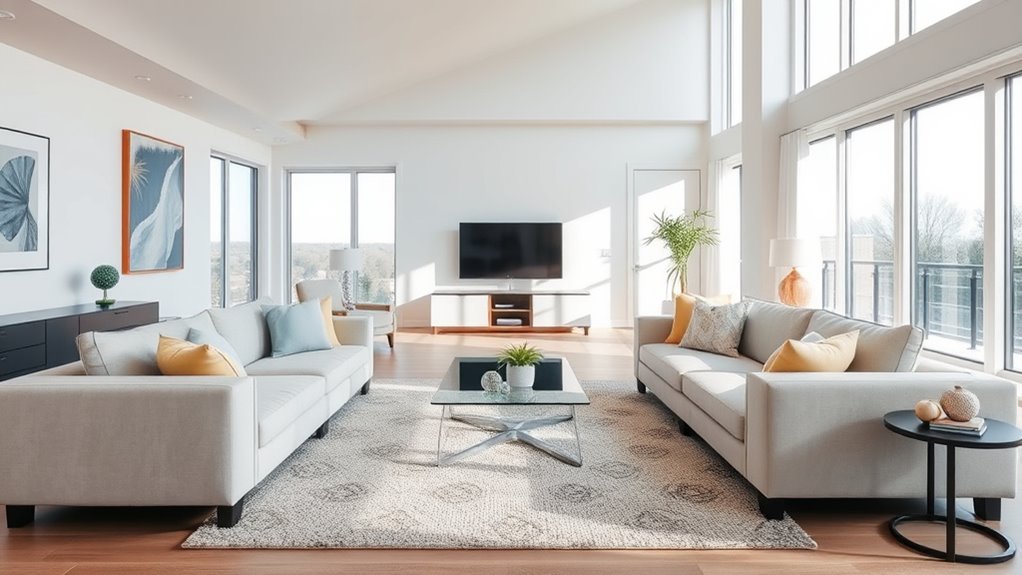
When it comes to standard living room dimensions, you’ll find that sizes range from 216 to 350 square feet, striking a balance between comfort and functionality. Think about how your furniture fits—sofas should be about 72-96 inches long, and coffee tables need to be placed 16-20 inches away for ease. Creating distinct zones with furniture arrangement and lighting can elevate your space. Want to know more about optimizing your layout? Keep exploring additional insights!
Understanding Standard Living Room Sizes: What You Need to Know
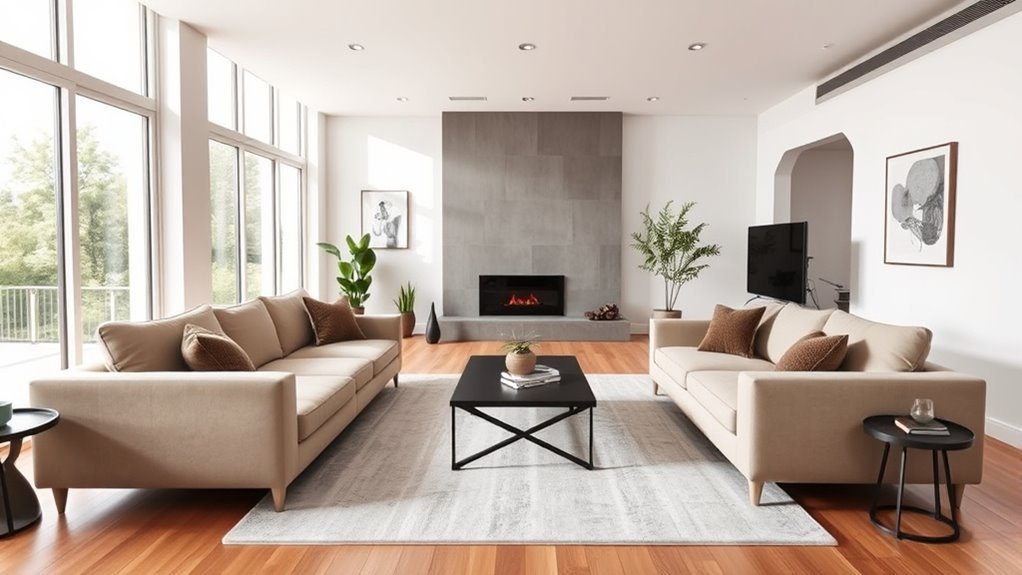
When you’re designing your living room, understanding standard sizes can make all the difference in creating a welcoming space. The average living room size in the U.S. is around 216 square feet, comfortably hosting between 6 to 10 people. If you’re working with a small living room, under 250 square feet, strategic furniture placement is key; think multi-functional pieces that maximize your room dimensions. Don’t overlook ceiling height, either—standard heights of 8 to 9 feet can enhance the feeling of openness, while taller ceilings create a luxurious vibe. Embrace your creativity within these guidelines, and liberate your living room from the ordinary, transforming it into a stylish haven that reflects your personal aesthetic.
Finding Your Ideal Living Room Size?
Choosing the right size for your living room is key to creating a space that feels just right for you. The ideal size varies, but knowing your needs can help avoid room size mistakes. Consider these factors:
- Household size: How many people will use the space?
- Medium-sized living room: Aim for 250-350 square feet for comfort.
- Furniture pieces: Confirm they fit without crowding.
- Layout preferences: Think about how you’ll arrange your furniture.
- Functionality: Will it be for relaxing, entertaining, or both?
Essential Furniture Sizes for Your Living Room Layout
To create a harmonious living room layout, understanding essential furniture sizes is crucial, as each piece contributes to the overall flow and functionality of the space. Here’s a quick guide to help you visualize your living room furniture:
| Furniture Piece | Recommended Size | Notes |
|---|---|---|
| Sofa | 72-96 inches long | Seat height: 17-19 inches |
| Coffee Table | 16-20 inches from the sofa | Guarantees ease of use |
| TV Stand | 24-30 inches high | Keeps screen at eye level |
| Main Walkways | 32-40 inches wide | Facilitates smooth movement |
How to Create Zones in Your Living Room for Multi-Functional Use
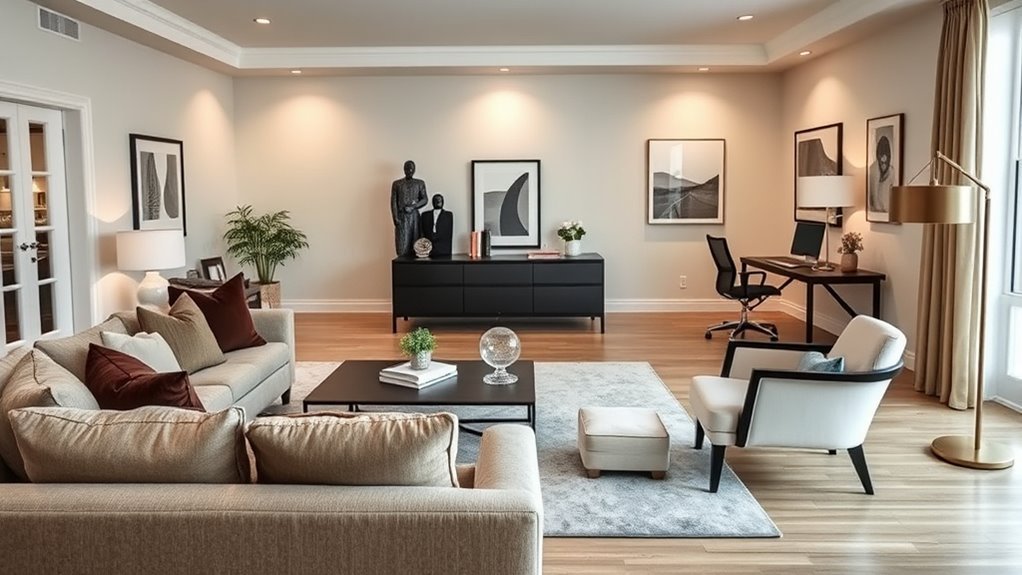
Creating distinct zones in your living room can transform the space into a multi-functional haven that caters to your every need. Embrace zoning to enhance functionality and flow:
Transform your living room by creating distinct zones that enhance functionality and cater to your lifestyle needs.
- Use area rugs to visually define each zone, like a cozy reading nook or an entertainment area.
- Arrange furniture to promote conversation while guaranteeing clear pathways for movement.
- Vary lighting with floor lamps for reading and softer ambient lights for social gatherings.
- Incorporate multi-functional furniture, such as storage ottomans, to maximize efficiency and declutter.
- Make certain natural light flows freely, enhancing the ambiance of each distinct area.
Avoid These Common Living Room Design Mistakes
While envisioning your perfect living room, it’s easy to overlook some common design pitfalls that can disrupt the harmony of the space. Oversized furniture pieces can overwhelm smaller rooms, so always measure before you buy. Make certain to maintain 32-40 inches for movement zones; this guarantees you’re not traversing a crowded area. Position your TV at the right distance—2-3 times the screen diagonal—for ideal viewing comfort. Avoid clutter by focusing on fewer, meaningful decor items rather than overwhelming your focal point with excess. Finally, consider your lighting choices carefully; layered solutions can transform the ambiance and functionality of your living room, making it a true sanctuary for relaxation and connection.
How Ceiling Height Affects Your Living Room Perception
Ceiling height plays an essential role in how you perceive your living room’s space and style. With standard heights creating a cozy ambiance, higher ceilings reveal expansive opportunities for bold decor and light. Remember, choosing furniture that complements your ceiling’s proportions can elevate the entire room, making it feel both inviting and harmonious.
Standard Ceiling Heights Impact
When you step into a living room with standard ceiling heights ranging from 8 to 9 feet, you immediately feel a sense of comfort and coziness. This height strikes a balance, enhancing your spatial perception while allowing you to explore decor choices that resonate with your taste.
Consider the following:
- Choose larger furniture pieces that complement the ceiling’s height.
- Incorporate ambient lighting to elevate the room’s atmosphere.
- Use vertical decor elements to draw the eye upwards.
- Embrace a mix of textures that enhance visual impact.
- Opt for color palettes that create harmony with your ceiling’s height.
With thoughtful design, you can transform how you experience your living room, making it a sanctuary of style and comfort.
Perception of Spaciousness Enhanced
As you enter a living room with lofty ceilings, you can’t help but notice how the space seems to breathe and expand around you. High ceilings transform your perception of spaciousness, allowing natural light to flood in and illuminate every corner. This airy atmosphere invites you to relax and unwind, feeling liberated in your surroundings. Incorporating vertical elements like tall bookshelves or striking artwork draws your gaze upward, enhancing that expansive feeling even more. However, remember to choose proportionate furniture; oversized pieces can disrupt the harmony of the room. By balancing height and scale, you create a sanctuary that celebrates freedom, making your living room an inviting retreat both visually and emotionally.
Furniture Proportions Matter Most
Furniture proportions play an essential role in shaping your living room’s ambiance, especially when dealing with varying ceiling heights. The right balance can transform your space, making it feel inviting and free. Consider these tips when choosing your living room furniture:
- Match furniture heights to your ceiling height.
- Use tall bookshelves or art pieces to draw the eye upward in high ceilings.
- Opt for neutral colors to create a calming, cohesive look.
- Incorporate accent chairs that complement your existing pieces while enhancing proportions.
- Confirm lighting design harmonizes with ceiling height, illuminating dark corners.
Using Technology to Optimize Your Living Room Layout
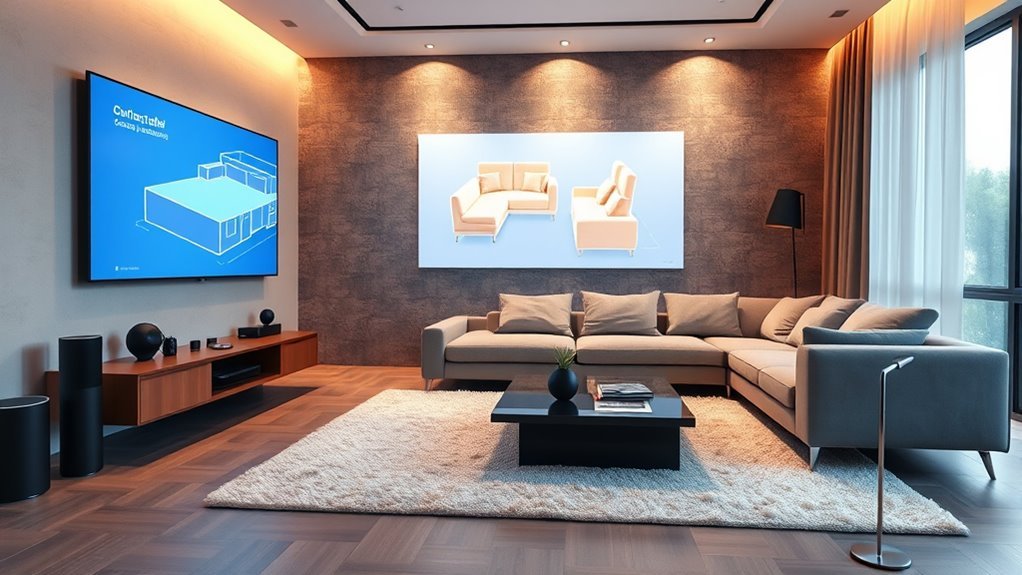
To create a living room that truly reflects your style and meets your needs, leveraging technology can be a game-changer. Imagine using online room planners to visualize your living room furniture within your square footage, ensuring every piece enhances your space. With 3D modeling software, you can explore design options that maintain functionality while being aesthetically pleasing. Augmented reality apps allow you to see how furniture fits in real-time, helping you make informed decisions about spacing and flow. And with virtual reality tools, you can “walk through” your designs, adjusting as needed before you commit. Embrace these innovations, and transform your living room into a harmonious sanctuary that feels just right for you.
Frequently Asked Questions
What Is the 2/3 Rule for Living Rooms?
The 2/3 Rule suggests you arrange furniture to occupy two-thirds of your living room, ensuring design balance and visual harmony. This enhances space utilization and room functionality, creating a comfortable seating layout that feels liberating and inviting.
Is a 20X20 Living Room Small?
No, a 20×20 living room isn’t small. You can explore diverse furniture arrangements, maximize space utilization, and embrace design trends with vibrant color schemes and creative lighting options, creating an inviting, liberated atmosphere.
Is 250 Sq Ft a Big Living Room?
A 250 sq ft living room size strikes a perfect balance, offering room functionality and comfort levels. You can optimize space with thoughtful furniture arrangements, enhancing design aesthetics while creating a welcoming atmosphere for gatherings.
Is 10X12 Too Small for a Living Room?
A 10×12 living room isn’t too small; with smart furniture arrangement, multifunctional pieces, and light color choices, you can maximize your small space. Incorporate clever lighting ideas and design tips to create an inviting atmosphere.
Conclusion
In the grand tapestry of your home, your living room is the vibrant centerpiece, where every inch matters! Imagine a space so perfectly designed that even the walls seem to dance with joy. By understanding dimensions, furniture sizes, and creating cozy zones, you’ll elevate your living room from ordinary to extraordinary. So go ahead—let your creativity soar and transform your living space into a breathtaking haven where comfort and style intertwine like a luxurious silk ribbon!

Leave a Reply