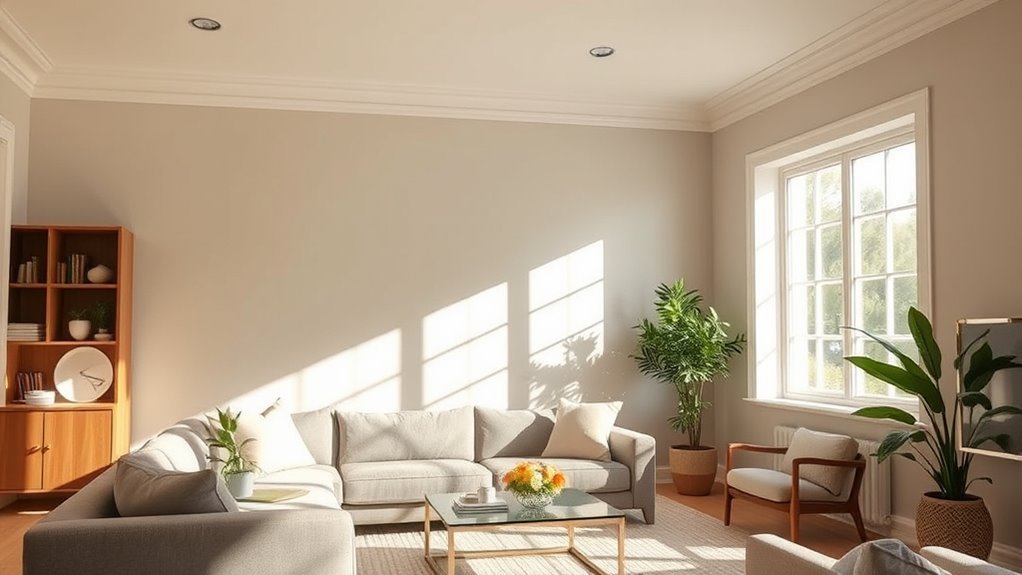
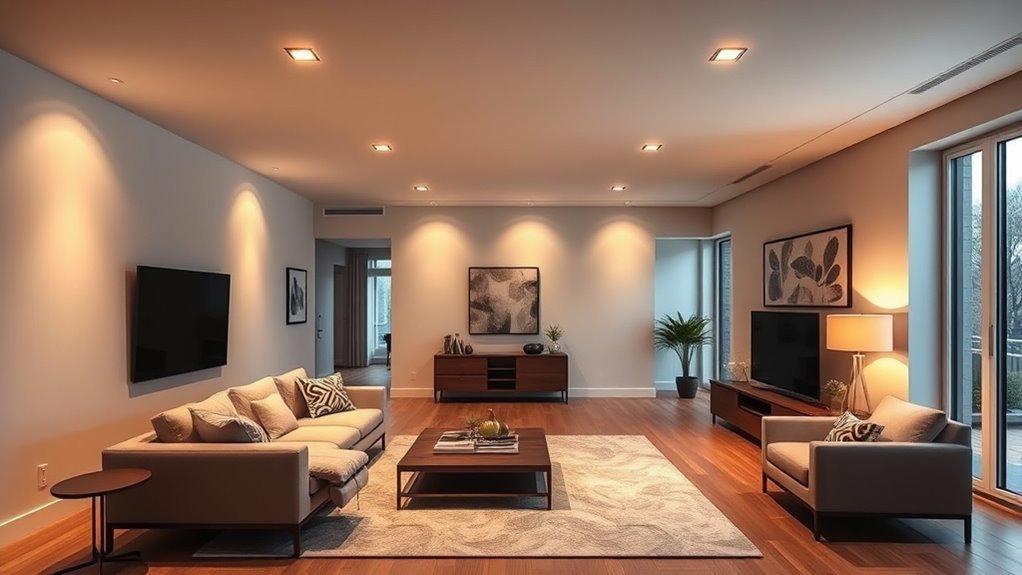
A floor plan in interior design is your blueprint for envisioning a space. It maps out room dimensions, furniture layouts, and traffic flow, ensuring functionality and aesthetic appeal. You’ll typically encounter 2D and 3D versions, each enhancing your understanding of spatial relationships. To choose the perfect plan, consider factors like natural light and room accessibility. With practical tips for design, you can transform your space into a harmonious home. Discover more ideas to elevate your design game!
What Is a Floor Plan and Why Is It Important in Interior Design?

A floor plan acts as the blueprint for your interior design vision, laying out the intricate details of space in a clear, scaled diagram. It enhances your spatial awareness, helping you visualize how rooms, walls, and furniture arrangements interact. By meticulously detailing dimensions and layout, a well-crafted floor plan guarantees peak functionality, guiding your decisions on design features. Whether you’re renovating or building, a layout plan facilitates effective communication with contractors and designers, guaranteeing everyone’s on the same page. Plus, in real estate, these plans help potential buyers grasp a property’s flow, making them a powerful marketing tool. Ultimately, understanding how to create a compelling floor plan elevates the usability and aesthetics of your space, liberating your design potential.
Explore Various Types of Floor Plans: 2D, 3D, and Interactive
Understanding floor plans opens the gateway to various formats that can elevate your interior design project. Start with 2D floor plans; they provide a flat, scaled view of your space, highlighting walls, doors, and windows—perfect for initial layout planning. Next, immerse yourself in 3D floor plans, which enhance spatial relationships by allowing you to visualize height dimensions and incorporate furniture and decor seamlessly. For an even more immersive experience, explore live 3D floor plans. These interactive designs let you navigate your project in real-time, making adjustments as you go. With design software like HomeByMe and SketchUp, creating both 2D and 3D floor plans becomes intuitive, releasing your creative potential and transforming your vision into a tangible reality.
Choosing the Right Floor Plan: Key Elements to Consider
Choosing the right floor plan hinges on several key elements that can greatly impact your overall design and functionality. As you explore various layouts, keep these considerations in mind:
Selecting an ideal floor plan is crucial for achieving a functional and harmonious living space.
- Flow and Circulation: Guarantee movement between rooms is intuitive and unobstructed.
- Functionality Needs: Evaluate each room based on your lifestyle; prioritize communal areas for family and private spaces for individuals.
- Natural Light: Assess exposure to optimize room placements, balancing illumination without overheating in living areas.
- Accessibility Features: Place bathrooms and laundry rooms near bedrooms for convenience.
- Design Tools: Utilize software to visualize different floor plan layouts, helping you make informed decisions about furniture arrangements.
These elements will guide you in creating harmonious interior spaces that liberate and inspire.
Essential Tips for Creating Functional and Aesthetic Floor Plans

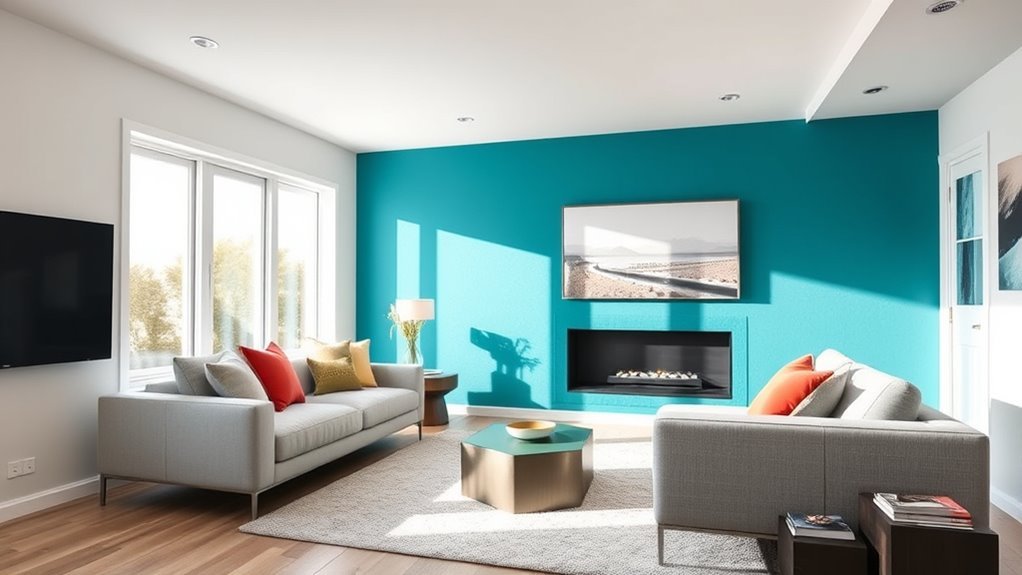
While crafting an engaging floor plan, it’s crucial to blend functionality with aesthetics to create a space that not only looks good but also works seamlessly for your daily life. Start by measuring your space and sketching a scaled outline. Prioritize functionality by ensuring at least 24 inches between furniture for comfortable movement. Utilize design software to visualize arrangements and maximize natural light. Balance aesthetics with your personal style through color and material choices.
| Tips | Details |
|---|---|
| Measure Your Space | Create a scaled outline for accuracy. |
| Consider Traffic Flow | Maintain at least 24 inches between furniture. |
| Use Design Software | Experiment with layouts in 2D or 3D. |
These steps will help you make informed design decisions for your home.
Inspiring Floor Plan Examples for Every Room in Your Home
As you explore floor plan options for every room in your home, consider how each layout can elevate both functionality and style. Thoughtful arrangements can make your living spaces truly shine. Here are some inspiring examples:
- Living Room: Central seating promotes conversation, enhancing social interactions.
- Kitchen: L-shaped or U-shaped designs streamline workflow, essential for cooking efficiency.
- Bathroom: His-and-hers vanities and separate tub/shower areas maximize space and functionality.
- Bedroom: Strategic window placements provide natural light while ensuring privacy.
- Outdoor Space: Patios or decks seamlessly connecting to living areas enhance indoor-outdoor living experiences.
These floor plans, designed with intended use in mind, help you visualize and create spaces that are both functional and visually engaging.
Frequently Asked Questions
What Does a Floor Plan Include?
A floor plan includes room dimensions, furniture placement, traffic flow, architectural features, and design elements, ensuring ideal space utilization. It also considers zoning regulations and aesthetic balance, creating a harmonious and functional environment for you.
Are Layout and Floor Plan the Same?
No, layout and floor plan aren’t the same. While a floor plan outlines room dimensions and spatial arrangement, a layout focuses on furniture placement, traffic patterns, and aesthetic flow, enhancing functionality and aligning with your design preferences.
Are Floor Plan and House Plan the Same?
No, a floor plan and house plan aren’t the same. While floor plans focus on space allocation and layout considerations, house plans address architectural differences and building regulations, serving distinct planning purposes and visualization techniques in design software.
What Are Three Types of Floor Plans?
You’ll explore three types of floor plans: open concept for spacious living, traditional layouts for classic charm, and split-level designs that maximize functionality. Each caters to tiny homes, commercial spaces, and a minimalist approach.
Conclusion
In the end, while you might think a floor plan is just a simple sketch of your space, it’s really the blueprint for your dreams. Ironically, the very lines that confine your rooms can liberate your creativity, transforming mundane spaces into reflections of your personality. So, as you embrace the structure of a floor plan, remember: it’s not just about walls and furniture; it’s about crafting a life that feels distinctly yours within those boundaries.