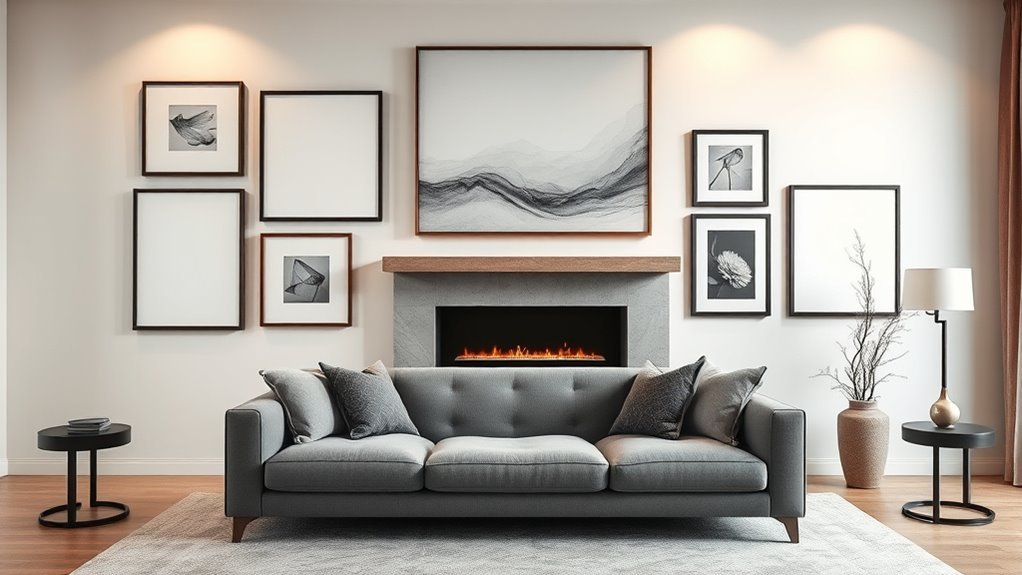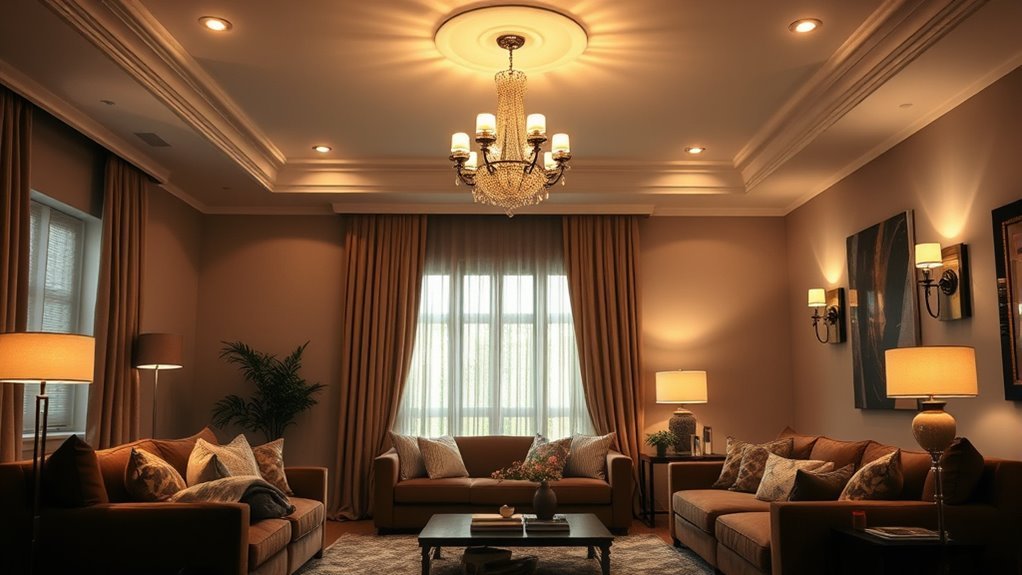
Layered lighting in your living room creates a perfect blend of ambiance, functionality, and style by incorporating ambient, task, and accent lighting. Start with general overhead illumination, then add specific task lamps for activities like reading. Complement these with accent lights to highlight artwork or architectural features. Dimmable fixtures enhance versatility, allowing you to adjust the mood effortlessly. With the right mix, you can transform your space into a cozy haven. Discover more tips and ideas to elevate your lighting!
What Is Layered Lighting and Why Does It Matter in Your Living Room?
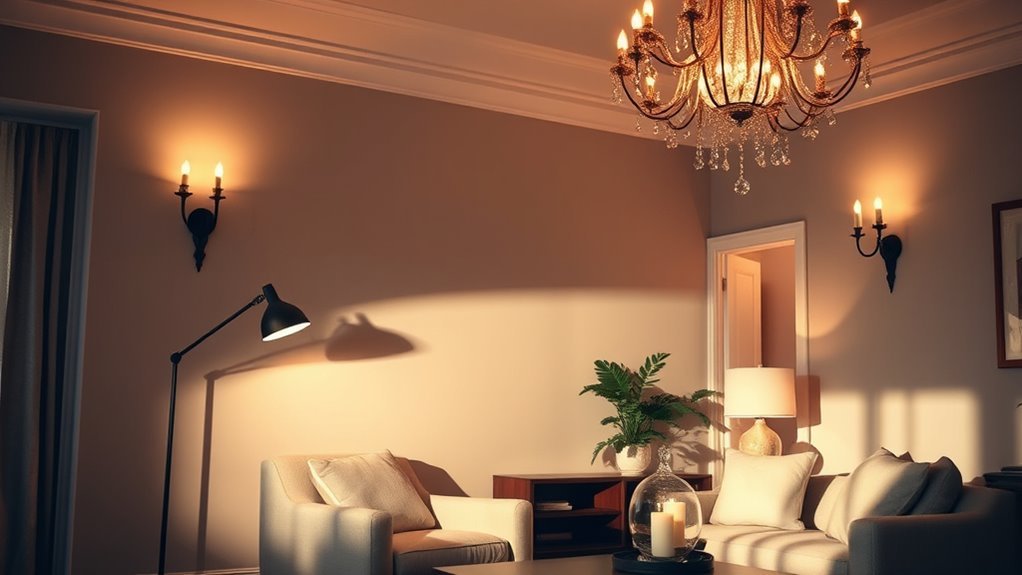
When you think about transforming your living room into a space that balances functionality and aesthetics, layered lighting plays a crucial role. It’s the art of combining ambient lighting, task lighting, and accent lighting, creating a versatile atmosphere that adapts to your needs. Ambient lighting serves as the foundation, casting a warm glow that invites relaxation. Task lighting focuses on specific areas, like your favorite reading nook, while accent lighting highlights beautiful artwork or architectural elements. By using multiple light sources, such as chic chandeliers, stylish floor lamps, and elegant wall sconces, you enhance depth and dimension. Incorporating dimmer switches gives you control over brightness, allowing you to craft the perfect mood for every occasion in your living room.
The Three Essential Types of Layered Lighting: Ambient, Task, and Accent
In your living room, ambient lighting sets the stage with a warm glow, guiding you through the space effortlessly. Task lighting zeroes in on your favorite activities, making reading or playing games a pleasure rather than a strain. Finally, accent lighting adds a touch of drama, showcasing your artwork and architectural features to create an enchanting atmosphere.
Understanding Ambient Lighting Effects
While exploring the layered lighting in your living room, understanding the effects of ambient lighting is essential for creating a balanced atmosphere. Ambient lighting serves as your foundational light source, casting a warm glow that allows you to navigate and engage with the space effortlessly. By strategically placing various lighting sources—like ceiling fixtures or floor lamps—you set the stage for a welcoming environment. This general illumination not only enhances visibility but also harmonizes beautifully with task lighting and accent lighting. Layering light in this way enriches your living room’s overall aesthetic, while adding visual interest through contrasts and highlights. Embrace ambient lighting to transform your space into a vibrant sanctuary that invites relaxation and connection.
Enhancing Functionality With Task Lighting
To effectively enhance your living room’s functionality, incorporating task lighting is key, as it targets specific activities that require focused illumination. Think of task lighting for reading, knitting, or playing games, illuminating these moments with precision. Use floor lamps and table lamps, strategically placed to create an inviting atmosphere, while wall-mounted sconces can add elegance and utility. Properly layered task lighting complements your ambient light, reducing shadows and improving visibility. Consider adjustable task lighting options, like dimmable lamps, to tailor brightness based on the time of day or mood. This thoughtful integration of task lighting not only boosts usability but also enriches your living experience, allowing you to embrace each moment with clarity and purpose.
Creating Drama With Accent Lighting
Accent lighting transforms your living room into an enchanting space by emphasizing unique features and creating visual drama. By strategically placing accent lights, like wall sconces or spotlights, you can highlight focal points such as artwork or architectural details, adding depth and dimensional effect to your design. Combine this with ambient lighting for general illumination and task lighting for activities like reading, and you’ve layered light to enhance both functionality and aesthetics. Dimmable accent lighting offers flexibility, allowing you to adjust the mood according to the time of day. Incorporating various decorative fixtures—table lamps, floor lamps—creates visual interest and prevents a flat atmosphere, inviting liberation through a beautifully illuminated living space.
Tips for Effectively Layering Light in Your Living Room
To effectively layer light in your living room, start by evaluating your unique lighting needs and the activities you enjoy in the space. Combine ambient, task, and accent lighting to create a balanced atmosphere that enhances both functionality and style. With the right mix of sources, you’ll transform your living room into a warm, inviting haven.
Assess Your Lighting Needs
How can you guarantee your living room lighting meets the varied needs of your daily activities? Start by evaluating your space and its primary functions. Consider these four essential tips:
- Identify key activities—reading, entertaining, or watching TV—to tailor your lighting accordingly.
- Factor in your room size and layout to pinpoint areas needing extra light sources for comfort and navigation.
- Mix ambient lighting, like chandeliers, with task lighting—table or floor lamps—for focused activities, plus accent lighting to showcase art or design elements.
- Incorporate adjustable lighting with dimmers, allowing flexibility in mood and function.
Regularly reevaluate your fixture placements to guarantee your lighting evolves with your lifestyle and remains liberating and functional.
Combine Different Light Sources
While creating a warm and inviting living room, layering different light sources is essential for achieving a balanced and functional ambiance. Start with ambient lighting from overhead fixtures like chandeliers to provide general illumination, then add task lighting using floor or table lamps for reading or hobbies. Incorporate accent lighting with wall sconces or spotlights to highlight artwork, adding depth and intrigue. Ascertain each light source operates independently for a customizable atmosphere tailored to your needs. Utilize movable lamps and adjustable sconces for flexibility in your lighting arrangements. Remember to reflect on furniture placement to prevent obstruction while maximizing illumination.
| Ambient Lighting | Task Lighting | Accent Lighting |
|---|---|---|
| Overhead fixtures | Floor/table lamps | Wall sconces |
| Chandeliers | Adjustable lamps | Spotlights |
| General warmth | Focused tasks | Highlight features |
How to Figure Out Your Lighting Needs?
What activities do you envision in your living room? Knowing this helps you determine your lighting needs. Start by considering these key factors:
- Reading: You’ll need focused, bright light to avoid straining your eyes.
- Entertaining: Create a warm, inviting atmosphere with ambient lighting for social gatherings.
- Watching TV: Ascertain your lighting doesn’t create glare, using softer, indirect sources.
- Assessing Natural Light: Observe how sunlight moves through your space, affecting brightness throughout the day.
Evaluate your existing light sources and their effectiveness. Layered lighting can enhance your living room, providing even illumination and comfort. Adjust your artificial lighting to support both daytime activities and evening ambiance, making sure your space feels just right.
Choosing the Right Fixtures for Each Light Layer
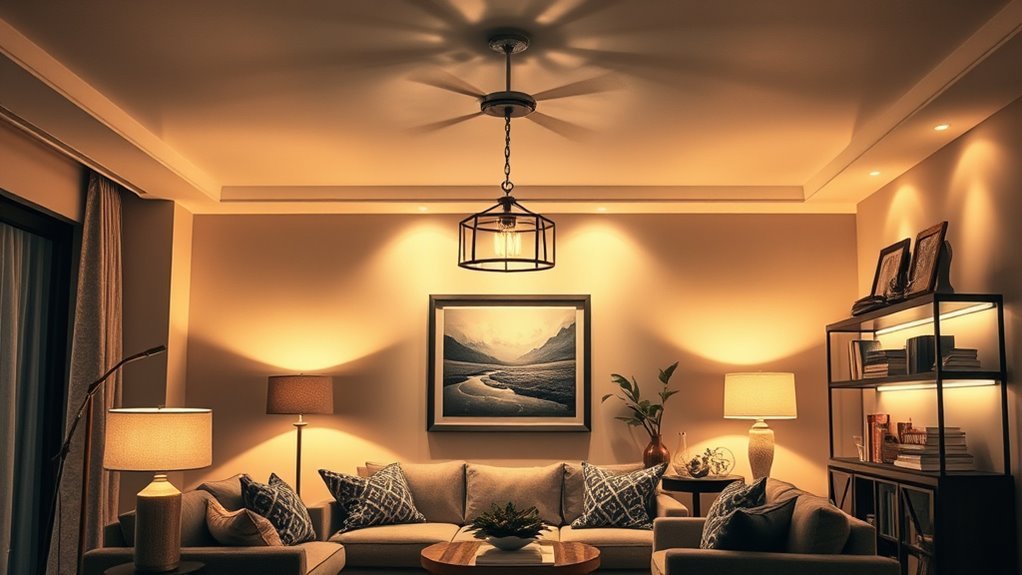
Choosing the right fixtures for each layer of lighting can transform your living room into a functional and inviting space. For ambient lighting, consider large ceiling-mounted fixtures like chandeliers or flush mounts that cast a warm glow across the room. Task lighting is best served by adjustable table or floor lamps, positioned near seating areas for reading and activities. To highlight your favorite artwork or architectural details, incorporate accent lighting with wall sconces or picture lights. Mixing various styles and heights of fixtures adds depth and avoids uniformity in your design. Finally, make certain all lights share a compatible color temperature—opting for warm white bulbs (2700K–3000K) creates a cozy atmosphere that beckons relaxation.
Examples of Layered Lighting Styles for Different Living Rooms
When it comes to creating the perfect ambiance in your living room, exploring various layered lighting styles can make all the difference. Here are some inspiring examples tailored for different aesthetics:
- Contemporary: Use a large chandelier as ambient lighting, stylish floor lamps for task lighting, and wall sconces to highlight artwork.
- Rustic: Opt for recessed lighting for general illumination, table lamps for tasks, and decorative lanterns as warm accent pieces.
- Modern Minimalist: A sleek pendant light serves as the primary ambient source, complemented by adjustable track lighting and LED strips for showcasing art.
- Traditional: Feature a grand ceiling fixture for ambient lighting, classic table lamps for reading, and accent lights to illuminate cherished decor.
These layers of light not only enhance functionality but also elevate your space’s character.
Transform Your Living Room Atmosphere With Creative Lighting Techniques
To elevate your living room’s atmosphere, embracing creative lighting techniques can be a game changer. Start with layering lighting by incorporating ambient lighting through a striking chandelier, setting a welcoming tone. Enhance functionality with table lamps and floor lamps for task lighting, perfect for reading or entertaining. Don’t forget accent lighting—strategically place wall sconces or spotlights to draw attention to your favorite architectural features or artwork, adding depth and intrigue. Dimmable fixtures are essential; they let you adjust light intensity to match your mood, transforming the space from cozy to vibrant. Regularly reassess your lighting plans to guarantee harmony between illumination and decor, allowing your living space to continually evolve and inspire liberation.
Frequently Asked Questions
What Does Layered Lighting Mean?
Layered lighting means combining ambient, task, and accent lighting with various light sources and fixtures. It enhances mood setting, color temperature, and energy efficiency, creating a dynamic space that adapts to your needs and style.
How to Layer Lighting in a Living Room?
When it comes to layering lighting in your living room, think outside the box. Combine ambient lighting, task lighting, and accent lighting through strategic light placement, diverse light fixtures, and dimmer switches to enhance your design styles.
What Is Multi Layered Lighting in a Residential Interior Space?
Multi-layered lighting in your home blends ambient lighting design, task lighting options, and decorative lighting styles. Incorporating natural light integration and energy-efficient bulbs enhances atmosphere, while dimmer switches and strategic fixture placement optimize color temperature effects.
What Is the 3 Lighting Rule?
The 3 Lighting Rule combines ambient light, task light, and accent light through strategic light placement. Use dimmer switches and consider room dimensions to balance natural light and color temperature for a versatile, inviting atmosphere.
Conclusion
Incorporating layered lighting in your living room can dramatically define and enhance your space. By blending ambient, task, and accent lights, you create an enchanting and cozy atmosphere that invites comfort and conversation. As you explore various fixtures and styles, remember to prioritize purpose and placement. With a little creativity and careful consideration, you’ll transform your living room into a luminous haven that dazzles and delights, making every moment spent there a truly magical experience.