Traffic flow in a living room layout refers to how easily you and your guests can move through the space. It’s about creating clear pathways and organizing functional zones, so navigation feels effortless. To optimize flow, arrange furniture with at least 18 inches between pieces, use multiple entry points, and position seating to encourage conversation without blocking walkways. Discover how others enhance their living room designs for better traffic flow, and explore more tips to elevate your own layout.
Understanding Traffic Flow in Living Room Layouts
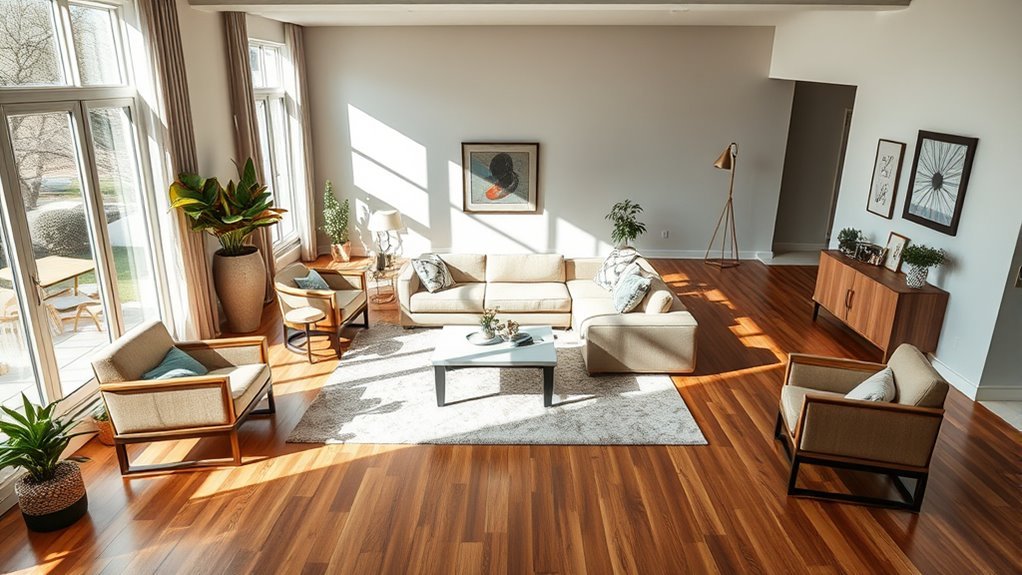
When you step into a living room, you might not realize how much thought goes into the flow of movement within the space. Effective traffic flow is essential for a harmonious atmosphere, allowing you and your guests to navigate easily. Imagine strategically placing furniture to create clear pathways, ensuring that seating doesn’t block doors or high-traffic areas. Open layouts invite exploration, seamlessly connecting functional zones like seating and entertainment areas. By analyzing traffic patterns, you can identify bottlenecks and adjust your furniture layout to enhance usability. Embrace the freedom of movement, inviting effortless interaction and connection. Your living room can transform into a vibrant space, where every step feels natural, and every gathering becomes a joyful experience.
Essential Factors Affecting Living Room Traffic Flow
Every living room layout should consider key factors that influence how easily people can move through the space. Prioritize traffic flow by arranging your furniture to promote easy access and clear pathways. Aim for at least 18 inches between pieces to guarantee comfortable passage, allowing guests to glide effortlessly through the room. Multiple entry points and an open layout can greatly reduce bottlenecks, enhancing movement between the living room and adjoining areas. Don’t underestimate the power of lighting; well-placed fixtures can illuminate pathways, guiding your guests’ movements. Finally, think about the room’s purpose—whether it’s for relaxation, entertainment, or social gatherings—as this will shape the layout and traffic patterns, creating a functional and inviting atmosphere.
Tips for Optimizing Movement in Your Living Room
To create a living room that flows effortlessly, it’s essential to analyze the natural pathways that emerge in your space. Start by defining distinct functional zones—seating, conversation, and activity areas—to promote an organized flow. Choose appropriately sized furniture, allowing clear pathways for easy navigation. Position seating to encourage conversation while keeping walkways clear, ideally creating a circular traffic flow.
| Tip | Action | Purpose |
|---|---|---|
| Analyze pathways | Observe movement | Identify natural routes |
| Define functional zones | Separate areas clearly | Promote organized flow |
| Choose the right size | Scale furniture to room | Avoid overcrowding |
| Regularly reassess | Adjust layouts as needed | Maintain accessibility |
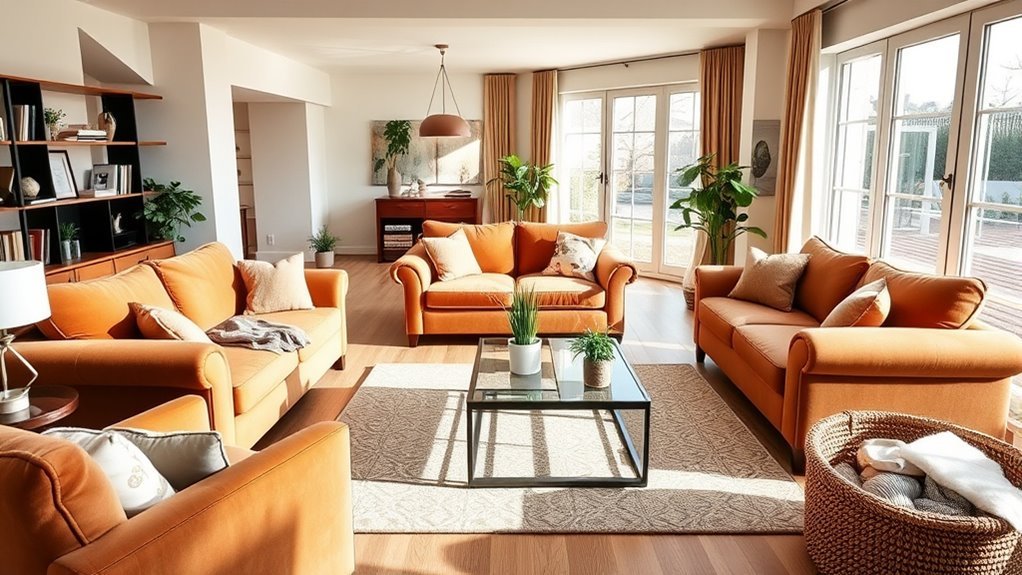
See How Others Design for Great Living Room Flow
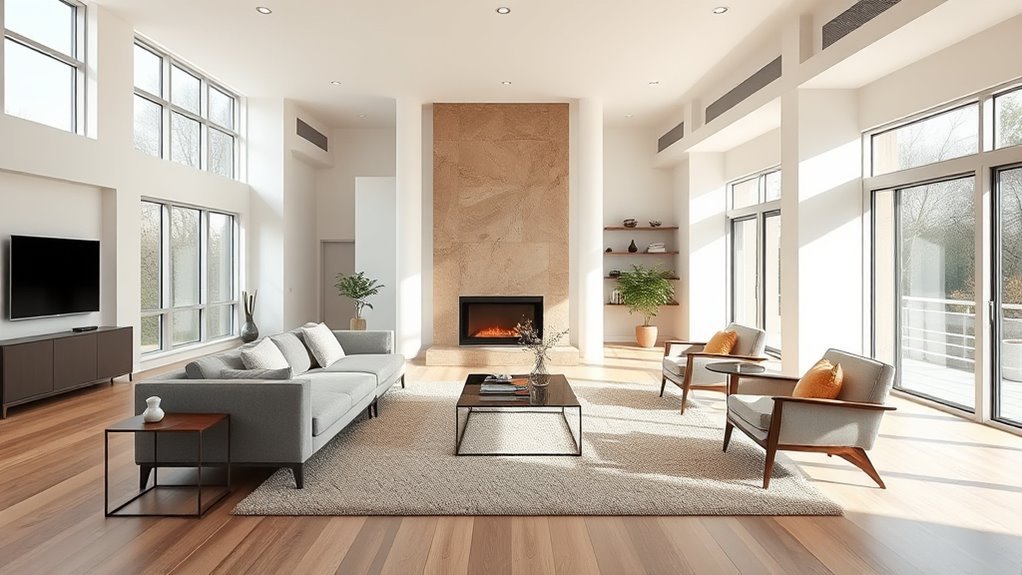
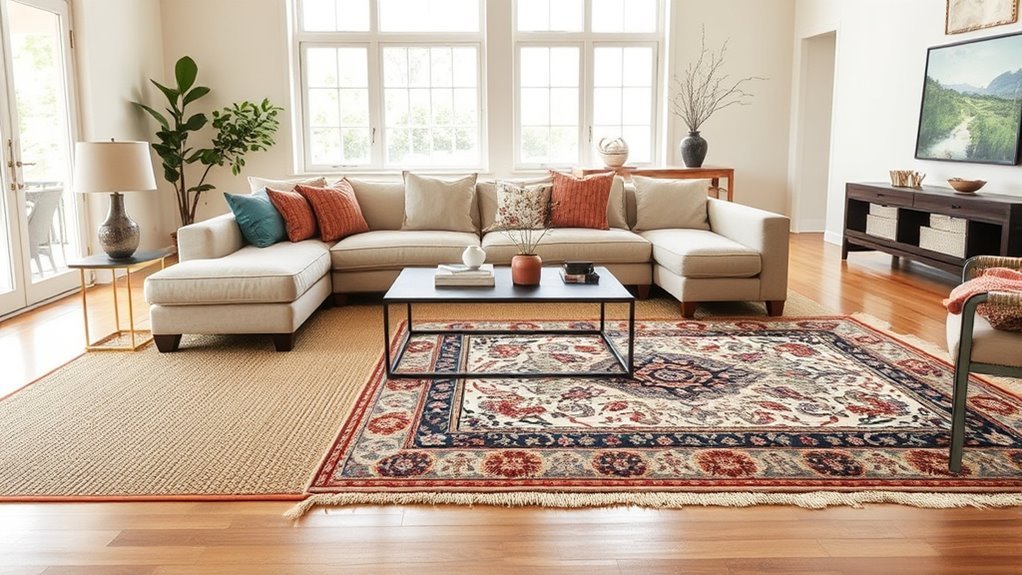
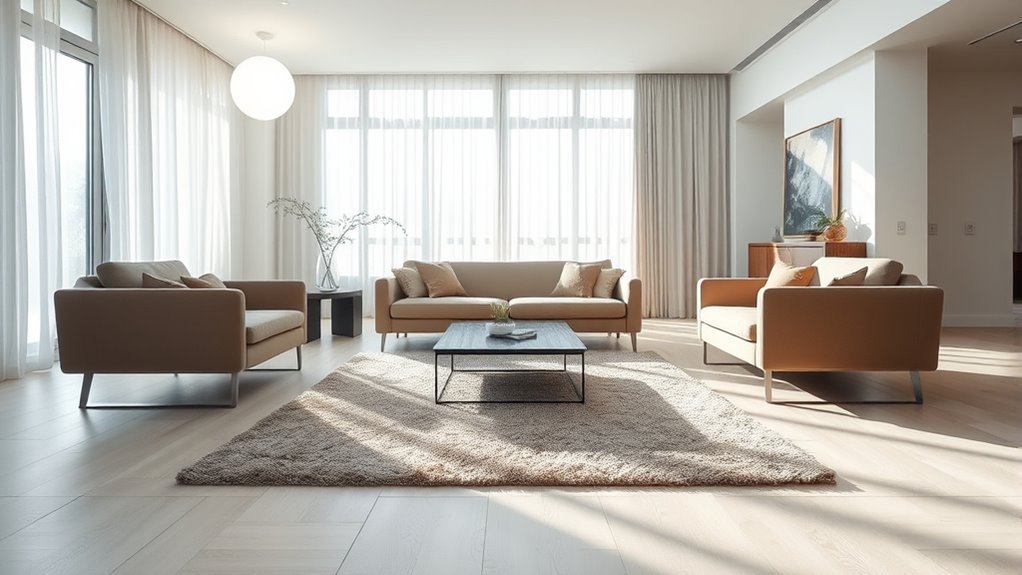
How can you transform your living room into a seamless space that invites movement and interaction? Start by prioritizing clear pathways between furniture pieces. Create a circular traffic flow design, where seating encourages natural navigation without interruptions. Strategically place sofas and chairs to define conversation zones while ensuring unobstructed access to entry points. Incorporate multi-functional furniture, like ottomans that double as storage, to optimize space and improve traffic flow. Enhance the atmosphere by using lighting and decor to guide movement; well-lit areas signal pathways and elevate your living room’s aesthetic. Embrace these design strategies to cultivate an inviting environment that fosters connection, making your living room a liberated haven of comfort and usability.
Adjusting Furniture for Enhanced Traffic Flow
While you might love the look of your living room furniture, adjusting its arrangement can make a world of difference in traffic flow and usability. Prioritize clear pathways so people move freely, preventing bottlenecks in high-traffic zones.
- Maintain at least 24 inches of walking space between pieces for fluid navigation.
- Create a conversational layout; facing chairs and sofas encourages interaction while keeping room for movement.
- Incorporate multi-functional furniture like ottomans that provide storage and enhance usability without crowding.
Common Mistakes in Living Room Layouts to Avoid
When setting up your living room, it’s easy to overlook how traffic patterns affect the flow of the space. Crowding your area with oversized furniture can turn a cozy retreat into a maze, making it hard for guests to navigate. By being mindful of these common pitfalls, you can create an inviting atmosphere that fosters connection and comfort.
Ignoring Traffic Patterns
One of the most common mistakes you can make in designing your living room is overlooking established traffic patterns. Ignoring these patterns can disrupt the natural flow and make your space feel cramped and uninviting. To create an inviting atmosphere, focus on ensuring clear pathways and a seamless experience for your guests:
- Leave enough space between furniture to allow easy movement.
- Position seating away from entry points to avoid obstructing pathways.
- Consider the natural flow of movement when arranging furniture, enhancing accessibility to key areas.
Overcrowded Furniture Arrangements
Overcrowded furniture arrangements can quickly turn a cozy living room into a claustrophobic maze, making it tough for you and your guests to navigate the space with ease. When you place too many large pieces in a small area, it overwhelms the room and stifles its functionality. Aim for at least 24 inches of clear pathways between seating and other furniture to maintain a smooth traffic flow. Define distinct functional zones—like seating and entertainment areas—to prevent a cluttered layout that disrupts movement. Embrace multi-functional furniture, such as ottomans with storage, to minimize overcrowding while maximizing utility. By prioritizing space and flow, you’ll create a liberating environment where everyone can comfortably enjoy their time together.
Frequently Asked Questions
What Is Traffic Flow in Interior Design?
Traffic flow in interior design is all about how you arrange furniture for space optimization. You’ll want to create clear pathways, making movement effortless and your environment feel more liberating and inviting for everyone.
What Is a Traffic Pattern in a Room?
A traffic pattern in a room guides your movement, shaping furniture arrangement and optimizing space utilization. By understanding it, you can create a layout that flows effortlessly, liberating your living area for comfort and functionality.
What Does Traffic Flow Mean?
Traffic flow means how you navigate a space, shaped by furniture arrangement and clear pathways. It enhances space utilization, ensuring you can move freely, enjoy your surroundings, and create a welcoming atmosphere for everyone.
What Are Traffic Patterns in a Floor Plan?
Traffic patterns in a floor plan guide your movement, enhancing the design layout. By ensuring clear pathways through the space, you create a liberating environment where flow feels natural, inviting, and effortlessly navigable for everyone.
Conclusion
You might think a living room’s layout is just about aesthetics, but it’s really about how you move through the space. By prioritizing traffic flow, you create a welcoming environment that invites conversation and relaxation. Even a small adjustment can transform the way you experience your living room. So, don’t be afraid to experiment with your furniture arrangement—your ideal layout is just waiting to be discovered, enhancing both function and style in your home.