
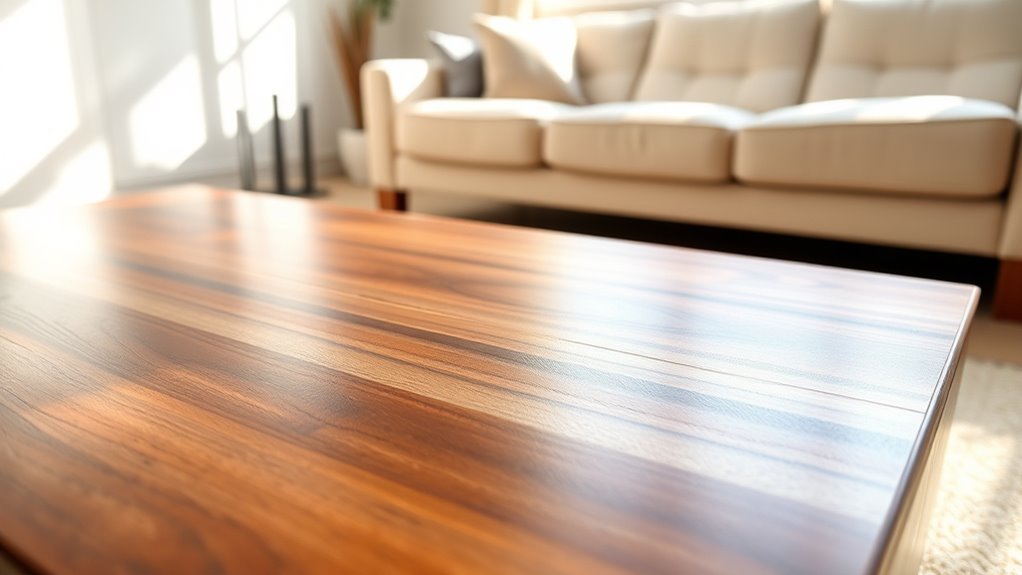
Wood finishes are essential for your living room furniture, protecting it from moisture and scratches while enhancing its natural beauty. Consider polyurethane for durability, varnish for UV resistance, or oil finishes for richness in color. When selecting a finish, think about durability, environmental factors, and your skill level. Proper application involves sanding, testing, and layering. For longevity, maintain finishes by dusting and avoiding harsh chemicals. Continue exploring to discover tips on applying and maintaining these finishes effectively.
Understanding the Importance of Wood Finishes for Living Room Furniture

When you consider the longevity and beauty of your living room furniture, wood finishes play an essential role in protecting these investments. They shield your pieces from moisture, scratches, and the daily wear that inevitably occurs in high-traffic areas. A well-applied finish, like polyurethane, enhances the natural beauty of the wood grain, showcasing its unique color and texture while providing outstanding durability against heat, water, and UV light. Regular maintenance, such as reapplying wax or oil, is vital for preserving your furniture’s appearance and preventing deterioration. By selecting the right wood finish, you not only improve the aesthetic appeal but also the functionality of your furniture, ensuring it remains resilient and beautiful for years to come.
Best Types of Wood Finishes?
Choosing the right wood finish can considerably impact the durability and aesthetic of your living room furniture. For high-use surfaces like coffee tables, polyurethane finishes are your best bet due to their excellent durability and water resistance. Varnish also provides a tough layer that resists UV rays while enhancing the wood’s natural beauty. If you prefer a sleek, modern look, lacquer finishes dry quickly and offer a glossy finish. For those drawn to traditional interiors, oil-based finishes like tung or Danish oil penetrate deeply, enhancing the natural grain and providing a rich appearance. However, keep in mind that wax finishes, while easy to apply, require more maintenance and work best for low-wear pieces like decorative shelves.
Essential Factors for Selecting the Right Wood Finish
Selecting the right wood finish for your living room furniture involves careful consideration of several essential factors. To guarantee you choose effectively, keep these in mind:
- Durability: Opt for finishes like oil-based polyurethane for high-traffic pieces needing robust protective coating.
- Environmental Factors: Consider exposure to sunlight and humidity; varnishes excel in UV and water resistance for bright areas.
- Skill Level: If you’re a beginner, easy-to-apply finishes like wax or Danish oil might suit you better than complex options like lacquer.
Additionally, think about color; water-based finishes maintain a natural appearance, while others, like shellac, may alter hues. By weighing these factors, you’ll create a stunning and durable living room space.
Applying Wood Finishes for Best Results
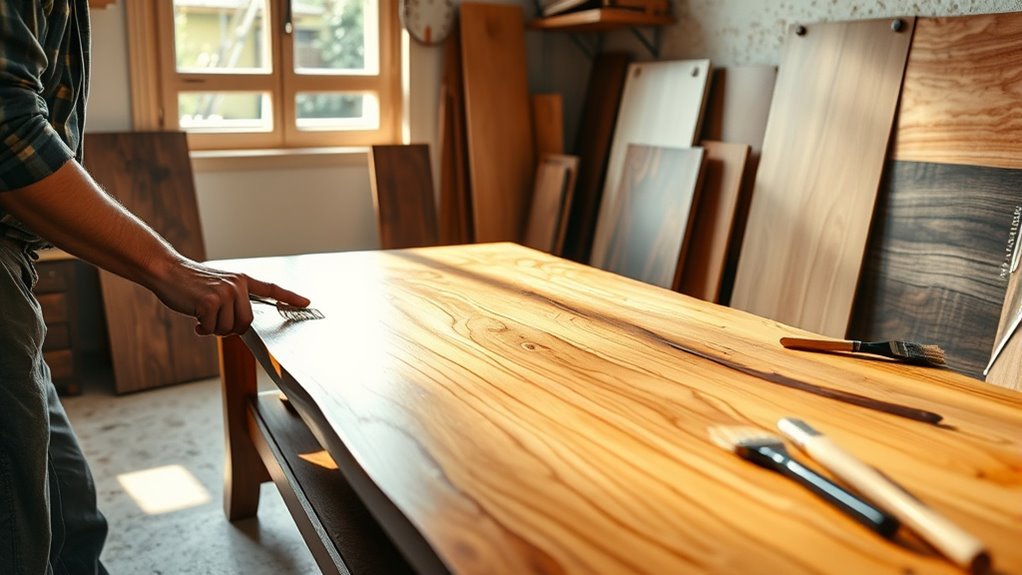
To achieve the best results when applying wood finishes, start with a well-prepared surface, as this is essential for a smooth and even application. Sand the wood surface with progressively finer grits, starting at 120 and finishing at 220, to enhance adherence. Make sure the surface is free of dust and debris to achieve a flawless look. When applying wood finishes, consider oil finishes like Danish oil, a beginner-friendly option that you can easily apply with a cloth. Remember to test the finish on a small, inconspicuous area first. For best protection, apply multiple coats, allowing adequate drying time between each to achieve the desired depth and protect wood from wear.
How to Maintain Your Wood Finishes After Application
While you’ve put in the effort to apply a beautiful wood finish, maintaining it is equally important to preserve its appearance and longevity. To keep your wood finishes looking their best, follow these steps:
- Regularly dust your furniture with a soft, lint-free cloth to prevent dirt buildup and maintain that luster.
- Avoid harsh chemicals; instead, use pH-balanced wood cleaners for safe maintenance, protecting the finish.
- Schedule periodic inspections for wear and tear, addressing any damage promptly to extend the life of your finishes.
Also, reapply wax finishes every 6 to 12 months and oil finishes every 1 to 2 years to enhance their natural beauty. Keep your furniture away from direct sunlight and excessive humidity to prevent fading, warping, or cracking.
Frequently Asked Questions
What Is the Best Finish for Indoor Wood Furniture?
The best finishes for indoor wood furniture combine durability and aesthetic appeal. Consider oil-based polyurethane for protection, water-based options for eco-friendliness, and varnish for UV resistance. Always follow maintenance tips and verify finish compatibility during application.
What Are the Four Main Types of Wood Finishes?
The four main types of wood finishes are penetrating oils, polyurethane varnish, lacquer finishes, and water-based stains. Each offers unique benefits, enhancing your wood’s beauty while providing protection and durability for your creative projects.
Is It Okay to Have Different Wood Tones in a Living Room?
Yes, mixing different wood tones can enhance your living room’s aesthetic appeal. Focus on wood harmony, color balance, and design cohesion, using layering techniques and texture variation to create visual interest that reflects your personal preference.
How to Determine the Type of Finish on Furniture?
To determine a furniture finish, use finish identification techniques like evaluating lacquer sheens, testing for oil absorption, and recognizing shellac qualities. Compare stains visually and explore finish preservation tips for ideal maintenance.
Conclusion
In the world of living room furniture, wood finishes are the armor that protects your treasures. Just as a knight carefully chooses their shield, you must select the right finish to defend against wear and tear while enhancing beauty. By understanding your options and applying them with precision, you create a sanctuary that tells a story. Remember, maintaining that finish is like nurturing a garden; with care, your furniture will thrive and continue to enchant for years to come.

Leave a Reply