
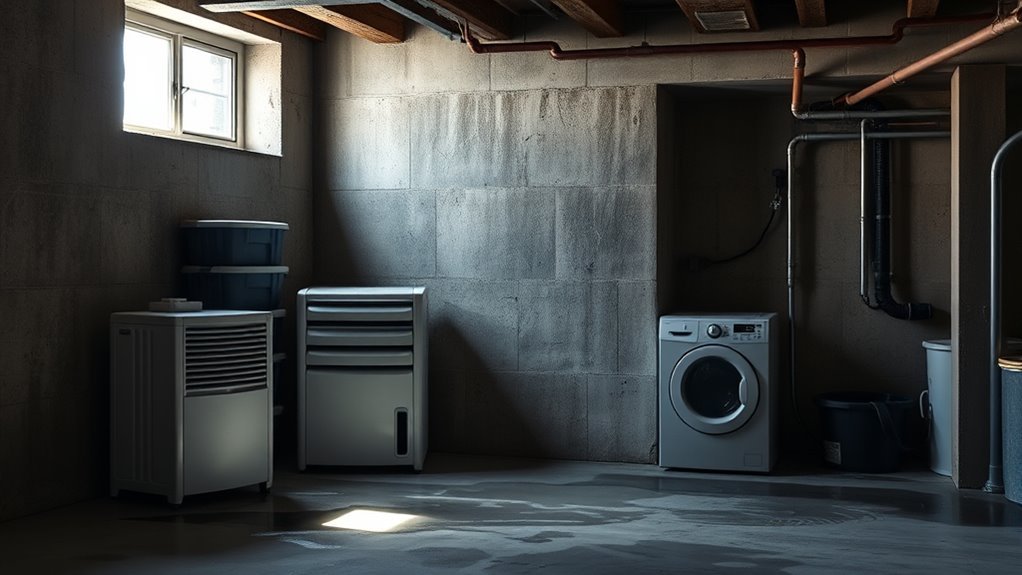
Basement dehumidifier size depends on square footage, how damp the space is, temperature, and drainage. For a basement under 2,000 square feet, ENERGY STAR’s chart points to 20 to 30 pints per day if it is slightly damp, 25 to 40 if it is very damp, and 30 to 50 if walls or floors sweat or seep. Larger or persistently wet basements need 40 to 50+ pints, continuous drainage, or a whole-home unit.
These are portable-unit ratings under current test rules, so do not match them to an old 70-pint label. Measure the room, check humidity with a hygrometer, and fix any water source first.
Basement Dehumidifier Size Chart by Square Footage
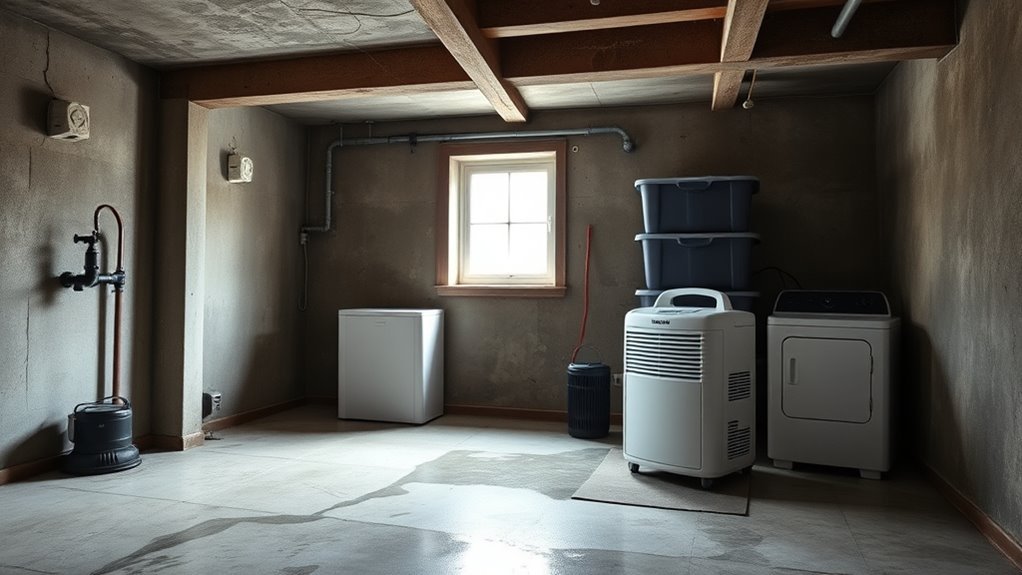
Capacity is the water a unit can remove in 24 hours, measured in pints per day. According to ENERGY STAR, capacity depends mainly on the size of the space and how damp it is before dehumidifying.
| Basement condition | Common signs | RH before dehumidifying | Under 2,000 sq. ft. | Over 2,000 sq. ft. |
|---|---|---|---|---|
| Slightly to moderately damp | Intermittent musty odor | 50-75% | 20-30 pints/day | 30+ pints/day |
| Very damp | Consistently damp feel and smell; damp spots on walls or floors | 75-90% | 25-40 pints/day | 40+ pints/day |
| Wet | Walls or floors sweat; seepage or heavy laundry moisture | 90-100% | 30-50 pints/day | 50+ pints/day |
ENERGY STAR advises oversizing rather than undersizing. For basements over 2,000 square feet, treat the chart as a minimum starting point. If one portable unit cannot keep up, consider a second unit, better air circulation, or a whole-home dehumidifier installed by a qualified contractor.
Note on older labels: ENERGY STAR explains that DOE now tests portable units at 65°F instead of 80°F to better reflect basement conditions. That lowers the printed capacity, so an old 70-pint unit is roughly a 40 to 45 pint unit under today’s ratings. For other rooms, see our general dehumidifier sizing guide.
Measure Your Basement Square Footage
Multiply the length by the width of the area you want to dry. A 30 by 40 foot basement is 1,200 square feet. If several rooms connect and air moves between them, measure the whole connected area. If doors stay closed, size each room separately or improve airflow.
Square footage is only the baseline. A dry, sealed 1,000-square-foot basement may need less capacity than a 700-square-foot basement with seepage, musty odors, laundry moisture, and an open stairwell.
Check Humidity Levels With a Hygrometer
Check relative humidity (RH) before you buy. Put a hygrometer in the middle of the basement, away from the dehumidifier, exterior walls, laundry machines, and floor drains, then check corners and stored boxes too, since basement moisture is often uneven.
The EPA says to keep indoor humidity below 60 percent, ideally between 30 and 50 percent if possible. The CDC advises keeping home humidity no higher than 50 percent all day to help prevent mold. A practical basement target is 40 to 50 percent; avoid pushing far below 30 percent, since very dry air can be uncomfortable.
Adjust for Seal Quality and Moisture Load
After you pick a range from the chart, use the actual conditions to decide where in the range to land. This is practical judgment rather than a published formula.
- Choose the upper end for a loosely sealed basement: drafty rim joists, gaps around windows, an open stairwell, exposed foundation walls, foundation cracks, or frequent door traffic.
- The lower or middle part may work for a tightly sealed basement with no water stains, good air movement, and RH that stays near target after a trial run.
- Add capacity for indoor laundry drying, stored cardboard, damp carpet, an open sump pit, nearby bathrooms, or condensation on pipes and walls.
- Look for a hidden problem if RH stays above 60 percent after the unit has run correctly for a day or two. The unit may be undersized, poorly placed, or fighting seepage, plumbing leaks, poor dryer venting, or outside drainage.
Warning: A dehumidifier cannot fix active leaks, flooding, failed gutters, poor grading, foundation seepage, or plumbing problems. Fix the water source first, then use the unit to manage the air moisture that remains.
Drainage and Controls
ENERGY STAR notes that most portable units use a bucket with an automatic shutoff when full, and some have a hose fitting so water drains to a floor drain or sump. Choose continuous drainage if the bucket fills daily, the basement is wet, or the unit runs while you are away, because a full bucket stops dehumidification.
- A gravity drain works only if the hose slopes downward to a floor drain or sump. Keep the unit near the drain so the hose stays short.
- If water must move upward, use a model with a built-in pump or a condensate pump suited to that setup.
- Keep drain hoses away from cords and electrical connections.
- Pick a unit with a built-in humidistat so it cycles around your target RH.
Tip: Start the humidistat around 45 to 50 percent, then lower it slightly only if the basement still smells musty. See how low a dehumidifier can go before you chase a very low setting.
When a Bigger Dehumidifier Makes Sense
Go bigger when the basement is large, wet, or high-load, or when you want shorter run times. The goal is a unit that reaches your RH target without running nonstop, not the largest unit available.
- Larger square footage: Over 2,000 square feet, start at 30+, 40+, or 50+ pints based on dampness. Very large finished basements or whole-house humidity problems may suit a whole-home dehumidifier.
- Higher moisture: If RH is above 70 to 80 percent, inspect for seepage, sump issues, plumbing leaks, and drainage problems outside the foundation.
- Continuous drain needs: A full bucket in humid weather can let the basement climb back into mold-friendly conditions. For pump options, see our guide to a dehumidifier with a pump.
It also helps to know how long a dehumidifier takes to work before judging whether a new unit is too small.
Recommended Products

【119 Pints Max Powerful Moisture Removal】: Built for heavy humidity, this high-capacity dehumidifier removes up to 119 pints of moisture per day under high-temperature, high-humidity conditions, with 50-pint DOE-rated performance for reliable everyday use. Ideal for basements, large rooms, laundry areas and other moisture-prone spaces

[The Undisputed Champion — Industry-Leading Dehumidifier Brand] When you choose AEOCKY, you get double market validation. According to data independently verified by Stackline, a leading third-party data analytics company, AEOCKY was an industry‑leading dehumidifier brand on Amazon U.S. in 2025. This means you’re not just choosing a flagship product from a market leader, but a top-performing brand backed by independent market data and trusted by millions of real users, delivering the ultimate combination of performance, quality and trust.

4,500 SQ. FT. DEHUMIDIFIER – Removes up to 50 pints of moisture per day with an adjustable humidity setting from 35% to 85%. Perfect for use in basement, bathroom, bedroom, office, kitchen, cellar, or crawlspace. Maintain a healthy 45%-55% humidity range
Placement, Temperature, and Maintenance
Put the unit where air can circulate freely. ENERGY STAR says units without top-mounted air discharge should stay clear of walls and furniture, and that doors and windows should stay closed while it runs.
Temperature matters too. Compressor units remove less water in a cool basement, and coils can frost. ENERGY STAR suggests choosing a unit specified for lower temperatures if the space often falls below 65°F, and notes that some models have an anti-frost sensor. Check the operating range in your manual.
- Clean or replace the filter on the manual’s schedule.
- Keep coils and grilles free of dust.
- Wash the bucket regularly to prevent slime and odors.
- Check drain hoses for kinks, clogs, and upward loops.
- Recheck RH with a separate hygrometer each season.
Related Guides
- What size dehumidifier do I need? General pint guide
- Dehumidifier size for 2,000 square feet
- Do you need a dehumidifier in your basement?
- Garage dehumidifier size guide
Frequently Asked Questions
What size dehumidifier do I need for a 2,000 square foot basement?
ENERGY STAR’s chart puts a 2,000 square foot basement at the edge of both columns. Start around 30 pints per day if slightly damp, 40 if very damp, and 50 if wet or seeping, and size up if humidity stays above 50 percent after proper operation.
Is it better to undersize or oversize a dehumidifier?
ENERGY STAR advises oversizing rather than undersizing. An undersized unit may run nonstop and still leave the basement damp. A slightly larger unit with a humidistat can cycle off at the target, though setting it too low can waste energy and over-dry the air.
What humidity should a basement be?
A practical basement target is 40 to 50 percent RH. The EPA says indoor humidity should be below 60 percent and ideally 30 to 50 percent, and the CDC advises keeping home humidity no higher than 50 percent all day to help prevent mold.
Can a dehumidifier help with dust mites?
Yes, it can help. The American Lung Association says humidity is the biggest factor in dust mite numbers and recommends keeping indoor humidity below 50 percent, noting that dehumidifiers can help in humid areas. It works best alongside regular cleaning and bedding care.
Why does my dehumidifier run but the basement still feels damp?
Common causes include an undersized unit, poor placement, a dirty filter, a cold basement, a full bucket shutoff, a blocked drain hose, open windows, air leaks, or an active moisture problem such as seepage, a plumbing leak, or poor foundation drainage.
Should I use a dehumidifier if I have COPD?
A dehumidifier may make a damp, musty basement more comfortable, but it is not a COPD treatment. Keep humidity in a moderate range, avoid over-drying the air, and ask your healthcare provider whether humidity changes affect your breathing.
Sources
- ENERGY STAR: Dehumidifiers
- ENERGY STAR: Dehumidifier Testing and Capacity
- EPA: Mold Course, Chapter 2
- CDC: About Mold
- American Lung Association: Dust Mites

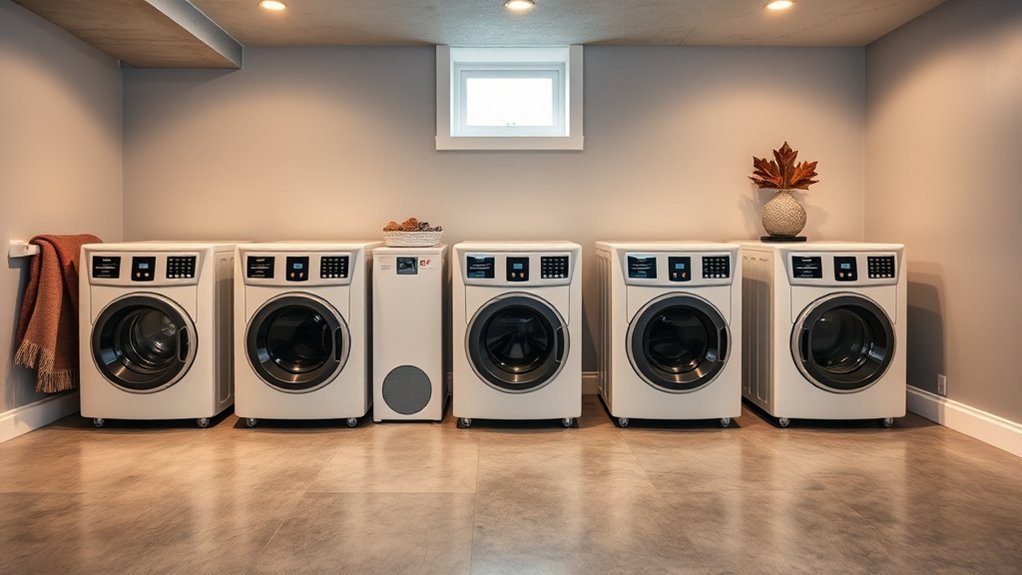

[…] Basement dehumidifier size chart […]
[…] Basement dehumidifier size chart […]