A dehumidifier can reduce costs in some humid homes, but the savings are not automatic. The unit uses electricity and releases slightly warmer air, so it must reduce your air-conditioning use or prevent another meaningful cost to produce a net saving. Your climate, indoor humidity, appliance efficiency, electricity rate, and thermostat habits all affect the result.
Quick Answer
A dehumidifier can save money when controlling moisture lets you reduce more air-conditioning energy than the dehumidifier consumes. It is most likely to help in persistently humid homes, basements, and mild but damp weather. It may raise costs if you run it unnecessarily, set the humidity too low, or leave your AC setting unchanged.
Key Takeaways
- A dehumidifier lowers moisture but does not cool a room like an air conditioner.
- Portable units release slightly warmer air, which can add to the cooling load.
- For most homes, a practical indoor target is 30% to 50% relative humidity.
- Your real cost depends on wattage, runtime, and your electricity rate.
- Fix leaks, drainage problems, and humid-air infiltration before relying on an appliance.
Does a Dehumidifier Save Money?
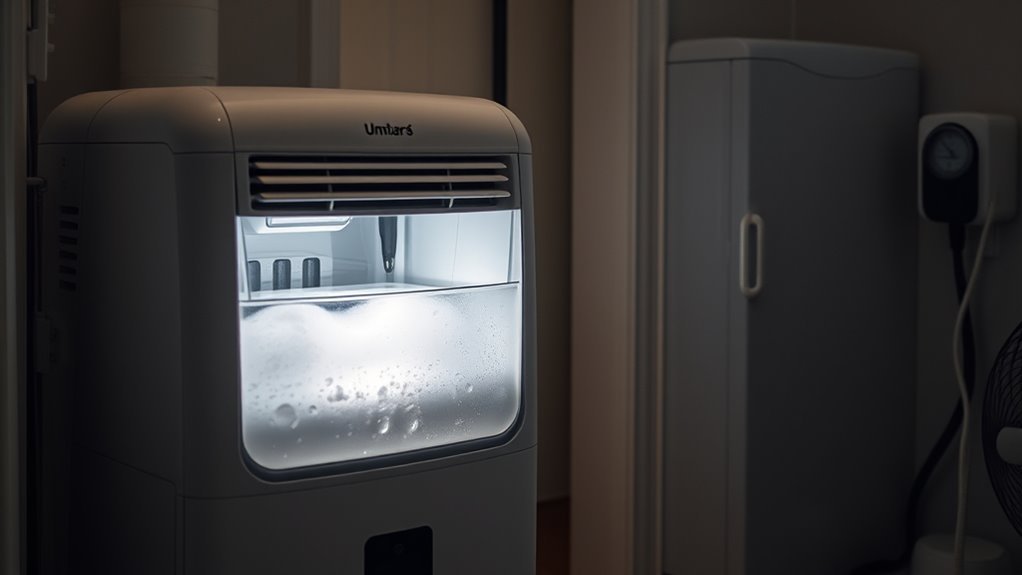
Yes, but only under the right conditions. A dehumidifier saves money when the cost it avoids is greater than the electricity it uses. For example, lowering indoor humidity may let you use a higher AC temperature setting while remaining comfortable. It may also control moisture during mild, rainy weather when the air conditioner does not run long enough to remove enough water from the air.
A portable dehumidifier does not provide free cooling. It removes water vapor and sends slightly warmer, drier air back into the room. ENERGY STAR explains that the area around a running dehumidifier may become warmer. If your air conditioner must remove that added heat, the two appliances may use more energy together than expected.
The basic savings test is simple:
Net savings = avoided AC and moisture-related costs − dehumidifier electricity and ownership costs
If you run the dehumidifier but do not reduce AC use, prevent moisture damage, or solve another costly problem, your electricity bill will normally increase.
Pro Tip: Use a plug-in electricity monitor to measure the dehumidifier’s actual kilowatt-hours. Comparing real energy use is more reliable than relying only on the maximum wattage printed on the label.
Dehumidifier vs. AC: Which Costs Less?
A dehumidifier may draw less power at a given moment than an air conditioner, but the appliances do different jobs. Comparing wattage alone does not show which option costs less overall.
| Feature | Portable Dehumidifier | Air Conditioner |
|---|---|---|
| Removes moisture | Yes | Yes, while cooling conditions allow |
| Lowers room temperature | No | Yes |
| Effect on room heat | Adds some heat | Moves heat outdoors |
| Best use | Damp rooms, basements, or periods with low cooling demand | Cooling with some moisture removal |
Use your AC when the room needs cooling. Consider supplemental dehumidification when indoor relative humidity remains high even though the temperature is comfortable. Some air conditioners also have a dry or dehumidification mode. Follow the manufacturer’s instructions because operating behavior varies by model.
Recommended Products

Semiconductor dehumidifiers use thermoelectric cooling to remove moisture from the air. They create a drier, more comfortable environment by reducing humidity and improving air quality.

Upgrade High Efficient Dehumidification: Dehumidifier utilize semi conductor condensation technology, ensuring quiet operation while effectively extracting moisture from the air. This advanced feature helps keep humidity levels below 45%
How Humidity Raises Your Energy Bill
Air-conditioning systems handle both sensible heat, which affects temperature, and latent heat, which comes from moisture. A humid home can therefore create extra work for the cooling system. The impact depends on outdoor weather, air leakage, ventilation, indoor moisture sources, and HVAC design.
Humidity Makes Cooling Harder
When humid outdoor air leaks into your home, the cooling system must remove some of that moisture along with the heat. Moisture can also come from showers, cooking, drying clothes indoors, plumbing leaks, wet foundations, and unvented appliances.
A properly sized air conditioner usually removes moisture while it runs. An oversized system may cool the home quickly and shut off before it has removed enough moisture. In that case, lowering the thermostat may make the room colder without fully correcting the humidity problem.
AC Works Overtime
If high humidity makes you lower the thermostat below your normal comfort setting, the AC may run longer and use more electricity. Reducing the moisture load can sometimes let you raise the thermostat again. The saving comes from the lower cooling demand, not from the dehumidifier simply being switched on.
Do not assume that running both appliances together is always wasteful or always efficient. Supplemental dehumidification can be useful in warm, humid climates and during shoulder seasons. However, the equipment must be controlled correctly, and the combined energy use should be measured.
Moist Air Feels Hotter
Humidity can affect comfort because sweat cools the body as it evaporates. When the air contains more moisture, evaporation slows. The National Weather Service explains that higher humidity can make warm conditions feel hotter.
Lower humidity may improve comfort enough to support a higher thermostat setting, but the actual energy saving must be measured rather than assumed.
When a Dehumidifier Pays Off
A dehumidifier is more likely to justify its operating cost when one or more of the following conditions apply:
- Indoor humidity regularly remains above 50% even when the temperature is comfortable.
- A basement, crawl space, laundry area, or other zone has a persistent moisture load.
- Your AC reaches the temperature setting but does not provide adequate humidity control.
- Mild, rainy weather creates high humidity without enough cooling demand to keep the AC running.
- Lower humidity lets you raise the thermostat and measurably reduce AC kilowatt-hours.
- Moisture control helps protect stored items or building materials after the underlying water source has been corrected.
The financial value is not limited to the electricity bill. Preventing condensation or moisture damage can have value, but a dehumidifier should never be used to hide an active leak, foundation problem, or drainage failure.
When a Dehumidifier Will Not Save Money
A dehumidifier is likely to increase your total cost when:
- Your indoor humidity is already within the desired range.
- You force the setting down to 35% or lower without a specific need.
- You run it with doors or windows open during humid weather.
- You continue using the same AC setting and do not reduce cooling consumption.
- The unit is too small and runs continuously without reaching the target.
- A dirty filter or blocked airflow reduces performance.
- Rainwater, plumbing leaks, or humid outdoor-air leakage keeps replacing the moisture being removed.
- The dehumidifier’s added heat causes the AC to run substantially longer.
Warning: Do not rely on a dehumidifier to correct active water intrusion, standing water, or significant mold growth. Repair the moisture source first. Use a properly grounded outlet, follow the manufacturer’s clearance requirements, and keep drainage hoses and water containers away from electrical connections.
How Much Power a Dehumidifier Uses
Power use varies by capacity, design, room temperature, humidity level, fan speed, and operating mode. Instead of assuming that every dehumidifier uses 300 to 700 watts, check the appliance label, EnergyGuide information, manual, or measured power consumption.
Use this formula:
Operating cost = watts ÷ 1,000 × operating hours × electricity price per kWh
The latest available U.S. Energy Information Administration data used for this example show a May 2026 national residential average of 18.44 cents per kWh. Your local rate may be much higher or lower.
| Example Power | Cost per Hour | 8 Hours Daily for 30 Days | 24 Hours Daily for 30 Days |
|---|---|---|---|
| 300 watts | $0.06 | $13.28 | $39.83 |
| 500 watts | $0.09 | $22.13 | $66.38 |
| 700 watts | $0.13 | $30.98 | $92.94 |
Note: The wattages in the table are calculation examples, not a claim that every dehumidifier falls within this range. Use your unit’s actual wattage and your complete electricity price, including applicable delivery charges.
How to Check Whether It Is Saving Money
You can test the result instead of guessing:
- Measure your starting conditions. Record indoor humidity, thermostat setting, AC electricity use, and dehumidifier electricity use for several comparable days.
- Set a reasonable humidity target. Start near 50%. Lower it only if the home remains uncomfortable or a specific moisture problem requires tighter control.
- Change one major variable. Run the dehumidifier with doors and windows closed and try a slightly higher AC setting.
- Compare similar weather. A cool week and a heat wave do not provide a fair billing comparison.
- Calculate total energy. Add the dehumidifier’s kWh to the AC’s kWh and compare that total with the baseline.
- Include ownership cost. Consider the purchase price, filters, cleaning, drainage equipment, and expected service life.
If the drop in AC consumption is larger than the dehumidifier’s consumption, you have an operating-energy saving. If total consumption rises, the dehumidifier may still provide useful moisture control, but it is not reducing your electricity cost.
How to Cut Dehumidifier Running Costs
Use the dehumidifier only where and when moisture control is needed. Proper sizing, a sensible humidity setting, closed doors and windows, clean airflow paths, and source control can reduce unnecessary runtime.
Recommended Products
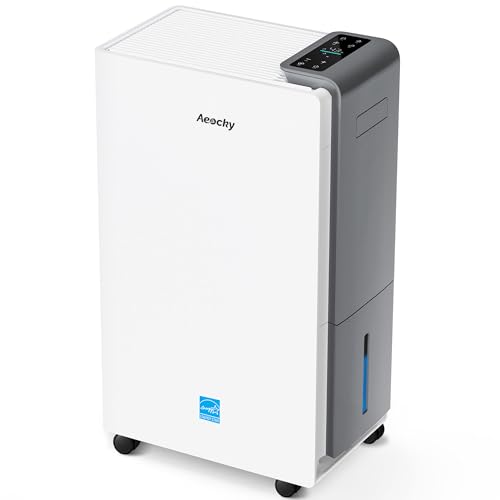
【ENERGY STAR 25 ≠ ENERGY STAR Most Efficient 2025】Don't fall for competitors' word games. With only 2.6% of ENERGY STAR models earning "Most Efficient 2025" title, these options are exceptionally rare on the market. RHEA-001 is one of the few to truly hold this top-tier certification. Many brands use misleading phrases like "Energy Star Efficient 25" or "Energy Star 25" to imply a standard they haven't met. Choosing them is a risk.With AEOCKY, you get verified performance and the peace of mind of authentic, top-tier efficiency.

【The Undisputed Champion — Industry‑Leading Dehumidifier Brand】When you choose AEOCKY, you get double market validation. In 2025, AEOCKY was an industry‑leading dehumidifier brand on Amazon US. This means you’re not just choosing a flagship from a market leader, but the top choice proven by millions of real users—representing the ultimate combination of performance, quality, and trust.

【The Undisputed Champion — Industry-Leading Dehumidifier Brand】When you choose AEOCKY, you get double market validation. According to data independently verified by Stackline, a leading third-party data analytics company, AEOCKY was an industry‑leading dehumidifier brand on Amazon U.S. in 2025. This means you’re not just choosing a flagship product from a market leader, but a top-performing brand backed by independent market data and trusted by millions of real users, delivering the ultimate combination of performance, quality and trust.
Right-Size the Unit
Capacity is normally stated in pints of water removed per day under standardized test conditions. Select a unit based on both the size of the area and how damp it is. Current ENERGY STAR buying guidance provides the following general ranges:
| Moisture Condition | Under 2,000 Sq. Ft. | Over 2,000 Sq. Ft. |
|---|---|---|
| Slightly to moderately damp | 20 to 30 pints per day | 30 or more pints per day |
| Very damp | 25 to 40 pints per day | 40 or more pints per day |
| Wet or high moisture load | 30 to 50 pints per day | 50 or more pints per day |
These are starting points rather than substitutes for the manufacturer’s instructions. Low room temperatures, open spaces, water intrusion, and unusual moisture loads can change the required capacity.
Use Smart Run Times
The EPA recommends keeping indoor humidity between 30% and 50%. In humid weather, begin near the upper end of that range. A setting around 45% to 50% often avoids unnecessary drying while still controlling dampness.
- Use the built-in humidistat instead of running the unit continuously.
- Turn it off when humidity remains within the desired range.
- Keep exterior doors and windows closed while it operates in humid weather.
- Use off-peak hours only when your utility has time-based rates and delayed operation will not allow a moisture problem to worsen.
- Clean the filter and air intake according to the manual.
- Keep furniture and walls from blocking airflow.
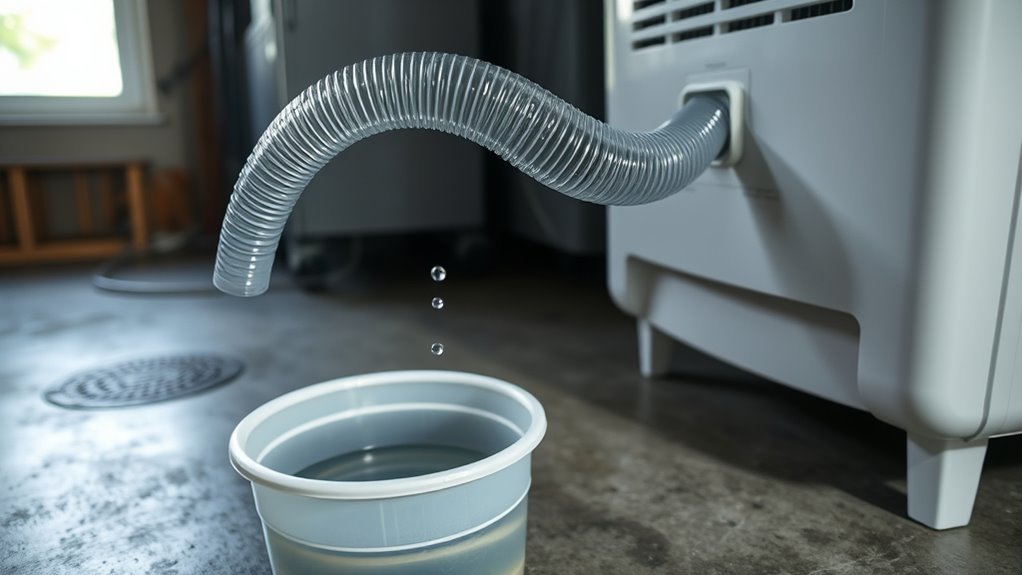
- Use continuous drainage only when the hose can run safely to an approved drain.
Ventilation must match outdoor conditions. Opening windows can help when outdoor air is drier, but it can increase the moisture load when outdoor air is hot and humid. Use bathroom and kitchen exhaust fans that vent outdoors to remove moisture near its source.
Fix Moisture Sources First
A dehumidifier is more effective after you reduce the amount of water entering the space. Check for:
- Plumbing, roof, window, or foundation leaks
- Poor gutter and downspout drainage
- Standing water near the foundation
- A clothes dryer that does not vent outdoors
- Bathroom fans that recirculate air instead of exhausting it
- Unsealed crawl spaces or basement air leaks
- Indoor clothes drying and other high-moisture activities
- Oversized or poorly controlled cooling equipment
Source control can reduce the required dehumidifier capacity and runtime. It can also solve moisture problems that an appliance alone cannot correct.
Is a Whole-Home Dehumidifier Worth It?
A whole-home dehumidifier may be worthwhile when humidity affects several rooms, a portable unit cannot distribute dry air evenly, or the home needs humidity control during periods with little cooling demand. These systems normally use ducts or dedicated air pathways to serve a larger area.
Whole-home equipment should be selected as part of the HVAC design rather than by floor area alone. The Building America Solution Center recommends calculating the home’s cooling and moisture loads and properly sizing both the HVAC system and supplemental dehumidification.
A whole-home system is more likely to make sense when:
- The home is in a warm, humid climate.
- Humidity remains high across multiple rooms.
- The AC is properly sized but cannot control humidity during low cooling loads.
- You want automatic control and central air distribution.
- There is a safe, permanent drainage route.
It may not be worthwhile for one small problem room or a short seasonal moisture issue. Installation cost varies with capacity, ductwork, electrical work, drainage, controls, and access. Obtain a load-based design and itemized quote rather than relying on a universal price estimate.
Recommended Products

2500 Sq. Ft Dehumidifier - SEMKAP dehumidifier for basement features a quiet, high-performance compressor that removes up to 32 pints of moisture per day (at 95°F, 90% RH). Ideal for basements, offices, bathrooms, bedrooms, kitchens, stockrooms, living rooms, laundry rooms, garages, crawlspaces, or RVs. It helps maintain optimal humidity between 40%–60%RH for healthier, more comfortable living
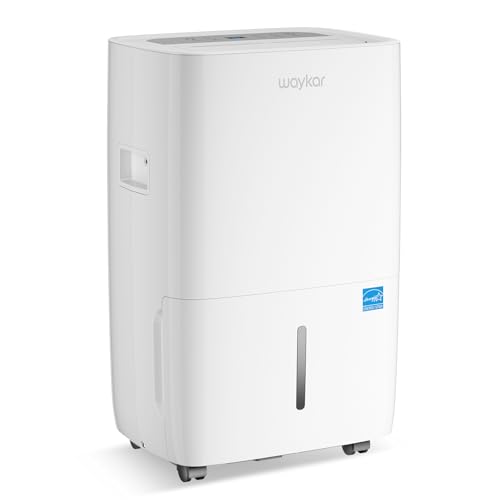
【80 Pint Capacity for Up to 5,000 Sq.Ft Spaces】Quickly removes excess moisture from basements, bathrooms, bedrooms, RVs, and other large living areas, delivering 80 pints per day (95°F, 90% RH).conditions. Designed as a powerful dehumidifier for basement, home, and large spaces, it helps eliminate damp air, condensation—and pet-related odors caused by excess humidity. Even during humid seasons, it works continuously to maintain a dry, comfortable, and healthier indoor environment.

【Reduce humidity - Enhance comfort】:Massive Capacity + Wide Coverage. This dehumidifier remove 80% of the moisture every day—outperforming standard units while covering 4,500 sq. ft. of living space. Great dehumidifier for basements, large house, garages, bedroom, bathroom and gyms where excess humidity triggers cause unpleasant odors and discomfort. The result? A noticeably drier, fresher, and more comfortable environment for your entire family.
Frequently Asked Questions
Will a dehumidifier make my electric bill go up?
The dehumidifier itself always adds electricity use while running. Your total bill may still fall if lower humidity lets you reduce AC consumption by a larger amount. Measure the kilowatt-hours used by both appliances before deciding whether you are saving money.
Should you use a dehumidifier if you have COPD?
High humidity can worsen symptoms for some people with COPD, while very dry air may bother others. A dehumidifier may help control dampness or a personal humidity trigger, but it does not treat COPD. Keep track of your symptoms and discuss your indoor environment with your healthcare professional. This is general indoor-air information, not medical advice.
What are the downsides of using a dehumidifier?
The main downsides are electricity use, added room heat, fan and compressor noise, filter cleaning, water disposal, and the risk of making the air too dry. A unit can also waste energy if it is undersized, blocked by furniture, or used while humid outdoor air continually enters the room.
How much does it cost to run a dehumidifier 24 hours a day for a month?
Multiply the appliance’s kilowatts by 720 hours and your electricity price. At 18.44 cents per kWh, a unit averaging 300 watts would cost about $39.83 for 30 days, while one averaging 700 watts would cost about $92.94. Actual consumption may be lower if the humidistat cycles the compressor off.
Can you run a dehumidifier and air conditioner together?
Yes. Supplemental dehumidification can help when the AC reaches the desired temperature before removing enough moisture. However, the dehumidifier adds heat, so control both appliances with sensible temperature and humidity settings and compare their combined electricity use.
What humidity setting gives the best balance of comfort and cost?
For many homes, 45% to 50% is a practical starting point during humid weather. Lower the setting only when needed for comfort or moisture control. Avoid forcing the home to 35% if a higher setting already prevents condensation, musty odors, and dampness.
Conclusion
A dehumidifier can save money, but simply plugging one in does not guarantee a lower bill. It pays off when moisture control lets you reduce more AC energy than the unit consumes or when it prevents a real moisture-related cost. Start with a 45% to 50% humidity setting, fix moisture sources, measure actual kilowatt-hours, and compare total energy use under similar weather conditions. If total consumption falls while comfort remains stable, the dehumidifier is doing useful financial work.
Sources
- ENERGY STAR: Dehumidifiers — humidity settings, efficiency, capacity guidance, placement, and operating advice.
- ENERGY STAR: Dehumidifier Efficiency Criteria — current portable and whole-home efficiency requirements.
- U.S. Environmental Protection Agency: Improving Your Indoor Environment — recommended indoor humidity range and moisture control.
- U.S. Energy Information Administration: Electric Power Monthly — current residential electricity-price data used in the calculations.
- Building America Solution Center: Whole-House Dehumidification — HVAC sizing, moisture loads, ventilation, and supplemental dehumidification.
- National Weather Service: Heat Index — how humidity affects sweat evaporation and perceived warmth.