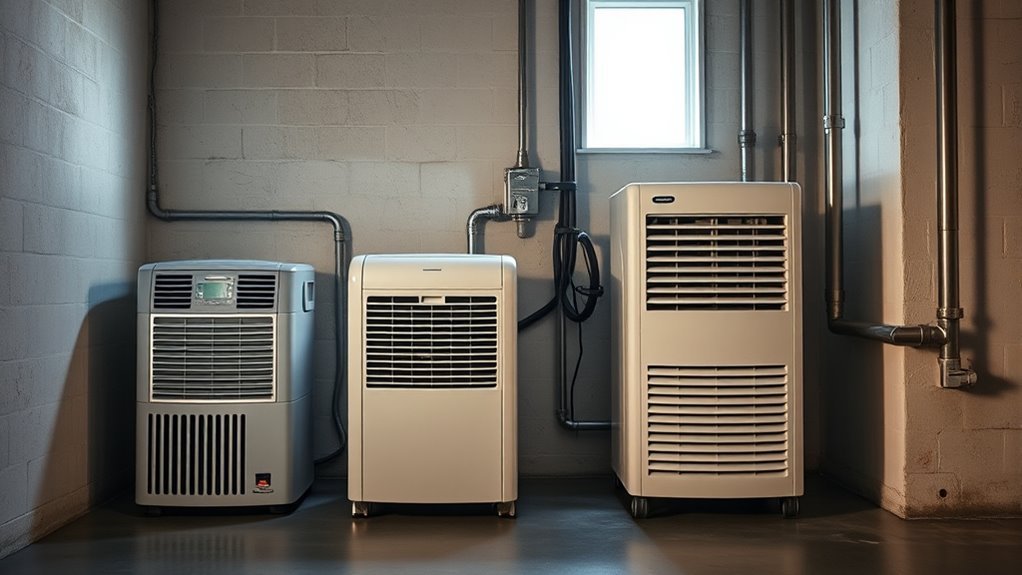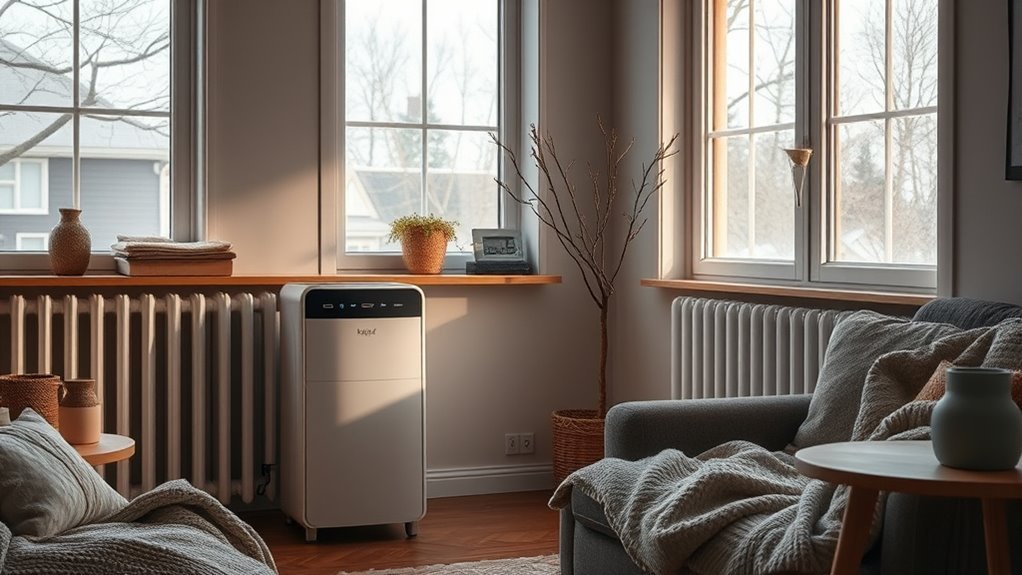
A dehumidifier can help a damp winter home feel less clammy, control condensation, and protect against mold. It is not, however, a guaranteed way to lower heating bills. The unit uses electricity, and humidity has a smaller, more complex effect on winter comfort than the original article suggests. Use one when indoor moisture is genuinely high, then compare its operating cost with any change in heating use.
Quick Answer
A dehumidifier may reduce total winter energy costs in a persistently damp home, but savings are not automatic. It adds electricity use and only slightly warms the room. Run one to control excess humidity, condensation, or mold risk, then calculate whether reduced heating use is greater than the dehumidifier’s cost.
Key Takeaways
- Use a dehumidifier for measured excess moisture, not as a substitute for a heater.
- A winter target of about 30% to 40% relative humidity is often suitable in cold climates; the broader indoor range is usually 30% to 50%.
- Raising the thermostat from 68°F to 72°F does not save heating energy. Lowering the setpoint is what normally reduces heating demand.
- Calculate running cost from the unit’s actual wattage, runtime, and your electricity rate.
- Fix leaks, poor drainage, unvented dryers, and weak bathroom or kitchen ventilation before relying on a dehumidifier.
Do Dehumidifiers Lower Heating Bills?
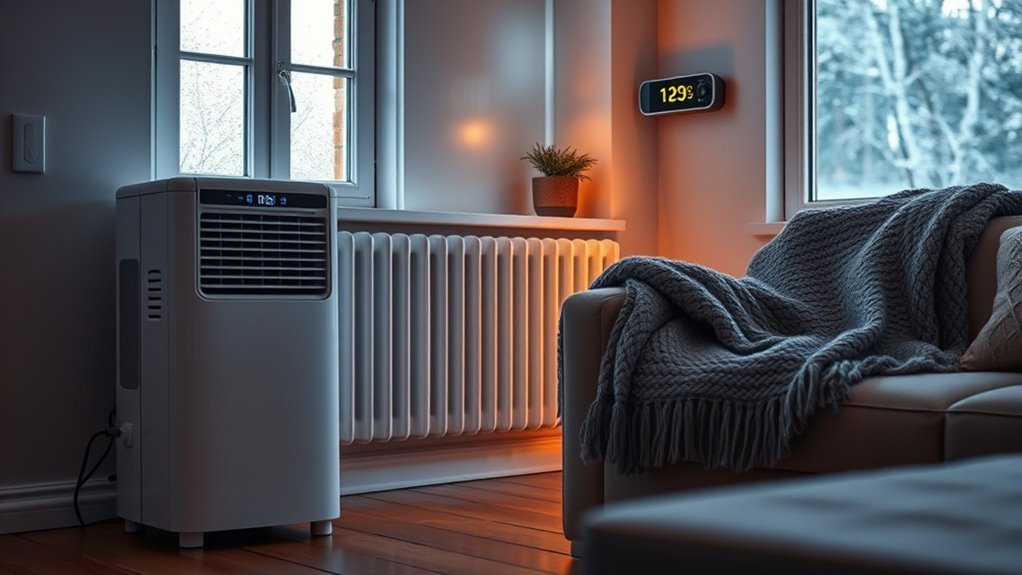
Sometimes, but only under the right conditions. A dehumidifier can be worthwhile when your home has persistently high relative humidity, window condensation, damp materials, or a musty smell. Removing that moisture may improve comfort and reduce the need to overheat a clammy room. The dehumidifier also releases slightly warmer air as it runs, which ENERGY STAR notes can warm the space around the unit.
That does not prove that your total bill will fall. The machine consumes electricity, and there is no universal percentage by which a dehumidifier reduces winter heating costs. Its net effect depends on the home’s moisture source, outdoor weather, insulation, ventilation, heating system, electricity price, unit efficiency, and runtime.
Warning: Do not raise the thermostat and describe the change as an energy-saving step. Moving from 68°F to 72°F normally increases heating demand. A dehumidifier should not be used as a reason to maintain a higher temperature unless comfort or health needs require it.
Why Humidity Makes Your Home Feel Colder
A damp room can feel clammy, especially when walls, floors, windows, or furnishings are cold. Condensation and wet materials can also signal poor insulation, air leaks, water intrusion, or inadequate ventilation. Those building problems may create discomfort even when the thermostat reading looks acceptable.
Humidity is only one part of thermal comfort. Air temperature, radiant temperature from nearby surfaces, air movement, clothing, and activity level also matter. The National Institute of Standards and Technology identifies all of these as interacting comfort factors. Research does not support a simple rule that drier air always feels warmer in winter.
A damp home may feel uncomfortable, but lowering relative humidity alone does not guarantee a warmer sensation or a lower heating bill.
- Cold windows and walls can make a room feel chilly through radiant heat loss.
- Condensation shows that a surface is below the air’s dew point.
- Leaks and wet materials can keep humidity high even when a dehumidifier runs.
- Air movement and drafts may matter more than a modest humidity change.
- Correcting insulation, sealing, drainage, and ventilation can improve both comfort and moisture control.
How a Dehumidifier Helps Your Heater
A dehumidifier does not make a furnace, boiler, or heat pump mechanically more efficient. Its main job is moisture removal. It may help the overall home system indirectly by reducing condensation, drying damp materials, and making a clammy room more comfortable at the same temperature.
Portable refrigerant dehumidifiers also discharge air that is a little warmer than the air they take in. That heat stays in the room, but the electricity used by the dehumidifier still appears on your bill. Treat the warmth as a side effect, not as free heat or a replacement for an efficient heating system.
The strongest reason to run a dehumidifier in winter is a measured moisture problem. If relative humidity is already in a suitable range and there is no condensation or dampness, running one may simply add electricity use and make the air too dry.
When Dehumidifiers Save More Than Heat
The value of a dehumidifier is often broader than heating savings. Moisture control can protect finishes, furniture, stored items, and building materials. It can also reduce the conditions that support mold growth. The U.S. Environmental Protection Agency recommends fixing moisture sources, drying wet materials quickly, and using dehumidifiers when needed.
A winter dehumidifier is more likely to be worthwhile when:
- relative humidity remains above about 50% to 55% for long periods;
- windows, pipes, or exterior walls collect condensation;
- a basement, laundry area, or poorly ventilated room smells musty;
- clothes are regularly dried indoors;
- the home recently had a leak, flood, or other water event; or
- you need to protect stored items in a damp space.
Note: There is no reliable evidence for a universal 20% to 30% reduction in heating bills from using a dehumidifier. Any savings must be measured in the individual home.
The Best Winter Humidity Range
The EPA recommends keeping indoor relative humidity between 30% and 50%. ENERGY STAR gives a narrower winter guideline of about 30% to 40% in colder climates to reduce window condensation. Your best setting may need to be lower during very cold weather or in a home with older windows.
Ideal Winter Humidity
Start with a target near 40% and use a separate hygrometer to check the room. Adjust the target based on comfort, condensation, and outdoor temperature.
- Below 30%: The air may feel dry and can irritate eyes, skin, or airways.
- About 30% to 40%: Often a practical cold-climate winter range.
- About 40% to 50%: May be acceptable in milder weather if surfaces stay dry.
- Above 50%: Watch for condensation, musty odors, and damp materials.
- Above 60%: Reduce humidity and investigate the moisture source promptly.
Comfort And Energy Savings
Do not assume that changing humidity lets you increase the thermostat without an energy penalty. If a less-clammy room allows you to lower the thermostat while remaining comfortable, heating use may fall. If you keep the same heating schedule, any financial benefit must exceed the electricity consumed by the dehumidifier.
A winter office study found that increasing humidity at a cool 20°C reduced the number of people who felt too cold, while the effect changed at warmer temperatures. That result shows why the claim that “drier always feels warmer” is too simple. Humidity’s comfort effect depends on temperature and the rest of the indoor environment.
Adjust for Condensation and Outdoor Temperature
If water appears on the inside of windows, lower the humidity target a few percentage points and improve air movement near the glass. Also check weatherstripping, window condition, insulation, and indoor moisture sources. During severe cold, even a normal indoor humidity level can cause condensation on poorly insulated surfaces.
How Much Power a Dehumidifier Uses
Power use varies widely by capacity, technology, room temperature, humidity load, and operating mode. Use the wattage on the unit’s nameplate or an energy monitor instead of relying on a broad estimate.
Running-cost formula: watts ÷ 1,000 × hours used × electricity rate per kWh.
- A 400-watt unit running for 8 hours uses 3.2 kWh.
- At an electricity rate of $0.20 per kWh, that example costs $0.64 per day.
- The same unit running 12 hours uses 4.8 kWh and costs $0.96 at that rate.
- Actual compressor runtime may be lower when the humidistat cycles the unit off.
Current ENERGY STAR-certified dehumidifiers use about 20% less energy than comparable non-certified models. Compare the integrated energy factor, measured in liters of water removed per kilowatt-hour. A higher value means greater moisture-removal efficiency.
Pick the Right Dehumidifier Size
Choose capacity by both room size and dampness level. Capacity is rated in pints of water removed per 24 hours under standard test conditions. The old rule of “1 pint per 1,000 square feet” is not a reliable sizing method.
Recommended Products

4,500 SQ. FT. DEHUMIDIFIER – Removes up to 50 pints of moisture per day with an adjustable humidity setting from 35% to 85%. Perfect for use in basement, bathroom, bedroom, office, kitchen, cellar, or crawlspace. Maintain a healthy 45%-55% humidity range

[The Undisputed Champion — Industry-Leading Dehumidifier Brand] When you choose AEOCKY, you get double market validation. According to data independently verified by Stackline, a leading third-party data analytics company, AEOCKY was an industry‑leading dehumidifier brand on Amazon U.S. in 2025. This means you’re not just choosing a flagship product from a market leader, but a top-performing brand backed by independent market data and trusted by millions of real users, delivering the ultimate combination of performance, quality and trust.
Match Room Size
ENERGY STAR’s current buying guidance gives these approximate minimum capacity ranges:
| Condition | Under 2,000 sq. ft. | Over 2,000 sq. ft. |
| Slightly to moderately damp | 20 to 30 pints/day | 30+ pints/day |
| Very damp | 25 to 40 pints/day | 40+ pints/day |
| Wet or seepage present | 30 to 50 pints/day | 50+ pints/day |
Twenty U.S. pints are about 9.5 liters, 30 pints are about 14.2 liters, and 50 pints are about 23.7 liters. Check whether a product’s capacity follows the current DOE test method when comparing models.
Balance Humidity Load
A unit that is too small may run continuously and fail to reach the target. A somewhat larger unit can remove moisture faster and cycle off through its humidistat. Choose a model that meets the recommended capacity, then compare noise, low-temperature operation, integrated energy factor, drainage, and controls.
Room temperature matters. ENERGY STAR warns that frost can form on some refrigerant dehumidifiers when the space falls below about 65°F, reducing performance. For a cold basement or unheated room, choose a model specifically rated for low-temperature use and follow the manufacturer’s operating limits.
Warning: Plug the unit into a properly grounded outlet and follow all electrical instructions. Keep the appliance, cord, plug, and drainage setup away from standing water, splashes, and tripping hazards.
Tips to Cut Dehumidifier Energy Costs
- Measure first: Use a reliable hygrometer and run the unit only when humidity is above the target.
- Use the humidistat: Set a sensible target instead of running continuously.
- Close the space: Keep doors and windows closed while dehumidifying so the unit is not treating outdoor air.
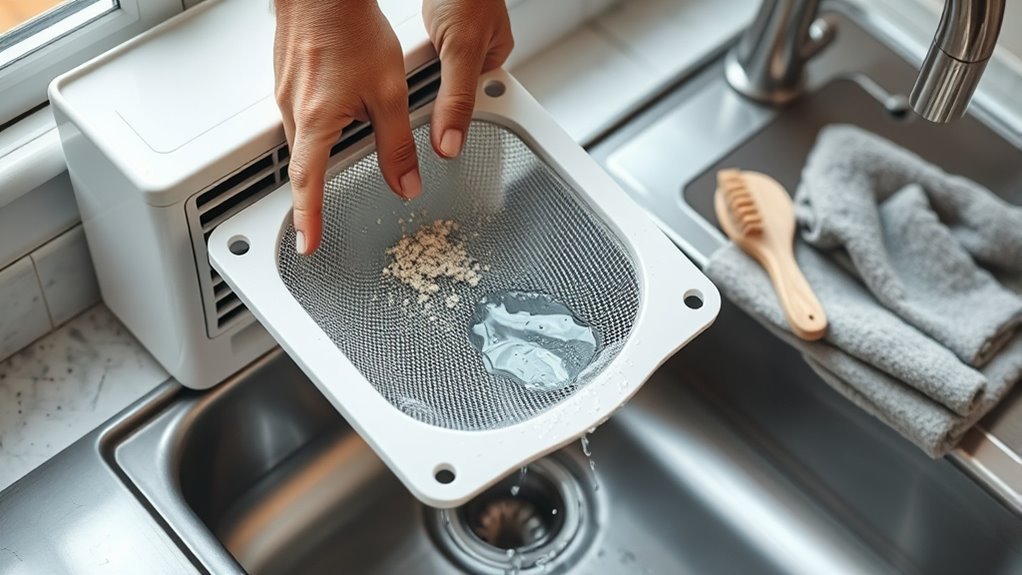
- Clean the filter: Follow the manual’s schedule to maintain airflow and efficiency.
- Provide clearance: Keep intake and discharge openings clear.
- Use continuous drainage carefully: A proper hose setup prevents shutdown from a full bucket without creating leaks.
- Stop the moisture at its source: Vent dryers and bathrooms, repair leaks, and improve drainage.
- Choose ENERGY STAR: Compare current certified models and integrated energy factor ratings.
Pro Tip: Put the hygrometer several feet from the dehumidifier rather than directly in its warm, dry discharge air. This gives a more useful room reading.
Recommended Products

【The Undisputed Champion — Industry-Leading Dehumidifier Brand】When you choose AEOCKY, you get double market validation. According to data independently verified by Stackline, a leading third-party data analytics company, AEOCKY was an industry‑leading dehumidifier brand on Amazon U.S. in 2025. This means you’re not just choosing a flagship product from a market leader, but a top-performing brand backed by independent market data and trusted by millions of real users, delivering the ultimate combination of performance, quality and trust.
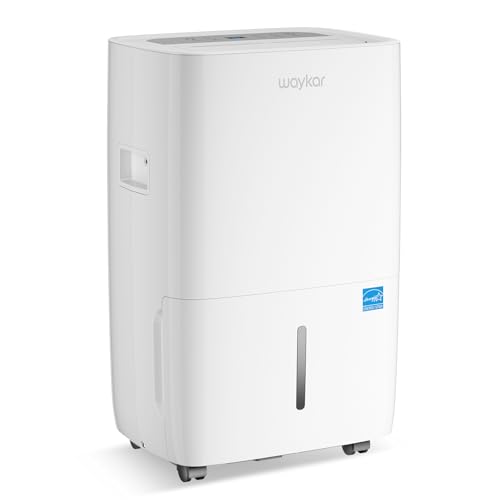
【80 Pint Capacity for Up to 5,000 Sq.Ft Spaces】Quickly removes excess moisture from basements, bathrooms, bedrooms, RVs, and other large living areas, delivering 80 pints per day (95°F, 90% RH).conditions. Designed as a powerful dehumidifier for basement, home, and large spaces, it helps eliminate damp air, condensation—and pet-related odors caused by excess humidity. Even during humid seasons, it works continuously to maintain a dry, comfortable, and healthier indoor environment.
How to Test Whether a Dehumidifier Saves Money
- Record a baseline: For several similar-weather days, note indoor humidity, indoor temperature, thermostat setting, heating energy use, and any condensation.
- Set a target: Run the dehumidifier only enough to maintain an appropriate winter range, often around 30% to 40% in a cold climate.
- Measure its electricity: Use the nameplate estimate or, preferably, a plug-in energy monitor.
- Keep other settings stable: Do not change the thermostat schedule, open windows more often, or add another heater during the comparison.
- Compare net cost: Subtract any heating-cost reduction from the dehumidifier’s electricity cost.
- Judge non-energy value too: Reduced condensation, faster laundry drying, and protection from moisture damage may justify the cost even when the heating bill does not fall.
Fix the Moisture Source First
A dehumidifier manages moisture in the air, but it does not repair the cause. The EPA says moisture control is the key to mold control. Inspect the home for:
- roof, plumbing, window, or foundation leaks;
- blocked gutters or downspouts that discharge near the foundation;
- soil that slopes toward the house;
- a clothes dryer that does not vent outdoors;
- bathroom or kitchen fans that do not exhaust outdoors;
- unvented combustion appliances that add water vapor;
- cold surfaces that need insulation; and
- rooms with poor air circulation behind furniture or inside closets.
Dry water-damaged materials within 24 to 48 hours when possible. If visible mold covers a large area, keeps returning, or may be inside the HVAC system, follow EPA guidance and consider professional help.
When a Whole-Home Dehumidifier Makes Sense
A whole-home unit can make sense when humidity stays above about 55% throughout a relatively well-sealed home, especially in a humid climate with central air conditioning. It can provide more even control than moving portable units from room to room.
Do not assume that a whole-home dehumidifier will lower winter heating bills. Ask an HVAC professional to identify the moisture load, inspect ventilation and drainage, calculate capacity, design the duct connection, and estimate annual energy use. In a cold climate, persistent winter humidity may point to indoor moisture generation, weak exhaust ventilation, air-sealing problems, or water intrusion that should be corrected first.
Recommended Products

Semiconductor dehumidifiers use thermoelectric cooling to remove moisture from the air. They create a drier, more comfortable environment by reducing humidity and improving air quality.

2500 Sq. Ft Dehumidifier - SEMKAP dehumidifier for basement features a quiet, high-performance compressor that removes up to 32 pints of moisture per day (at 95°F, 90% RH). Ideal for basements, offices, bathrooms, bedrooms, kitchens, stockrooms, living rooms, laundry rooms, garages, crawlspaces, or RVs. It helps maintain optimal humidity between 40%–60%RH for healthier, more comfortable living

【Reduce humidity - Enhance comfort】:Massive Capacity + Wide Coverage. This dehumidifier remove 80% of the moisture every day—outperforming standard units while covering 4,500 sq. ft. of living space. Great dehumidifier for basements, large house, garages, bedroom, bathroom and gyms where excess humidity triggers cause unpleasant odors and discomfort. The result? A noticeably drier, fresher, and more comfortable environment for your entire family.
Frequently Asked Questions
How much will an electric bill go up with a dehumidifier?
It depends on wattage, compressor runtime, and your electricity rate. Multiply watts ÷ 1,000 by operating hours and cost per kWh. A humidistat-controlled unit may cycle off after reaching the target, so measured kWh is more accurate than assuming it runs at full power all day.
Should you use a dehumidifier if you have COPD?
Do not treat a dehumidifier as a COPD treatment. It may help control dampness or mold, which can affect respiratory health, but air that is too dry may also be uncomfortable. Measure humidity, avoid extremes, follow your clinician’s advice, and seek medical care for worsening breathlessness or other symptoms.
What are the downsides of using a dehumidifier?
The main downsides are electricity use, noise, heat near the unit, filter and bucket maintenance, possible frost in cold rooms, and overly dry air if the setting is too low. A dehumidifier can also hide a leak or ventilation problem if you never repair the moisture source.
How much does it cost to run a dehumidifier 12 hours a day?
There is no single amount. A 400-watt unit uses 4.8 kWh in 12 hours. At $0.20 per kWh, that example costs $0.96. Replace those figures with the unit’s measured wattage and your utility rate for a realistic estimate.
Does a dehumidifier heat a room?
A refrigerant dehumidifier normally releases air that is slightly warmer than the room air it takes in, so the nearby space may warm a little. It is still designed for moisture removal, not efficient space heating.
Should you run a dehumidifier in winter?
Run one when measured humidity is too high, condensation or dampness is present, and source-control steps are not enough. Do not run it simply because it is winter. Many heated homes already have low indoor humidity.
Conclusion
A dehumidifier can make sense in a genuinely damp winter home, but it should be judged as a moisture-control appliance, not a guaranteed heating-bill reducer. Keep indoor humidity in a suitable range, often about 30% to 40% in cold weather, fix the source of excess moisture, choose the right capacity, and measure the unit’s electricity use. The only reliable way to know whether it saves money is to compare total heating and dehumidifier costs under similar conditions.
Sources
- ENERGY STAR: Dehumidifiers — current efficiency, sizing, placement, low-temperature, safety, and humidity guidance.
- ENERGY STAR: Dehumidifier Efficiency Criteria — current integrated energy factor requirements effective October 1, 2025.
- U.S. EPA: Care for Your Air — the general 30% to 50% indoor relative-humidity range.
- U.S. EPA: A Brief Guide to Mold, Moisture and Your Home — moisture-source control, condensation, ventilation, and mold prevention.
- NIST: Dissecting Interactions Among Indoor Environmental Quality Factors — the multiple environmental and human factors involved in thermal comfort.
- Palonen, Seppänen, and Jaakkola: Indoor Air study — evidence that humidity’s winter comfort effect changes with temperature.