If you want the best rechargeable desiccant dehumidifier for a van, choose by van size, moisture load, placement, and recharge access. Large 500g reusable silica-gel bags are the strongest fit for general van moisture management, while compact pods and canisters work better inside cabinets, toolboxes, electronics bins, and sealed storage bays. USB-C and plug-in models can simplify reactivation when you have reliable power, while microwave- or oven-reactivated bags often provide more desiccant for the space they occupy.
Quick Verdict
Best overall: Wisesorb 2 Pack 500G Bags for useful capacity, visible saturation monitoring, and flexible placement. Best for larger vans: Wisedry 4 x 500g Packets for distributing several large bags around different moisture zones. Best multi-bag vehicle option: unuaST 4 x 500g Bags. Best USB-C option: the 2 Pack Rechargeable Desiccant Dehumidifier for cabinets and equipment storage. Best secured plug-in canister: Hornady 95900 for an enclosed storage area with access to 110V power for reactivation.
Quick Comparison
| Product | Best Use | Recharge Method | Main Limitation | Amazon |
|---|---|---|---|---|
| Wisesorb 2 x 500g Bags | All-around van placement | Microwave or oven, per instructions | Passive, gradual moisture control | Check Price |
| Wisedry 4 x 500g Packets | Larger or partitioned vans | Microwave or oven; weigh first | Requires weight-based recharge checks | Check Price |
| unuaST 4 x 500g Bags | Multiple van moisture zones | Microwave, per instructions | Careful heating and handling required | Check Price |
| USB-C 2 Pack | Cabinets and equipment bins | USB-C heated reactivation | Reactivation takes hours | Check Price |
| Hornady 95900 | Mounted enclosed storage | 110V outlet | Not intended for heavy occupied-van moisture loads | Check Price |
| SnapSafe 75900 | Cabinets and enclosed cargo areas | 110V outlet | Less flexible to place than soft bags | Check Price |
| HYDROSORBENT SG450 | Small sealed storage bay | 240°F oven for at least 3 hours | Designed for relatively small enclosed spaces | Check Price |
| Rechargeable Hanging Unit | Closets and narrow storage spaces | Per product instructions | Small-space use only | Check Price |
| Dry Monster 100g Bag | Toolboxes and small cases | Per included instructions | Only one small 100g bag | Check Price |
| GearGuard 100g | One enclosed gear bin or case | Microwave, per instructions | Limited capacity for open van interiors | Check Price |
Wisesorb Reusable Silica Gel Desiccant Bags (2 Pack)
Best Overall
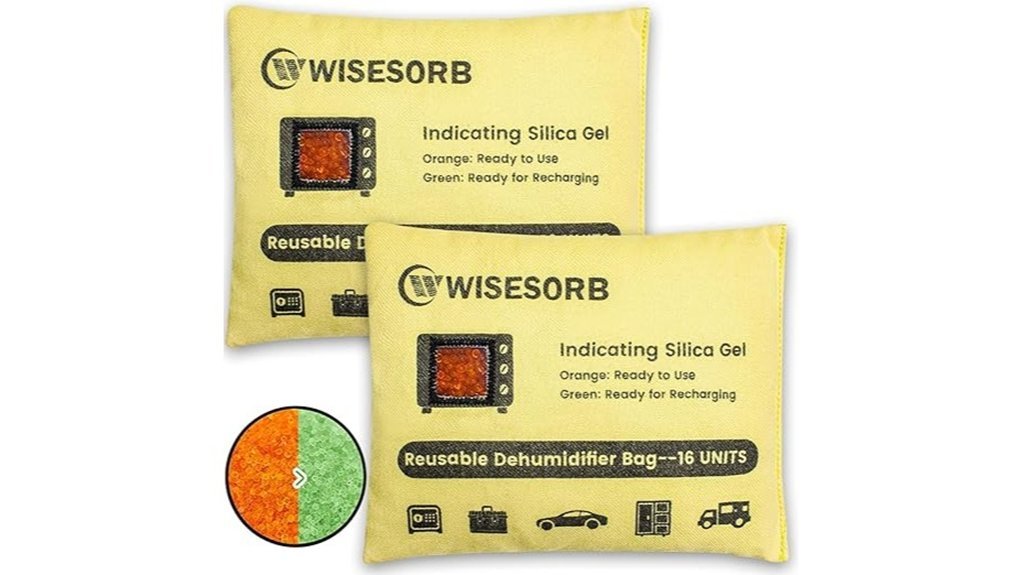
The Wisesorb two-pack is a practical all-around choice for vans because each bag contains 500g of desiccant and includes a viewing area that makes saturation easier to monitor. The indicating beads change color as moisture builds, and the bags can be reactivated using the method specified in the product instructions. Using two separate bags also lets you spread passive moisture control between the windshield area, sleeping zone, or rear storage instead of concentrating everything in one location.
Best For: Van owners who want large reusable moisture absorbers with visible saturation monitoring and no power use while the bags are absorbing moisture.
Why You’ll Like It: The two-bag format is easier to position around a van than one rigid canister, while the visible indicator reduces guesswork about when to reactivate the desiccant.
Who Should Avoid It: Anyone expecting passive silica gel to handle heavy overnight condensation from occupants, cooking, wet equipment, or water leaks without ventilation.
Pros:
- Two 500g reusable bags can be placed in separate moisture-prone zones.
- Color indication and a viewing window make maintenance easier to monitor.
- Soft bags fit more easily around seats, storage bins, and sleeping areas than many rigid canisters.
Cons:
- Reactivation requires access to a suitable microwave or oven and careful handling while hot.
- Passive desiccant works gradually and cannot replace ventilation when moisture production is high.
- The bags should be secured so they cannot slide near pedals, seat tracks, or walking areas.
Wisedry Rechargeable Silica Gel Dehumidifier Packets (4 x 500g)
Best for Large Vans
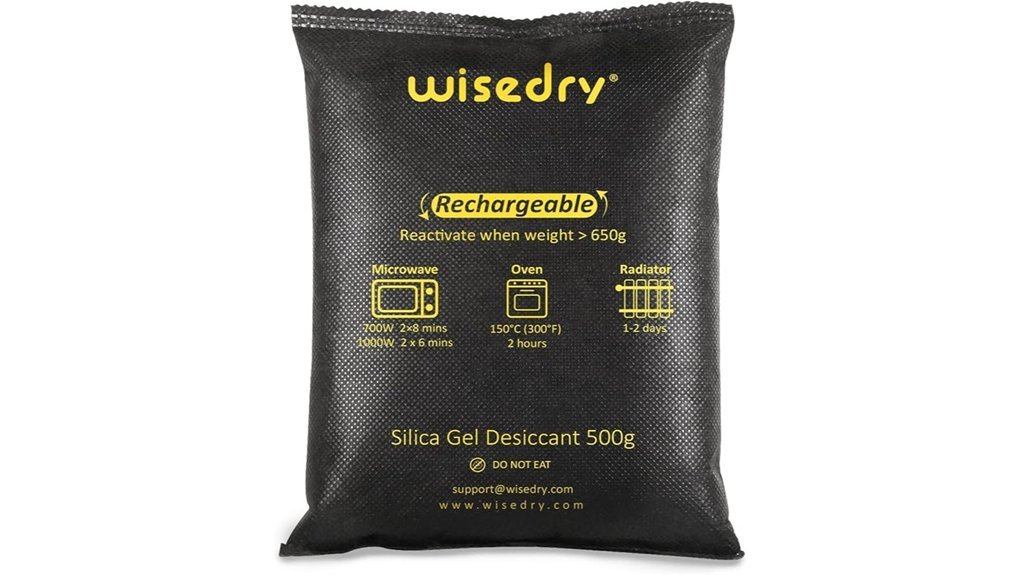
Wisedry’s four 500g packets provide one of the most flexible high-capacity setups in this guide. The current product guidance states that each 500g packet can adsorb roughly 150g of moisture, with a stated maximum around 180g. The listing also instructs users to weigh the packets before reactivation rather than relying only on appearance. Four separate packets make it easier to divide passive moisture control among the front cabin, sleeping area, cabinets, and cargo storage.
Best For: Larger or partitioned vans, RV-style layouts, or owners who want several substantial desiccant packets for different zones.
Why You’ll Like It: Four separate packets let you distribute capacity throughout the van instead of relying on a single moisture absorber.
Who Should Avoid It: Buyers who do not want to weigh packets as part of routine maintenance or who lack safe access to the specified reactivation method.
Pros:
- Four 500g packets provide broad placement flexibility.
- Large total desiccant quantity is better suited to multiple van zones than a single small pod.
- Reusable construction can reduce repeated purchases when the packets are reactivated correctly.
Cons:
- Weight-based saturation checks require more effort than a simple visible indicator.
- Heating instructions must be followed carefully to avoid unnecessary overheating.
- The four-packet set takes more storage space than compact 100g units.
unuaST Rechargeable Silica Gel Car Dehumidifier Bags
Best Multi-Bag Vehicle Pack
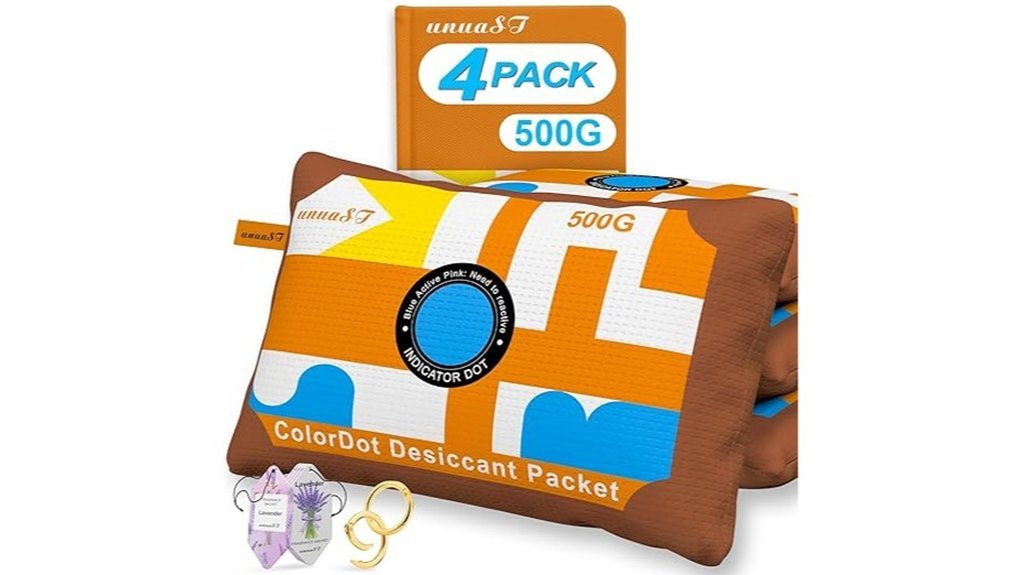
The unuaST set is marketed for cars and other enclosed storage environments, making its four 500g bags a sensible fit for vans with several moisture-prone areas. The color indicator provides a visible maintenance cue, while the four-bag format lets you rotate bags between the vehicle and the recharge area. Follow the exact heating procedure included with the product because microwave requirements and removable accessories can vary by bag design.
Best For: Drivers who want four large reusable bags for the front cabin, rear cargo area, sleeping zone, or separate storage compartments.
Why You’ll Like It: The four-pack makes it easier to keep several bags working while another is being reactivated.
Who Should Avoid It: Anyone who wants a maintenance-free solution or cannot safely follow the product-specific heating procedure.
Pros:
- Four large bags support front, rear, and compartment placement.
- Color indication provides a simple saturation cue.
- Soft construction fits areas where rigid canisters may be inconvenient.
Cons:
- Microwave reactivation requires preparation, supervision, and careful handling.
- Reuse lifespan depends on heating, storage, and physical condition of the bags.
- Passive bags may reduce background moisture but cannot be expected to eliminate heavy overnight condensation alone.
2 Pack Rechargeable Desiccant Dehumidifier with USB-C Cable
Best USB-C Option
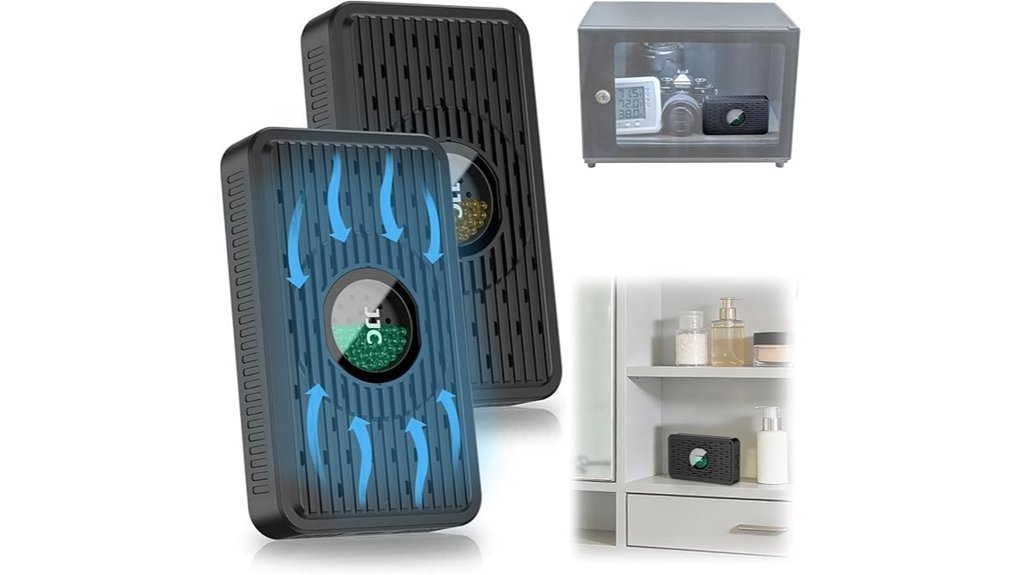
This two-pack uses rigid ABS housings, color-indicating desiccant, and a built-in heating system that uses USB-C for reactivation. The seller describes a reactivation period of roughly 2 to 6 hours depending on conditions. Because the product is aimed at enclosed storage rather than open rooms, it makes the most sense in van cabinets, under-bed bins, camera cases, electronics storage, or other compact areas where a rigid unit is convenient.
Best For: Van owners who prefer USB-C reactivation and need compact reusable units for cabinets, cases, or equipment storage.
Why You’ll Like It: USB-C can be easier to access while traveling than a microwave or oven when you already carry a compatible power setup.
Who Should Avoid It: People looking for whole-van humidity control or a desiccant unit that can be reactivated within minutes.
Pros:
- USB-C reactivation suits many travel power setups.
- Two rigid units can protect separate enclosed storage areas.
- Color-changing desiccant makes recharge timing easier to judge.
Cons:
- Reactivation takes hours rather than minutes.
- The strongest use case is compact enclosed storage, not an open or frequently ventilated cabin.
- Allow the units to complete reactivation and cool before returning them to enclosed storage.
Hornady Rechargeable Dehumidifier for Gun Safes and Cabinets
Best Secured Plug-In Canister
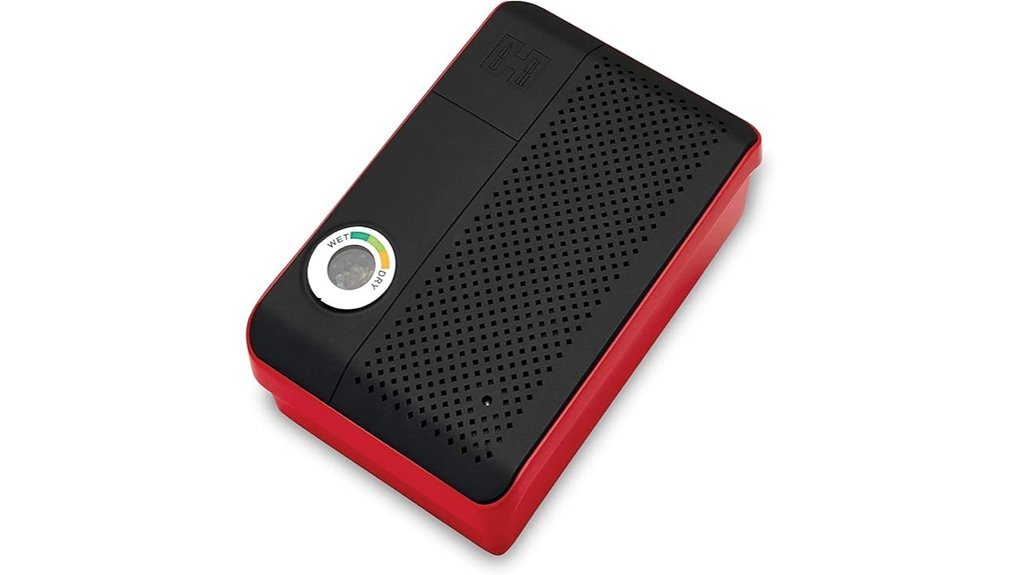
Hornady’s 95900 is a cordless-in-use desiccant unit that is reactivated by plugging it into a 110V outlet. The listing also includes a quick-connect mounting bracket and identifies cars, RVs, boats, cabinets, closets, and other enclosed spaces among its potential uses. Published coverage figures for this model are inconsistent within the listing, so van owners should not size their entire moisture-control plan around one cubic-foot number. Its strongest role is as a secured passive absorber in a parked van, cabinet, cargo area, or storage bay.
Best For: Owners who want a rigid, bracket-mounted unit and have access to a standard 110V outlet for reactivation.
Why You’ll Like It: The mounting bracket can keep the unit off the floor and secured, while the color-changing desiccant provides a visible maintenance signal.
Who Should Avoid It: Travelers without 110V recharge access or anyone needing active dehumidification while people are producing large amounts of moisture inside the van.
Pros:
- No batteries or continuous power connection are needed while the unit is absorbing moisture.
- The bracket provides a cleaner way to secure a rigid moisture absorber inside a moving vehicle.
- Color-changing desiccant helps indicate when reactivation is due.
Cons:
- Reactivation requires a 110V outlet.
- Conflicting published coverage figures make exact whole-van sizing unreliable.
- It is better for passive enclosed-space control than heavy moisture generated by occupants.
SnapSafe Rechargeable Dehumidifier for Gun Safes and Cabinets
Best Alternative Plug-In Unit
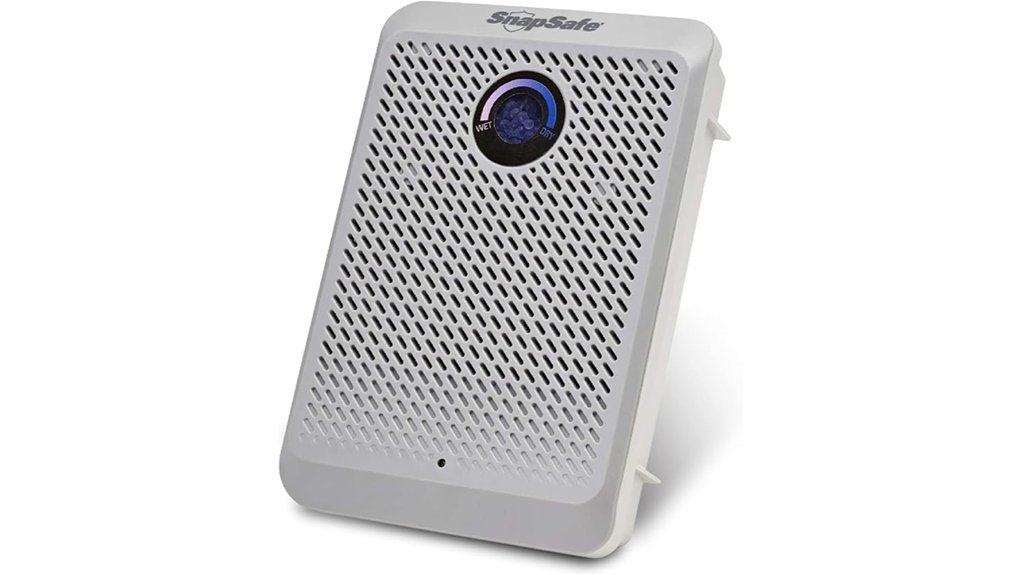
The SnapSafe 75900 follows the same general cordless-in-use concept as other plug-reactivated silica-gel canisters. It absorbs moisture passively while unplugged, then uses a standard outlet for reactivation. In a van, its most sensible role is inside a secured cabinet, cargo compartment, closet-style storage area, or parked interior rather than as the main response to moisture created by sleeping or cooking.
Best For: Buyers who want a compact rigid moisture absorber for van storage bays, closets, or enclosed cabinets.
Why You’ll Like It: The rigid format avoids a liquid reservoir and can be positioned neatly in a small storage area.
Who Should Avoid It: Anyone without suitable outlet access for reactivation or anyone expecting it to replace ventilation.
Pros:
- Cordless operation while absorbing moisture.
- Color-changing crystals provide a visible recharge signal.
- Rigid housing is tidy and easier to secure than a loose container of liquid absorber.
Cons:
- Needs periodic plug-in reactivation.
- Passive performance depends heavily on how enclosed the target space is.
- The rigid shape is less flexible to place than soft desiccant bags.
HYDROSORBENT Gun Safe Dehumidifier Silica Gel (SG450)
Best for Small Storage Bays
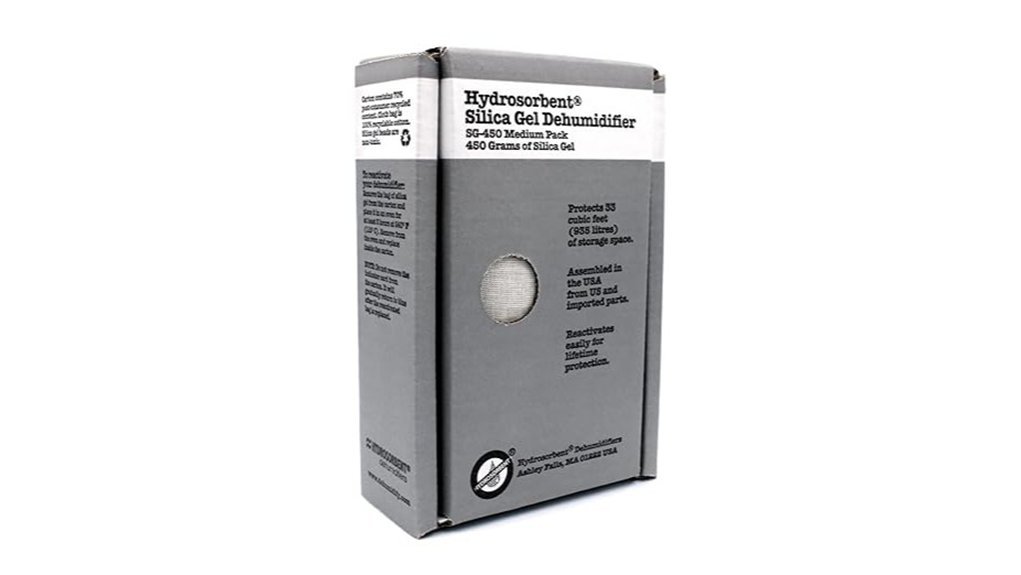
The HYDROSORBENT SG450 contains 450g of silica gel and is marketed for enclosed spaces up to about 33 cubic feet. Its indicator changes color when reactivation is needed. The product instructions call for removing the silica bag from the carton and heating it in a preheated 240°F oven for at least three hours, which makes this a better fit for owners who can perform maintenance at home or somewhere with safe oven access.
Best For: Small van cabinets, tool storage, under-bed boxes, and sealed cargo compartments.
Why You’ll Like It: The simple carton-and-bag design provides a relatively substantial amount of desiccant without requiring electronics while in use.
Who Should Avoid It: Travelers who need fast on-road reactivation or want one product to manage an entire occupied van.
Pros:
- 450g of silica gel provides more capacity than many compact 100g options.
- Color indication gives a straightforward maintenance cue.
- No battery, USB connection, or outlet is required while it is absorbing moisture.
Cons:
- Oven reactivation takes at least several hours.
- The stated enclosed-space rating is intended for a relatively small area rather than an entire large van.
- The carton should be protected from crushing, spills, and direct contact with wet gear.
Rechargeable Small Dehumidifier for Bathroom and Closet
Best Hanging Unit
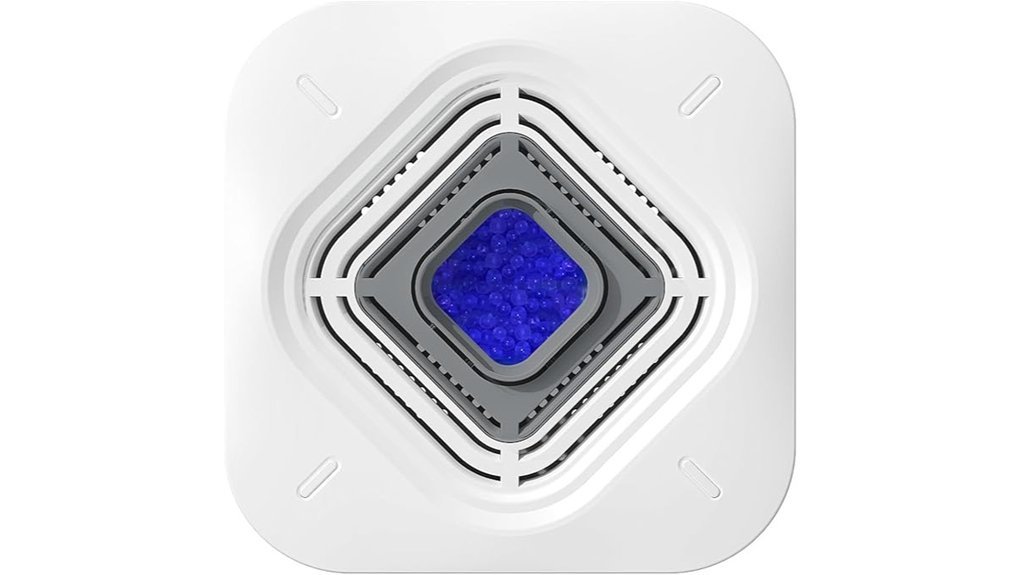
This compact moisture absorber includes a detachable hook, which can be useful when shelf or floor space is limited. Its strongest applications are small closets, lockers, cabinets, and similar enclosed storage areas. Treat any exact coverage, runtime, or humidity-reduction figures as seller-stated estimates because real performance will change with temperature, air leakage, starting humidity, and the amount of new moisture entering the compartment.
Best For: Small closets, lockers, hanging storage, or narrow van compartments where silent passive operation matters.
Why You’ll Like It: The slim body and hook provide placement options that soft bags and tabletop canisters do not.
Who Should Avoid It: Buyers who need fast large-area moisture removal or verified whole-van performance.
Pros:
- Slim profile fits narrow storage areas.
- Silent passive operation is suitable near sleeping or gear storage zones.
- Color-changing beads make maintenance easier to monitor.
Cons:
- Small desiccant units have less total capacity than large 500g bags.
- Seller coverage and runtime estimates may not reflect real occupied-van conditions.
- It should not be the only moisture-control method in a heavily occupied or poorly ventilated van.
Dry Monster 100g Rechargeable Desiccant Bag
Best for Toolboxes

The Dry Monster product is one 100g rechargeable desiccant bag designed for targeted protection in small storage areas. Its compact size makes it more appropriate for a toolbox, camera bin, document case, electronics container, or other enclosed van storage space than for the open cabin. A color-changing indicator provides a recharge cue, while the limited 100g size keeps expectations realistic.
Best For: Protecting tools, papers, electronics, camera gear, and other moisture-sensitive items stored in one enclosed container.
Why You’ll Like It: The small bag is easy to fit into a toolbox or gear case without occupying much usable storage space.
Who Should Avoid It: Anyone looking for cabin-wide condensation control or enough capacity to cover several storage zones with one product.
Pros:
- Compact enough for tight containers and cases.
- Reusable design avoids replacing the bag after every saturation cycle when maintained correctly.
- Indicator makes recharge timing easier to judge.
Cons:
- Only one 100g bag is included.
- Capacity is much lower than the 500g options in this guide.
- Follow the included recharge instructions rather than relying on generic heating times from another product.
GearGuard 100g Professional Grade Rechargeable Dehumidifier
Best Single Compact Pod
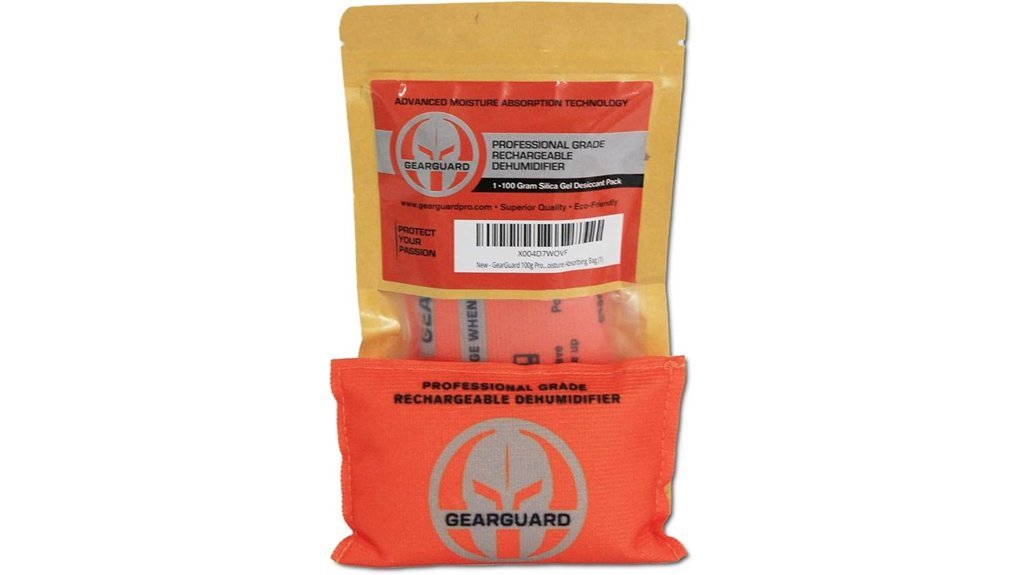
This 100g rechargeable moisture absorber is marketed for storage bins, cars, boats, closets, safes, and other enclosed areas. Its small format makes it useful for one van drawer, toolbox, gear case, tackle box, camera bin, or similar compartment rather than the entire cabin. The listing provides microwave reactivation instructions, so follow the exact power and timing directions for this product rather than applying another bag’s procedure.
Best For: One enclosed bin, case, drawer, or cabinet containing moisture-sensitive equipment.
Why You’ll Like It: The compact reusable format is tidy and easy to position with gear that needs targeted moisture protection.
Who Should Avoid It: Large vans, open cabins, or buyers who need multiple moisture-control points from one purchase.
Pros:
- Small format is easy to place with sensitive equipment.
- Reusable design provides targeted moisture control without a liquid reservoir.
- Suitable for vehicle and storage applications where a large bag would be inconvenient.
Cons:
- Only 100g of desiccant limits total moisture capacity compared with larger bags.
- Coverage is best treated as one small enclosed storage area.
- Microwave reactivation must follow the exact product instructions.
Factors to Consider When Choosing a Desiccant Rechargeable Dehumidifier for Your Van
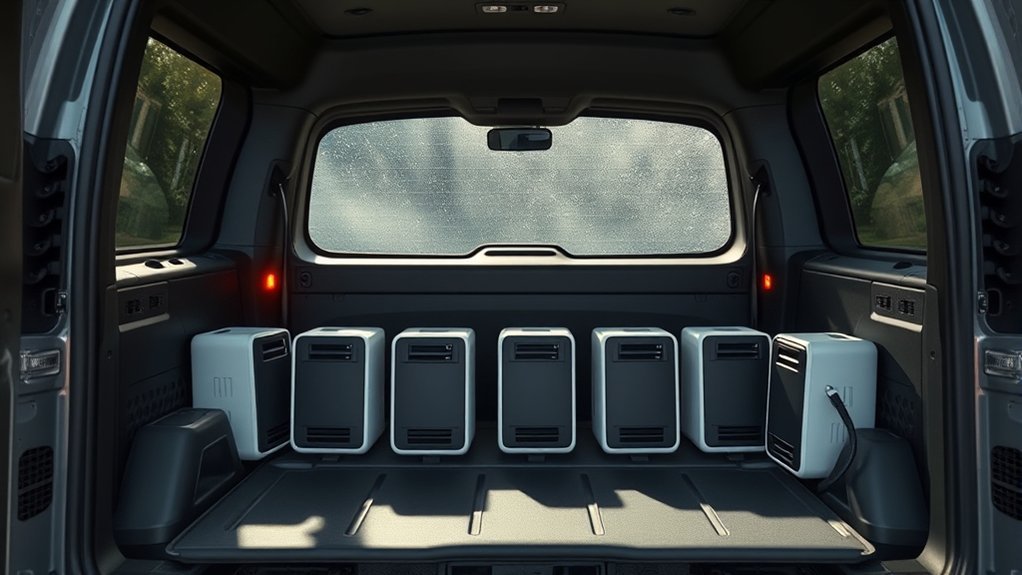
The best choice depends less on the word “dehumidifier” and more on how much reusable desiccant you get, where you can place it, how it is reactivated, and whether your van is occupied or simply being stored. Use the points below to avoid buying a product that is too small or inconvenient for your routine.
Moisture Absorption Capacity
For passive silica-gel products, compare desiccant weight, seller-stated moisture capacity, and the type of enclosed space the product is designed to protect. Do not compare a passive 100g or 500g desiccant product directly with a powered compressor or thermoelectric dehumidifier using pints-per-day figures unless a manufacturer provides a credible tested removal rate. A 100g unit makes more sense in a case or drawer, while several 500g bags are more realistic when you want passive support across multiple van zones.
Recharge Method
Choose a reactivation method you can use safely and consistently. Some bags use a microwave, some can be oven-dried, USB-C units use a built-in heater, and plug-in canisters require access to a wall outlet. Never assume one product’s time, power level, or temperature applies to another. Follow the instructions for your exact model and allow heated products to cool before returning them to storage.
Van Space Coverage
Coverage claims generally make the most sense in relatively enclosed spaces. An occupied van with ventilation openings, wet gear, cooking, breathing, or frequent door opening creates a much larger moisture load than a sealed cabinet. For partitioned layouts, several separate absorbers near the windshield area, sleeping zone, cabinets, and cargo storage can be more practical than concentrating all of the desiccant in one corner.
Indicator Visibility
Color-changing beads, dots, or windows make maintenance easier, but some products rely more heavily on weight-based checks. Choose a system you will actually monitor. A visible indicator is convenient for frequently checked cabinets, while weighing larger packets can provide a clearer maintenance routine when the manufacturer specifically instructs you to do so.
Safe Material Design
Look for intact heat-resistant packaging, reinforced seams, a secure rigid shell, and clear reactivation instructions. Loose beads, damaged packets, heated housings, and broken accessories can create ingestion, choking, spill, or burn hazards. Keep every product secured away from children, pets, food, pedals, and cooking equipment, and stop using a unit if its packaging or housing becomes damaged.
Portability and Placement
Soft bags fit beside seats, bedding, and storage bins, rigid pods work well with sensitive gear, and hanging or bracket-mounted units can keep the floor clear. Secure loose products before driving. Never place a moisture absorber where it can interfere with pedals, seat tracks, heaters, doors, or safe movement through the van.
Reuse Durability
Reusable does not mean permanent. High heat, damaged seams, cracked housings, contaminated desiccant, or repeated rough handling can reduce safety and useful life. Inspect the packet, indicator, cable, plug, hook, bracket, or housing after each reactivation cycle and replace damaged products.
Occupied Van vs. Storage Use
A parked van with closed cabinets is a much easier environment for passive desiccant than a van with people sleeping, cooking, drying clothing, or bringing in wet outdoor gear. Use these products as part of a wider moisture-control plan rather than as a reason to close vents or ignore condensation sources.
Before You Buy Checklist
- Decide whether you need moisture support across several van zones or protection for one enclosed compartment.
- Compare desiccant amount instead of relying only on broad coverage marketing.
- Confirm the reactivation method works with your microwave, oven, USB-C setup, or 110V outlet.
- Check whether saturation is indicated by color, weight, or another method.
- Plan a secure location away from pedals, direct heat, food, children, and pets.
- Consider using a hygrometer to see whether your overall moisture-control strategy is working.
- Fix leaks and dry wet materials before expecting a desiccant product to control ongoing dampness.
Frequently Asked Questions
How Often Should I Recharge a Van Dehumidifier?
Reactivate it when the product’s indicator reaches the specified state, the packet reaches the manufacturer’s saturation weight, or the instructions otherwise tell you it is ready for drying. A fixed calendar schedule is less reliable because saturation can happen much faster in a damp occupied van than in a dry parked vehicle.
Can Rechargeable Desiccants Work in Freezing Van Temperatures?
Silica-gel desiccant can still adsorb moisture at low temperatures, but practical performance changes with temperature, relative humidity, airflow, and the amount of new moisture entering the space. Cold-window condensation may also require better ventilation, insulation, and removal of wet moisture sources.
Are Desiccant Dehumidifiers Safe Around Pets and Children?
Use every product only as directed and secure it out of reach. Do not allow children or pets to chew packets or housings, and stop using a damaged unit if beads or internal materials can escape. Products that have been heated for reactivation should cool before being returned to the van.
Do They Reduce Condensation on Van Windows Overnight?
Large reusable bags may help reduce background humidity and light fogging, but passive desiccant is unlikely to absorb all of the moisture produced by breathing, cooking, wet clothing, or a water leak during one night. Ventilation and moisture-source control remain essential.
How Long Does a Full Recharge Usually Take?
It depends on the product. Some microwave-reactivated bags can be dried relatively quickly, oven-dried products may take hours, USB-C units can also require several hours, and plug-in canisters may need an extended drying period. Follow only the time, temperature, power level, orientation, and cooling instructions provided for your exact model.
How Many Desiccant Bags Do I Need for a Van?
There is no universal number because van volume, ventilation, weather, occupants, wet gear, and partitioning all change the moisture load. One 100g unit may be enough for a toolbox, while several 500g bags are more appropriate when you want passive moisture support in multiple areas of a larger van. A hygrometer can help you judge whether your setup is making a meaningful difference.
Where Should I Put Desiccant Bags in a Van?
Place them near moisture-prone but secure areas such as rear storage, enclosed cabinets, the sleeping zone, or near the windshield area when parked. Keep them away from pedals, heaters, cooking equipment, open food, standing water, and any location where they could move dangerously while driving.
Should I Use a Desiccant or a Powered Dehumidifier?
Choose reusable passive desiccant when you need silent background moisture control, storage protection, low power use, or targeted protection for cabinets and gear. Consider a properly sized powered dehumidifier when persistent humidity remains high after leaks and other moisture sources have been addressed and you have suitable electrical power and drainage. Neither approach replaces sensible ventilation while people are inside the van.
Final Recommendation
Choose Wisesorb 2 Pack 500G Bags for the best overall balance of substantial desiccant capacity, visible monitoring, and flexible placement. Choose Wisedry 4 x 500g when you want to distribute several large packets across a larger or partitioned van and do not mind weight-based maintenance. Choose unuaST 4 x 500g when a multi-bag vehicle-oriented setup is your priority. Choose the USB-C two-pack for cabinets and equipment bins when travel-friendly powered reactivation matters. Choose Hornady 95900 when you want a secured rigid unit for an enclosed storage area and have 110V recharge access.
For toolboxes, camera cases, drawers, and small storage bins, the 100g and compact hanging options can be more practical than a large bag. Whichever format you choose, treat reusable desiccant as one part of a complete van moisture plan: fix leaks, dry wet gear, ventilate during occupancy, monitor humidity, secure the absorber before driving, and reactivate it before it remains saturated for long periods.