If you’re choosing a ductable dehumidifier in 2026, focus on verified duct compatibility—not just crawl-space capacity. The strongest options in this guide include the ALORAIR Sentinel WHD 100 for whole-house systems, the ALORAIR Sentinel HDi90 Duct for heavy-duty moisture removal with a pump, the Waykar 158-Pint Dual-Duct for large crawl spaces, and smaller duct-ready models for grow tents, basements, and remote monitoring. Compare the AHAM rating, duct connection type, drainage method, operating temperature, and included accessories before choosing.
Affiliate disclosure: This article contains Amazon affiliate links. We may earn a commission from qualifying purchases at no extra cost to you.
Quick Answer
Best overall: Choose the ALORAIR Sentinel WHD 100 when you need a true whole-house unit with multiple duct-mounting options and a 90-pint AHAM rating.
Best heavy-duty option: The ALORAIR Sentinel HDi90 Duct combines a 90-pint AHAM rating, return/supply duct capability, and a built-in condensate pump.
Best for a large crawl space: The Waykar 158-Pint Dual-Duct offers dual-duct airflow, a wired remote, and continuous drainage for demanding installations.
Best niche choice: The MARS HYDRO 18L/Day is designed for small grow tents and includes an air duct, but it is not a replacement for a whole-house dehumidifier.
Key Takeaways
- Use the AHAM pints-per-day rating for realistic comparisons; “maximum” or “saturation” ratings are measured in hotter, wetter conditions.
- Confirm whether the unit supports a supply duct only or both return and supply ducts, and check whether collars or hoses are included.
- Choose gravity drainage only when the hose can slope continuously to a drain; otherwise, select a built-in pump.
- Automatic defrost helps in cool areas, but it does not make a refrigerant dehumidifier suitable for below-freezing operation.
Quick Comparison of the Best Ductable Dehumidifiers
| Model | Verified Capacity Basis | Duct Setup | Drainage | Best For | Amazon |
|---|---|---|---|---|---|
| ALORAIR Sentinel WHD 100 | 90 PPD at AHAM | Multiple whole-house inlet/outlet configurations | Gravity drain | Whole-house HVAC integration | Check Details |
| MARS HYDRO 18L/Day | Up to 18 L / 38 pints per day | Included air duct for small grow tents | Tank or drain hose | 3×3, 2×4, and 4×4 grow tents | Check Details |
| ALORAIR Sentinel HD55S | 55 PPD at AHAM; 120 PPD max | Optional duct mounting / supply collar | Gravity drain | Compact crawl spaces and basements | Check Details |
| ALORAIR Sentinel HDi90 Duct | 90 PPD at AHAM; 198 PPD max | Return duct, supply duct, or both | Built-in condensate pump | Large basements and whole-home projects | Check Details |
| CREWORKS 130 PPD | 60 PPD at AHAM; 130 PPD max | Duct collar included | Drain hose; bundle may include a pump | Remote-panel crawl-space setups | Check Details |
| ALORAIR Sentinel HD55 Blue Wi-Fi | 53 PPD at AHAM; 113 PPD max | Ducting option with compatible collar | Gravity drain | App-based remote monitoring | Check Details |
| Waykar 158-Pint Dual-Duct | Up to 158 PPD in high-humidity conditions | Dual ducting | Continuous gravity drain | Large crawl spaces and distributed airflow | Check Details |
ALORAIR Sentinel WHD 100 Whole-House Dehumidifier
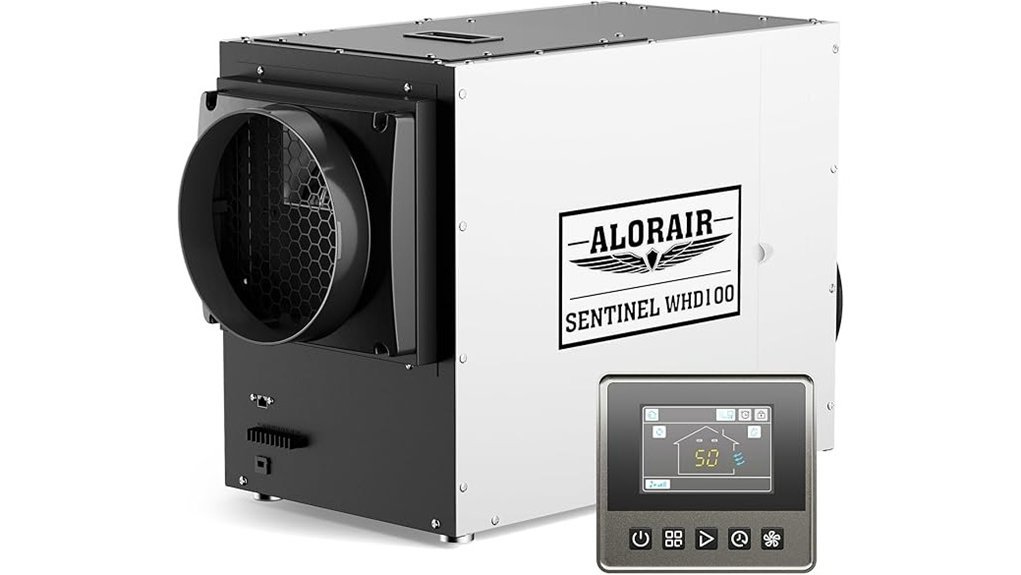
The ALORAIR Sentinel WHD 100 is the clearest match for buyers who want a true whole-house ductable dehumidifier. It is rated for 90 pints per day at AHAM conditions and is intended for spaces up to about 2,300 sq. ft. Multiple inlet and outlet arrangements make it easier to adapt the unit to a dedicated duct system or an HVAC-supported layout. It also includes gravity drainage, automatic defrost, a fresh-air damper, timer controls, memory restart, and GPP operation.
Best For: Homeowners and HVAC installers planning a dedicated whole-house, basement, garage, or multi-room humidity-control system.
Why You’ll Like It: Its adjustable airflow path and whole-house design reduce the compromises that come with adapting a basic crawl-space unit to ductwork.
Pros:
- 90-pint AHAM capacity gives a realistic basis for sizing.
- Multiple duct-mounting configurations support different installation layouts.
- Gravity drainage, automatic defrost, timer, memory restart, and fresh-air controls reduce daily maintenance.
Cons:
- Professional sizing and duct planning are recommended for whole-house performance.
- Gravity drainage requires a continuous downward slope to a suitable drain.
- It is larger and more installation-dependent than a portable room dehumidifier.
MARS HYDRO 18L/Day Compressor Dehumidifier with Air Duct
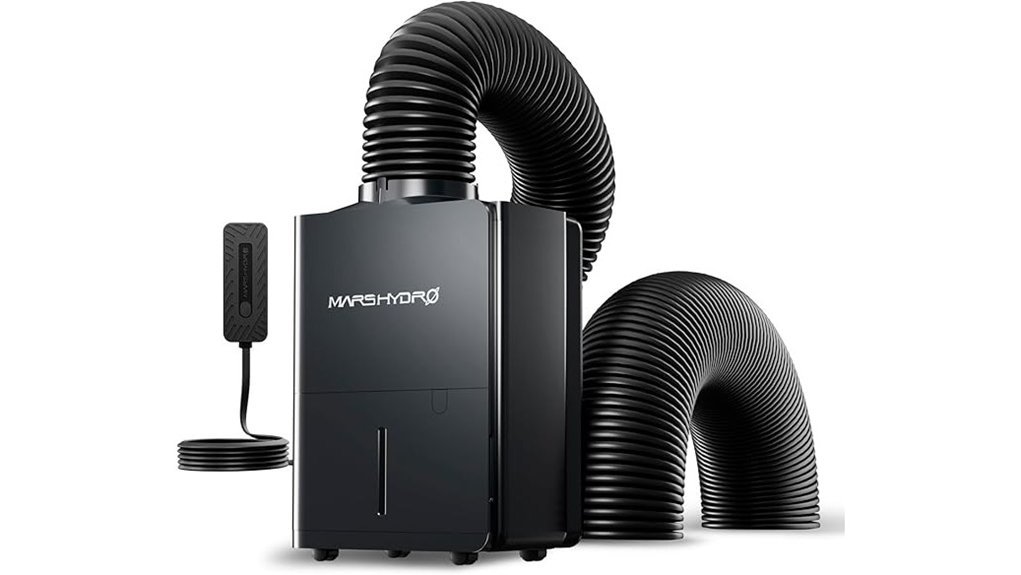
MARS HYDRO’s 18L/day model is a niche ducted grow-tent dehumidifier rather than a whole-house machine. The included air duct lets you position the compressor outside a small tent and route humid air through the connection, which can reduce the amount of equipment heat released inside the growing area. It is advertised to remove up to 18 liters, or about 38 pints, per day under the maker’s test conditions. Smart auto mode lets you select a target from 30% to 90% relative humidity, while the drain hose, washable filter, and tank shutoff support flexible operation.
Best For: Growers using 3×3, 2×4, or 4×4 tents who want the compressor body outside the tent.
Why You’ll Like It: It combines an included duct connection with automatic humidity control in a smaller format than commercial crawl-space units.
Pros:
- Air duct and connecting components are included for grow-tent placement.
- Automatic 30% to 90% humidity control reduces manual adjustments.
- Offers both a collection tank and drain-hose option.
Cons:
- Its small-space design is not suitable for whole-house or large crawl-space use.
- The maximum extraction figure depends on warm, humid test conditions.
- Ducting can reduce heat inside the tent, but the dehumidification process still produces heat.
ALORAIR Sentinel HD55S 55 PPD AHAM Duct-Ready Dehumidifier
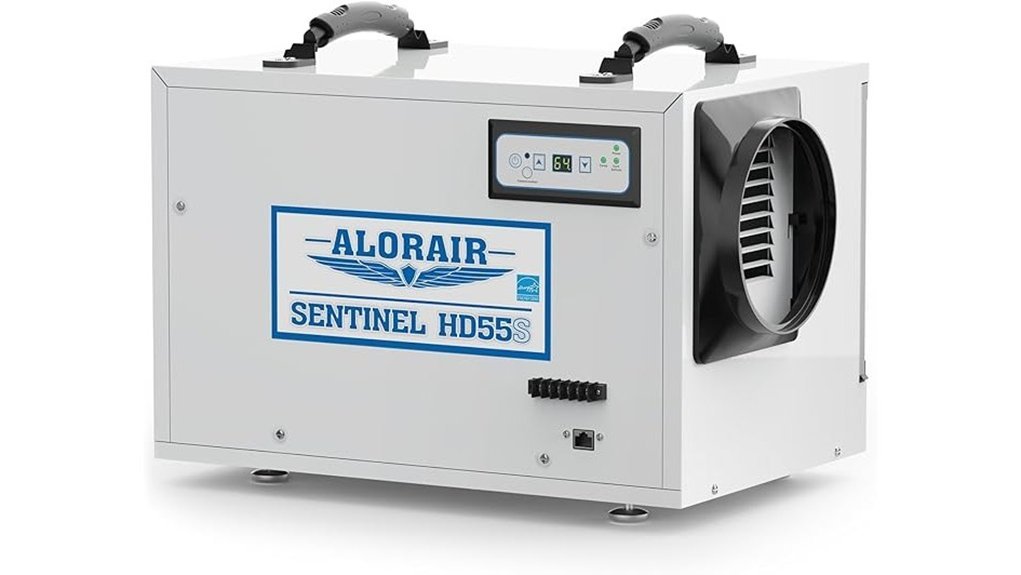
The ALORAIR Sentinel HD55S is rated for 55 pints per day at AHAM conditions and up to 120 pints at saturation, with coverage advertised up to 1,300 sq. ft. Its low-profile metal housing fits crawl spaces and basements, while optional duct mounting and a supply collar allow you to redirect dry air. Gravity drainage removes the need for a collection tank, and automatic defrost helps the unit operate within its stated low-temperature range. A MERV-1 filter protects internal components from larger airborne debris.
Best For: Crawl spaces, basements, storage areas, and compact installations where a gravity drain is available.
Why You’ll Like It: The 55-pint AHAM rating, compact dimensions, and duct option make sizing and installation easier than with oversized commercial units.
Pros:
- Clearly stated 55-pint AHAM and 120-pint maximum ratings.
- Optional duct mounting supports redirected supply airflow.
- Automatic defrost, gravity drainage, and metal housing suit unattended crawl-space use.
Cons:
- Duct accessories may need to be purchased separately.
- Gravity drainage limits placement when no lower drain point is available.
- A supply-only duct arrangement is less flexible than a full return-and-supply whole-house setup.
ALORAIR Sentinel HDi90 Ductable Dehumidifier with Pump
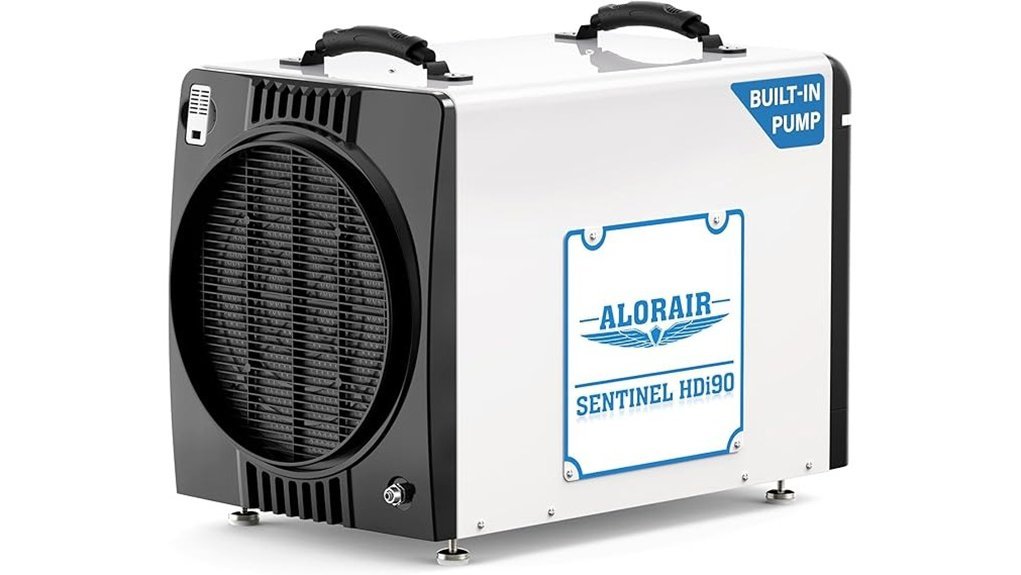
The ALORAIR Sentinel HDi90 Duct is built for larger residential and commercial moisture loads. It removes 90 pints per day at AHAM conditions and up to 198 pints at saturation, with coverage advertised up to 2,600 sq. ft. The housing supports a return duct, a supply duct, or both, making it more adaptable than supply-only crawl-space units. Its built-in condensate pump can move water to a higher drain point, while automatic defrost, a MERV-1 filter, and optional remote control support long-term installation.
Best For: Large basements, crawl spaces, storage areas, garages, offices, and whole-home projects that cannot rely on gravity drainage.
Why You’ll Like It: It solves two common installation problems at once: distributing air through ducts and lifting condensate to a remote drain.
Pros:
- 90-pint AHAM capacity is suitable for demanding moisture loads.
- Supports return-only, supply-only, or combined ducting.
- Built-in pump and automatic defrost improve placement flexibility.
Cons:
- Heavier and more expensive than compact crawl-space models.
- Proper duct sizing and static-pressure planning are important.
- The pump and ductwork add more components that may require maintenance.
CREWORKS 130 PPD Crawl-Space Dehumidifier with Duct Collar
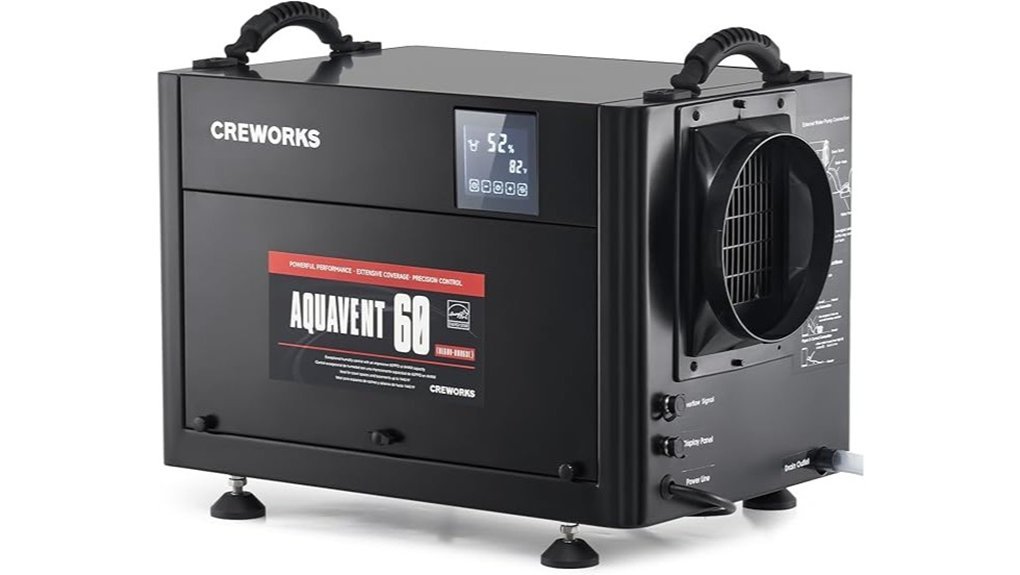
The CREWORKS 130 PPD model is rated for 60 pints per day at AHAM conditions and up to 130 pints in hot, highly humid air. It is intended for roughly 500 to 1,440 sq. ft. and moves about 215 CFM. A duct collar is included, so it fits the article’s ductable buyer intent more clearly than ordinary drain-hose-only crawl-space units. The detachable display panel can be mounted up to 32.8 feet away, giving you access to humidity settings, timer controls, and operating modes without entering a tight crawl space.
Best For: Crawl spaces, basements, garages, and warehouses where the controls need to be placed outside the damp area.
Why You’ll Like It: The included duct collar and detachable panel reduce the number of accessories needed for a practical crawl-space installation.
Pros:
- 60-pint AHAM rating and approximately 215 CFM airflow.
- Includes a duct collar and a long detachable control-panel cable.
- Manual, continuous, and night modes offer flexible operation.
Cons:
- The 130-pint figure is a maximum-condition rating, not the AHAM result.
- Amazon bundles may differ, so confirm whether the selected variant includes a pump and all listed accessories.
- The manufacturer’s listed warranty is shorter than several premium competitors.
ALORAIR Sentinel HD55 Blue Wi-Fi Duct-Ready Dehumidifier
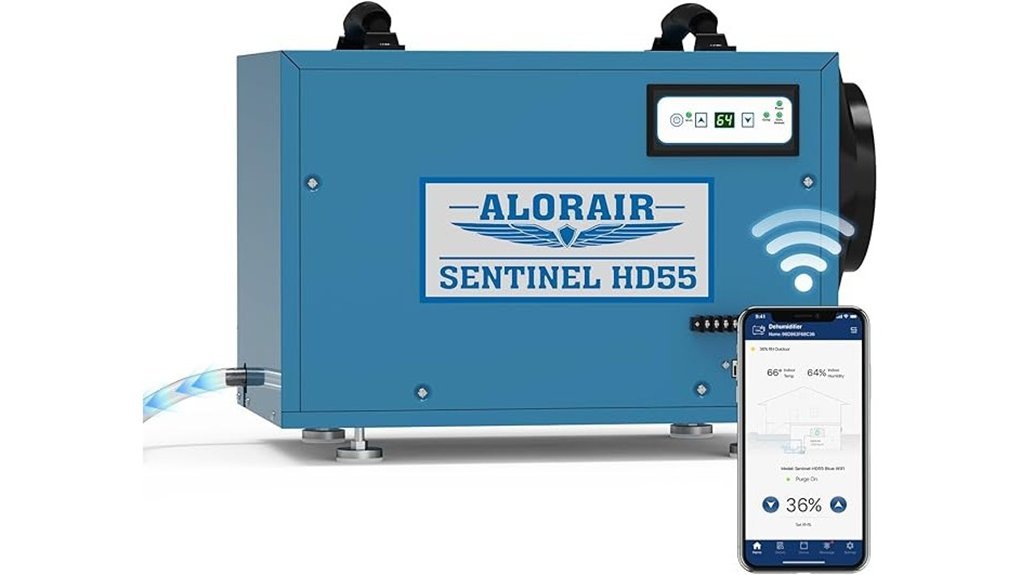
The ALORAIR Sentinel HD55 Blue Wi-Fi model is rated for 53 pints per day at AHAM conditions and up to 113 pints at saturation, with coverage advertised up to about 1,200 sq. ft. It supports ducting with a compatible supply collar and uses gravity drainage for continuous operation. Its main advantage is app-based monitoring: you can view humidity and adjust settings without crawling into the installation area. Automatic defrost and a MERV-1 filter support routine crawl-space or basement use.
Best For: Homeowners, property managers, and contractors who want to monitor a duct-ready crawl-space dehumidifier remotely.
Why You’ll Like It: Wi-Fi access makes it easier to notice humidity changes or operating issues before entering a hard-to-reach area.
Pros:
- Wi-Fi app provides remote humidity monitoring and setting adjustments.
- 53-pint AHAM rating is more useful for sizing than the 113-pint maximum figure.
- Ducting option, automatic defrost, gravity drainage, and compact metal housing fit crawl-space installations.
Cons:
- A compatible duct collar may be sold separately.
- Wi-Fi performance depends on signal strength near the installation area.
- Gravity drainage is less flexible than a built-in pump.
Waykar 158-Pint Dual-Duct Crawl-Space Dehumidifier
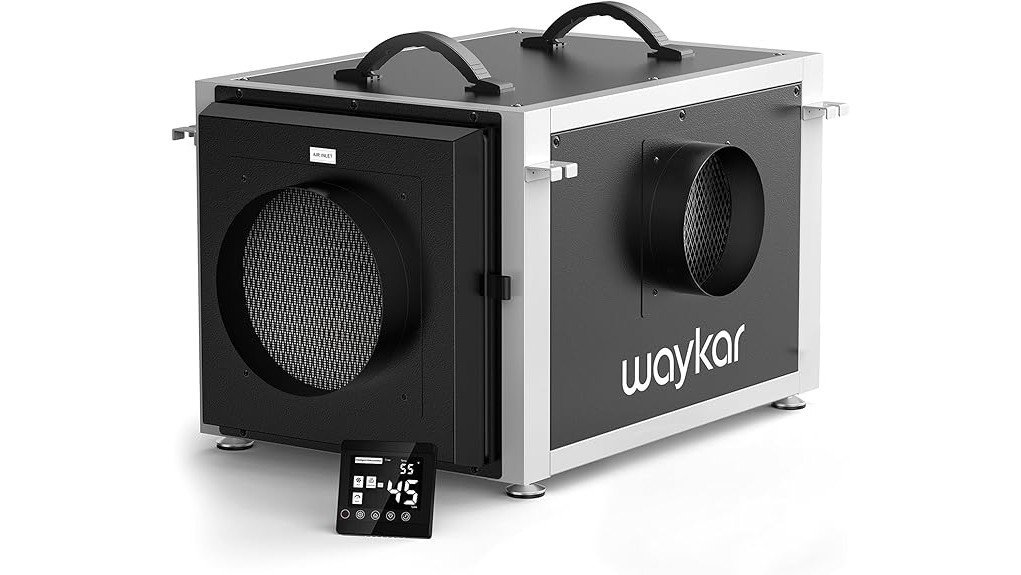
The Waykar 158-Pint model is designed for large crawl spaces and distributed airflow. Its dual-duct configuration can help separate humid-air intake from dry-air discharge, while the included wired controller and remote humidity sensor let you place the controls outside the crawl space. The maximum 158-pint figure is measured under warm, highly humid conditions, and the manufacturer advertises coverage up to 6,500 sq. ft. Continuous gravity drainage and automatic defrost support unattended operation within the unit’s stated temperature limits.
Best For: Large crawl spaces, basements, garages, warehouses, and layouts that benefit from separate intake and discharge ducts.
Why You’ll Like It: Dual ducting gives you more control over where humid air is collected and where dry air is delivered.
Pros:
- Verified dual-duct design suits distributed crawl-space airflow.
- Wired controller and remote humidity sensor reduce crawl-space visits.
- Continuous drainage and automatic defrost support long operating cycles.
Cons:
- The 158-pint capacity is a maximum-condition rating, not an AHAM rating.
- Large advertised coverage still depends on moisture load, layout, airflow, and duct design.
- Current warranty and included drainage accessories should be confirmed on the selected listing.
Factors to Consider When Choosing a Ductable Dehumidifier

Start by confirming that the model has a real duct collar, duct port, or manufacturer-approved duct kit. Then compare AHAM capacity, airflow, drainage, operating temperature, control location, and installation requirements. A high maximum PPD number does not automatically make a unit better for your home.
Ducting Configuration
Check whether the unit accepts a supply duct only or supports both return and supply ducts. Supply-only ducting redirects dry air, while a return-and-supply layout can collect humid air from one zone and deliver dry air to another. Confirm the collar diameter, whether the collar is included, the recommended maximum duct length, and any static-pressure limits in the manual. Use insulated ducting in unconditioned areas when condensation or heat gain is a concern, and keep runs as short and smooth as practical.
Moisture Removal Capacity
Compare models using the AHAM pints-per-day rating whenever it is available. AHAM capacity is measured at 80°F and 60% relative humidity, while saturation or maximum ratings use much hotter and wetter conditions. A unit advertised as 120, 158, or 198 PPD may remove far less water in a normal basement. Match the AHAM rating to the size of the space, the severity of moisture, air leakage, and whether the area is connected to other rooms.
Coverage Area and Airflow
Square-foot coverage is a rough marketing guide, not a substitute for sizing. Two spaces with the same floor area can have very different moisture loads because of ceiling height, groundwater, outdoor-air leakage, insulation, or laundry and shower use. Review the unit’s CFM airflow and make sure the duct design can move air through the entire target area. Large or divided spaces may need professional load calculations or additional return paths.
Drainage Options
Choose gravity drainage when the hose can slope continuously downward without kinks or standing water. Select a built-in condensate pump when water must travel upward, across a long distance, or to a higher drain. Check the pump’s maximum lift, hose length, and access for maintenance. Add a secondary drain pan or leak protection where a failure could damage finished space.
Energy Efficiency
Compare the current Integrated Energy Factor (IEF) and verify ENERGY STAR status in the current certification directory instead of relying only on seller badges. Smart humidistats, timers, clean filters, correct duct sizing, and unobstructed airflow can reduce wasted runtime. Oversizing can also increase cost without improving comfort if the airflow and controls do not match the space.
Automatic Defrost
Automatic defrost helps prevent frost from blocking the evaporator coil in cool conditions. During a defrost cycle, the compressor may stop while the fan continues to move air. This protects performance within the model’s approved temperature range, but it does not make the unit safe for continuous use below freezing. Always follow the minimum operating temperature in the manual.
Humidity Controls
Look for an adjustable humidistat, automatic restart, continuous mode, and a control location you can reach. A wired remote panel or Wi-Fi app is especially useful when the unit sits deep inside a crawl space. Confirm that the sensor measures humidity in the correct zone; a sensor mounted too close to the dry-air discharge can cause short cycling or misleading readings.
Build Durability and Safety
Metal housing, protected coils, serviceable filters, reinforced handles, and accessible drain components can improve long-term usability. ETL or cETL marks indicate that the product has been evaluated to applicable electrical safety standards; they are not proof of durability or lifespan. Review the written warranty, exclusions, registration requirements, replacement-part access, and service process before buying.
Before You Buy: Installation Checklist
- Confirm the unit is genuinely ductable and identify every required collar, hose, adapter, and clamp.
- Measure the crawl-space opening and the final service clearance around the filter, drain, and control panel.
- Verify outlet voltage, circuit requirements, and whether local code requires a dedicated circuit or professional wiring.
- Plan the drain route and pump lift before selecting the final mounting position.
- Check maximum duct length, collar diameter, airflow direction, and access for filter cleaning.
- Confirm the exact Amazon variant, included accessories, warranty terms, and return policy before ordering.
Frequently Asked Questions
What Makes a Dehumidifier Ductable?
A ductable dehumidifier has a manufacturer-designed inlet or outlet connection that accepts a duct collar, hose, or approved duct kit. A drain hose alone does not make a dehumidifier ductable. Check whether the unit supports supply-only ducting or both return and supply ducts.
How Often Should Ductable Dehumidifier Filters Be Cleaned?
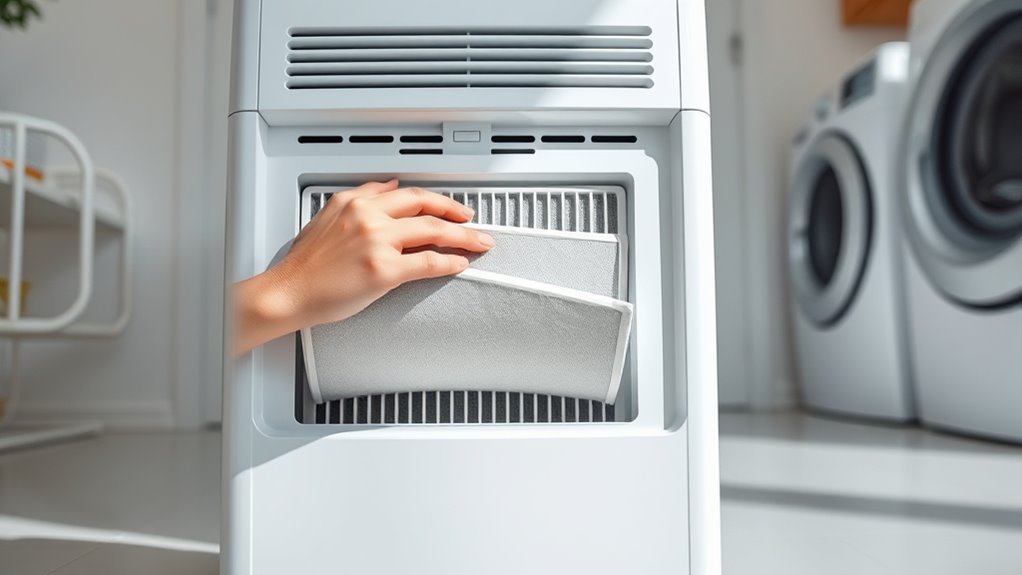
Inspect the filter at least monthly during regular use and clean or replace it according to the manual. Dusty crawl spaces, construction areas, and pet-heavy homes may need more frequent service. Reduced airflow, longer runtimes, or visible debris are signs that maintenance is due.
Can Ductable Dehumidifiers Run Continuously in Freezing Temperatures?
Most refrigerant dehumidifiers are not designed to run below 32°F. Some ductable models operate into the mid-30s and use automatic defrost, but you must follow the specific minimum temperature in the manual. Defrost protection does not override the approved operating range.
What Is the Difference Between AHAM and Saturation PPD?
AHAM capacity is measured at 80°F and 60% relative humidity and is the better figure for comparing normal basement or crawl-space performance. Saturation or maximum capacity is measured in hotter, wetter air, so it produces a much larger number that should not be used as a direct real-world estimate.
Do Ductable Dehumidifiers Require Professional Installation?
Not always. A standalone crawl-space unit with a short supply duct and gravity drain may be suitable for an experienced DIY installation. Whole-house systems, long duct runs, electrical changes, pumped drainage, or connections to existing HVAC equipment are better handled by a qualified HVAC professional.
How Loud Are Ductable Dehumidifiers During Operation?
Noise varies by model, fan speed, installation surface, and duct design. Many compact crawl-space units publish sound levels near the low-50s to around 60 dBA, but verify the exact specification. Isolation pads, secure mounting, insulated ducts, and avoiding sharp duct bends can reduce transmitted noise.
Does a Duct Kit Come with the Dehumidifier?
Sometimes. The MARS HYDRO and CREWORKS options in this guide list duct hardware in the package, while several ALORAIR models use optional or compatible collars. Always check the exact variant and “what’s in the box” list because Amazon bundles can change.
Conclusion
Final Recommendation: Choose the ALORAIR Sentinel WHD 100 for a dedicated whole-house installation. Select the ALORAIR Sentinel HDi90 Duct when you need high AHAM capacity and pumped drainage. For a large crawl space that benefits from separate intake and discharge paths, consider the Waykar 158-Pint Dual-Duct. The MARS HYDRO is the better niche option for small grow tents.
The best ductable dehumidifier is not simply the model with the largest PPD number. It is the unit whose verified duct connection, AHAM capacity, airflow, drainage, controls, and operating range fit your installation.