Affiliate disclosure: This article contains Amazon affiliate links. We may earn a commission from qualifying purchases at no extra cost to you.
Updated: August 2026
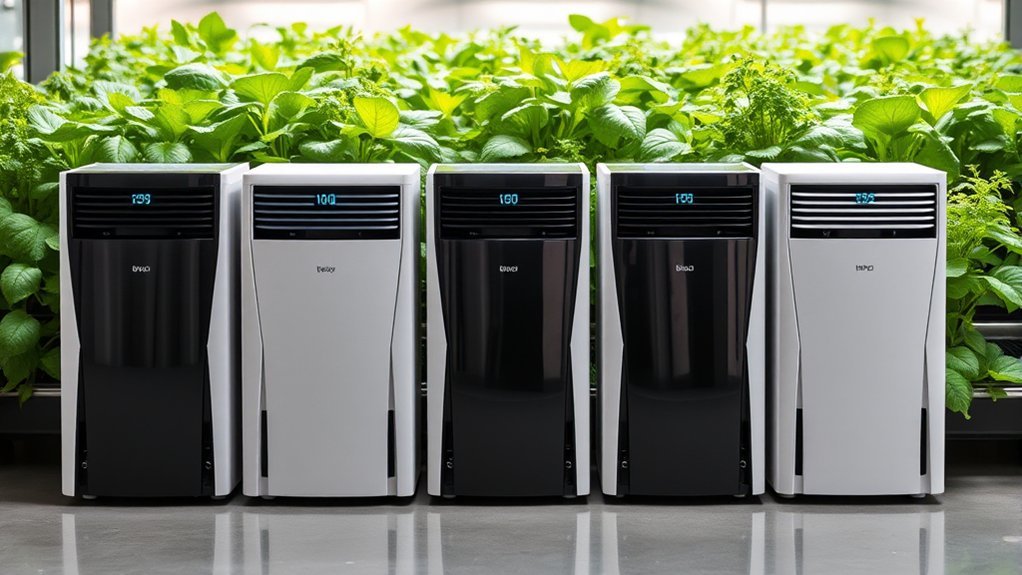
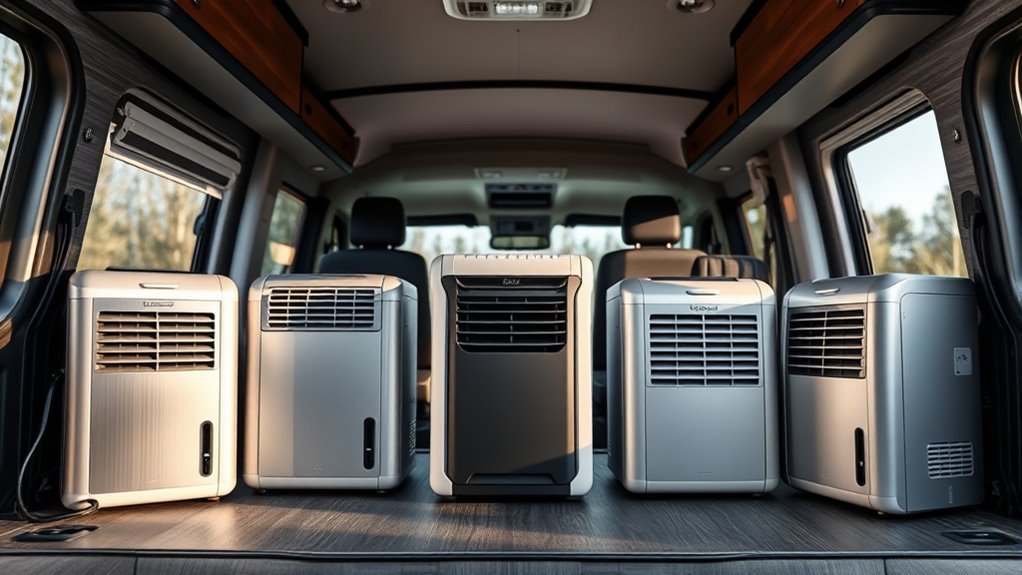
If you are comparing the best ENERGY STAR 70-pint dehumidifiers for a crawl space, basement, or other damp area, pay close attention to how capacity is measured. The Yaufey AYD1.5D, SIJIPT POWER 70, and MOISWELL Defender ME-7 are marketed as 70-pint models, but their maximum ratings are measured under hot, highly humid conditions. Compare standard-condition capacity, drainage type, operating temperature, and installation needs before choosing.
Quick Verdict
Best overall: Yaufey AYD1.5D for high airflow, a compact metal cabinet, and simple gravity drainage.
Best with a pump: SIJIPT POWER 70 when the drain is above or away from the unit.
Best simple gravity-drain option: MOISWELL Defender ME-7 for crawl spaces up to the manufacturer-stated 1,000 sq. ft.
Capacity note: “70 pints” is not automatically a comparable everyday removal rate. The SIJIPT and MOISWELL models are rated at 70 pints under saturation conditions and about 35 pints under AHAM conditions. Yaufey states 70 pints at 95°F and 90% relative humidity. Check the current listing or manual for the DOE/Appendix X1 rating before buying.
Quick Comparison
| Product | Capacity Label | Drainage | Best For | Amazon |
|---|---|---|---|---|
| Yaufey AYD1.5D | 70 pints max at 95°F/90% RH | Continuous gravity drain | Large crawl spaces and basements with a nearby low drain | Check Price |
| SIJIPT POWER 70 | 70 pints max; about 35 pints AHAM | Built-in pump with 16.4-ft lift | Locations without a convenient gravity drain | Check Availability |
| MOISWELL Defender ME-7 | 70 pints max; 35 pints AHAM | Continuous gravity drain | Compact crawl spaces with a floor drain or sump | Check Price |
Yaufey AYD1.5D 70-Pint Crawl-Space Dehumidifier
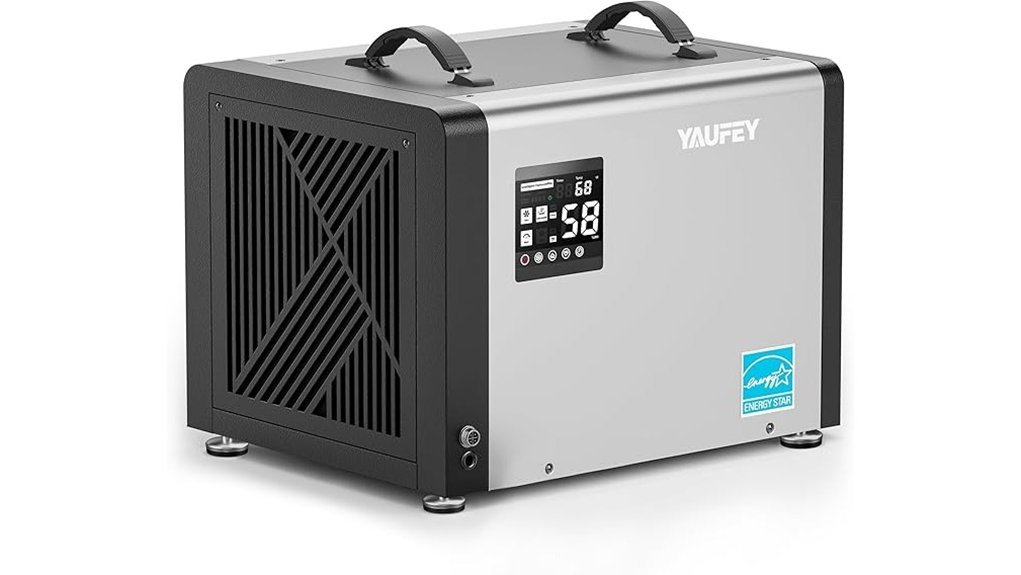
Best Overall
The Yaufey AYD1.5D is a compact, metal-cabinet dehumidifier intended for crawl spaces, basements, and similar high-humidity areas. The manufacturer rates it for up to 70 pints per day at 95°F and 90% relative humidity, with 159 CFM airflow and advertised coverage up to 5,000 sq. ft. Because that capacity is measured under saturation-style conditions, do not compare it directly with a 70-pint AHAM or DOE rating.
Its included 6.56-foot hose supports continuous gravity drainage, making it a practical choice when the unit can sit above a floor drain or sump. Automatic defrost, auto-restart, adjustable humidity control, a digital display, and a washable filter support low-maintenance operation.
Best For: Buyers who want a durable crawl-space unit with strong airflow and have a suitable downhill drainage route.
Why You’ll Like It: The compact horizontal design fits low-clearance spaces, while continuous drainage reduces the need for daily attention.
Who Should Avoid It: Choose a pump-equipped model instead if condensate must travel upward or across a long distance.
Pros:
- Strong 159 CFM airflow for moving damp air through a crawl space or basement.
- Continuous gravity drainage with an included 6.56-foot hose.
- Metal housing, automatic defrost, auto-restart, digital controls, and a washable filter.
Cons:
- The 70-pint figure is a maximum-condition rating, not a standard-condition figure.
- Gravity drainage requires the hose outlet to remain below the drain port.
- The advertised square-foot figure should not replace sizing based on moisture load and layout.
SIJIPT POWER 70 Crawl-Space Dehumidifier with Pump
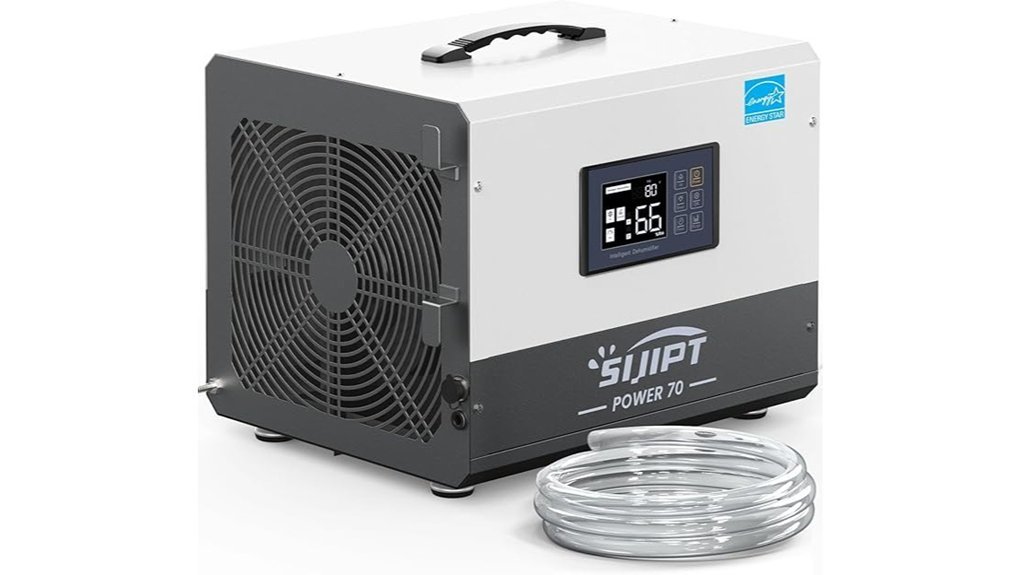
Best with Pump
The product linked here corresponds to the SIJIPT POWER 70, a compact crawl-space dehumidifier with a built-in condensate pump. It is rated for up to 70 pints per day under saturated conditions and about 35 pints per day under AHAM conditions, with manufacturer-stated coverage up to 1,000 sq. ft.
The pump can move condensate through the included hose and lift it up to 16.4 feet, which is useful when a floor drain is unavailable or above the unit. Automatic defrost, humidity controls, and memory restart help it operate with less supervision in basements and crawl spaces.
Best For: Installations where water must be pumped to a sink, window, drain line, or another elevated discharge point.
Why You’ll Like It: The pump provides more placement flexibility than a gravity-only design.
Who Should Avoid It: A gravity-drain model may be simpler and less expensive to maintain when a nearby low drain is already available.
Pros:
- Built-in pump with up to 16.4 feet of vertical lift.
- About 35-pint AHAM capacity provides a more useful everyday comparison figure.
- Compact layout with automatic defrost and power-outage memory.
Cons:
- The maximum 70-pint rating applies to saturated test conditions.
- The pump and discharge hose require periodic inspection for clogs, kinks, and leaks.
- Coverage still depends on temperature, humidity, air movement, and crawl-space sealing.
MOISWELL Defender ME-7 70-Pint Dehumidifier
Best Gravity-Drain Value
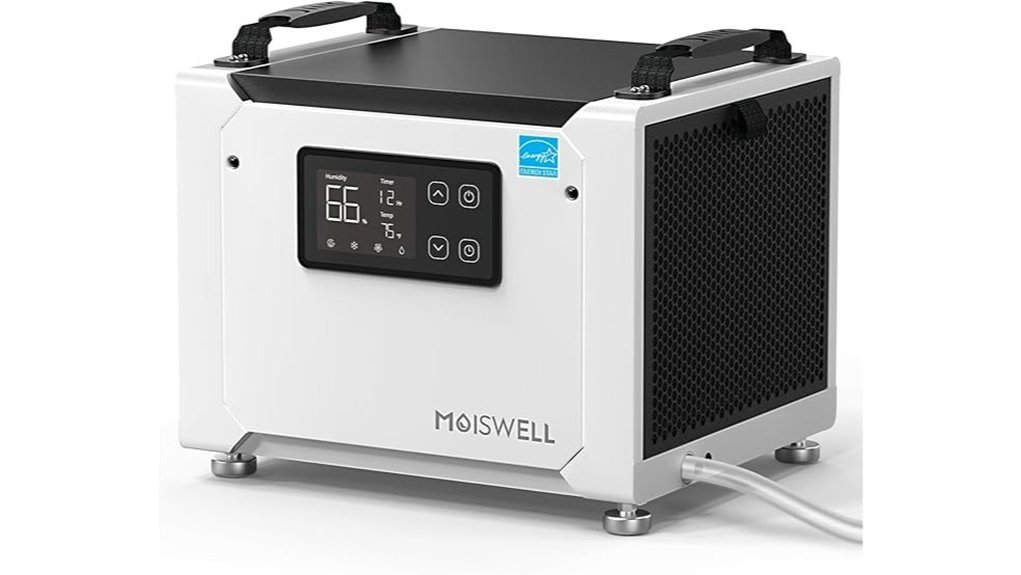
The MOISWELL Defender ME-7 removes up to 70 pints per day under saturation conditions and 35 pints per day under AHAM conditions. It is intended for crawl spaces, basements, attics, and similar areas up to the manufacturer-stated 1,000 sq. ft.
This model uses a 6.56-foot gravity drain hose rather than a bucket, so it is best placed above a floor drain or sump. The compact metal cabinet measures about 15.5 by 12.4 by 12.9 inches and weighs about 40 pounds. Automatic defrost, auto-restart, error detection, a timer, and straightforward controls make it suitable for continuous moisture management.
Best For: Buyers who want a compact, no-bucket crawl-space dehumidifier and already have a suitable gravity drain.
Why You’ll Like It: Its clearly stated 35-pint AHAM rating makes real-world comparison easier than relying only on the 70-pint maximum.
Who Should Avoid It: It is not the best choice when the drain is higher than the unit or the hose cannot maintain a steady downhill slope.
Pros:
- 35-pint AHAM rating and 70-pint saturation rating are clearly distinguished.
- Continuous gravity drainage avoids a bucket that needs regular emptying.
- Compact metal design with handles, automatic defrost, timer, and auto-restart.
Cons:
- No built-in pump for upward drainage.
- The 1,000-sq.-ft. coverage figure is a manufacturer estimate, not a universal sizing rule.
- At about 40 pounds, it is movable but not a lightweight room-to-room appliance.
Factors to Consider When Choosing an ENERGY STAR 70-Pint Dehumidifier
For crawl spaces and basements, the label on the box is only a starting point. A useful comparison should include the test conditions behind the capacity number, the drainage route, the lowest expected temperature, air circulation, maintenance access, and whether the area has been sealed against outside moisture.
Compare Capacity Ratings Under the Same Conditions
A 70-pint saturation rating measured at 95°F and 90% relative humidity will be much higher than the same unit’s output under AHAM or DOE conditions. Use the AHAM or DOE/Appendix X1 number when comparing models whenever it is available. This prevents a smaller unit with an aggressive maximum rating from appearing equal to a true 70-pint standard-condition machine.
Treat Coverage as an Estimate
Square-foot claims are not standardized sizing guarantees. A sealed 1,000-sq.-ft. crawl space may be easier to control than a smaller area with standing water, open vents, bare soil, leaks, or poor air circulation. Start by fixing water entry and air leaks, then size the dehumidifier for the actual moisture load.
Choose Gravity Drainage or a Pump
Gravity drainage is simple and dependable when the hose can run continuously downhill to a drain or sump. A built-in pump is more flexible when water must travel upward or across a longer distance. Regardless of the method, keep hoses free of kinks, secure the discharge point, and inspect connections regularly for leaks.
Verify the Exact ENERGY STAR Model
ENERGY STAR certification applies to specific model numbers, not every product sold under a brand name or pint label. Confirm that the exact model number on the listing and nameplate appears in the current ENERGY STAR product database. Do not rely only on an old “Most Efficient” year, a generic logo, or a different model in the same family.
Check Operating Temperature and Defrost
Automatic defrost helps a compressor dehumidifier recover when frost begins forming on the coil, but it does not make the unit suitable for freezing conditions. Check the manual’s minimum operating temperature and use a low-temperature model if the crawl space regularly falls below that limit.
Plan for Installation and Maintenance
Leave the required clearance around the intake and exhaust, keep the unit level, use a grounded outlet, and route the drain hose where it cannot be crushed or disconnected. Clean the filter on the schedule in the manual and inspect the coils, drain line, and pump reservoir where applicable.
Before You Buy
- Confirm the exact model number and current ENERGY STAR status.
- Compare AHAM or DOE capacity, not only the maximum saturation rating.
- Measure the available clearance and decide where intake and exhaust air will flow.
- Choose gravity drainage only when the hose can run downhill continuously.
- Check the minimum operating temperature and defrost instructions.
- Verify warranty terms, included hoses, and access to replacement filters or pump parts.
Frequently Asked Questions
What Does “70 Pint” Mean on a Dehumidifier?
It means the unit removed up to 70 pints of water in 24 hours under a stated test condition. Some crawl-space models use hot, highly humid saturation conditions, while AHAM or DOE ratings use different conditions. Always compare the test condition as well as the pint number.
Which 70-Pint Dehumidifier Is Best When I Need a Pump?
Among the retained options, the SIJIPT POWER 70 is the pump-equipped choice. Its pump can lift condensate up to 16.4 feet, making it better suited to installations without a convenient low drain.
Can a 70-Pint Dehumidifier Run in Freezing Temperatures?
No. Automatic defrost can manage limited frost formation within the approved operating range, but these compressor models should not be treated as freeze-proof. Follow the minimum temperature stated in the product manual.
How Often Should the Filter Be Cleaned?
Inspect it at least monthly during regular use and clean it sooner if airflow drops or dust builds up. The exact interval varies by model, environment, and operating hours, so follow the manual.
Does ENERGY STAR Guarantee Low Electricity Costs?
No. Certification indicates that a specific model meets applicable efficiency requirements, but actual electricity use depends on runtime, humidity load, temperature, settings, maintenance, and local utility rates.
Conclusion
Final Recommendation: Choose the Yaufey AYD1.5D when you have a nearby gravity drain and want strong airflow in a compact crawl-space cabinet. Choose the SIJIPT POWER 70 when water must be pumped upward. Choose the MOISWELL Defender ME-7 for a straightforward 35-pint AHAM gravity-drain setup.
Before ordering, confirm the exact model number, current ENERGY STAR status, standard-condition capacity, drainage route, and minimum operating temperature.
The best model is the one that matches your moisture load and installation—not simply the one with the largest square-foot claim. Fix leaks and water entry first, then use the dehumidifier to maintain controlled humidity with a safe, reliable drainage setup.