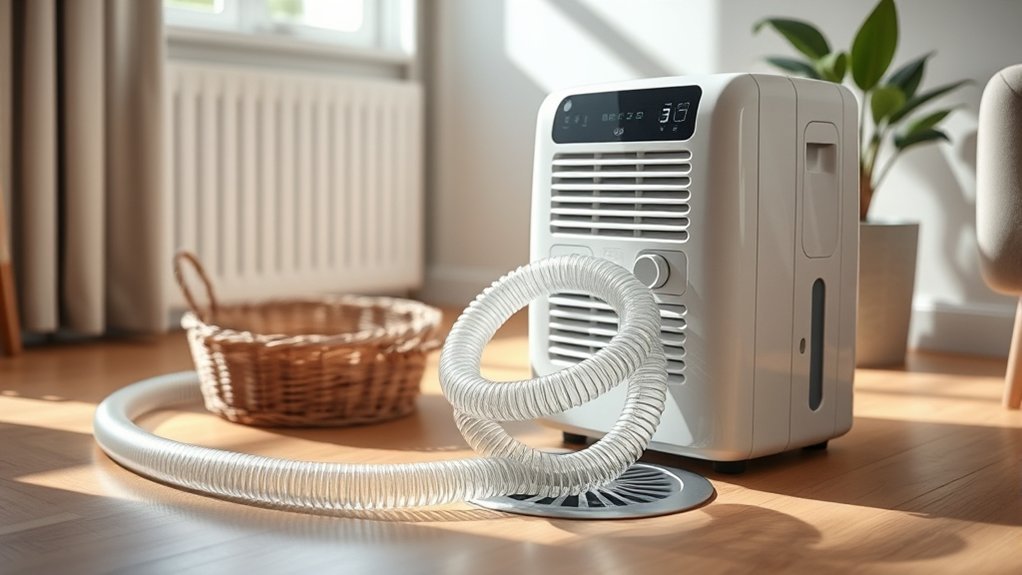
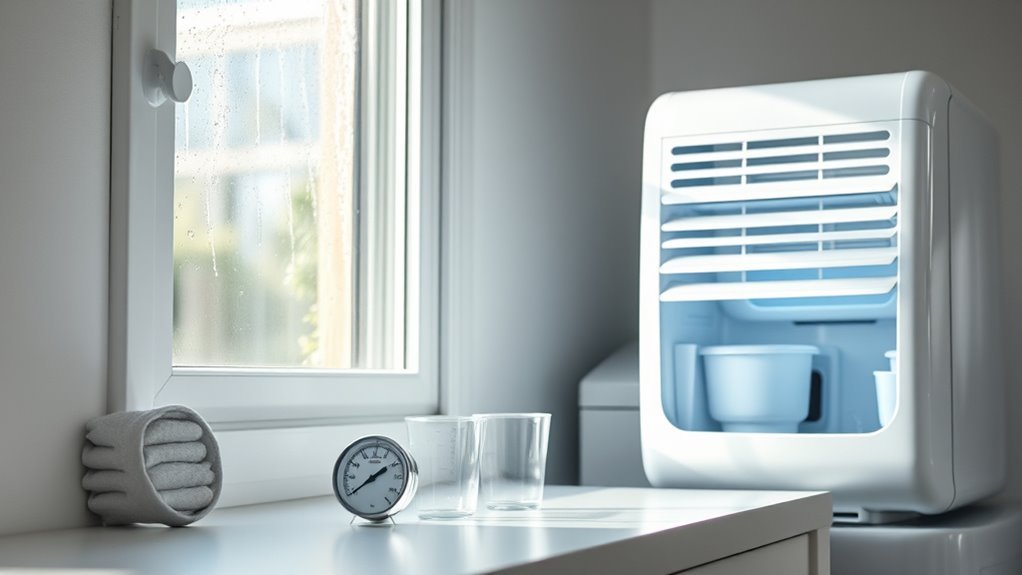
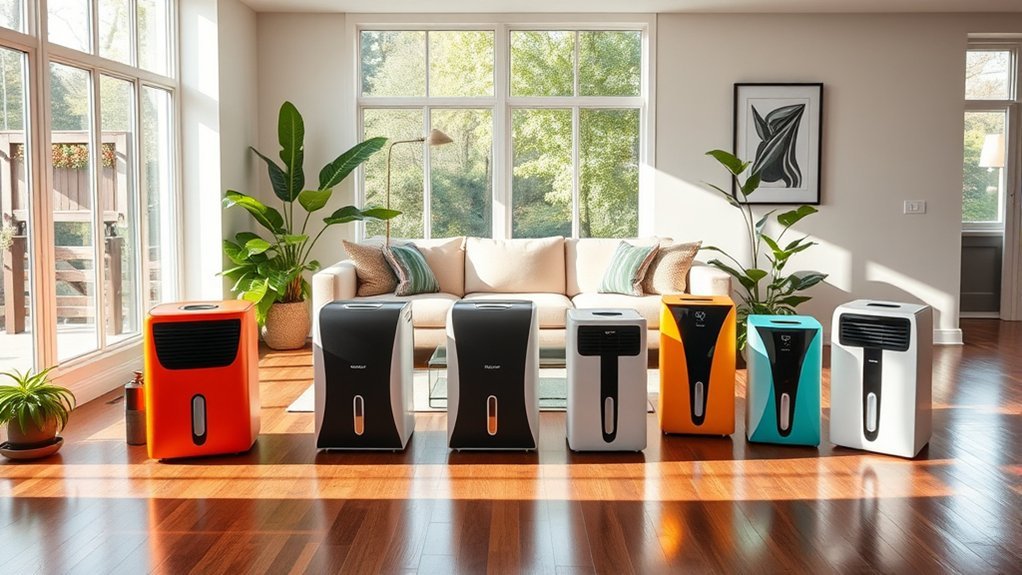
High humidity in a grow tent can encourage condensation, musty odors, and fungal growth, especially after watering, during lights-off periods, and when a dense canopy is flowering. The best dehumidifier for tent growing is not simply the model with the largest advertised coverage area. It needs enough moisture-removal capacity for the plant load, a practical drain route, manageable heat output, and controls that can maintain a stable relative humidity range.
For most 3×3 to 5×5 grow tents with a meaningful moisture load, a purpose-built compressor or rotary plant dehumidifier is the more dependable choice. Small home-style thermoelectric units may collect some water in a micro enclosure, but their low extraction rates, limited controls, and lack of tent-focused ducting make them a poor match for most actively ventilated grow tents.
- Designed or clearly equipped for grow tents and plant spaces.
- Enough rated output for more than a minor humidity correction.
- Continuous-drain capability for unattended operation.
- Useful controls such as a humidistat, remote sensor, ducting, or variable drying levels.
- Clear limitations around heat, power use, reservoir size, and test-condition ratings.
Quick Comparison of the Best Grow Tent Dehumidifiers
| Product | Best For | Rated Moisture Removal | Control and Drainage | Amazon |
|---|---|---|---|---|
| MARS HYDRO 18L/Day | Best overall for 3×3 to 4×4 tents | Up to 18 L/day (38 pints) under favorable test conditions | Sensor, duct, digital controls, drain hose | Check Price on Amazon |
| SPIDER FARMER 32 Pint | Best for external ducting and remote sensing | Up to 32 pints/day at 95°F and 90% RH | Remote probe, duct, drain hose, optional GGS control | Check Product Details on Amazon |
| AC Infinity HYDRONE 7 | Best premium smart option for 4 to 6 plants | 8 L real-world draw-rate specification; not directly comparable to compressor ratings | 10 drying levels, humidity/VPD sensor, dual ducts, gravity-drain ready | Check Current Amazon Availability |
MARS HYDRO 18L/Day Compressor Dehumidifier
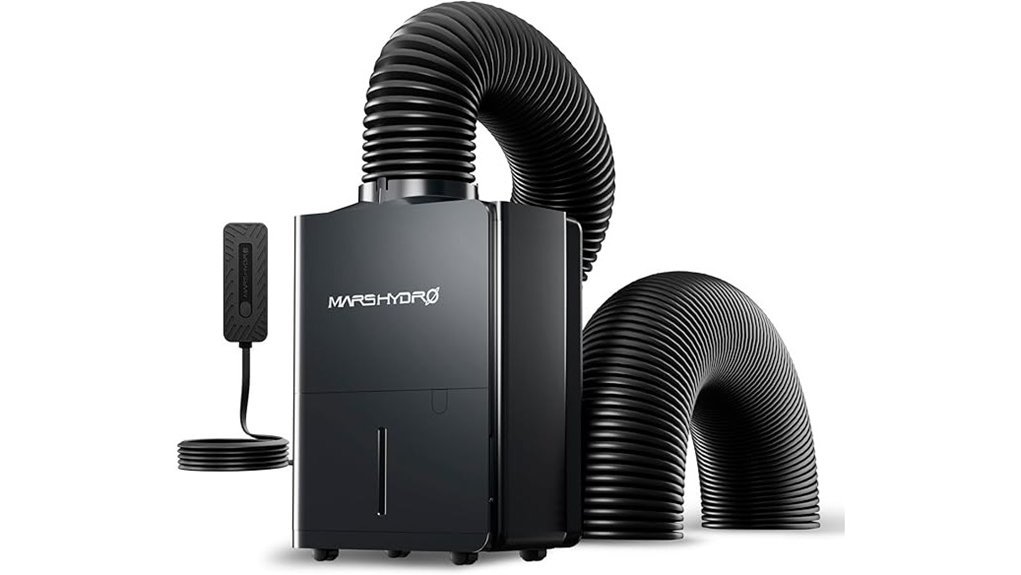
Best Overall
The MARS HYDRO 18L/Day model is the strongest all-around choice in this roundup for growers who need more than a minor humidity correction. Its compressor system is advertised to remove up to 18 liters, or about 38 pints, of moisture per day under favorable test conditions. The tent-focused package includes an air duct, a temperature and humidity sensor, a drain hose, digital controls, and a washable filter.
Why you’ll like it: The unit can stay outside the tent while the duct directs drier air into the growing area. That preserves valuable floor space and keeps most of the compressor body outside the canopy zone. Continuous drainage also makes it more practical during flowering, after watering, and through overnight humidity spikes.
Who should buy this: Growers using a 3×3, 2×4, 4×4, or similar tent who regularly struggle with elevated humidity and have a safe gravity-drain route.
Who should avoid this: Micro-tent growers who need only a small correction, or anyone without space for a heavier compressor unit, duct, and drainage setup.
Pros:
- Higher rated moisture-removal capacity than compact thermoelectric units.
- Includes tent-friendly ducting, a sensor, and continuous-drain hardware.
- Digital control, automatic operation, and a washable filter simplify routine use.
Cons:
- A compressor dehumidifier adds heat and uses more power than a mini unit.
- The 2.1-liter tank is small for a heavy moisture load, so the drain hose is preferable.
- Its size and weight may be excessive for a small grow area.
SPIDER FARMER 32 Pint Plant Dehumidifier
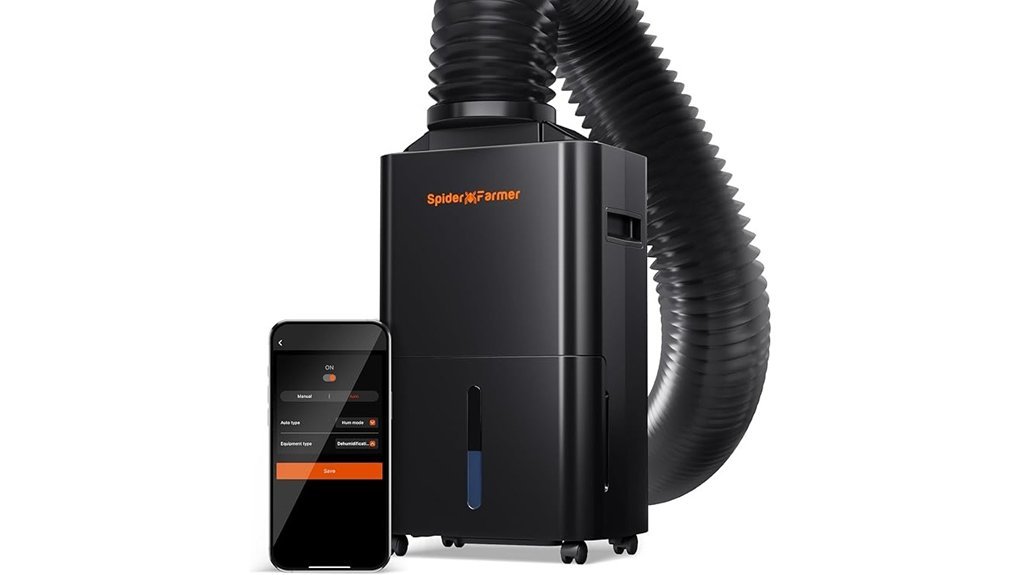
Best for External Ducting and Remote Sensing
The SPIDER FARMER plant dehumidifier is rated to remove up to 32 pints per day at 95°F and 90% RH. It is built around a practical grow-tent layout: the main unit can remain outside the enclosure, the included duct delivers dry air into the tent, and the remote temperature and humidity probe measures conditions closer to the plants.
Why you’ll like it: External placement protects tent floor space and reduces the amount of compressor heat released directly beside the canopy. The unit offers an adjustable 30% to 80% RH range, continuous drainage, a timer, automatic defrost, and restart behavior. Current versions also support connection to compatible Spider Farmer GGS hardware through an RJ12 cable for app-based control; confirm the exact bundle before ordering.
Who should buy this: Growers who want a purpose-built solution for a 3×3 to 5×5 tent with external placement, in-tent sensing, and optional ecosystem integration.
Who should avoid this: Buyers who do not have room outside the tent, cannot provide a downward-sloping drain route, or expect the outlet duct to remove humid air from the tent. It supplies drier air, so the exhaust system still needs to balance airflow.
Pros:
- Remote probe monitors temperature and humidity inside the grow space.
- External placement can save tent space and limit direct heat around plants.
- Continuous drainage and automatic controls support longer unattended runs.
Cons:
- Added supply airflow can create positive pressure if the exhaust fan is undersized.
- The 2.1-liter reservoir is best treated as a backup to continuous drainage.
- App control depends on compatible GGS equipment and the version or bundle purchased.
AC Infinity HYDRONE 7 Smart Plant Dehumidifier
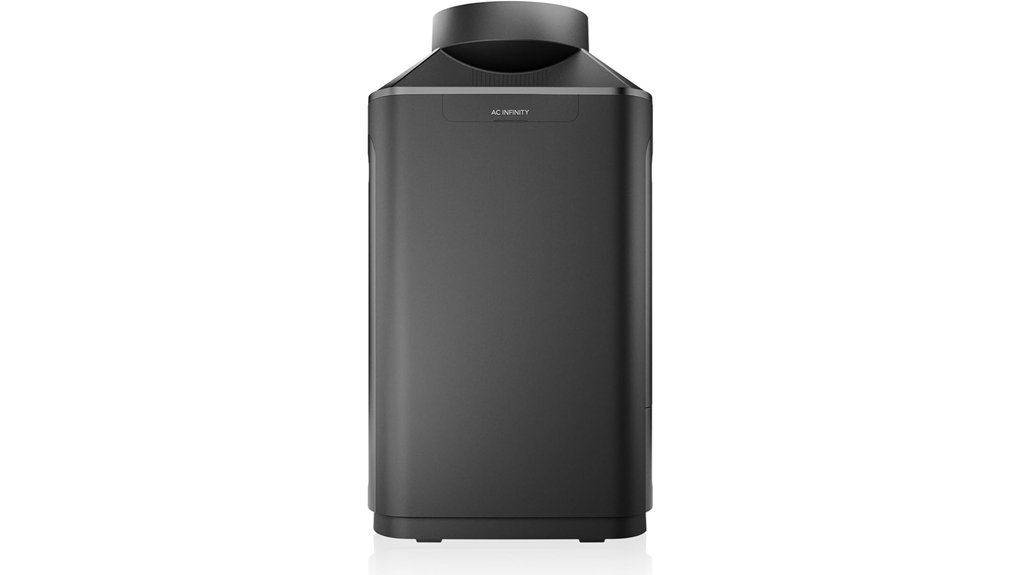
Best Premium Smart Option
The AC Infinity HYDRONE 7 is designed for growers who want finer control than a conventional single-speed compressor unit. Its PWM-controlled rotary system provides 10 drying levels, while the onboard controller can regulate humidity and vapor pressure deficit using a corded sensor. AC Infinity positions the model for approximately four to six plants and lists an 8-liter real-world draw-rate specification that it says is not directly comparable with standard compressor ratings.
Why you’ll like it: Dual 6-inch duct ports support internal, external open-loop, or external closed-loop layouts. The 2-liter reservoir can be paired with gravity drainage, and UIS compatibility adds app-based charts, alerts, and broader environmental automation when connected to compatible controllers.
Who should buy this: Growers who value VPD control, variable drying output, smart automation, and flexible ducting across changing growth stages.
Who should avoid this: Buyers who need only basic on/off humidity reduction or do not plan to use the advanced controller and ecosystem features.
Pros:
- Ten output levels allow finer control than simple full-power cycling.
- Integrated humidity and VPD programming suits changing plant stages.
- Dual duct ports allow several internal and external airflow configurations.
Cons:
- Premium controls increase cost and setup complexity.
- Power draw varies by output level and can be substantial at maximum operation.
- The 2-liter reservoir is modest, so gravity drainage is preferable during heavy use.
Factors to Consider When Choosing a Dehumidifier for Tent Growing
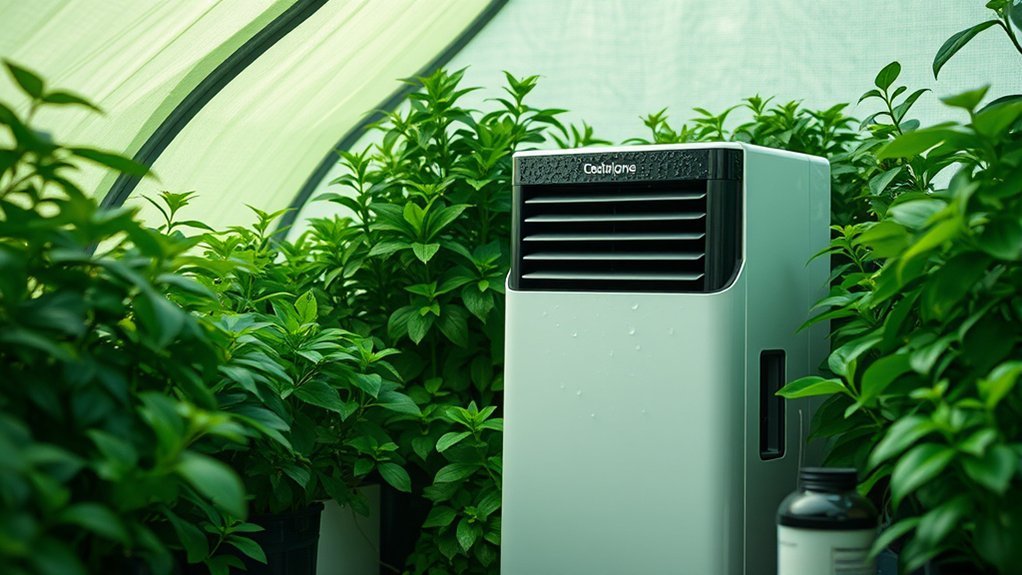
A grow tent is not the same as an empty bedroom. Plants release water through transpiration, wet growing media evaporates moisture, and ventilation constantly exchanges air with the surrounding room. Use the following checks before choosing a unit.
Start With Daily Moisture Load
The most useful sizing question is how much water must leave the air each day. Track how much water the unit actually collects over several complete light cycles. If plants and growing media add several pints of moisture between lights-on periods, a low-capacity mini unit will not keep up. A compressor or rotary plant dehumidifier is more appropriate for persistent high humidity.
Match the Unit to Tent Size and Plant Density
A lightly planted 2×2 tent may need only occasional correction, while a dense 4×4 or 5×5 can need a substantially higher-capacity unit. Plant count alone is not enough. Consider plant size, hydroponic versus soil growing, watering volume, ambient room humidity, temperature, and how often the exhaust system replaces tent air.
Choose the Right Technology
- Compressor dehumidifiers: A strong choice for warm tents with a substantial moisture load. They remove more water but add heat, noise, and power draw.
- Thermoelectric or Peltier models: Compact and quiet, but usually too weak for an actively ventilated tent with mature plants.
- Rotary plant dehumidifiers: Can provide multiple output levels and broader temperature performance, although purchase cost and maximum power use may be higher.
Plan for Heat and Airflow
Every dehumidifier releases heat. In a warm tent, placing the main unit outside and ducting dry air inward can be easier than putting the machine beside the plants. Check whether the added supply airflow will create positive pressure or overwhelm the exhaust fan. Keep all inlets, filters, and outlets clear.
Prioritize Continuous Drainage
A small tank can fill quickly during flowering or after watering. A gravity drain hose is usually the most dependable solution, provided the hose slopes downward without kinks and empties into a safe drain or stable collection container. Keep the tank installed when the manufacturer’s design requires it.
Look for Useful Controls
A built-in humidistat, remote probe, restart memory, defrost mode, timer, and compressor delay protection are more useful than decorative features. For accurate control, place the sensor near canopy height but away from a dry-air outlet, wet growing medium, direct fan blast, or any localized moisture source.
Check Low-Temperature Performance
Many dehumidifiers collect less water as temperature falls. If the tent or lung room becomes cool during lights-off hours, check the rated operating range and look for automatic defrost or technology designed for cooler conditions. Never assume the maximum daily rating applies at every temperature and humidity level.
Measure With a Separate Hygrometer
Use an independent, calibrated hygrometer to confirm the controller’s reading. Small sensor differences can cause unnecessary cycling or leave the tent wetter than expected. Monitor both daytime and lights-off humidity for several days before deciding the unit is correctly sized.
Why Home Mini Dehumidifiers Were Not Selected
Small thermoelectric home units are commonly advertised with large room-coverage numbers, but their actual extraction is often measured in ounces or around a fraction of a liter per day. In an actively ventilated grow tent, the incoming air and plant transpiration can exceed that output quickly. Because three purpose-built options are available here, low-capacity home and cabinet units were excluded rather than presented as direct alternatives.
- Estimate the daily moisture load, not just floor area.
- Confirm the unit fits inside the tent or supports safe external ducting.
- Choose a practical, downward-sloping drain route.
- Check operating temperature, voltage, power draw, noise, and required clearances.
- Verify whether smart controls, ducting, sensors, and drain hoses are included in the exact package.
- Confirm that an external controller can restart the dehumidifier safely after power cycling.
Frequently Asked Questions
What Humidity Should a Grow Tent Have?
The correct relative humidity depends on the plant species, growth stage, temperature, and desired VPD. As a broad starting point, seedlings often tolerate higher humidity, vegetative plants use a moderate range, and flowering plants usually need lower humidity. Follow crop-specific guidance and verify conditions with a reliable hygrometer instead of applying one fixed number to every plant.
What Size Dehumidifier Do I Need for a 4×4 Grow Tent?
A 4×4 tent with mature plants often needs a purpose-built compressor or rotary dehumidifier rather than a thermoelectric mini. A unit in roughly the 30- to 40-pint-per-day class can be a reasonable starting category for a meaningful moisture load, but the correct size depends on actual daily water collection, temperature, ambient room humidity, ventilation rate, plant density, and watering method.
Can a Mini Dehumidifier Work in a Grow Tent?
It may collect some moisture in a tiny, lightly loaded, mostly closed enclosure, but most mini thermoelectric units are too weak for a ventilated grow tent with mature plants. Compare the unit’s realistic daily extraction with the tent’s moisture load before relying on it for plant protection.
Should the Dehumidifier Go Inside or Outside the Tent?
Either layout can work. Inside placement is simple but uses floor space and adds heat directly to the tent. External placement is often better for larger units when the model supports ducting and remote sensing. Make sure the tent’s exhaust system can balance the added dry-air flow.
Can I Use a Dehumidifier During Flowering?
Yes. Flowering is often when dehumidification becomes most important because a dense canopy can trap moisture. Avoid blowing hot, dry air directly onto plants, and change humidity targets gradually rather than making abrupt adjustments.
How Often Should I Empty the Tank?
Empty it whenever the full-tank indicator activates. During a humid period, a small reservoir may fill more than once per day. For regular grow-tent use, continuous drainage is usually more practical than relying on a tank.
Is a Humidity Controller the Same as a Dehumidifier?
No. A humidity controller measures RH and switches a connected humidifier or dehumidifier on and off. It does not remove moisture by itself. Confirm that the connected dehumidifier supports safe automatic restart after power is restored.
Why Is My Dehumidifier Not Lowering Humidity?
The unit may be undersized, the tent may be exchanging too much humid room air, the temperature may be outside its effective range, the filter or airflow path may be blocked, the drain may be installed incorrectly, or the sensor may be in an unrepresentative location. Check actual water collection, ventilation balance, drain setup, filter condition, and hygrometer accuracy before replacing the machine.
Final Recommendation
Choose by moisture load and control needs—not marketing coverage.
For a typical 3×3 to 4×4 grow tent, the MARS HYDRO 18L/Day offers the strongest balance of rated capacity, tent-focused ducting, sensing, and continuous drainage. Choose the SPIDER FARMER 32 Pint when an external unit, in-tent probe, and optional GGS integration fit your setup. Pick the AC Infinity HYDRONE 7 when multi-level output, VPD programming, and flexible open- or closed-loop ducting matter more than simplicity.
Whichever model you choose, use an independent hygrometer, provide a safe drain route, keep airflow clear, verify the exact package contents, and watch tent temperature after the dehumidifier starts running.