If your home gym feels damp, smells musty, or stays humid after workouts, a properly sized compressor dehumidifier can help control excess moisture and reduce the conditions that contribute to musty odors, damp surfaces, and corrosion risk. The right choice depends on room size, starting humidity, temperature, drainage access, ceiling height, air leakage, and how quickly moisture returns after exercise.
For most buyers, the Frigidaire FHDD5034Y1 50-Pint Dehumidifier with Wi-Fi is the strongest all-around option because it combines a standardized 50-pint capacity, ENERGY STAR certification, three fan speeds, a large bucket, and continuous drainage. The compact AEOCKY ARION-001 is easier to fit beside gym equipment, while the KNKA PD22SC-12 and SEMKAP PD8R-03ME are simpler options for moderate moisture loads.
Quick Comparison of the Best Dehumidifiers for Home Gyms
| Product | Best For | Listed Moisture Removal | Tank and Drainage | Key Buying Note | Amazon |
|---|---|---|---|---|---|
| Frigidaire FHDD5034Y1 Best Overall |
Large, busy, or basement home gyms | 50 pints per day under the current standardized rating | 2.7-gallon bucket or continuous gravity drain | ENERGY STAR certified; Wi-Fi enabled; no built-in pump | Check Amazon |
| AEOCKY ARION-001 Best Compact High-Output Pick |
Humid gyms where floor space is limited | Up to 50 pints per day at 95°F/95% RH; 38 pints at 86°F/80% RH, according to the listing | 0.5-gallon tank, drain hose, and garden-hose adapter | Very compact, but its headline capacity is not directly comparable with a DOE-rated 50-pint model | Check Amazon |
| KNKA PD22SC-12 Best Mid-Size Option |
Medium home gyms with moderate dampness | Up to 34 pints per day, according to the manufacturer listing | 3-liter tank or continuous drain hose | Three modes, two fan speeds, child lock, and caster wheels | Check Amazon |
| SEMKAP PD8R-03ME Best for Moderate Humidity |
Smaller or moderately damp workout rooms | Up to 32 pints per day, according to the current marketplace listing | 2.5-liter tank or included 3.28-foot drain hose | Compact and simple; confirm the capacity test basis and warranty before ordering | Check Amazon |
Comparison note: The Frigidaire model has a current standardized 50-pint rating and ENERGY STAR documentation. The other capacities are seller or manufacturer listing claims that may use warmer and more humid test conditions. Treat advertised square-foot coverage as a rough marketing guide, not a performance guarantee.
How We Selected These Home Gym Dehumidifiers
This guide compares published specifications and buyer-relevant features. It does not claim hands-on testing. We prioritized compressor-based units with meaningful moisture-removal capacity, adjustable humidity control, continuous drainage, practical tank access, washable filters, portability, and controls suitable for a workout space. We also checked model numbers and noted where standardized capacity documentation was available or missing.
- Capacity: Enough listed extraction for a small, medium, or large home gym, with attention to the stated test conditions.
- Drainage: A hose option for long workout sessions or consistently damp basements.
- Control: A humidistat or adjustable target rather than simple on-and-off operation.
- Noise: Lower fan settings, sleep modes, or published sound information.
- Usability: Wheels, handles, washable filters, timers, automatic shutoff, and clear model identification.
Frigidaire FHDD5034Y1 50-Pint Dehumidifier with Wi-Fi: Best Overall
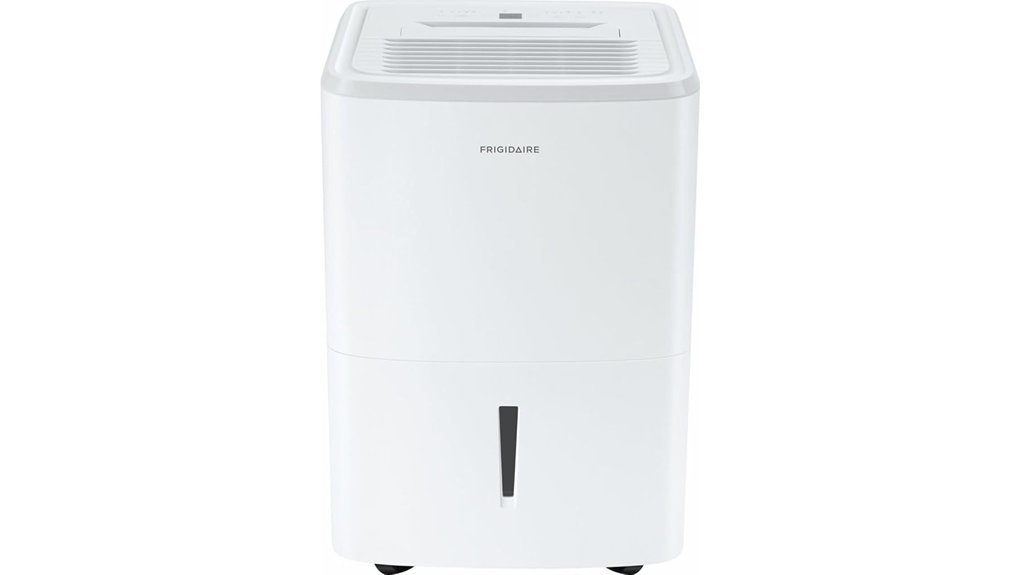
The Frigidaire FHDD5034Y1 is the most complete option in this group for a large or frequently used home gym. It carries a standardized 50-pint-per-day rating, a 2.7-gallon bucket, three fan speeds, continuous gravity drainage, automatic shutoff, automatic restart, and ENERGY STAR certification. That combination makes it easier to compare and better suited to persistent basement humidity than models that publish only high-temperature maximums.
The model is Wi-Fi enabled, and its published sound levels are 47 dBA on low, 49 dBA on medium, and 51 dBA on high. It also supports low-temperature operation and has a washable rear filter. The unit does not include a built-in pump, so its continuous drain hose must slope downward to a suitable drain. Confirm the current app requirements and whether a hose is included before ordering.
Who should avoid it: Buyers who need an internal condensate pump, do not need connected controls, or require near-silent operation.
Pros:
- Standardized 50-pint capacity is a strong fit for large or damp workout spaces.
- ENERGY STAR certification and a published 2.01 L/kWh IEF make efficiency easier to evaluate.
- Wi-Fi connectivity, three fan speeds, and digital humidity control improve everyday convenience.
- A 2.7-gallon bucket and continuous drainage reduce routine emptying.
Cons:
- At about 44.5 pounds, it is heavier than the compact models in this guide.
- There is no built-in pump, so drainage cannot run uphill without a separate condensate pump.
- Its 47 to 51 dBA published range is reasonable for a compressor unit but not silent.
AEOCKY ARION-001 Compact Dehumidifier: Best Compact High-Output Pick
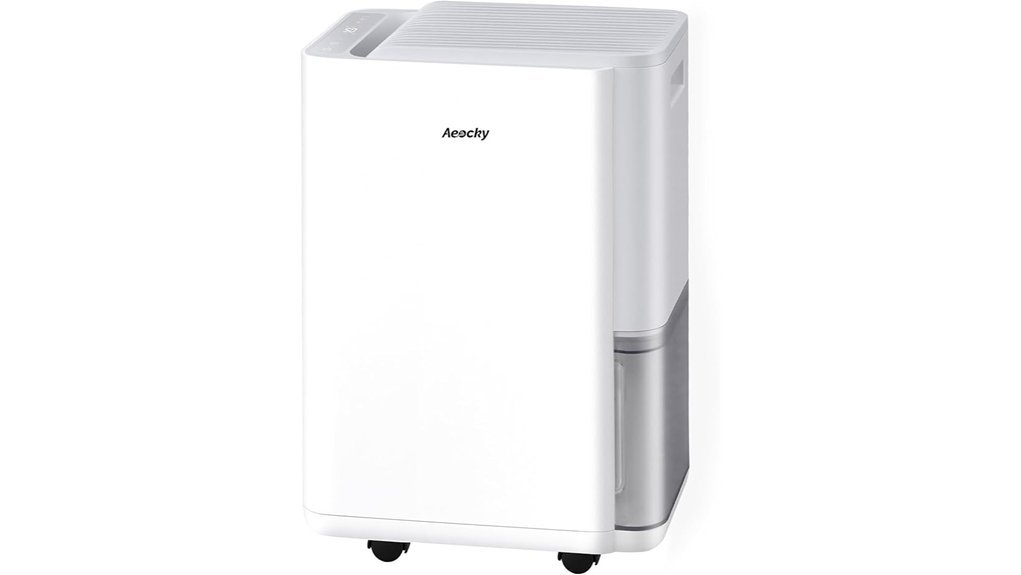
The AEOCKY ARION-001 is designed for buyers who need meaningful moisture removal without giving up much floor space. Its cabinet measures about 8.03 by 11.1 by 15.75 inches. The listing claims up to 50 pints per day at 95°F and 95% relative humidity, and 38 pints per day at 86°F and 80% relative humidity. Those figures should not be treated as equivalent to a standardized DOE 50-pint rating.
The 0.5-gallon tank is small compared with the unit’s advertised maximum output, so continuous drainage is the practical setup for a persistently damp gym. The package listing includes a drain hose and a garden-hose adapter, while the controls include an adjustable humidistat, timer, fan-speed control, and child lock. Current third-party listings show inconsistent 2,500- and 3,500-square-foot coverage claims, which is another reason to size by pint capacity and measured room humidity instead.
Who should avoid it: Buyers without a suitable drain or those who want a capacity rating that is directly comparable with DOE-rated models.
Pros:
- Very small footprint for a compressor-based dehumidifier.
- Drain hose and garden-hose adapter provide flexible gravity-drain options.
- Adjustable humidity, timer, child lock, and fan controls support everyday use.
- Easy to place beside a rack, treadmill, storage wall, or utility area.
Cons:
- The 50-pint headline is based on extreme heat and humidity, not a directly comparable DOE rating.
- The 0.5-gallon tank can fill quickly when the unit is removing substantial moisture.
- Published square-foot coverage is inconsistent across current listing mirrors.
KNKA PD22SC-12 Dehumidifier with Drain Hose: Best Mid-Size Option
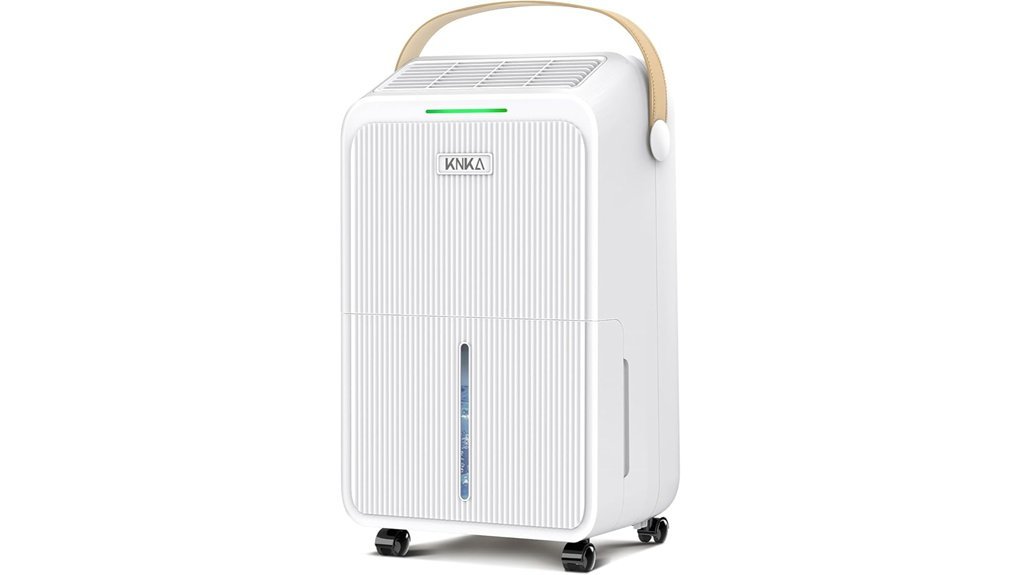
The KNKA PD22SC-12 is a practical middle-ground option for a medium home gym that feels damp but may not need the largest standardized 50-pint machine. The manufacturer listing states up to 34 pints per day, a 3-liter tank, two fan speeds, adjustable humidity control, a digital display, three operating modes, automatic shutoff, automatic defrost, a washable filter, child lock, and caster wheels.
The larger tank is more convenient than the very small reservoirs found in compact units, but buyers in humid basements should still plan to use the included drain hose. The model measures about 13.23 by 10.31 by 20.87 inches and weighs roughly 23 pounds, making it easier to move than the Frigidaire. Its 2,500-square-foot figure is a marketing estimate rather than a promise for every room, and a standardized DOE or ENERGY STAR capacity record was not confirmed during this review.
Who should avoid it: Buyers dealing with seepage, standing water, or an exceptionally wet basement that needs a verified higher-capacity solution.
Pros:
- Useful balance of listed capacity, 3-liter tank size, and portability.
- Three modes support normal dehumidifying, continuous use, and drying tasks.
- Drain hose, automatic shutoff, and automatic defrost reduce routine maintenance.
- Child lock and caster wheels are practical around a shared family workout space.
Cons:
- The 34-pint maximum may be slow for a large or very wet basement gym.
- The capacity claim is based on the product listing rather than a confirmed standardized record.
- The filter and drain path still need regular inspection and cleaning.
SEMKAP PD8R-03ME Dehumidifier with Drain Hose: Best for Moderate Humidity
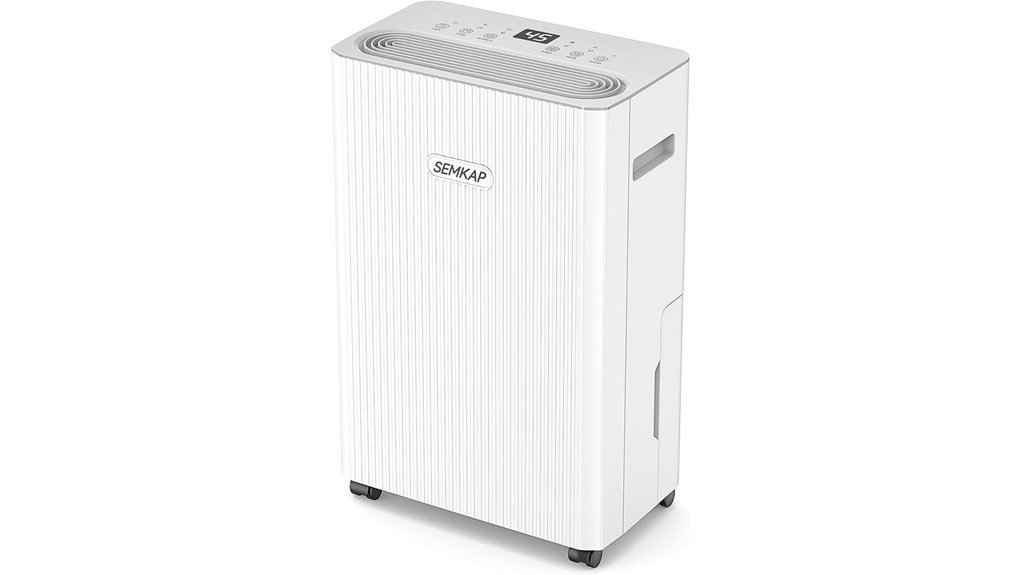
The SEMKAP PD8R-03ME is best suited to a smaller or moderately damp home gym where a standardized 50-pint unit would be unnecessary. The current marketplace listing states up to 32 pints per day, a 2.5-liter tank, a 3.28-foot drain hose, automatic defrost, automatic restart, a 24-hour timer, a washable filter, caster wheels, and three humidity-control modes.
Its compact body measures about 6.7 by 11.4 by 16.3 inches, so it is easy to fit into a crowded workout room. The smaller tank may fill quickly after frequent workouts or during humid basement weather, making continuous gravity drainage the better long-term setup. Because the capacity test basis and warranty support were not independently confirmed, verify the exact model number, manual, seller, and return terms before ordering.
Who should avoid it: Buyers with a large, very wet basement gym, no practical drain, or a preference for independently documented efficiency and capacity.
Pros:
- Compact compressor-based design is more suitable for a gym than a tiny semiconductor unit.
- Timer, automatic defrost, automatic restart, and washable filter improve convenience.
- Included drain hose supports continuous gravity drainage.
- Wheels and a handle make room-to-room movement easier.
Cons:
- The 2.5-liter tank may need frequent emptying without the hose.
- The maximum extraction figure may not represent cooler real-world conditions.
- Standardized efficiency data and warranty details were not confirmed.
Factors to Consider When Choosing a Dehumidifier for a Home Gym
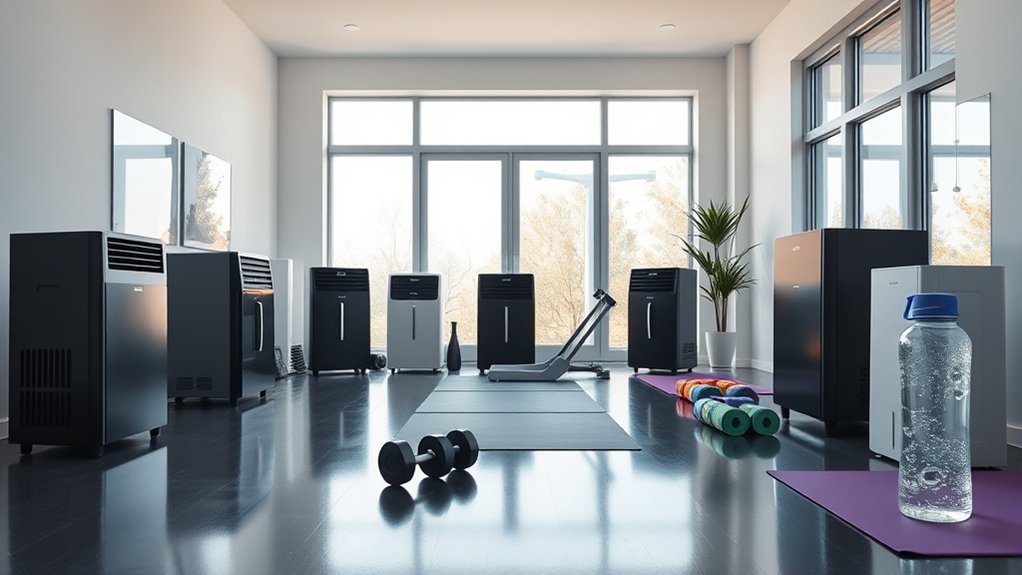
A home gym needs more than a large square-foot claim. The right unit must match the room’s dampness, temperature, ceiling height, ventilation, workout frequency, and drainage options. Use a separate hygrometer to confirm the starting humidity and check whether the dehumidifier is maintaining the target throughout the day.
Target Humidity Level
A practical indoor target is generally 30% to 50% relative humidity. Many home gyms feel comfortable around 40% to 50%, but the best setting depends on climate and personal comfort. Avoid setting the unit unnecessarily low, because very dry air can be uncomfortable and wastes energy. If the room remains above 50% to 60% for long periods, inspect for leaks, poor ventilation, or an undersized dehumidifier.
Room Size and Dampness
Room area is only one part of sizing. A 400-square-foot basement with seepage may need more capacity than a dry 1,000-square-foot upstairs room. ENERGY STAR uses both room size and dampness when giving portable-dehumidifier starting points.
| Condition Without Dehumidification | Small to Medium Room Under 2,000 sq. ft. |
Large Room Over 2,000 sq. ft. |
|---|---|---|
| Slightly to moderately damp: intermittent musty odor, roughly 50% to 75% RH | 20 to 30 pints/day | 30+ pints/day |
| Very damp: consistent damp smell or damp spots, roughly 75% to 90% RH | 25 to 40 pints/day | 40+ pints/day |
| Wet or high load: seepage, sweating surfaces, or frequent moisture generation | 30 to 50 pints/day | 50+ pints/day |
Sizing tip: These ranges are starting points. Open doors, high ceilings, outdoor air leaks, wet concrete, laundry drying, and low room temperatures can all increase the required capacity.
Moisture-Removal Capacity and Test Conditions
Capacity is the amount of water a dehumidifier can remove in 24 hours under specified conditions. Do not assume two products with the same headline pint number will perform identically. Some marketplace listings use hot, extremely humid test conditions that produce a larger number, while the current DOE procedure uses cooler conditions intended to make comparisons more realistic. Check the product label, model number, manual, or ENERGY STAR record when available.
Energy Efficiency
For dehumidifiers, the useful efficiency metric is the Integrated Energy Factor (IEF), reported in liters of water removed per kilowatt-hour. A higher IEF indicates more moisture removal for the electricity used. Do not use SEER to compare portable dehumidifiers, because SEER is an air-conditioner efficiency metric. An ENERGY STAR-certified model can be easier to compare against current efficiency requirements.
Drainage and Tank Size
Continuous gravity drainage is valuable in a home gym, especially in a basement or a room used every day. Confirm that the hose connection sits above a floor drain or another safe discharge point, because gravity systems cannot push water uphill. If no drain is available, compare the bucket size and make sure it is easy to remove without spilling.
Noise Level
Compressor dehumidifiers are not silent. Noise changes with fan speed, compressor cycling, room acoustics, and placement. A lower fan or sleep mode is useful during yoga, meditation, calls, or early-morning workouts. Published decibel figures can help, but they may be measured under different conditions, so read the manual and current listing carefully.
Room Temperature and Automatic Defrost
Compressor units remove less moisture as the room gets colder and may develop frost on the coils. Automatic defrost is important for basement gyms, garages, and other cool spaces. Check the manufacturer’s minimum operating temperature rather than assuming the unit will perform normally through winter.
Placement and Airflow
Leave the manufacturer-recommended clearance around the intake and exhaust. Do not push the unit tightly against a wall, curtain, bench, or storage rack. Keep it on a stable, level surface away from dripping water, and avoid routing a drain hose where it creates a trip hazard around exercise equipment.
Ventilation and Heat Output
A dehumidifier controls moisture but does not replace fresh-air ventilation. It may also add a small amount of heat to the room while operating. Use exhaust ventilation or air conditioning when appropriate, and address leaks, wet flooring, or standing water directly instead of expecting the appliance to solve the source of the moisture.
Electrical Safety Around Gym Equipment
Place the dehumidifier where sweat, cleaning water, and plumbing leaks cannot drip onto it. Plug it directly into a properly grounded wall outlet and follow the electrical instructions in the manual. Avoid power strips and extension cords unless the manufacturer specifically permits them. Keep the cord and drain hose outside walking paths and away from moving treadmill belts, weight plates, and other equipment.
Model Number, Warranty, and Support
Marketplace titles can change while the ASIN stays the same. Before buying, match the model number shown in this guide with the current listing, then check the manual, warranty length, seller identity, return policy, and included drain accessories. This is especially important for lesser-known brands whose square-foot claims or test conditions may vary between listing mirrors.
Before You Buy Checklist
- Measure the gym’s floor area and note the ceiling height.
- Check humidity with a separate hygrometer before and after workouts.
- Decide whether you can use continuous gravity drainage.
- Compare DOE-rated capacity or stated test conditions, not square footage alone.
- Check the minimum operating temperature for a basement or garage gym.
- Confirm the bucket size, filter access, cord length, required clearances, and whether the unit has a pump.
- Verify the exact model number, warranty, seller, drain hose, and included accessories on the current Amazon listing.
Frequently Asked Questions
What Humidity Level Is Ideal for a Home Gym?
A good general target is 30% to 50% relative humidity, with many people preferring roughly 40% to 50% for exercise. Use a hygrometer instead of relying only on how the room feels.
Should I Run the Dehumidifier During or After a Workout?
You can run it before, during, and after a workout if the noise and heat are acceptable. In a damp basement, automatic humidistat mode is usually easier than manually switching the unit on and off. Keep the air intake and exhaust clear.
Can a Dehumidifier Remove Gym Odors and Allergens?
A dehumidifier can reduce excess moisture that supports musty odors, mold growth, and dust-mite activity, but it is not an air purifier and does not remove every allergen. Clean equipment, wash fabrics, ventilate the room, and use appropriate filtration when needed.
Will a Dehumidifier Remove Existing Mold?
No. It can help control the moisture that encourages future growth, but existing mold and the underlying water source still need to be addressed. Significant or recurring mold may require professional assessment.
Is Advertised Square-Foot Coverage Reliable?
It is only a rough marketing guide. Actual performance depends on room dampness, temperature, air leakage, ceiling height, and how the capacity was tested. Compare the pint rating, test standard, tank size, and drainage setup.
Does a Dehumidifier Cool a Home Gym?
No. Removing moisture can make the room feel less clammy, but a portable compressor dehumidifier usually releases some heat. Use air conditioning or ventilation if temperature is also a problem.
How Do I Maintain My Dehumidifier?
Clean the washable filter on the schedule in the manual, empty and rinse the bucket, inspect the drain hose for kinks or buildup, keep the intake clear, and unplug the unit before cleaning. Check the hose connection regularly if you use continuous drainage.
Which Capacity Is Best for a Basement Home Gym?
A DOE-rated 50-pint class unit is a sensible starting point for a large, very damp, or frequently used basement gym. A model listed around 30 to 35 pints per day may be enough for a smaller space with moderate moisture, but check the test conditions before comparing it with a standardized rating. Measure the humidity and adjust based on how quickly the unit reaches and maintains the target.
Can I Use an Extension Cord or Power Strip?
Use a properly grounded wall outlet and follow the product manual. Power strips are not appropriate for this type of appliance, and extension cords should be avoided unless the manufacturer explicitly allows a correctly rated cord. Route the power cord where it cannot be pinched, pulled, or tripped over during a workout.
Final Recommendation
Best overall: The Frigidaire FHDD5034Y1 offers the strongest combination of standardized capacity, documented efficiency, Wi-Fi connectivity, a large bucket, and continuous drainage for a large or busy home gym.
Best compact high-output option: The AEOCKY ARION-001 is much easier to place in a tight gym, but its maximum pint claim uses hotter and more humid test conditions, so compare it cautiously.
Best for moderate humidity: The KNKA PD22SC-12 and SEMKAP PD8R-03ME provide simpler compressor-based moisture control for small to medium workout rooms, especially when connected to a gravity drain.
Before ordering, verify the exact model number, current specifications, capacity test conditions, warranty, seller, and included drain accessories. The most reliable choice is the one that can maintain the room near your target humidity without running continuously at maximum output.