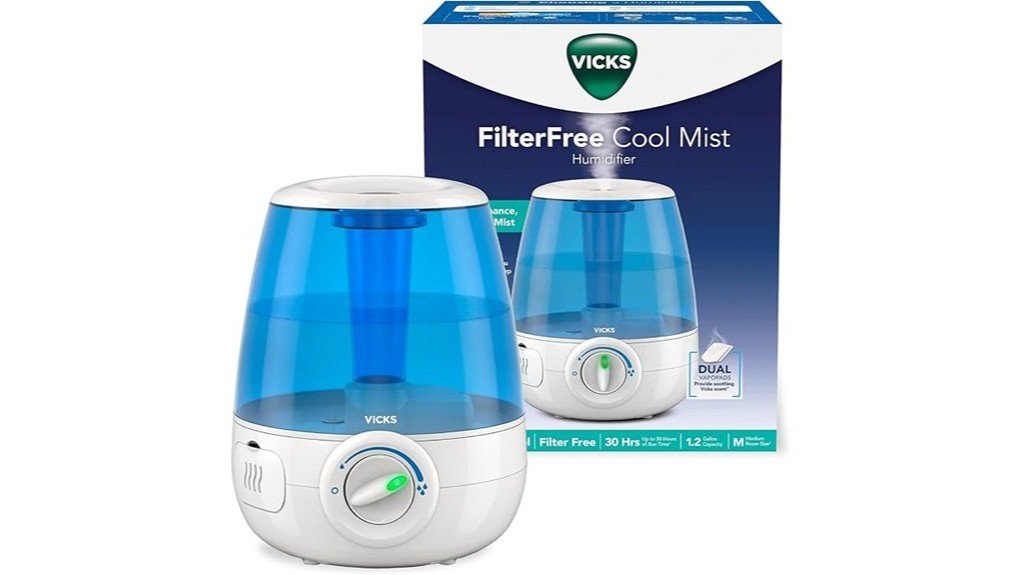
If you need a small dehumidifier for a compact laundry room, compare moisture removal per day, tank capacity, operating controls, noise, and automatic shutoff, not just the largest advertised coverage number. The four models below are compact electric dehumidifiers intended for light supplemental moisture control, occasional condensation, and small enclosed spaces. The BEDRED and OWAAE models provide larger 95-ounce tanks, the Windangel adds multiple modes and timer settings, and the TABYIK combines a compact design with clearly stated maximum extraction conditions.
Quick verdict:
Choose the TABYIK 35-ounce model when compact placement and a clearly stated maximum daily extraction figure matter most. Choose the Windangel 44-ounce model when you want more timer and operating-mode flexibility. The BEDRED CT11 and OWAAE TZ-C4S are better suited to buyers who prioritize a larger collection tank and can accept less-comparable daily extraction information.
Important laundry-room limitation:
These are mini electric dehumidifiers intended for light moisture control. They may help in a small laundry room with mild humidity, but they are not substitutes for a higher-capacity compressor dehumidifier, outdoor-vented dryer exhaust, proper ventilation, or repairing a moisture source. Consider a pint-rated unit if you regularly dry wet clothes indoors, see condensation on walls or windows, or record humidity above 60% for extended periods.
How these models were compared:
Daily moisture-removal information and the conditions behind that figure matter most for judging dehumidification performance. Tank size mainly affects how much collected water the unit can hold before emptying. We also considered automatic shutoff, control flexibility, noise claims, portability, and whether the seller provides enough information to make a meaningful comparison.
Quick Comparison of Small Laundry-Room Dehumidifiers
| Product | Best For | Tank | Seller-Listed Maximum Removal | Key Feature | Main Limitation | Details |
|---|---|---|---|---|---|---|
| BEDRED CT11 | Larger tank and simple controls | 95 oz | Not clearly stated in a comparable daily rating | Sleep mode and auto shutoff | Extraction performance is harder to compare | Check Current Amazon Availability |
| Windangel 44 oz | Very small rooms and flexible controls | 44 oz | Up to 11.8 oz/day at 86°F and 80% RH | Three modes and four timer settings | Limited capacity for heavy laundry moisture | Check Current Amazon Availability |
| TABYIK 35 oz | Compact placement and transparent extraction conditions | 35 oz | Up to 16 oz/day at 86°F and 80% RH | 28 dB seller-listed operation | Smaller tank and light-duty performance | Check Current Amazon Availability |
| OWAAE TZ-C4S | Quiet operation with a larger tank | 95 oz | Not clearly stated in a comparable daily rating | Sleep mode and LED controls | Coverage claim does not establish actual extraction capacity | Check Current Amazon Availability |
Specifications are based on the supplied article and seller-listed product information. Test conditions, features, warranties, and availability can change. Confirm the current Amazon listing and product manual before purchasing.
BEDRED CT11 95-Ounce Dehumidifier
Best for a Larger Collection Tank
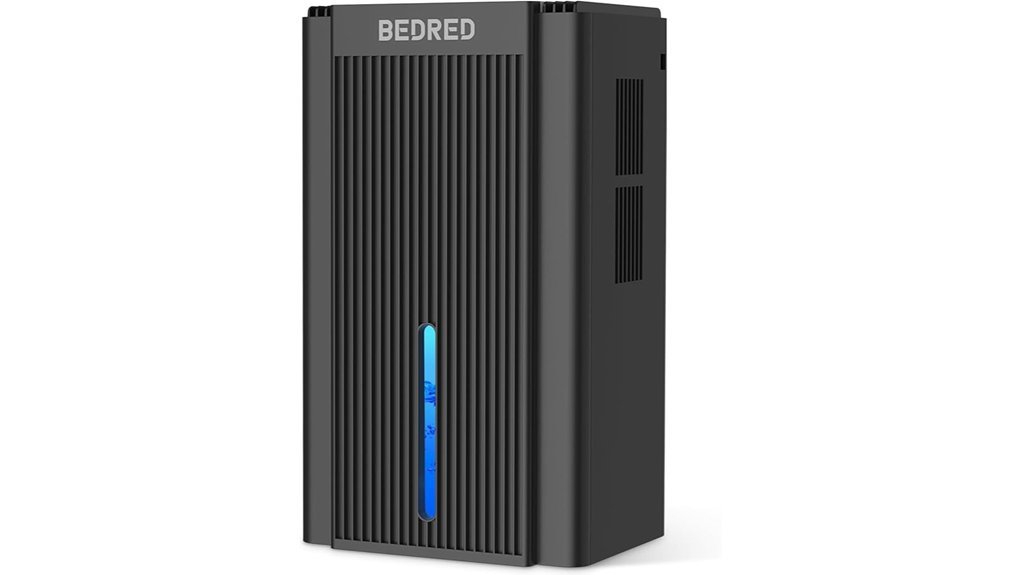
The BEDRED CT11 is a compact electric dehumidifier with a 95-ounce water tank, automatic shutoff, sleep mode, and seven-color ambient lighting. Its main buyer benefit is the larger tank, which may reduce emptying frequency compared with smaller 35- or 44-ounce tabletop models when the units collect water at similar rates.
The seller lists coverage of up to 1,000 square feet, but that figure should be treated as a general placement claim rather than proof of effective humidity control across a large room. A clearly comparable daily extraction rating is not provided in the supplied information. This makes the CT11 a better fit for supplemental localized moisture control in a compact laundry room than for a wet basement or frequent indoor clothes drying.
Who Should Buy This: Buyers who want a portable mini dehumidifier with a larger collection tank, automatic shutoff, and a low-distraction sleep setting.
Why You May Like It:
- The 95-ounce tank may require less frequent emptying than smaller tabletop models when collection rates are similar.
- Sleep mode reduces visual distraction when the laundry room is near a bedroom or living area.
- Automatic shutoff is designed to stop operation when the tank reaches its shutoff level.
Who Should Avoid This: Anyone dealing with wet walls, ongoing leaks, regular indoor clothes drying, or humidity that remains above 60% despite ventilation.
Consider Before Buying:
- The listing does not provide a clearly comparable standardized pint-per-day rating.
- The advertised 1,000-square-foot figure should not be used as the main sizing metric.
- The ambient lighting is decorative and should not influence your capacity decision.
Windangel 44-Ounce Portable Dehumidifier
Best Controls and Timers
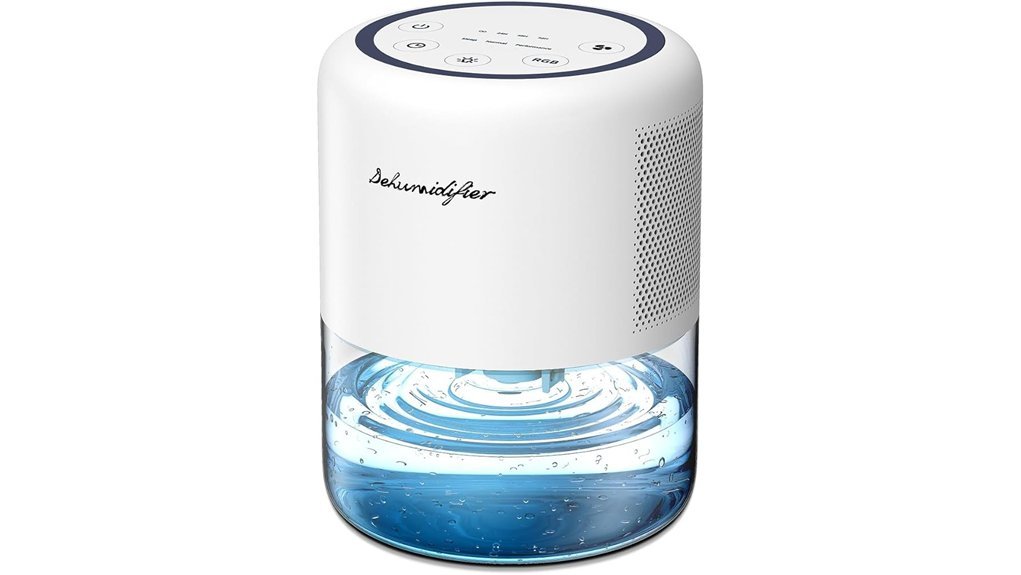
The Windangel 44-ounce portable dehumidifier is designed for small enclosed spaces where flexible controls matter. Its compact body and built-in portability make it easier to place on a stable shelf or counter in a crowded utility area.
The seller lists moisture removal of up to 11.8 ounces per day at 86°F and 80% relative humidity, along with coverage of up to 215 square feet. Three operating modes and four timer settings give it more control options than many basic mini units. Automatic shutoff is designed to stop operation when the tank reaches its shutoff point.
Who Should Buy This: Buyers with a very small laundry room and light seasonal humidity who value timers, operating modes, and compact placement more than high extraction capacity.
Why You May Like It:
- The seller provides a maximum daily extraction figure and the conditions used to produce it.
- Multiple modes provide more operating flexibility than a basic single-mode mini unit.
- Four timer settings can help manage runtime.
- Automatic shutoff helps reduce the risk of tank overflow.
Who Should Avoid This: Buyers who need to handle a full load of air-dried laundry, ongoing condensation, water intrusion, or a consistently damp room.
Consider Before Buying:
- The listed 11.8-ounce daily maximum is modest compared with compressor models rated in pints per day.
- Actual collection can be lower in cooler or less humid conditions than the seller’s stated test environment.
- Seller-listed dimensions, variant details, and other specifications can change, so confirm the current linked model before choosing a shelf location.
TABYIK 35-Ounce Small Dehumidifier
Best Compact Pick with Clear Extraction Data
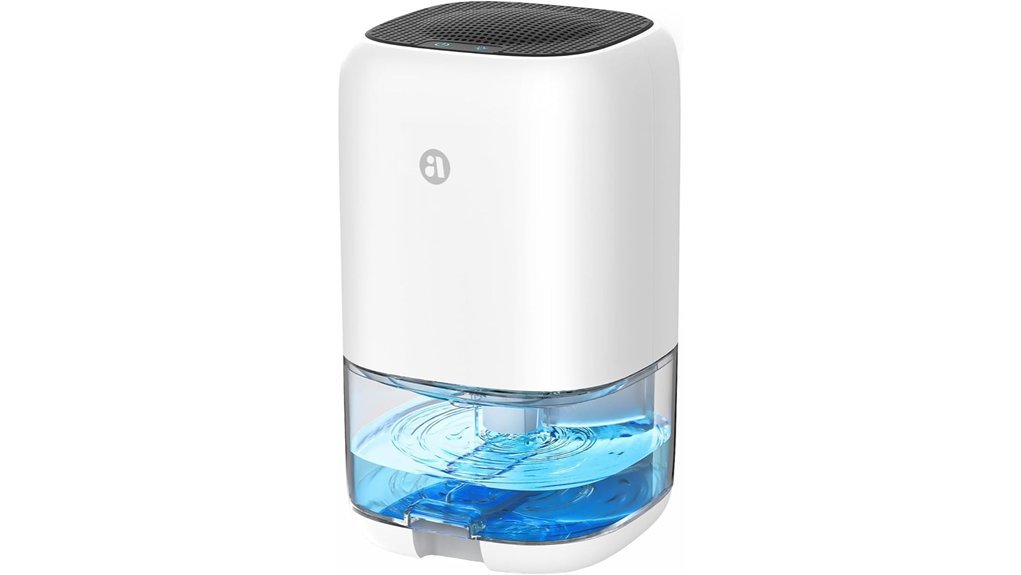
The TABYIK 35 OZ Dehumidifier is a small Peltier-style unit measuring approximately 5.9 x 5.9 x 10.1 inches and weighing about 2.2 pounds. Its compact footprint and built-in handle make it easy to move between a laundry room, bathroom, closet, or similarly small enclosed space.
The seller lists a maximum extraction rate of 16 ounces or 450 milliliters per day at 86°F and 80% relative humidity. Those are warm and highly humid test conditions, so normal collection may be lower. The unit also has a 35-ounce transparent tank, automatic shutoff, seven-color lighting, and a seller-listed operating noise level of 28 dB.
Who Should Buy This: Buyers who need a lightweight tabletop unit for a compact laundry room with mild humidity or occasional condensation and want a clearly stated maximum extraction figure.
Why You May Like It:
- The transparent tank makes the collected water level easy to see.
- Its compact footprint works where shelf or counter space is limited.
- The seller clearly states the warm, humid conditions used for its maximum extraction claim.
- Automatic shutoff is designed to stop the unit when the tank reaches its shutoff level.
Who Should Avoid This: Buyers who want a large tank, continuous drainage, or enough capacity to manage substantial indoor laundry drying.
Consider Before Buying:
- The maximum extraction rate applies to specific warm and humid test conditions.
- The 35-ounce tank is smaller than the 95-ounce tanks offered by the BEDRED and OWAAE models.
- It does not have the extraction capacity of a pint-rated compressor dehumidifier intended for heavier moisture loads.
OWAAE TZ-C4S 95-Ounce Dehumidifier
Best Quiet Large-Tank Alternative
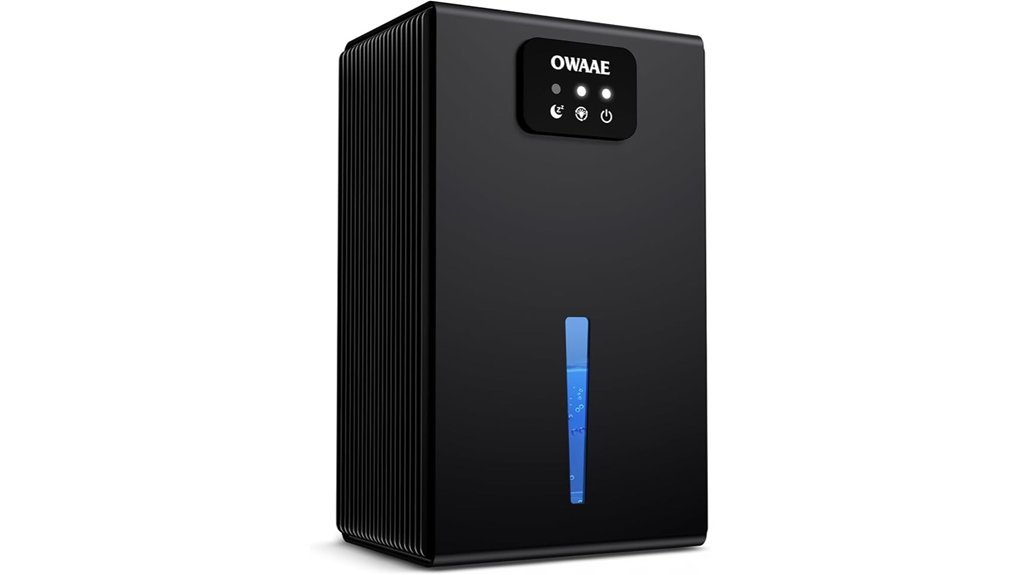
The OWAAE TZ-C4S is seller-listed with a 95-ounce water tank, sleep mode, automatic shutoff, and seven-color LED lighting. Its larger tank can be useful when you prefer not to empty a compact dehumidifier as often, although actual emptying frequency depends on room temperature, humidity, and the unit’s collection rate.
The seller describes the sleep setting as operating below 30 dB and lists coverage of up to 1,000 square feet. The coverage figure does not establish how much water the unit removes in a day. Because a directly comparable daily extraction figure is not clearly provided in the supplied information, the OWAAE is better viewed as a localized moisture-control option for a compact laundry room than as evidence-backed coverage for a large or persistently wet area.
Who Should Buy This: Buyers looking for a simple mini dehumidifier with a larger collection tank and a low-distraction sleep setting.
Why You May Like It:
- The seller-listed 95-ounce tank may reduce manual emptying compared with smaller models when collection rates are similar.
- Sleep mode may be useful when the laundry room is near a bedroom or home office.
- Automatic shutoff is designed to stop operation when the tank reaches its shutoff level.
- The compact format may fit where a full-size compressor unit would be inconvenient.
Who Should Avoid This: Buyers who need a clearly documented daily extraction rating, built-in humidity control, or enough capacity for severe dampness.
Consider Before Buying:
- The advertised coverage figure should not be treated as proof of effective dehumidification throughout a full 1,000-square-foot area under demanding conditions.
- A clearly comparable standardized daily extraction figure is not provided in the supplied information.
- Confirm the current linked product specifications before buying because seller-listed details and variants can change.
- It should not be relied on to correct leaks, standing water, or severe condensation.
How to Choose a Small Dehumidifier for a Laundry Room
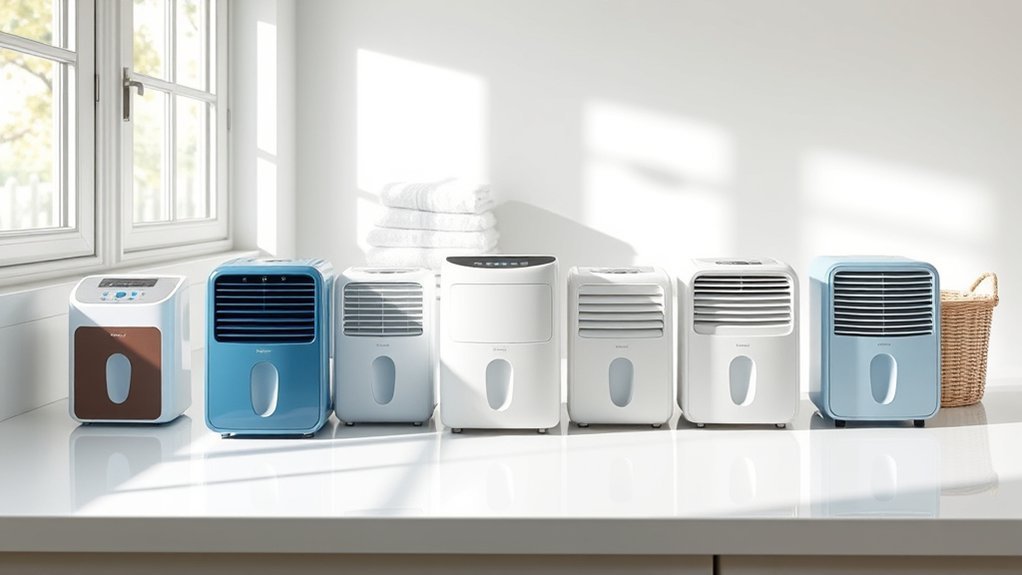
A laundry room can experience anything from mild seasonal humidity to a substantial moisture load created by wet clothing, poor ventilation, plumbing leaks, or an improperly vented dryer. Match the dehumidifier to the actual moisture problem rather than choosing solely by advertised floor coverage or tank size.
Measure the Humidity First
Use a separate digital hygrometer to measure relative humidity because many mini dehumidifiers do not include a precise humidistat. A practical indoor target is approximately 30% to 50% relative humidity. Persistent readings above 60% indicate that you should investigate ventilation, leaks, condensation, and whether a higher-capacity dehumidifier is needed.
Compare Daily Moisture Removal
The water tank size tells you how much water the machine can hold, not how quickly it can remove moisture. A 95-ounce tank does not automatically mean stronger extraction than a 35-ounce tank. Look for a stated daily extraction rate and note the temperature and humidity conditions used to produce that figure.
Thermoelectric or Peltier models generally work best in warm, humid, enclosed spaces and may collect less water as room temperature or relative humidity falls. For heavy indoor clothes drying or persistent dampness, a compressor dehumidifier rated in pints per day is usually the more appropriate category.
Treat Coverage Claims as a Secondary Metric
Square-foot coverage can be useful as a general placement reference, but it does not tell you how much moisture a dehumidifier actually removes. Two products can advertise similar room coverage while having very different extraction capacity. For a laundry room, daily water removal, room humidity, temperature, and moisture source are more useful decision points than the largest coverage number on the box.
Identify the Moisture Source
A dehumidifier should support, not replace, proper moisture control. Confirm that the dryer vents outdoors, plumbing connections do not leak, wet clothing is not left sitting for extended periods, and the room has adequate airflow. Repair active leaks and dryer-vent problems before relying on any dehumidifier.
Choose the Right Tank and Drainage Setup
A larger tank can reduce emptying frequency, but it also makes the full container heavier. Check how easily the tank slides out and whether it can be carried without spilling. Do not assume a mini unit supports continuous drainage. Use a drain hose only when the current product manual specifically provides a supported drain connection and explains how to route it safely.
Consider Temperature and Room Size
Mini thermoelectric dehumidifiers can be less effective in cool laundry rooms. Seller-listed square-foot figures also do not account for moisture load, airflow, open doors, or wet clothing. A small enclosed room with mild humidity is a much easier job than a similarly sized room containing damp materials or an unvented moisture source.
Consider Noise and Placement
Seller-listed noise levels for compact models often refer to a specific operating mode and test setup. Perceived noise also depends on fan speed, surface vibration, and room acoustics. Place the unit on a firm, level, dry surface instead of directly on a vibrating washer or dryer, and keep the air inlet and outlet unobstructed.
Review Safety Features
Automatic shutoff is important because it is designed to stop operation when the tank reaches its shutoff point. You should still inspect the tank, adapter, cord, and surrounding area regularly. Keep the unit away from direct splashes, sinks, leaking hoses, dryer heat, and locations where it could be knocked over. Follow the product manual for clearance, cleaning, and overnight operation.
Check Energy Use and Controls
Do not assume that a compact dehumidifier is ENERGY STAR certified or includes a true humidistat. Compare the wattage shown on the current listing or product label, expected daily runtime, timer controls, operating modes, and extraction capacity. A low-wattage unit that runs continuously without lowering the humidity may not be the most effective choice for the room.
Know When a Mini Dehumidifier Is Not Enough
Move to a larger solution when:
- Humidity stays above 60% for long periods.
- Walls, windows, pipes, or floors regularly show condensation.
- You dry full loads of wet clothing indoors.
- The room has a musty odor, visible mold, a plumbing leak, or standing water.
- A mini unit runs continuously but collects little water or does not lower the hygrometer reading.
Before You Buy Checklist
- Measure the laundry room and record its typical relative humidity.
- Identify whether the moisture comes from clothes drying, a leak, poor ventilation, or seasonal humidity.
- Compare daily extraction capacity instead of relying only on square-foot claims.
- Check the temperature and humidity conditions used for extraction claims.
- Remember that tank capacity and moisture-removal capacity measure different things.
- Confirm that the tank is easy to remove, carry, and clean.
- Check whether the unit has automatic shutoff, useful timers, and a true humidistat if you need automatic humidity control.
- Confirm current dimensions, wattage, warranty, return terms, model variant, and drainage support on Amazon.
- Choose a pint-rated compressor model if the room is consistently wet or used for regular indoor laundry drying.
Frequently Asked Questions
Will a Mini Dehumidifier Dry Clothes Faster?
It may provide limited assistance in a very small enclosed room, but a mini dehumidifier usually does not remove enough water to make a major difference when drying a full load of wet clothes. A properly vented dryer, exhaust ventilation, improved airflow, or a higher-capacity compressor dehumidifier is more suitable for that moisture load.
What Size Dehumidifier Do I Need for a Laundry Room?
Choose according to moisture conditions and daily extraction capacity, not floor area alone. A mini unit may be sufficient for mild humidity in a compact enclosed room. Persistent condensation, wet walls, musty odors, or regular indoor clothes drying usually calls for a compressor model rated in pints per day.
Where Should I Place a Small Dehumidifier?
Place it upright on a firm, level, dry surface with the air inlet and outlet clear. Leave the clearance specified in the manual. Do not position it where water can splash onto the unit or where vibration from a washer or dryer could make it move.
Do Mini Dehumidifiers Work in Cold Laundry Rooms?
They may operate, but thermoelectric models generally remove less water as the room becomes cooler or less humid. Compare the room conditions with the manufacturer’s operating guidance and use a hygrometer to see whether the unit is actually lowering relative humidity.
How Do I Maintain My Small Dehumidifier?
Empty and rinse the tank regularly, wipe it dry if residue develops, clean the air inlet as directed in the manual, and keep the vents clear of lint. Unplug the unit before cleaning and allow washable parts to dry fully before reinstalling them.
Can a Small Dehumidifier Prevent Mold?
A dehumidifier can support moisture control, but it cannot guarantee mold prevention or remove existing mold. Correct leaks, condensation, wet materials, and poor ventilation promptly. Seek appropriate remediation guidance if mold is already visible or covers a substantial area.
What Humidity Level Should a Laundry Room Have?
A practical indoor target is generally around 30% to 50% relative humidity, with the room kept below 60% when possible. Use a hygrometer to confirm the actual level instead of judging only by how the air feels.
Can I Run a Mini Dehumidifier Overnight?
Follow the product manual and place the unit on a stable, dry surface with clear airflow. Automatic shutoff is useful, but it does not replace correct placement, regular inspection, or electrical safety. Stop using the unit if the adapter becomes unusually hot, the unit leaks, or it develops an abnormal smell or sound.
Are Small Dehumidifiers Energy-Efficient?
Small thermoelectric units often draw less power at one time than larger compressor models, but they also remove less moisture. Compare energy use together with extraction capacity and runtime. The more useful option is the one that lowers your actual humidity without running unnecessarily.
Final Recommendation
Choose according to the moisture load and the comparison metric that matters most:
- Choose the BEDRED CT11 when a larger tank, automatic shutoff, and simple controls are your priorities, and you do not need a clearly documented daily extraction figure.
- Choose the Windangel 44-ounce model when timers, multiple operating modes, and a stated maximum extraction rate are most useful.
- Choose the TABYIK 35-ounce model for compact placement, easy portability, and clearly documented maximum extraction conditions.
- Choose the OWAAE TZ-C4S when you want another low-distraction 95-ounce option and can accept less-comparable daily extraction information.
Any of these models can provide supplemental moisture control in a small laundry room, but none should be expected to solve a major humidity problem by itself. Measure the room with a hygrometer, correct leaks and ventilation issues first, and move to a pint-rated compressor dehumidifier when wet laundry or persistent condensation creates a heavier moisture load.