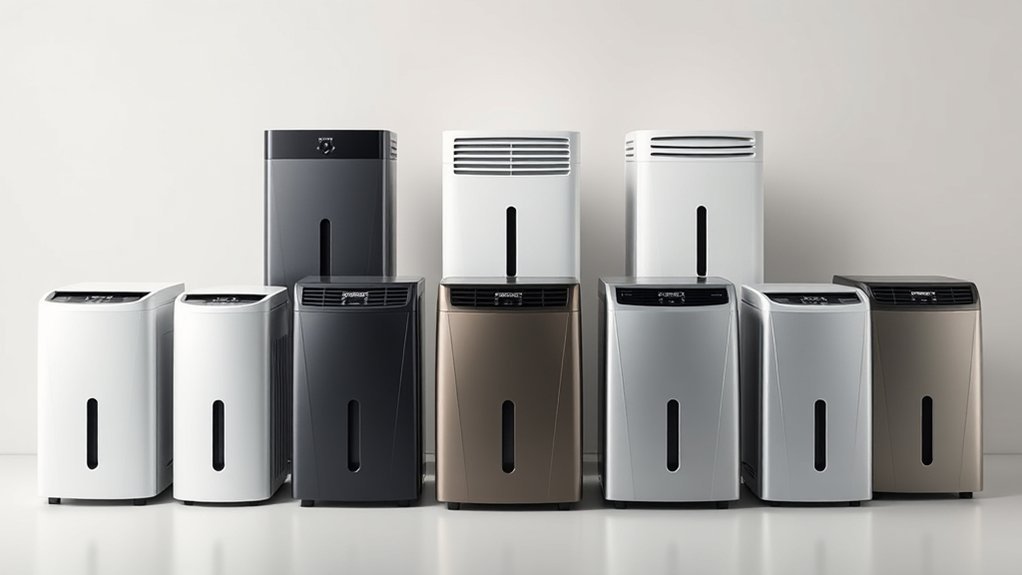
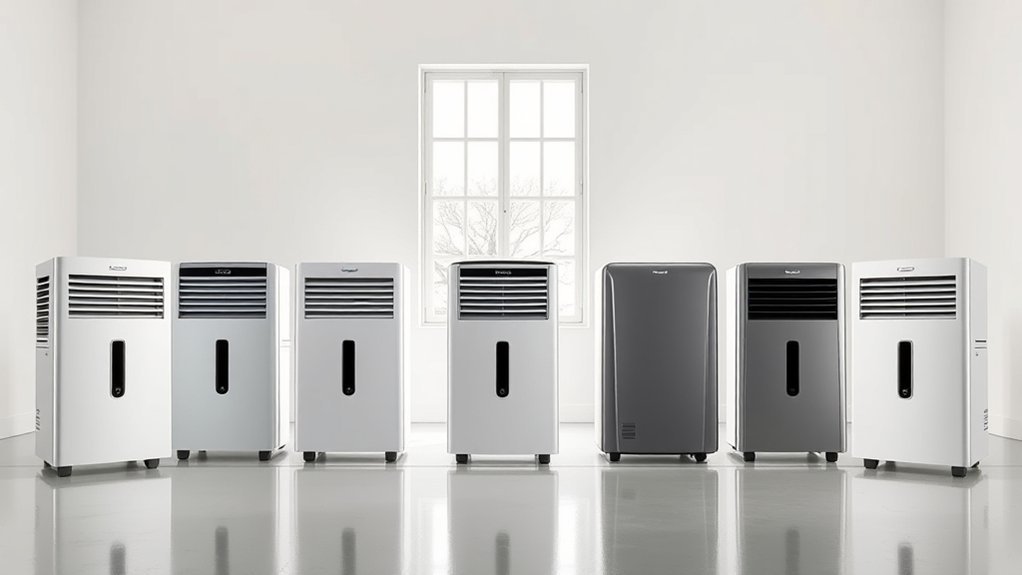
If you are comparing US-market refrigerant dehumidifiers for basements, bedrooms, laundry areas, or large open rooms, the four compressor-based models below offer different balances of capacity, tank size, smart control, and continuous drainage. The Waykar 34-Pint is the strongest all-around choice for most buyers, the Midea 22-Pint suits people who want app control, and the larger AIRPLUS and Tehanld models are aimed at heavier moisture loads.
Quick Verdict
- Best Overall: Waykar 34-Pint Dehumidifier for ENERGY STAR certification, automatic humidity control, and a practical balance of capacity and portability.
- Best Smart-Control Pick: Midea 22-Pint Dehumidifier for Wi-Fi app control and medium-room use.
- Best for Heavy Moisture: AIRPLUS AP20-1905EE for buyers comparing a higher seller-listed extraction capacity.
- Best Large Tank: Tehanld 50-Pint Dehumidifier for its seller-listed 1.6-gallon tank and continuous-drain option.
Quick Comparison
| Model | Advertised Capacity | Advertised Coverage | Drainage | Best For | Amazon |
|---|---|---|---|---|---|
| Waykar PD160B | 34 pints/day at the seller’s stated hot-and-humid test condition | Up to 2,000 sq. ft. | Tank or gravity drain | Balanced everyday use | Check Price on Amazon |
| Midea 22-Pint Dehumidifier | 22 pints/day | Up to 1,500 sq. ft. | Tank or gravity drain | Wi-Fi app control | Check Product Details on Amazon |
| AIRPLUS AP20-1905EE | Seller-listed 70 pints/day | Up to 4,500 sq. ft. | Tank or gravity drain | Large damp spaces | View Latest Deal on Amazon |
| Tehanld 50-Pint Dehumidifier | Seller-listed 50 pints/day | Up to 5,000 sq. ft. | 1.6-gallon tank or hose | Fewer tank-emptying trips | See Today’s Price on Amazon |
Capacity note: Pint-per-day and square-foot figures are manufacturer or seller claims unless stated otherwise. Test conditions can differ sharply. For example, the Waykar is marketed as a 34-pint model at 95°F and 90% relative humidity, while its ENERGY STAR record uses a lower standardized water-removal figure. Compare test methods, tank size, airflow, and drainage setup instead of ranking models by the largest headline number alone.
Best Overall: Waykar 34-Pint Energy Star Dehumidifier
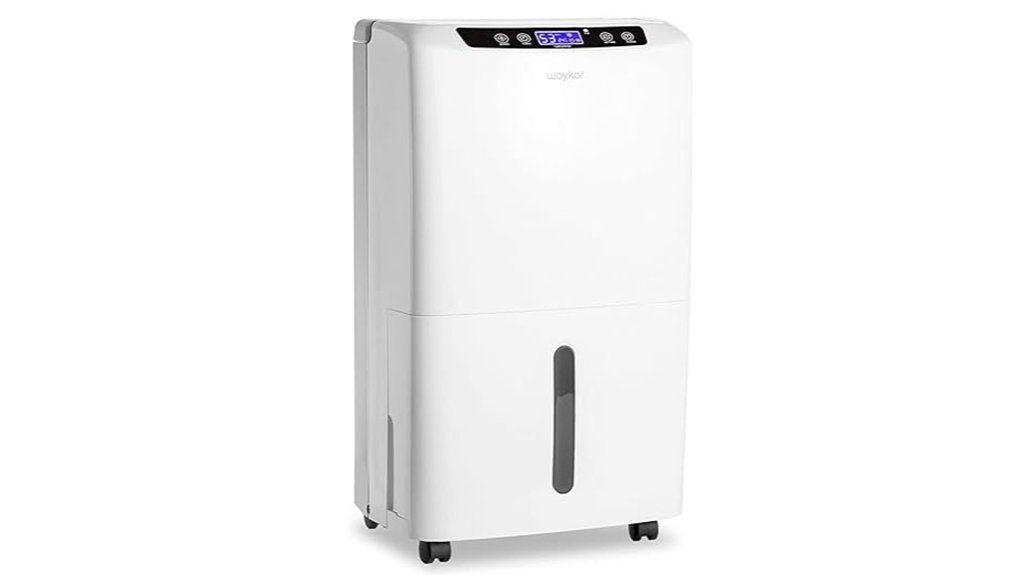
The Waykar PD160B offers a practical balance of automatic humidity control, portable design, continuous drainage, and verified ENERGY STAR certification. The seller markets it as removing up to 34 pints per day at 95°F and 90% relative humidity in areas up to 2,000 square feet. The EPA ENERGY STAR database uses a different standardized test method and lists a lower water-removal capacity, so the headline 34-pint figure should not be compared directly with modern standardized ratings.
- Seller-listed extraction: 34 pints per day at 95°F and 90% RH
- Advertised coverage: Up to 2,000 sq. ft.
- Tank: 0.66 gallon
- Humidity setting range: 30% to 80%
- Convenience: Timer, auto defrost, washable filter, wheels, and continuous gravity drainage
Why You’ll Like It: It combines useful everyday controls with ENERGY STAR certification and enough seller-listed capacity for many basements, living areas, and laundry rooms.
Who Should Buy This: Buyers who want a balanced compressor dehumidifier with automatic humidity control and the option to run a drain hose downhill.
Who Should Avoid It: Buyers without access to a suitable gravity drain may find the 0.66-gallon tank too small for persistently wet conditions.
Pros:
- ENERGY STAR-certified model.
- Automatic humidity control and continuous mode.
- Portable body with wheels and an ergonomic handle.
Cons:
- The tank may fill quickly in very humid rooms.
- The 2,000-square-foot claim is not a guarantee for divided floor plans.
- No built-in pump for moving water uphill.
Best Smart-Control Pick: Midea 22-Pint Dehumidifier
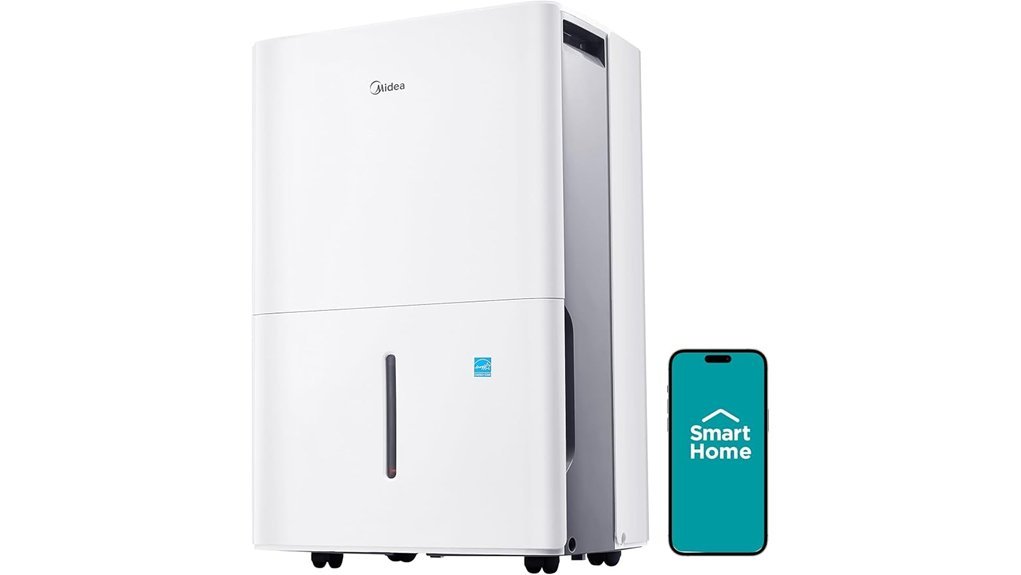
This Midea 22-pint dehumidifier is a practical choice for buyers who want Wi-Fi control in a medium-size room. The linked listing is marketed for spaces up to 1,500 square feet and supports control through Midea’s SmartHome app. A removable bucket handles manual collection, while a compatible hose can provide continuous gravity drainage when the outlet is lower than the unit.
- Advertised extraction: 22 pints per day
- Advertised coverage: Up to 1,500 sq. ft.
- Controls: SmartHome app, digital panel, timer, operating modes, and fan-speed settings
- Drainage: Removable bucket or continuous gravity drain
- Best use: Bedrooms, living areas, offices, and moderately damp basements
Why You’ll Like It: App control, portable wheels, and a splash-guard bucket can reduce day-to-day effort when the unit is used in a frequently occupied room.
Who Should Buy This: Buyers who value remote control and need moderate moisture removal rather than the largest available capacity.
Who Should Avoid It: Buyers dealing with severe water intrusion, very cold unheated areas, or drainage that must travel uphill should choose a different setup.
Pros:
- Wi-Fi control through the SmartHome app.
- Useful capacity for medium-size rooms.
- Portable design with wheels and a side-access bucket.
Cons:
- No built-in condensate pump.
- The tank needs manual emptying unless a gravity drain is available.
- App setup adds complexity for buyers who prefer basic physical controls.
Best for Heavy Moisture: AIRPLUS AP20-1905EE Dehumidifier
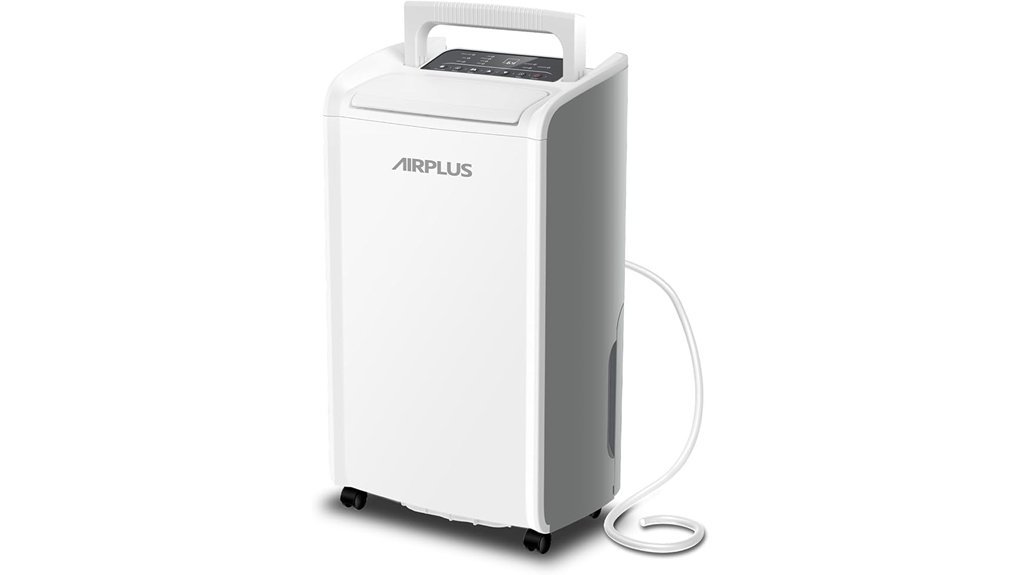
The AIRPLUS AP20-1905EE is seller-listed as a 70-pint dehumidifier for spaces up to 4,500 square feet. It is aimed at buyers comparing a higher-capacity machine for basements, garages, storage areas, or large open rooms. Four operating modes, automatic defrost, a washable filter, and two drainage methods make it easier to adapt to changing moisture levels.
- Seller-listed extraction: Up to 70 pints per day
- Advertised coverage: Up to 4,500 sq. ft.
- Tank: About 0.7 gallon
- Drainage: Removable tank or continuous gravity drain hose
- Convenience: Four modes, timer, auto shut-off, child lock, memory, auto defrost, and washable filter
Why You’ll Like It: The higher seller-listed output and included drain hose make it more practical for a damp open area where a smaller room unit could run almost continuously.
Who Should Buy This: Buyers with a large, warm, damp space and access to a floor-level drain.
Who Should Avoid It: Buyers seeking a compact bedroom unit, a built-in pump, or independently standardized capacity data should consider another model.
Pros:
- Higher seller-listed moisture-removal capacity.
- Continuous drainage and full-tank auto shut-off.
- Automatic defrost and multiple operating modes.
Cons:
- Larger footprint than lower-capacity models.
- The 0.7-gallon tank may fill often if continuous drainage is not used.
- The headline capacity and coverage figures should be treated as seller claims.
Best Large Tank: Tehanld 50-Pint Dehumidifier
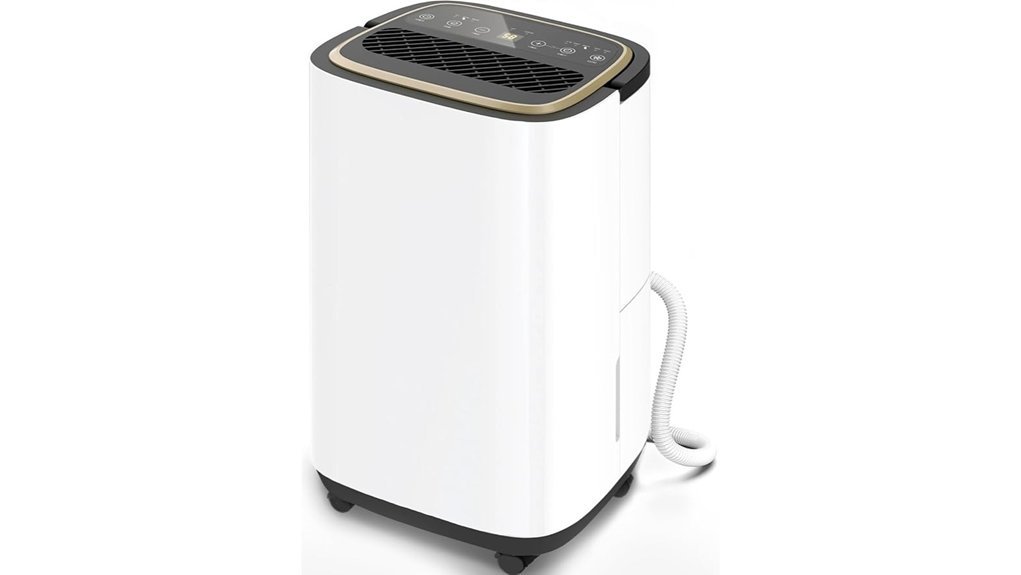
This Tehanld compressor dehumidifier is seller-listed to remove 50 pints of moisture per day in large rooms up to 5,000 square feet. Its biggest practical advantage is the seller-listed 1.6-gallon removable tank, which can reduce emptying frequency compared with the smaller tanks used by the other models in this comparison. It also includes a hose for continuous gravity drainage.
- Seller-listed extraction: 50 pints per day
- Advertised coverage: Up to 5,000 sq. ft.
- Tank: 1.6 gallons
- Controls: Adjustable humidity, fan-speed settings, timer, and real-time humidity display
- Modes: Humidity control, continuous or manual operation, and laundry-drying mode
Why You’ll Like It: The larger tank is useful when no floor drain is nearby, and the drying mode can support indoor laundry routines.
Who Should Buy This: Buyers who want fewer bucket-emptying trips and prefer a larger manual tank as a backup to continuous drainage.
Who Should Avoid It: Buyers who prioritize a long-established service network, extensive independent documentation, or a built-in pump may prefer another option.
Pros:
- Large seller-listed 1.6-gallon removable tank.
- Continuous-drain hose included.
- Child lock, auto defrost, washable filter, and portable wheels.
Cons:
- The 5,000-square-foot figure is a marketing claim, not a whole-home performance guarantee.
- Less independent product documentation than established brands.
- Actual output depends heavily on temperature, humidity, room layout, and airflow.
Factors to Consider When Choosing a Refrigerant Dehumidifier
The right compressor dehumidifier depends on more than the largest pint or square-foot number. Start with the room temperature, moisture severity, drainage route, noise tolerance, electrical compatibility, and the rating method used for the capacity claim.
Electrical Compatibility and Market
Always read the rating plate before ordering or plugging in a dehumidifier. Confirm the input voltage, frequency, plug, wattage, certification, and warranty region. The models in this comparison are US-market products. A simple travel adapter changes the plug shape only; it does not convert voltage or frequency.
Capacity and Test Conditions
Daily extraction capacity is meaningful only when the test method is clear. Some listings quote performance at 95°F and 90% relative humidity, which is much warmer and wetter than many real rooms. Modern standardized ratings can be substantially lower for the same machine. Compare like-for-like test methods rather than assuming a seller-listed 70-pint unit will always remove more water than every model with a lower standardized rating.
Coverage Area and Layout
Square-foot coverage is a rough marketing guide, not a substitute for moisture load. Open-plan rooms allow dry air to circulate more easily than homes divided by closed doors. Persistent leaks, wet foundations, poor ventilation, and indoor laundry can also increase the capacity you need. Choose extra capacity for severe dampness, but do not assume one portable unit will evenly control an entire multi-room home.
Room Temperature and Auto Defrost
Refrigerant dehumidifiers work best in warmer rooms. As temperatures fall, moisture removal slows and frost can form on the evaporator coil. Auto defrost helps protect the coil and restore operation, but it does not make every compressor model ideal for an unheated winter space. A desiccant dehumidifier may be a better match for consistently cold rooms.
Noise Level
Check whether a quoted decibel figure was measured on low or high fan speed and at what distance. Compressor cycling, hard floors, nearby walls, and room echo can make a unit sound louder than the headline number. For bedrooms and offices, prioritize clear noise documentation, multiple fan speeds, and a return policy that lets you reassess the unit in your own room.
Drainage Options and Maintenance
A removable tank is flexible, but it can fill quickly in damp weather. Continuous gravity drainage is more convenient when the hose can run downhill to a floor drain or sink. A built-in pump is needed when water must travel upward. Clean the washable filter according to the manual, keep the intake clear, inspect the hose for kinks, and let a transported compressor unit stand upright before use when the manufacturer requires it.
Energy Efficiency
For US models, ENERGY STAR efficiency is compared using Integrated Energy Factor (IEF), measured in liters of water removed per kilowatt-hour. A higher IEF indicates more moisture removal for the electricity used under the standardized test. Do not estimate efficiency by dividing wattage by a headline pint rating when the test method and operating cycle are different.
Controls and Smart Features
A built-in humidistat, timer, auto restart, full-tank shut-off, and memory function are useful for everyday operation. Wi-Fi control adds convenience, but it should not outweigh extraction performance, drainage, filter access, electrical safety, or parts support. For most homes, a moderate humidity target is more practical than running continuously at the lowest possible setting.
Before You Buy Checklist
- Confirm the model is rated for your country’s voltage and frequency.
- Compare extraction figures measured under similar test conditions.
- Choose a drainage method before deciding where the unit will sit.
- Check tank size, hose length, filter access, dimensions, weight, and minimum operating temperature.
- Look for auto defrost in cooler rooms and a pump only when drainage must go uphill.
- Verify the current model number, warranty, return policy, included accessories, and replacement-part availability.
Frequently Asked Questions
How Do Refrigerant Dehumidifiers Work Compared With Desiccant Models?
A refrigerant dehumidifier draws air over a cold evaporator coil, condenses moisture into water, and returns reheated, drier air to the room. A desiccant model uses a moisture-absorbing material instead. Compressor units are usually a strong choice for warmer rooms and larger moisture loads, while desiccant units can perform better in colder spaces.
Can Refrigerant Dehumidifiers Be Used in Winter?
Yes, but room temperature matters. In cooler spaces, extraction falls and the unit may spend more time in defrost mode. Check the manufacturer’s minimum operating temperature and consider a desiccant model for an unheated garage, cellar, or outbuilding.
Are These Models Suitable for Use in the UK?
These links point to US-market products, so they should not be treated as direct UK recommendations. Only use a model when its rating label explicitly supports the local 230V, 50Hz supply and it has the correct plug, conformity markings, and warranty coverage. A plug adapter alone is not enough for a 110V or 120V appliance.
Are Refrigerant Dehumidifiers Energy-Efficient?
Efficiency varies by capacity, compressor design, humidity level, temperature, and operating mode. Compare ENERGY STAR certification and IEF data for US models, or verified energy-consumption information for your market. A correctly sized unit with a humidistat and suitable drainage is generally easier to run efficiently than an undersized unit operating continuously.
Is a Higher Pint Rating Always Better?
No. A higher number may come from a hotter and more humid test condition rather than a stronger standardized rating. Compare the test method, room temperature, tank size, airflow, drainage, and verified efficiency before deciding which unit has the most useful real-world capacity.
How Often Should I Empty the Water Tank?
Empty it whenever the full-tank indicator activates. In a very damp room, a small tank may fill more than once per day; in milder conditions, it may take several days. Continuous gravity drainage removes this chore when a suitable lower drain is available.
What Humidity Setting Should I Use?
Start near 50% relative humidity and adjust for comfort, condensation, and the condition of the room. Avoid forcing the unit to run continuously at the lowest possible setting unless the space has a specific moisture-control requirement.
How Long Does a Refrigerant Dehumidifier Last?
There is no guaranteed lifespan. Durability depends on operating hours, temperature, filter care, drainage, compressor cycling, storage, and parts support. Regular cleaning and correct setup can help, but warranty length is not the same as expected service life.
Final Recommendation
Choose the Waykar 34-Pint for the strongest overall balance of verified ENERGY STAR certification, automatic control, and continuous-drain flexibility. Pick the Midea 22-Pint when Wi-Fi app control and medium-room use matter most. The AIRPLUS is the higher-output seller-listed option for a large damp area, while the Tehanld is the better fit when a larger manual tank is the priority.
Whichever model you choose, verify the exact listing, model number, electrical rating, standardized capacity, and drainage requirements before ordering. The best dehumidifier is the one that matches your power supply, room temperature, moisture load, floor plan, and maintenance routine.