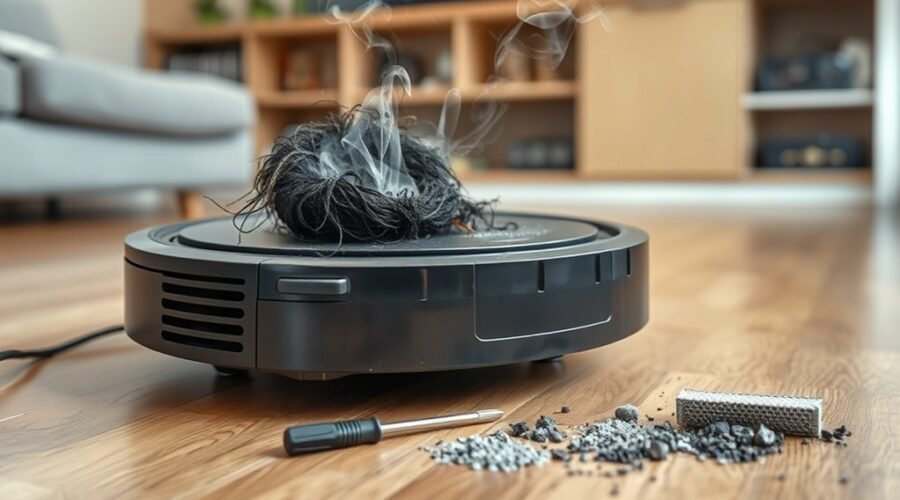
A robot vacuum that smells like burning usually points to heat buildup, restricted airflow, or an electrical problem. The source may be a clogged brush roll, a jammed belt, a full dustbin, or a dirty filter forcing the motor to work harder. In some cases, worn wiring or a failing motor is involved. Each cause leaves a different trace, and the next step is to isolate which one is responsible.
Why Your Robot Vacuum Smells Burnt
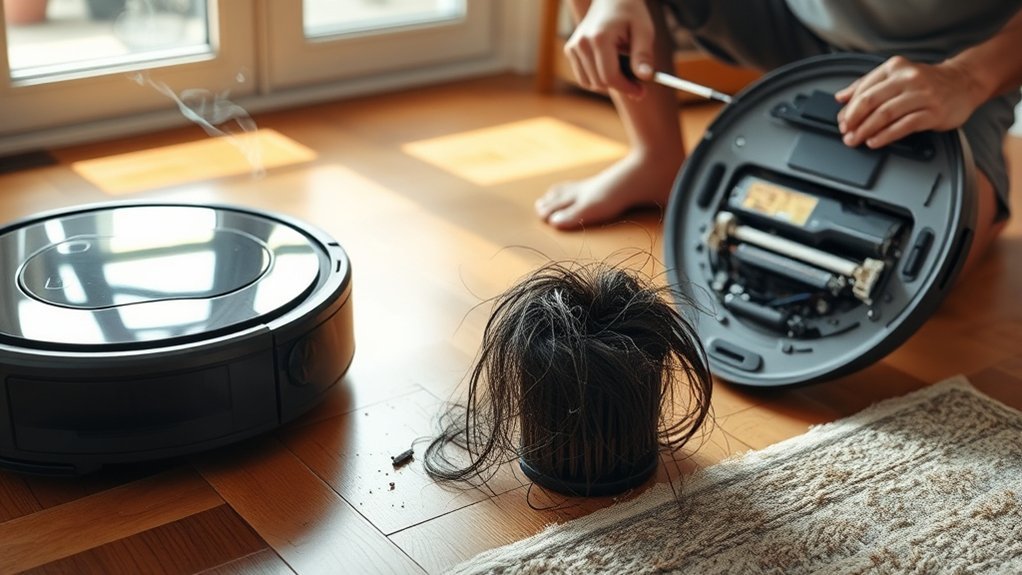
A burnt smell from a robot vacuum usually signals overheating in the motor or excess friction in the brush system. The burning smell often tracks to overheating motors or clogged brush rolls, where resistance rises and heat accumulates.
Tangled hair and debris can wrap the mechanism, creating drag and a rubbery odor. Clogged filters also restrict airflow, forcing the motor to labor and increasing thermal stress. Regular cleaning reduces these load conditions and preserves autonomy.
Users should inspect vents, intake paths, and dust compartments, then replace filters when saturation is visible or airflow drops. If odor persists, mechanical failure becomes more likely and the unit should be stopped before damage spreads.
Electrical faults also matter: frayed cords or loose wiring near the power source can emit heat and smell scorched. Rapid inspection limits escalation and protects the device from avoidable collapse.
Check the Brush Roll and Belt
After signs of overheating are noted, the brush roll and drive belt should be inspected first. A tangled brush roll can create friction and a burning rubber smell, so hair, thread, and other obstructions should be removed from the bristles.
If the brush roll does not spin freely, it can drive an overheating motor and worsen odor. The assembly should be checked for correct installation and any binding points.
Next, inspect the belt for glazing, cracks, stretching, or slippage. Worn drive belts can slip on the motor pulley, build heat, and emit a burnt odor; replace the brush roll or belt when damage is present.
Regular maintenance of these parts supports peak performance, improves vacuum lifespan, and preserves operational freedom through proper care.
The manufacturer’s manual should be consulted for model-specific access and replacement steps, since procedures vary and correct service prevents avoidable failure.
Clean the Filters, Bin, and Airflow Paths
Filters, the dustbin, and airflow passages should be cleaned routinely to prevent odor and loss of suction. A technician would clean the filters, empty the dustbin after each use, and inspect airflow paths for trapped lint, hair, and compacted dust.
Clogged filters are a common source of a burning smell because restricted flow forces the motor to work harder. The filters should be clean or replaced on a maintenance schedule of 3 to 6 months, depending on use.
The dustbin should be washed with warm, soapy water when removable, then dried fully before reassembly to limit odor buildup and mold.
Airflow paths, including hoses and brush rolls, should be opened and checked to remove debris that can block circulation. Debris tangled in brush rolls should also be cleared promptly, since friction can create a burning rubber smell.
Consistent cleaning preserves suction, reduces stress, and keeps the machine serviceable.
Check for Overheating or Electrical Faults
Overheating is a common cause of burning odor in a robot vacuum, especially during prolonged operation on thick carpets or when the dustbin is full. The device should be turned off and unplugged at once when a burning smell appears; continued use can intensify overheating or reveal electrical faults. Inspect motor temperature, brush rolls, and drive areas for tangled hair, debris, or friction. Frayed cords, loose connectors, and damaged wiring merit immediate attention because they can create resistance and heat.
| Check | Diagnostic sign | Action |
|---|---|---|
| Motor | Excess heat | Stop use |
| Brush rolls | Tangled hair | Clean thoroughly |
| Cords | Frayed cords | Replace or repair |
| Wiring | Loose contact | Service promptly |
A disciplined maintenance routine and alert monitoring during operation can expose abnormal odor early. Such inspection preserves function, reduces hazard, and supports autonomous use without unnecessary restriction.
Prevent Burnt Smells From Returning
Preventing recurring burnt odors depends on controlling friction, airflow, and load conditions during routine operation.
Regular maintenance should clean the brush roll after every few uses, removing hair and debris that can create drag and a burning smell. Technicians should inspect and maintain the drive belt for stretch, glaze, or misalignment, since a slipping belt can heat rapidly.
Airflow must stay open: monitor and replace the filter on a 3-6 month cycle, or sooner if a dirty filter restricts intake and raises motor temperature.
Prolonged runs on thick carpet or debris-heavy zones should be limited to reduce overheating and mechanical strain.
Owners should store the vacuum in a dry, well-ventilated place to prevent moisture buildup and odor retention.
These controls prevent odors, preserve performance, and support a freer cleaning routine without repeated burnt smell events.
Frequently Asked Questions
How Do You Fix a Vacuum That Smells Like It’s Burning?
Inspect brush, belt, filters, and cords for common odor causes; clear wheel obstructions removal, reduce motor overheating issues, and follow a troubleshooting guide. Robot maintenance tips, vacuum cleaning frequency, filter replacement schedule, sensor cleaning methods, debris collection tips, battery life management.
My Robot Vacuum Has a Bad Smell. How Can I Get Rid of It?
Empty bin, clean brush, replace filters; stench fades, clean air returns. For robot vacuum maintenance, odor removal techniques, filter cleaning tips, brush roller care, battery issues, pet hair buildup, carpet type effects, sensor malfunction signs, charging station placement, user troubleshooting steps.
My Roomba Smells Like Burning. What Could Be Causing This?
A robot vacuum’s burning odor usually indicates brush blockage, debris entrapment, dust buildup, overheating issues, motor malfunction, battery problems, or electrical faults; maintenance tips include immediate shutdown, inspection, and cleaning before reuse.
Why Does a Vacuum Have Burning Smell?
A vacuum smells burning because robot overheating from brush blockage, debris accumulation, dust buildup, filter problems, belt wear, motor malfunction, electrical issues, improper maintenance, or age deterioration generates friction, heat, and odor.
Conclusion
To sum up, a robot vacuum that smells burnt usually signals brush roll binding, blocked airflow, or a brewing electrical fault. Careful checks of the belt, bin, filters, and vents can quickly reveal the source of strain or overheating. If the odor persists, power down the unit and inspect cords, motor housing, and internal wiring. Regular cleaning and routine review reduce risk, restore reliable running, and prevent repeated burning smells.