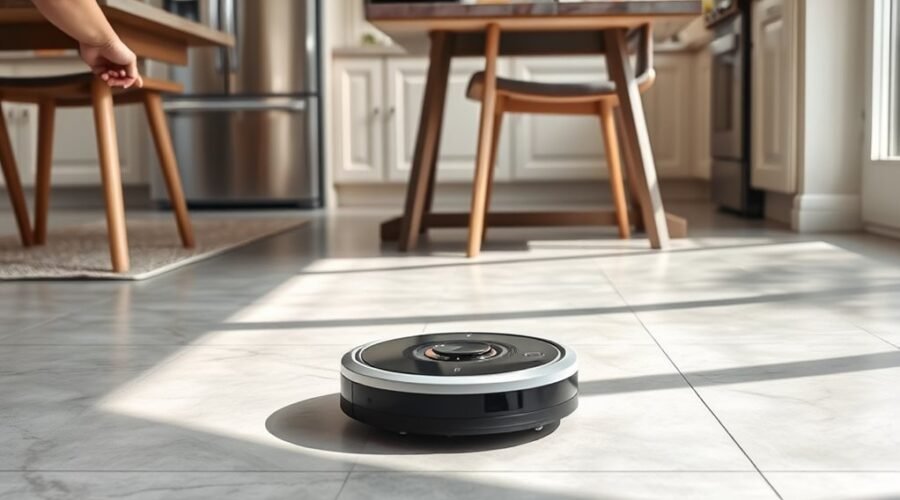
Robot vacuums can handle tile floors well, but performance depends on the machine and the room. Strong suction helps lift dust from grout lines, while the right brush design can reduce scratches on glossy surfaces. Some models also mop sealed tile, which adds another layer of cleaning. The key is knowing which features matter most before assuming every robot will work the same on tile.
Do Robot Vacuums Work on Tile Floors?
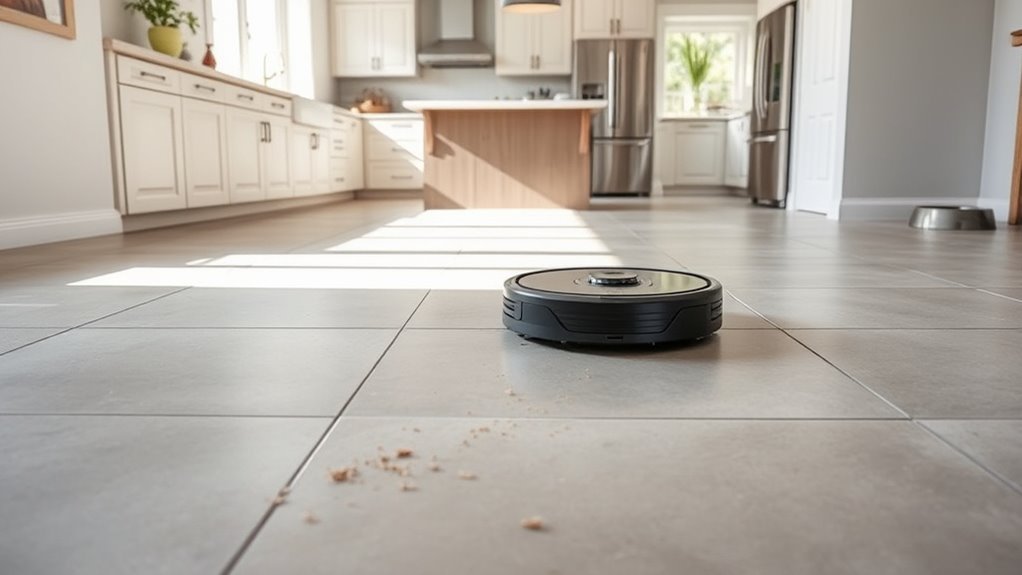
Yes—robot vacuums generally work very well on tile floors, especially ceramic and porcelain. Their low-friction surface lets robot vacuums move efficiently, while brushes and strong suction lift dust, crumbs, and grit from grout lines and open areas.
On glossy tile floors, adjustable settings help reduce unnecessary wear, preserving the finish without sacrificing performance. Many models also use side brushes or D-shaped bodies to reach corners and edges, improving the cleaning experience in spaces that manual tools often miss.
Smart navigation systems and sensors help these machines shift smoothly between tile and carpet, maintaining consistent coverage. Hybrid models add another option: they vacuum and mop in one pass, which can improve results on sealed tile and handle light sticky residue.
For allergy-sensitive households, high-efficiency filters offer added benefit by trapping fine particles instead of releasing them back into the room.
Why Tile Floors Need Strong Suction
Tile floors often have grout lines and small crevices that hold onto dirt, so strong suction is essential for reaching trapped debris.
Weaker models may skim the surface while leaving dust and allergens behind, especially in busy areas.
Higher-suction robot vacuums are better suited to pull debris from these gaps and support a deeper clean.
Suction for Grout Lines
Grout lines on tile floors can trap dust, crumbs, and fine debris, so robot vacuums need strong suction—typically 8,000Pa or higher—to pull dirt out of these deeper crevices.
A vacuum for tile with real suction power helps prevent residue from settling into grout lines, where weak machines often fail. For households seeking a low-effort cleaning solution, high-suction robot vacuums offer a practical way to keep surfaces cleaner with less manual work.
- Strong suction reaches grout lines
- Weak units leave buildup behind
- Adaptive settings boost performance
- Daily cleaning reduces allergens
- Better pickup supports healthier air
For routine use, daily cleaning with the right model can protect tile from staining and support a cleaner, freer living space.
Deep Cleaning Crevices
Deep crevices in tile floors can collect dust, crumbs, and fine debris that ordinary vacuums often miss, so strong suction is essential for a thorough clean.
For robot vacuums, tile floors demand powerful suction to pull dirt from grout lines without scuffing the surface. Models with adjustable settings support deep grout cleaning, letting users increase force in traffic-heavy areas while easing off on smoother sections.
Tangle-free rollers also help clean grout by capturing pet hair and long hair before it knots. Weak suction leaves residue behind, dulling the floor and affecting air quality.
A reliable vacuum for your tile should run 2-3 times weekly, especially in busy zones, to keep crevices clear and the floor free.
Which Brushes Are Safest for Tile?
For tile floors, softer bristles are generally the safest choice because they lift dust and debris without scratching the surface. In practice, soft bristles support daily cleaning without forcing tile to endure unnecessary wear.
High-quality side brushes help sweep particles from corners and along furniture edges, giving the vacuum more reach and keeping paths clear.
- Soft bristles protect tile flooring.
- Side brushes improve edge pickup.
- Tangle-free rollers manage pet hair.
- Rubber components add grip on hard surfaces.
- Clean or replace brushes regularly.
Tangle-free rollers are useful for pet hair and long hair, since they reduce snags and keep movement smooth.
Brushes with rubber components can further improve cleaning efficiency by handling debris with less friction. A well-maintained brush system lets the machine work freely, not fight buildup.
Regular upkeep matters, because worn or dirty parts can scratch tile and reduce performance.
Can Robot Vacuums Clean Grout Lines?
Beyond the brushes themselves, grout lines are another place where tile floors collect dirt and dust. Robot vacuums can clean these gaps well when they offer strong suction and the right cleaning modes. High-suction models are better at lifting trapped debris from grout lines, where loose dirt often settles and stays hidden.
On tile floors, edge-cleaning brushes help guide particles out of crevices and corners, supporting a more complete pass. Advanced navigation also matters, because it helps robot vacuums adjust to uneven surfaces and stay aligned with grout lines instead of skipping over them.
For owners seeking easier upkeep, regular use can reduce buildup and limit allergens lodged in grout. The result is a cleaner floor with less manual effort and more freedom from constant sweeping.
Can Robot Vacuums Mop Tile Floors?
Robot vacuums can mop tile floors effectively when the surface is sealed, since sealed tile tolerates light moisture without damage.
Water control settings are important because adjustable flow helps prevent over-wetting while still lifting dust and sticky residue.
Hybrid models such as the Roborock S8 and systems with dual reservoirs offer the most practical mopping performance on tile.
Mopping On Sealed Tile
On sealed tile floors, robot vacuums with mopping functions can safely handle light cleaning tasks without damaging the surface. A robot vacuum with mopping suits sealed tile well, especially in hybrid models built for routine cleaning.
These devices lift smudges, dust, and sticky spots from ceramic and porcelain while helping preserve a polished look. Real-time mop cleaning keeps dirty water from circulating, supporting more hygienic results during cleaning.
- Safe on sealed tile
- Useful for daily mopping
- Handles smudges and stains
- Fits ceramic and porcelain
- Can improve shine over time
The main advantage is steady upkeep with little effort. For owners seeking more freedom from manual chores, these systems offer practical, low-intervention care for hard floors.
Water Control Settings
Water control settings help robot vacuums mop tile floors more effectively by limiting how much moisture reaches the surface. A hybrid robot with adjustable output can use enough water to lift grime without soaking grout lines or leaving residue. On tile floors, lower flow often preserves shine, while stronger mopping modes suit sticky spots and dried smudges.
| Setting | Effect | Use |
|---|---|---|
| Low | Less moisture | Light dust |
| Medium | Balanced cleaning | Daily mopping |
| High | More scrubbing power | Stubborn stains |
Systems that separate clean and dirty water support hygienic results and prevent spread of debris. Regular pad care and suitable solutions keep performance steady and help the machine stay useful without demanding constant supervision.
Best Hybrid Robot Models
Hybrid robot vacuums can mop tile floors well when they pair strong suction with controlled water delivery and effective scrubbing. The best hybrid robot models free owners from repetitive floor labor while improving cleaning efficiency in busy homes.
- Roborock S8 Pro Ultra: strong vacuum and mop performance
- iRobot Roomba Combo j9+: SmartScrub for stubborn stains
- Shark AI Ultra 2-in-1: sonic scrubbing for tile floors
- Adjustable water flow: protects sealed surfaces from over-wetting
- High-traffic areas: better overall cleanliness with less effort
A robot vacuum with hybrid features handles crumbs, dust, and sticky spots in one pass.
For tile floors, these hybrid robot vacuums offer practical autonomy, especially where daily messes build fast and time is better spent elsewhere.
What Features Matter Most for Tile Floors?
For tile floors, the most important features are strong suction, gentle cleaning components, and effective filtration. A robot with at least 8,000Pa of suction power can pull debris from grout lines and open seams, where dust often settles.
Soft bristles reduce the risk of scratching delicate finishes, while well-designed side brushes improve reach along edges and corners. High-efficiency air filters, including HEPA-like systems, matter because they trap fine particles and allergens instead of redistributing them.
Adaptive navigation adds control by adjusting suction power and cleaning modes automatically when surface conditions change, helping the machine work efficiently without unnecessary energy use.
Regular maintenance remains essential: brushes should be cleared of hair and lint, and filters should be cleaned or replaced on schedule. With these features in place, tile floors can stay cleaner with less effort, giving owners more time and freedom.
Tile vs. Hardwood, Laminate, and Carpet
Tile flooring asks more of a robot vacuum than hardwood, laminate, or carpet in several specific ways. On tile, grout lines collect debris, so stronger suction power and edge-cleaning brushes matter.
Tile flooring challenges robot vacuums with grout lines, making stronger suction and edge-cleaning brushes especially important.
Hardwood asks for softer contact to prevent scratches, while laminate is often easier because its smoother surface gives a robot vacuum fewer places to miss dirt.
Carpet shifts the task again, since fibers need more suction and surface detection. For owners seeking freedom from manual cleaning, the differences are practical, not cosmetic.
- tile needs grout-focused cleaning
- hardwood needs gentler brushes
- laminate cleans quickly and evenly
- carpet demands higher suction
- a robot vacuum must adapt across surfaces
Modern machines can move from tile to carpet smoothly, adjusting as needed. That flexibility helps them manage dust and pet hair efficiently, though performance still depends on floor type.
What Robot Vacuums Work Best on Tile?
The best robot vacuums for tile combine strong suction, smart navigation, and effective edge cleaning. On tile floors, robot vacuums with suction power of 6,000Pa or more are better at lifting dust, crumbs, and grit from grout lines.
Smart navigation matters as well, because it helps the machine map open spaces, avoid repeated passes, and adapt to mixed surfaces without wasted effort. Hybrid models such as the Shark AI Ultra 2-in-1 and iRobot Roomba Combo j9+ add mopping, which helps keep hard floors cleaner with less manual labor.
For tight edges, D-shaped designs or units with side brushes improve corner cleaning, especially along baseboards and cabinet toes. Models like the Roborock S8 Pro Ultra and Yeedi Vac Max show how practical design supports thorough results.
Useful extras include scheduling, app control, and self-docking, which let users maintain tile floors with less dependence on routine upkeep.
Frequently Asked Questions
What Are the Downsides of Using a Robotic Vacuum Cleaner?
Robotic vacuums can struggle with robot performance, suction power, and navigation efficiency, especially around clutter and grout. Limited battery life may require repeated runs, noise levels can annoy, and maintenance costs rise with regular upkeep.
Which Robot Vacuum Cleaner Is Best for Tile Floors?
Roborock S8 Pro Ultra seems best for tile floors, offering strong robot vacuum features, high tile floor compatibility, and excellent cleaning efficiency comparison. Price considerations, maintenance tips, and user reviews favor it for busy households seeking freedom.
What Is the Best Way to Clean Ceramic Tile Floors?
Like a tailored suit, ceramic tile responds best to gentle precision: regular sweeping, mopping attachments, and matched floor types. Cleaning frequency should be 2-3 times weekly, protecting surface durability, improving stain removal, and supporting simple maintenance tips.
What Type of Vacuum Is Best for Cleaning Tile Floors?
A vacuum with strong suction power, soft brush, and HEPA filter suits tile floors best, especially across varied floor types. Smart robot features, maintenance tips, user reviews, and price comparison help identify the most capable model.
Conclusion
In the end, robot vacuums can clean tile floors well enough to make the task look almost suspiciously easy. Their strong suction, edge brushes, and occasional mopping handle dust, crumbs, and sticky spots with practical efficiency. Yet tile still rewards the machine that is configured correctly, maintained regularly, and chosen with care. So the irony is simple: a floor built for durability often demands the most thoughtful cleaning strategy.