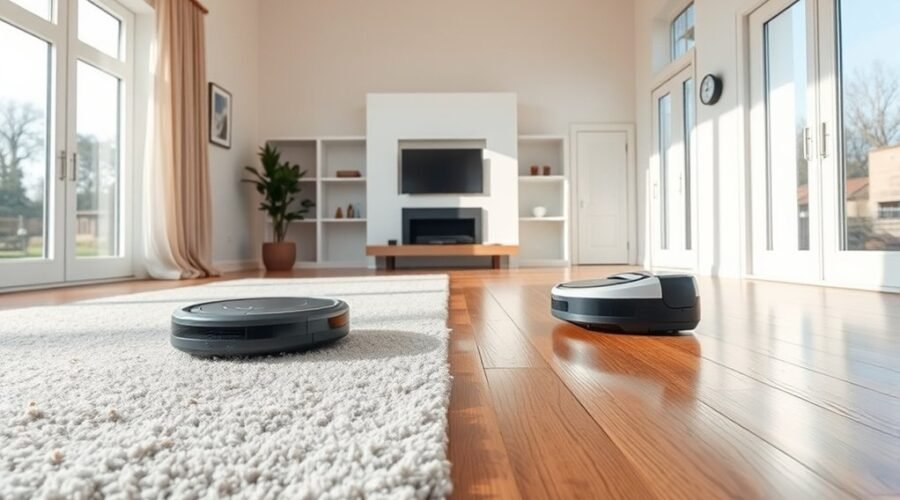
Vacuum-only robots and vacuum mop robots solve different cleaning problems. One focuses on suction and debris removal, while the other adds wet mopping for hard floors and spills. That difference affects performance, upkeep, battery use, and cost. For homes with mixed surfaces, the choice is not always obvious, and the tradeoffs are worth examining closely.
What Is a Vacuum Only Robot?
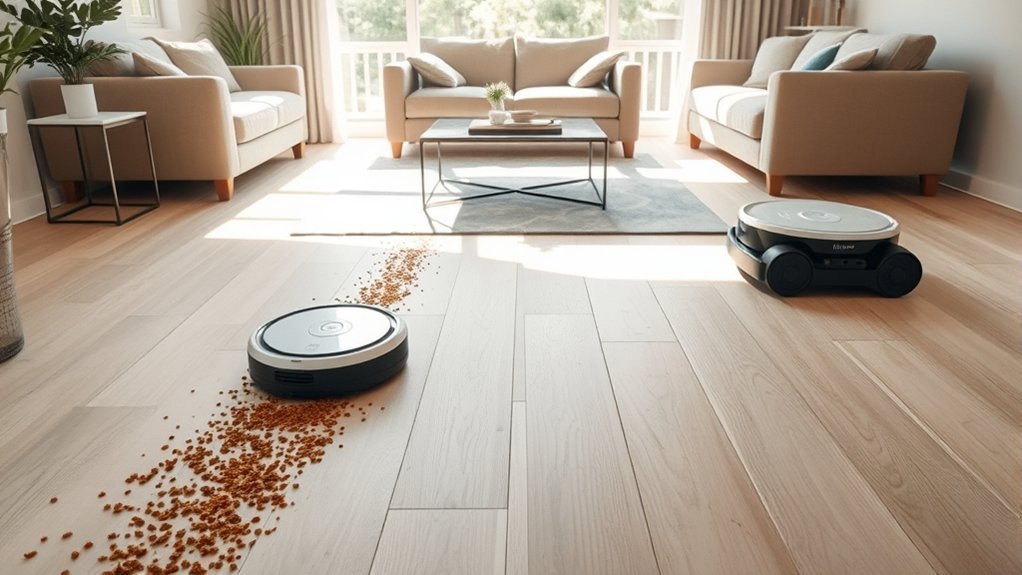
A vacuum-only robot uses suction as its sole cleaning method, collecting dry debris without mopping functionality. A vacuum-only robot concentrates suction power on dry debris across carpets and rugs, making it suitable for homes where floor care centers on dust removal rather than wet cleaning.
Its design usually includes fewer moving parts, which reduces maintenance demands and can extend battery life relative to hybrid units. In high-pile carpets, deep cleaning performance can be strong, with embedded dirt and allergens lifted from fibers through repeated passes.
Most models use smart technology, including app controls and scheduled cleaning, allowing users to reclaim time with minimal oversight. However, effective operation often requires a decluttered floor plan because cords and furniture can disrupt navigation.
For households seeking practical autonomy, this category offers a precise, low-complexity solution focused on suction-based cleanliness and efficient liberation from routine sweeping.
What Is a Vacuum Mop Robot?
Vacuum mop robots expand on suction-only cleaning by combining dry debris pickup with wet mopping in a single unit. A vacuum mop robot uses a water tank and microfiber mop pads to remove dust, crumbs, and light spills in one automated cleaning cycle.
Among robot vacuum cleaners, this hybrid format is designed to improve cleaning performance on hard floors, where liquid residue and fine debris often coexist. Some models use vibrating or rotating pads to increase contact and agitation, while others lift the mop pads when moving across mixed surfaces to reduce unwanted dampening.
The mopping function is typically suited to routine upkeep rather than deep scrubbing, but it can support homes with children or pets by handling frequent messes efficiently.
Regular maintenance is required: the water tank must be emptied, and mop pads should be washed or replaced to preserve hygiene and output.
Vacuum Only vs Vacuum Mop: Key Differences
While both robot types automate floor care, vacuum-only models are built for suction-based debris removal, whereas vacuum mop robots combine vacuuming with wet mopping in a single system. Vacuum-only robots prioritize suction power, brush rolls, and dirt and dust capture; vacuum mop robots add water delivery and pad agitation for cleaning surfaces. Their core differences appear below:
| Aspect | Difference |
|---|---|
| Cleaning mode | Dry suction vs dry-plus-wet action |
| Maintenance | Simpler bins and filters vs bins plus water tanks |
| Efficiency on surfaces | Strong on carpets vs best on hard floors |
| Cost considerations | Usually lower cost vs higher cost |
| Advanced features | Suction-focused designs vs self-washing pads, dual tanks |
Vacuum-only robots reduce upkeep and favor liberation from frequent maintenance. Vacuum mop robots offer broader cleaning surfaces coverage, but demand more attention to reservoirs and pads. The choice reflects whether the priority is debris removal efficiency or integrated mopping convenience.
Which Robot Works Best on Your Floors?
Floor type should determine the robot choice: vacuum-only models are optimized for carpets and high-pile surfaces, while vacuum mop robots are better aligned with hard floors and routine spill cleanup.
On carpets, dedicated vacuums generally maintain stronger debris removal, whereas hybrids can lose efficiency unless carpet detection and mop lift are reliable.
For mixed flooring, the main tradeoff is between mopping capability on hard surfaces and sustained performance on carpeted areas.
Floor Type Match
When surface conditions vary, robot selection should follow the dominant flooring type. For hard flooring, robot mops deliver efficient spill control and dirt removal, especially when clean water supports repeated vacuuming and mopping cycles.
Vacuum-only units provide stronger suction for deeper extraction and superior carpet performance on resilient fibers. In mixed floor types, vacuum mop combos offer the most flexible response, lifting mops over carpet while preserving surface sensitivity on delicate areas.
Robot mops suit daily maintenance in homes with frequent spills, reducing manual labor. Vacuum-only robots are better for less frequent, thorough cleaning sessions where carpeted zones demand higher suction.
Therefore, floor type match should prioritize liberation through low-intervention automation, selecting the machine that aligns with material, frequency, and cleaning depth.
Carpet Vs Hard Floors
Carpeted and hard flooring place different demands on robot cleaning systems, so the best choice depends on which surface dominates the home. A robot vacuum is strongest for carpet cleaning, especially high-pile fibers; ECOVACS X8 Pro OMNI leads at 75.5% efficiency. On hard floors, the 3i S10 Ultra reaches 99.75% efficiency and removes 39.9 grams of debris. | Surface | Best Type | Efficiency |
| — | — | — |
|---|---|---|
| Carpet | Vacuum-only robot | 75.5% |
| Hard floors | Vacuum mop combos | 99.75% |
| Mixed rooms | Hybrid models | High |
Vacuuming dominates carpet performance, while wet cleaning suits hard floors. Carpet detection and automatic cleaning mode switching improve results, but hybrid models may trade suction for versatility. For liberation from manual labor, choose vacuum-only for carpets, or vacuum mop combos for hard floors.
Mopping Needs And Tradeoffs
Mopping needs depend on the floor surface and the type of mess. On hard floors, vacuum mop combos and a robot mop provide direct spill response, and a strong mopping system can reduce manual effort.
Yet debris handling remains limited compared with a robot vacuum built for suction. On carpet, a hybrid vacuum with carpet detection and lift-up pads offers flexibility, but the tradeoffs include added complexity and reduced deep-clean performance versus dedicated vacuum-only models.
The ECOVACS X8 Pro OMNI shows superior vacuuming efficiency, making it more credible for carpeted cleaning than many mop-focused designs.
For mixed homes seeking liberation from repetitive upkeep, hybrid systems suit light daily cleaning, while a vacuum-only unit better serves large messes, high-pile carpet, and deeper debris removal.
Vacuum Only vs Vacuum Mop Costs
Upfront purchase price is often the clearest difference, with vacuum-only robots generally costing less than combo vacuum-mop units, while high-end robotic vacuums can still reach several hundred dollars.
Maintenance and supplies also vary, since vacuum mops require pads and water-tank cleaning, whereas vacuum-only models mainly need bin emptying.
Over time, long-term value depends on feature set, upkeep demands, and any available discounts or membership programs.
Upfront Purchase Price
Price is one of the clearest differentiators between vacuum-only robots and vacuum mop models. The upfront purchase price for a robot vacuum is typically higher, especially in high-end models with advanced features. By contrast, a vacuum mop is often a budget-friendly option for cleaning hard surfaces, with a lower initial investment.
| Type | Typical Price | Example |
|---|---|---|
| High-end robot vacuum | £500-£1,000 | Eufy Robot Vacuum |
| Vacuum mop | £100-£400 | BISSELL CrossWave |
| Entry-level robot vacuum | £139.99+ | Hoover HG2 Turbo Slim |
| Basic vacuum mop | £99.99+ | Shark VacMop |
| Comparison | Significant cost difference | More affordable for surfaces |
This significant cost difference makes entry-level robot vacuums and simple vacuum mop devices serve distinct needs. High-performance robot vacuums justify cost through performance, while simpler models emphasize access.
Maintenance And Supplies
Maintenance costs differ substantially between vacuum-only robots and vacuum mop models, as the former usually requires only dustbin emptying and routine filter care, while the latter adds ongoing expenses for mop pads, water tanks, and cleaning solutions.
In practice, maintenance for vacuum mop robots includes pad replacement, reservoir cleaning, and periodic refills, all of which raise upkeep costs and operational costs.
Vacuum-only units minimize cleaning supplies and reduce labor, making them easier to sustain.
Self-cleaning features in docked mop systems can lower manual maintenance, but they often increase initial costs and may still require consumables.
For homes with minimal spills, vacuum-only robots remain the leaner option; frequent messes can justify the added maintenance burden of mop-capable models.
Long-Term Value
Long-term value tends to favor vacuum-only robots when total ownership cost is considered rather than purchase price alone. Vacuum-only models usually cost less upfront, and their maintenance costs remain lower because they avoid mopping pads, water tanks, and related cleaning routines.
Vacuum mop robots offer dual functionality, yet added complexity raises repair costs and increases malfunction risk. Over a typical lifespan of about five years, this difference can erode savings. Vacuum mop robots may appear efficient, but their long-term value weakens when upkeep and replacement parts are included.
In homes dominated by carpets, the mop system often adds little utility while still imposing extra cost. For users seeking practical freedom from recurring expense, simpler vacuum-only designs generally deliver stronger ownership economics.
Which Robot Is Easier to Maintain?
Vacuum-only robots are generally easier to maintain because they have fewer components to clean and service, with no water tanks, mopping pads, or fluid pathways to manage.
Vacuum-only robots are easier to maintain because they have fewer parts, with no water tanks or mopping pads to service.
Vacuum-only robots like the Roborock Saros 10R typically demand lower maintenance frequency, since upkeep centers on emptying dust bins, clearing brushes, and checking for hair tangles.
By contrast, combo robot vacuums add water tanks and mopping pads to the service load, which increases routine cleaning and inspection.
Dirty pads can reduce cleaning performance by spreading residue instead of removing it, so they must be washed or replaced regularly.
Models such as the ECOVACS X8 Pro OMNI show that dual-function systems can work well, but they require more attention than single-purpose units.
The eufy S1 Pro also illustrates how hair tangles can raise upkeep demands.
For users seeking autonomy, simpler robots usually offer longer lifespan and less maintenance burden overall.
Frequently Asked Questions
Which Is Better for My Home, a Robot Vacuum or a Vacuum and Mop?
A robot vacuum suits carpets and higher robot efficiency; a vacuum and mop suits hard floor types and spills. Cleaning performance, maintenance ease, price comparison, noise levels, battery life, smart features, user reviews, brand reliability should guide selection.
Is It Better to Get a Robot Vacuum With or Without a Mop?
Without a mop, a robot vacuum usually offers better robot efficiency, battery life, and lower maintenance requirements. With a mop, cleaning performance improves on hard floors. Surface compatibility, price comparison, user reviews, and technology advancements guide convenience factors.
Is It Better to Get Separate Robot Vacuum and Mop?
Separate units suit mixed floor types: one drives suction power, the other mopping. This improves robot efficiency, cleaning schedules, and maintenance costs, though water tank upkeep, noise levels, smart features, and brand comparisons affect user preferences.
What Are the Drawbacks of Vacuum Mops?
Vacuum mops often limit floor compatibility, reduce mop efficiency, and weaken cleaning performance. They can raise maintenance costs, complicate water management, shorten battery life, increase noise levels, restrict scheduling flexibility, and depend on brand reliability for user experience.
Conclusion
In the end, the choice is hardly mysterious: vacuum-only robots do one job with admirable discipline, while vacuum-mop robots attempt the noble but slightly messy ambition of doing two. The former suits carpets, debris, and low-maintenance households; the latter favors hard floors and spill-prone spaces, provided one accepts extra upkeep. As with most household technology, simplicity tends to age better than versatility, and the robot with fewer moving parts is often the one that keeps working.