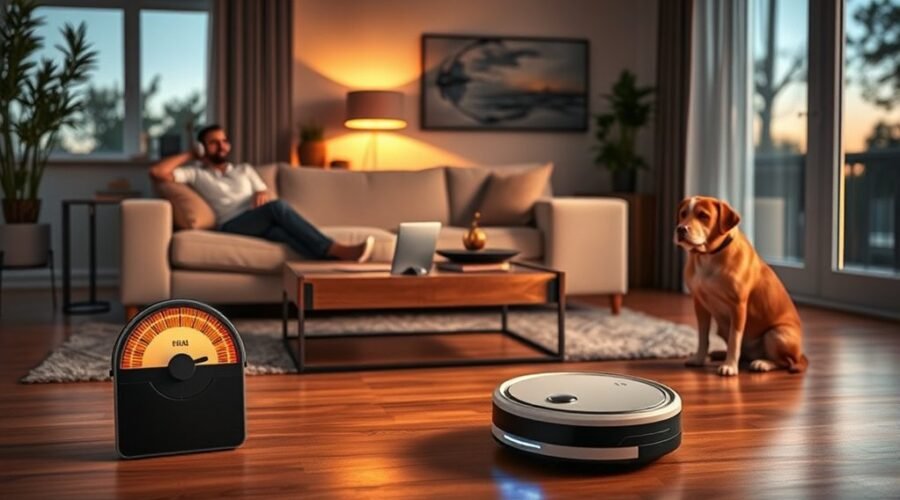
Robot vacuums typically produce 55 to 70 decibels, placing them between normal conversation and a loud office. Units below 60 dB are usually considered quieter, especially for apartments or homes with open layouts. Noise can rise with hard floors, clogged brushes, worn parts, or poor maintenance. The real question is not only how loud they are, but why some become noticeably harsher over time.
How Loud Is a Robot Vacuum?
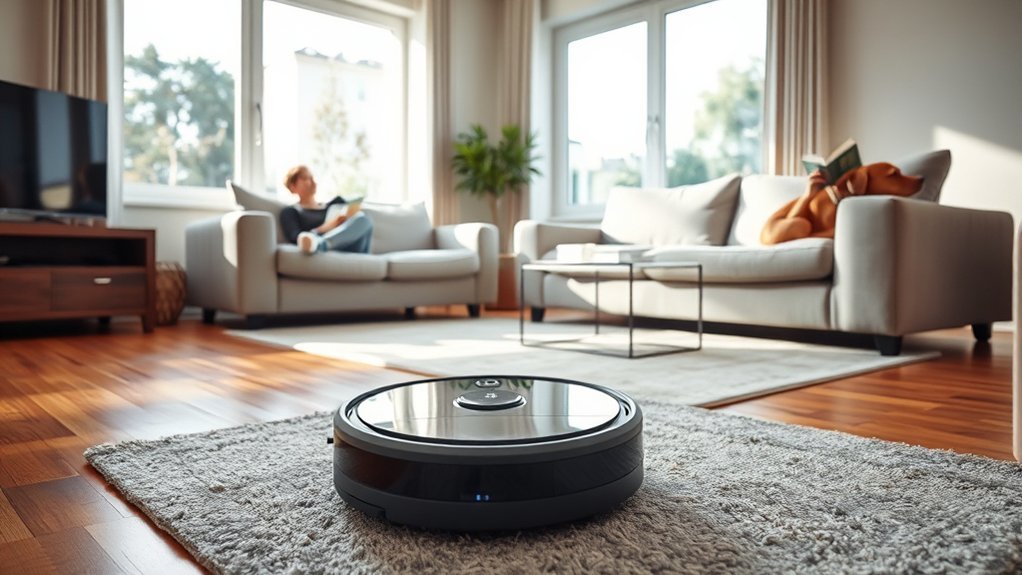
How loud is a robot vacuum? In technical terms, robot vacuum noise typically falls between 55 and 70 decibels, placing the noise level below many conventional uprights. That range supports quiet operation for households seeking less auditory intrusion and more autonomy in daily cleaning.
The quietest models, including selected DEEBOT units, are engineered to limit motor and fan output, with some rated near 55 dB. Perceived loudness is not fixed; it shifts with cleaning mode, surface type, and environmental acoustics. Hard floors can reflect sound and make the machine seem louder.
Wear also matters: older units often increase in noise as components age. Regular maintenance, including brush cleaning and dust-bin emptying, helps preserve low output and stable performance.
For users prioritizing liberation from manual labor, these decibel levels offer a workable balance between mechanical efficiency and acceptable acoustic impact.
What dB Levels Count as Noisy?
Noise becomes more noticeable once sound levels rise above 70 dB, a threshold at which many traditional vacuum cleaners are generally considered noisy. At this point, decibels (dB) reflect a level that can dominate background noise and reduce comfort.
A robot vacuum usually operates between 55 and 70 dB, so it is often judged more quiet than a traditional vacuum. Yet perceived noise is not determined by number alone; a 3-5 dB shift can materially change how intrusive the sound feels.
- Below 60 dB: ideal noise levels for unobtrusive use.
- 60-70 dB: acceptable, but increasingly noticeable.
- Above 70 dB: noisy enough to command attention.
- High-pitched sounds: more intrusive at equal dB levels.
For users seeking liberation from disruption, lower noise levels support cleaning that remains present, yet less controlling.
What Makes Robot Vacuums Noisy?
Robot vacuums become louder when mechanical resistance or airflow restriction increases during operation. Noise often rises from debris collecting inside the housing, a clogged filter limiting airflow, or wear in key components such as brushes and wheels.
These conditions raise vibration, friction, and drag, making the unit sound loud even when its motor output has not changed. Typical vacuum decibel readings fall between 55 and 70 dB, yet older models may exceed that band as parts age and tolerances loosen.
Vibration, friction, and drag can make a robot vacuum sound louder, even without a motor increase.
Wheel misalignment or damage can add scraping or dragging sounds, further increasing noise levels. Poor maintenance, especially neglecting the dustbin and brush set, allows residue to accumulate and amplifies acoustic output over time.
Regular inspection of the components restores cleaner motion, reduces resistance, and keeps operation more controlled. For owners seeking quieter performance, disciplined maintenance is the practical route to lower noise.
Why Your Robot Vacuum Got Louder
A robot vacuum can grow noticeably louder when debris accumulates inside the unit, restricting airflow and increasing resistance through the system. As the robot vacuum encounters clogged filters or hidden obstructions, motor load rises and noise levels shift upward.
Damaged wheels or brushes may add scraping, rattling, or irregular vibration, making the device sound louder than normal. Over time, insufficient maintenance accelerates wear, so the machine loses its quiet performance and operates outside the expected 55-70 dB range.
- Debris buildup narrows internal passages and strains airflow.
- Clogged filters force the motor to work harder.
- Worn wheels or brushes create abnormal acoustic signatures.
- Routine inspection identifies faults before noise escalates.
These changes are mechanical, not mysterious, and they signal a need for structured maintenance. For owners seeking liberation from avoidable disturbance, recognizing the source of the louder sound is the first analytical step toward restoring predictable operation.
How to Reduce Robot Vacuum Noise
Inspecting the brush roll and wheels is a primary noise-control measure, as trapped debris or misalignment can produce rattling and increased vibration.
Clogs in the intake path and accumulation of dirt should be cleared routinely, since restricted airflow and obstruction often raise motor load and acoustic output.
Consistent maintenance of these components helps preserve smoother operation and lower overall sound levels.
Inspect Brushes And Wheels
Brushes and wheels should be checked regularly for hair tangles, trapped debris, misalignment, and visible wear, since each of these conditions can increase rattling, friction, and overall operating noise. Routine maintenance helps a robot vacuum reduce noise while preserving cleaning efficiency.
- inspect brushes for hair tangles and worn bristles.
- verify wheels roll freely and stay aligned.
- replace damaged parts to restore peak performance.
- confirm loose components are secured before use.
When brushes are clean and wheels are unobstructed, noise levels decline and motion becomes more stable.
Worn brushes should be cleaned or replaced promptly, because added friction raises sound output. If cracks or loosened fittings appear, repair is warranted.
Consistent attention to these parts supports quieter operation and more effective coverage.
Clear Clogs And Debris
After brushes and wheels are checked for wear and alignment, the next source of excess noise is often internal or trapped debris. Owners can clear clogs in the dustbin and filters to lower noise levels, since restriction increases motor strain and unwanted sounds.
Debris accumulation in the brush roll or wheels also raises vibration; routine cleaning limits this effect and preserves smoother motion. Hair and dirt should be removed to keep airflow unobstructed, because poor airflow can amplify acoustic output.
Maintenance checks should also identify damaged components, such as cracked wheels or worn brushes, which generate abnormal noise. Regular cleaning is consequently not cosmetic maintenance but a control measure that helps keep the machine quiet, efficient, and operationally free.
Best Quiet Robot Vacuums
The MOVA V50 Ultra represents the quietest overall performance, combining low operating noise with 24,000 Pa suction.
For best value, the Eufy Robot Vacuum 11S MAX offers quiet cleaning in a budget-oriented format, while the Roborock S7 MaxV Ultra provides a balanced option with quiet mode near 60 dB.
Across these models, brushless motors and sound-dampening designs illustrate the primary noise-reduction strategies used in modern robot vacuums.
Quietest Overall Performance
Among quiet robot vacuums, the MOVA V50 Ultra stands out as the quietest overall performer, combining low operating noise with 24,000 Pa of suction. This quietest robot vacuum pairs high suction power with a low noise robot vacuum profile, preserving cleaning performance without intrusion.
Its noise level suits a daily routine that values autonomy and calm. Advanced features, including brushless motors and optimized airflow, reduce acoustic output while sustaining effective debris removal.
Premium models typically remain near 60-65 dB, enabling unobtrusive cleaning that does not dominate a room.
- High suction with controlled acoustics
- Lower disturbance during work or rest
- Efficient floor coverage without compromise
- Technical design that supports liberation
Best Value Choice
For buyers balancing quiet operation and cost, the Eufy Robot Vacuum 11S MAX is the strongest value option, delivering remarkably low noise—comparable to a microwave—without moving into premium pricing. It belongs among the quietest robot vacuums for users who prioritize freedom from disruption.
| Metric | Assessment |
|---|---|
| Noise level | Low |
| Cleaning performance | Solid |
| Price tier | Budget-friendly |
| Control features | Basic |
Its noise control suits apartments and shared spaces, while effective cleaning remains adequate for daily maintenance. Unlike models with advanced features, it avoids unnecessary complexity and keeps the package lean. App scheduling is limited, yet the unit still supports predictable operation. For households seeking low noise levels without premium spending, the 11S MAX offers a clear, technically efficient compromise between silence and coverage.
Smart Noise Reduction
Quiet operation is not only a matter of lower decibel output, but also of how a robot vacuum manages motor design, airflow, and vibration. Smart noise reduction in a quiet robot vacuum typically holds the sound level near 55–60 decibels (dB), limiting disruption during work or sleep.
Advanced models achieve this through brushless motors, refined fan geometry, foam insulation, and vibration dampening, preserving high suction power without sacrificing cleaning performance.
- App scheduling lets cleaning run when occupants are away.
- Maintenance of filters and dust bins prevents acoustic strain.
- Engineered airflow reduces turbulence and tonal noise.
- Premium chassis isolation stabilizes moving parts.
These controls create quieter autonomy, helping users reclaim calm spaces while keeping daily cleaning efficient and predictable.
Frequently Asked Questions
What Are the Downsides of Using a Robotic Vacuum Cleaner?
Downsides include noise levels, limited cleaning efficiency, reduced battery life, maintenance costs, floor compatibility constraints, imperfect smart features, pet hair handling, and navigation technology errors, all of which can degrade user experience in demanding spaces.
Are There Quieter Robot Vacuums?
Yes—quieter robot vacuums exist. Like a midnight metronome at 55 dB, quiet models deliver silent operation; noise levels vary by floor types, suction power, and cleaning efficiency, while user experiences, sound comparisons, and brand reviews confirm it.
Is 70 dB Loud for a Vacuum?
Yes; 70 dB is loud for a vacuum. Noise levels may still balance vacuum efficiency and cleaning performance, but comfort levels, user preferences, pet reactions, floor types, battery life, and maintenance tips matter.
How Many Decibels Is a Roomba?
A Roomba typically measures 60–66 dB, reaching about 71 dB on max suction; Roomba noise varies with Decibel levels, Cleaning efficiency, Battery life, Floor types, Maintenance tips, User reviews, Brand comparisons, and Performance metrics.
Conclusion
Robot vacuums typically operate between 55 and 70 dB, with units below 60 dB considered relatively quiet. Noise rises when hard floors reflect sound, brushes encounter debris, or maintenance is neglected. In this sense, a well-kept vacuum is like a tuned instrument: it performs smoothly and with less acoustic friction. For quieter operation, regular cleaning and careful model selection are essential, especially in shared or noise-sensitive living spaces.