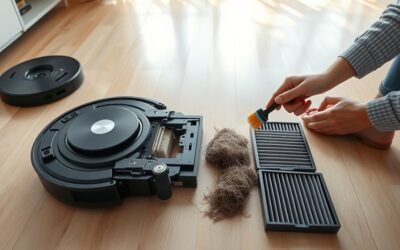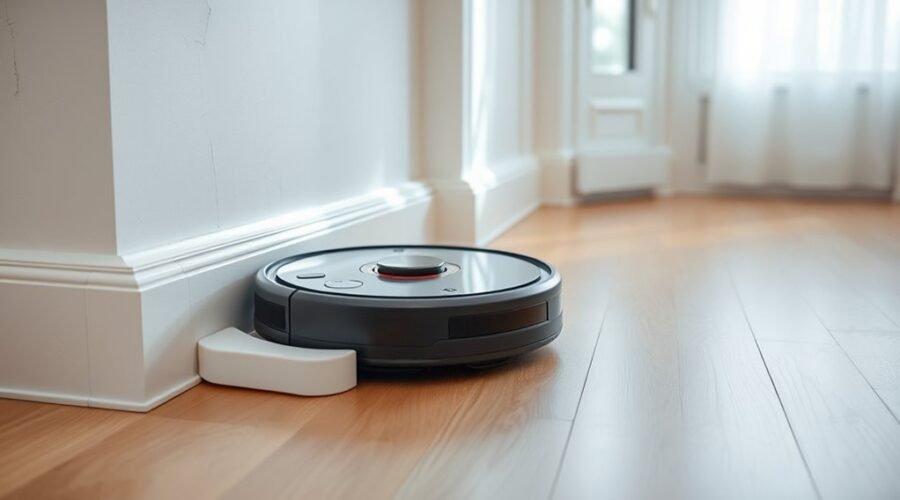
Robot vacuums can damage baseboards, especially at outside corners where impacts are repeated and concentrated. Hard bumpers may leave scuffs on painted surfaces, while softer bumper designs usually reduce wear. The risk depends on contact force, finish type, and cleaning pattern. Simple safeguards can limit damage, but the key limits are not always obvious. A closer look shows where the problem starts and which fixes actually matter.
Can a Robot Vacuum Damage Baseboards?
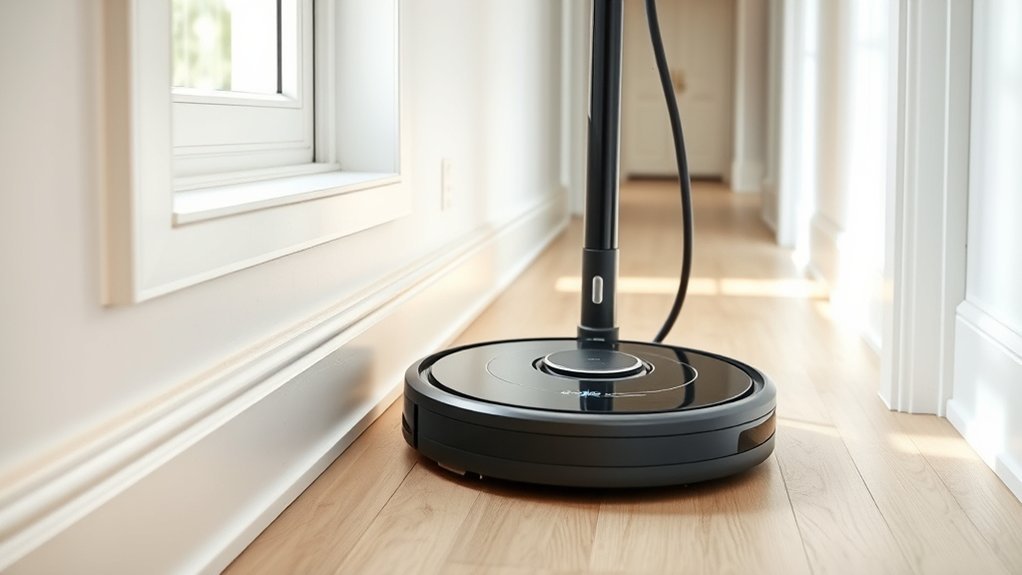
Yes—robot vacuums can damage baseboards, especially painted ones at outside corners where repeated contact is concentrated. Reported outcomes range from minor marks after a few passes to visible scuffing on softer finishes.
The robot vacuum does not need high force to leave evidence; persistent edging and contact are enough when the paint film is weak or poorly bonded. Baseboard durability consequently varies with finish quality, surface hardness, and how much traffic a wall edge receives.
Persistent edging can mark weak paint; baseboard durability depends on finish quality, surface hardness, and wall-edge traffic.
Newer robot vacuum designs with soft-touch bumpers reduce risk, but they do not eliminate it. Practical mitigation is straightforward: inspect corners routinely, clean and repair damaged paint early, and add felt floor protection strips where impacts recur.
These measures preserve the condition of the room without requiring constant labor. For users seeking freedom from manual cleaning, the key is to treat the machine as useful but not harmless.
What Causes Baseboard Scuffs?
Baseboard scuffs usually result from hard bumper contact when a robot vacuum makes repeated impacts during navigation.
Painted edge wear can appear quickly where the finish is thin or poorly cured, especially after multiple passes.
Corner contact points are the most vulnerable because outside corners concentrate force and leave visible marks more readily.
Hard Bumps
Hard bumps are a common cause of baseboard scuffs when a robot vacuum repeatedly contacts walls or trim, especially with older models that use stiffer, less forgiving bumpers and transfer more impact to the surface.
A robotic vacuum with limited compliance can strike the same edge many times, and outside corners are especially exposed. Repeated contact increases visible marking even when the contact seems minor.
Paint quality also matters: weak or uneven coatings tend to scuff faster under impact.
Newer units often use softer bumpers, which lower force and reduce damage.
Practical control comes from inspection, placement tuning, and protective felt strips where needed. This keeps the machine working without letting routine navigation erode the room’s finish or the user’s autonomy.
Painted Edge Wear
Painted edge wear typically occurs when a robot vacuum’s hard body or bumper repeatedly rubs against painted baseboard surfaces, especially at outside corners where contact is concentrated.
Robot vacuums can leave scuffs when rigid edges abrade thin or poorly cured paint. In many homes, visible marks appear after only a few cleaning cycles, showing that finish quality matters as much as machine design.
Older units often transmit harder impacts, while newer models use softer bumpers that reduce abrasion but do not eliminate it.
The practical response is simple: inspect baseboards regularly, note fresh wear early, and improve the coating if needed. A durable paint job preserves clean lines, limits recurring damage, and keeps routine cleaning from becoming a source of avoidable friction.
Corner Contact Points
Scuffs most often appear at outside corners, where a robot vacuum’s body or bumper makes repeated point contact with painted trim.
These corner strikes concentrate force on a small area, so a robot vacuum can damage painted baseboards even when overall movement seems gentle. Older units without soft-touch bumpers tend to hit harder and leave visible marks sooner.
Paint formulation also matters: harder, more durable coatings resist abrasion better than soft or worn finishes. After repeated passes, wear may build into scratches or dull spots, especially along tight turns and obstacles.
Adding soft felt discs or similar accessories can reduce impact at contact points, lowering the chance of baseboard scuffs while preserving routine cleaning performance and household autonomy.
Which Robot Vacuum Models Are Gentler?
Newer robot vacuum models are generally gentler on baseboards than older units, largely because they use softer-touch bumpers and improved navigation that reduce direct impact. In practice, recent Roomba versions and similar units are less likely to mark white baseboards or furniture during routine cleaning. Older models with harder bumpers show a higher chance of scratches, especially at repeated contact points.
| Model class | Typical contact outcome |
|---|---|
| Older units | More scuffing, harder hits |
| Newer units | Fewer marks, smoother turns |
| Newer plus felt discs | Added margin against abrasion |
Verified purchasers often report minimal damage after long use, including over a year of operation. That pattern suggests current designs are better suited for users seeking low-intervention cleaning without surrendering surfaces to wear. Soft felt discs can add another layer of protection, but model choice remains the main factor.
How Soft Bumpers Protect Baseboards
Soft bumper cushioning on newer robot vacuums absorbs contact energy before it reaches baseboards.
This reduces scuffs, paint transfer, and surface scratches compared with harder housing materials.
The result is gentler wall contact without compromising cleaning coverage.
Soft Bumper Cushioning
Recent robot vacuum models use soft-touch bumpers to reduce direct impact against baseboards and walls, helping limit scratches and scuff marks during routine navigation.
This soft bumper cushioning relies on compliant materials, often foam-rubber blends, that compress on contact and absorb kinetic energy before it reaches finished trim. Compared with older rigid designs, the result is gentler surface interaction and fewer hard strikes at corners or along narrow passes.
The cushioning also supports smoother movement around furniture edges and wall lines, reducing abrupt corrections that can wear paint over time. User reports frequently note minimal baseboard marking, and manufacturer guidance describes these bumpers as a practical safeguard for maintaining surface integrity without sacrificing autonomous cleaning freedom.
Reducing Baseboard Scuffs
A growing number of robot vacuum models now use soft-touch bumpers that compress on contact, absorb impact, and reduce the chance of scuff marks or scratches on baseboards during routine navigation.
This design improves collision tolerance versus older units with harder fronts. iRobot representatives have confirmed that these bumpers support gentle movement around painted trim and adjacent surfaces.
Verified purchaser feedback also shows that newer models usually leave baseboards with minimal or no damage. In higher-use homes, users sometimes add soft felt discs beneath a Roomba to further limit scuffing and protect finishes.
Community guidance treats soft bumpers as a practical preventive measure: they help preserve walls, reduce repair needs, and let owners move through daily cleaning with less concern and more control.
Why Painted Baseboards Scuff More Easily?
Painted baseboards tend to scuff more easily because the finish is often a thin, less durable layer than the underlying material, making it more vulnerable to repeated contact from a robot vacuum.
That vulnerability matters in homes where a robot runs often to keep floors clean. Even brief brush contact can leave visible marks, especially when the coating is low-grade or unevenly applied. Users commonly report scratches after only a few passes, indicating that the paint film can fail before the baseboard itself shows wear.
Frequent robot passes can quickly mark low-quality painted baseboards, leaving visible scuffs after just a few brushes.
Outside corners are the highest-risk zones because they project into the robot’s path and take the first hit during navigation. Once the finish is compromised, subsequent passes can enlarge the scuff and expose more of the surface beneath.
In practice, paint quality and edge geometry determine how fast damage appears, making painted trim a weaker barrier than unpainted or factory-finished surfaces.
How to Prevent Robot Vacuum Baseboard Damage
Reducing robot vacuum baseboard damage starts with limiting contact at the points most likely to hit, especially outside corners and trim edges.
Felt floor protection strips can be placed on vulnerable corners to absorb impact and reduce abrasion. Bumper guards add another barrier, keeping plastic housings and painted trim from direct contact.
Vacuum behavior also matters: lower speed settings and gentle navigation modes reduce lateral force and repeated scraping along walls. Where available, manufacturer guidance should be consulted for approved accessories and safe operating limits, since the best protection depends on the model’s clearance and sensor layout.
Regular inspection of baseboards supports timely intervention before wear expands. Such measures preserve surfaces without sacrificing convenience, giving users more control over automated cleaning. Rights Reserved.
A practical setup combines padding, restrained motion, and informed use, allowing the machine to operate with less risk to finishes while keeping maintenance simple and predictable.
How to Spot Early Scuff Marks
Early scuff marks on baseboards often appear first as faint gray streaks, small paint abrasions, or dull spots along white trim, especially at outside corners where a robot vacuum is most likely to make contact.
Scuff Detection should focus on these high-risk points after the first few cleaning cycles. Regular inspection under bright light helps expose subtle changes before the finish fails. Users have reported visible wear after only a few uses, even with newer models, so early checks remain necessary.
Focus on high-risk points early; subtle scuffs can appear after just a few cleaning cycles.
A fingertip or dry cloth can confirm whether a mark is merely dust or actual damage. Pay attention to repeated paths near walls, where contact can accumulate quietly. If discoloration deepens, repainting may eventually be required.
Consistent monitoring gives the owner more control over surface care and reduces dependence on trial and error. Early recognition protects the trim and preserves clean lines without adding friction to daily cleaning routines.
When to Use Felt Strips or Bumper Guards
Once scuff marks are identified along baseboards, protective materials become the next practical measure. Felt strips belong on outside corners, where repeated contact from a robot vacuum most often produces scratches. Bumper guards suit higher-risk layouts, especially where furniture legs, wall edges, and docking paths converge. These Protection Strategies preserve painted surfaces without restricting routine cleaning.
| Option | Best use | Effect |
|---|---|---|
| Felt strips | Corner edges | Reduces scuffs |
| Bumper guards | Walls and furniture | Absorbs impact |
| Both together | Mixed-risk rooms | Improves defense |
| Soft-touch bumpers | Newer vacuums | Lowers abrasion |
| Manufacturer advice | Unclear layouts | Refines selection |
Regular application supports baseboard appearance and extends service life. Reports indicate that pairing felt strips with newer models already equipped with soft-touch bumpers further reduces marks. When uncertainty remains, consulting the manufacturer helps match protection to the vacuum, floor plan, and docking needs.
Frequently Asked Questions
How to Protect Baseboards From Robot Vacuum?
Preventive Measures include attaching felt strips to baseboard corners, adding soft felt discs to the vacuum, lowering speed, selecting gentle navigation, inspecting wear regularly, and consulting the manufacturer for surface-specific protection guidance.
What Robot Vacuum Doesn’t Damage Baseboards?
Robot vacuums with soft-touch bumpers and careful Vacuum Design, especially newer mapping models, are least likely to damage baseboards. Gentle navigation, low-impact casing, and optional felt pads further reduce scuffing during routine cleaning.
What Are the Downsides of Using a Robotic Vacuum Cleaner?
The downsides include limited Cleaning Efficiency on edges, stairs, and thick carpet, occasional baseboard scuffs, noise, maintenance, map errors, and battery wear. It frees labor, yet still requires supervision, emptying, and periodic repair.
Why Is My Robot Vacuum Leaving Marks on My Baseboards?
Marks appear because the robot vacuum is contacting painted baseboards too hard, especially on corners or weak finishes. Mark Prevention requires soft bumpers, felt pads, and regular inspection; older models often scuff more.
Conclusion
Robot vacuums can, in fact, turn baseboards into a slow-motion battlefield, especially at outside corners where repeated impacts concentrate. Hard bumpers and painted finishes make scuffs far more likely, while soft-bumper models reduce the risk substantially. Routine inspection, careful placement of felt strips, and bumper guards can prevent minor contact from becoming visible damage. In practical terms, the threat is real but manageable, and early protection is far cheaper than repairing battered trim.