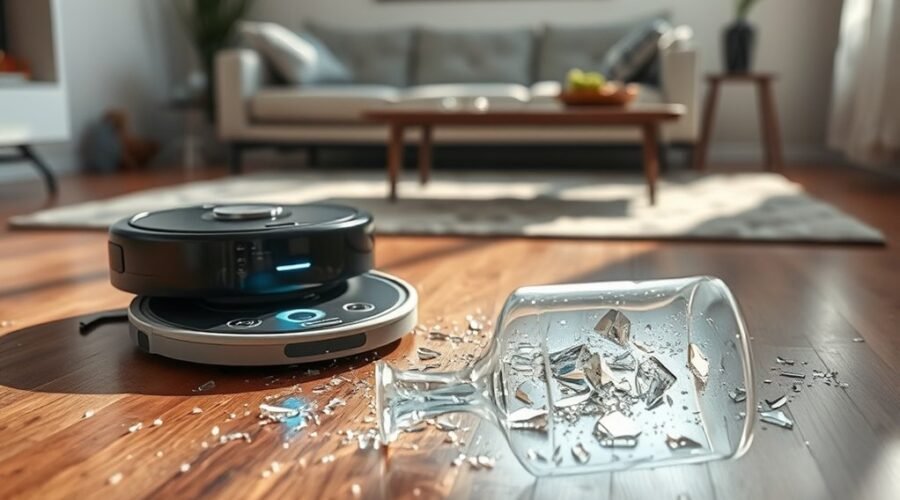
Robot vacuums are generally a poor choice for broken glass cleanup. Sharp shards can damage brushes, wheels, filters, and internal suction parts, while fine fragments may escape or clog the system. A standard vacuum may also spread debris or leave hidden pieces behind. Safe cleanup usually starts by hand, with a shop vac reserved for the smaller residue. The key question is not just whether it works, but what it may cost.
Can You Vacuum Broken Glass?
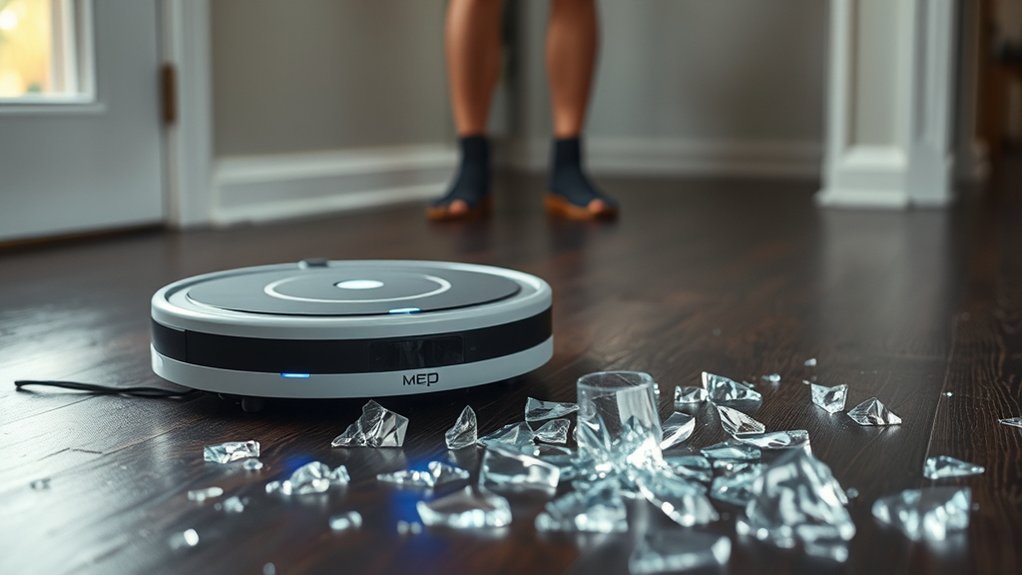
No robot vacuum should be used to clean broken glass, because it cannot reliably distinguish hazardous shards from ordinary debris.
To vacuum broken glass is to accept avoidable risk: sharp glass shards can lodge in wheels, scratch floors, and disrupt navigation. Small fragments may also pass through weak filtration and reenter the air, exposing occupants to injury.
A robot’s sensors and motors are not built for abrasive debris, so even limited contact can create costly failure.
The practical approach is manual first aid for the room: use a broom and dustpan to collect larger pieces, then inspect the surface under strong light. Only after the area is clear should a vacuum handle any remaining tiny particles.
This sequence helps clean up safely while preserving the machine and the floor.
In short, liberation from waste also means rejecting automated shortcuts when shattered glass is present.
Why Broken Glass Damages Vacuums
Broken glass damages robot vacuums because their internal systems are not designed to tolerate sharp, abrasive debris. The risk begins with glass shards striking delicate sensors and moving parts, which can cause immediate damage to your vacuum and reduce reliability.
Small fragments may wedge in the wheels, limiting traction, scratching floors, and restricting motion. In addition, broken glass can enter the filtration path, where it may clog passages and lower suction, weakening cleaning performance.
Small fragments may jam wheels, scratch floors, and clog filters, reducing suction and cleaning performance.
Sharp pieces can also cut flexible hoses or seals, creating leaks that further degrade operation. Fine particles are harder to trap and may be returned to the air during use, increasing irritation risks.
For people seeking freedom from preventable repair costs, the practical conclusion is simple: broken glass is a high-risk material for robot vacuums, and glass shards should be removed by hand before automated cleaning begins.
How Glass Damages a Vacuum Inside
Inside a robot vacuum, glass shards can cause damage quickly and in multiple ways. Sharp fragments may puncture hoses, creating air leaks and reducing suction. Fine debris can clog filters and airways, restricting flow and making the unit work harder. | Damage point | Effect | Result |
| — | — | — |
|---|---|---|
| Hose | Puncture | Suction loss |
| Motor and fan | Scratches | Internal wear |
| Wheels | Lodging | Mobility loss |
| Filters | Clogging | Performance drop |
Internal components face direct risk when shards enter the housing: motors and fans may be scratched, bent, or unbalanced. Wheel assemblies can trap fragments, which may scratch floors and impair movement. Even small particles can accumulate until the system strains enough to fail. In practice, the result can destroy vacuum reliability and trigger warranty loss, leaving owners with repair costs that often exceed replacement value. For users seeking control over their space, the practical response is clear: avoid glass pickup with this machine and remove debris manually before operation.
Which Vacuums Are Safe for Glass Cleanup?
For glass cleanup, industrial shop vacs are the only vacuum type generally suited to the task, because their durable parts are designed to tolerate sharp debris.
Robot vacuums are a poor choice, since shards can lodge in wheels, damage sensors, and reduce performance.
Safer cleanup typically starts with manual pickup of larger pieces, followed by a shop vacuum for fine remnants only after the area is cleared.
Industrial Shop Vacs
Industrial shop vacs are generally the safest vacuum category for cleaning broken glass because they are built for heavy-duty debris handling. Their wide hoses, durable drums, and strong suction let them collect sharp shards and fine particles without strain. Heavy-duty filters help trap dust, limiting airborne contamination and protecting indoor air. For practical use, the unit should match the debris load and be operated with protective gear and the manufacturer’s instructions.
| Feature | Benefit |
|---|---|
| Wide hose | Handles larger shards |
| Durable drum | Resists damage from glass |
| Heavy-duty filter | Captures fine debris |
For households seeking clean, self-directed recovery after a breakage, industrial shop vacs offer a reliable, controlled method for broken glass cleanup.
Robot Vacuum Risks
Robot vacuums are generally not recommended for broken glass cleanup because they cannot distinguish safe debris from hazardous shards, creating a high risk of internal damage.
In robot vacuum risk assessments, glass shards can lodge in wheels, scratch floors, and disrupt navigation. Mechanical issues may follow when fragments reach brushes or the motor, reducing suction and shortening service life. Fine particles can also bypass filtration, leaving airborne residue that undermines a liberated, healthy home environment.
- Wheels can seize.
- Motors can be compromised.
- Sensors may misread debris.
- Repairs may exceed replacement value.
For practical use, these machines are poor candidates for glass cleanup. The safest operational decision is to avoid running a robot over shattered material, since precision engineering offers no protection against sharp, irregular fragments.
Safer Cleanup Tools
When broken glass must be cleared, manual tools remain the safest primary option, with a broom, dustpan, and tape or damp paper towels used for fine fragments. This manual cleanup limits wheel damage, sensor failure, and scratches. Among safer cleanup tools, only industrial shop vacuums are built for glass shards, using wide hoses and durable parts to reduce clogging. Household vacuums, cordless sticks, robot vacuums, and wet/dry units are not suited for jagged debris.
| Tool | Glass-safe |
|---|---|
| Broom | Yes |
| Dustpan | Yes |
| Tape | Yes |
| Shop vacuum | Yes |
| Robot vacuum | No |
For liberation from repair costs, the rule is simple: clear glass by hand first, then vacuum only non-hazardous debris.
How to Clean Broken Glass Safely
Safe cleanup begins by securing the area and removing pets and children to prevent contact with sharp fragments. A careful vacuum may seem convenient, but to clean up glass, the method should avoid vacuuming glass because loose shards can damage equipment and spread hazards.
- Use a broom and dustpan for large shards, lifting rather than sweeping to limit scattering.
- Press damp paper towels or sticky tape onto tiny splinters to collect fragments without pushing them deeper.
- Inspect floors, rugs, and baseboards with a flashlight; missed particles can remain nearly invisible under normal light.
- Place all collected glass in a labeled, sturdy container before disposal to reduce injury risk.
This process supports controlled cleanup and preserves personal autonomy through disciplined, low-risk action.
When a Shop Vac Is the Better Choice
A shop vac is the better choice when broken glass is present because its durable drum, reinforced hose, and heavy-duty filter are built for abrasive debris.
It can collect larger shards and fine fragments more effectively than a standard or robot vacuum, reducing the chance of clogs or punctures.
This design also lowers the risk of internal damage while improving cleanup safety.
Shop Vac Durability
Shop vacs are built for tougher cleanup tasks and are often the better choice for broken glass. Their shop vac durability comes from reinforced drums, wide hoses, and heavy-duty filters that tolerate sharp debris better than a standard vacuum. This reduces clogging, puncture risk, and internal wear during broken glass cleanup.
- Wide hose: moves shards without tight bends.
- Heavy-duty filter: traps large fragments efficiently.
- Durable drum: resists impact and abrasion.
- Strong suction: lifts wet or dry debris.
For practical use, that build supports efficient recovery and limits repair costs. A shop vac gives users more control over hazardous messes, making cleanup faster and less dependent on fragile household equipment.
Better Glass Pickup
When broken glass is involved, a shop vac is often the better choice for pickup because it is built to handle sharp, heavy debris without the limitations of a robot vacuum.
Robot vacuums are not designed for glass shards; their sensors, wheels, and cleaning paths can be compromised by sharp fragments, and suction is usually insufficient for complete recovery.
Shop vacs provide stronger airflow and more durable collection systems, making them more effective for clearing fragments from floors and edges.
Heavy-duty filters in shop vacs also support wet and dry cleanup, adding practical flexibility.
For efficient glass pickup, shop vacs reduce manual effort and help restore a space faster, while robot vacuums remain suited to lighter debris and routine maintenance.
Lower Damage Risk
Reduced damage risk is a major reason a shop vac is the better choice for broken glass cleanup. A robot vacuum cannot reliably separate safe debris from sharp shards, so broken glass can damage sensors, wheels, and internal parts.
Flexible wheels may snag, scratch flooring, or stall the unit, while suction can scatter fine fragments into the air. A shop vac is built for harsher debris and contains this task better, reducing risk to the machine and the room.
- Glass shards enter the tank safely.
- Larger pieces are lifted without clogging.
- Smaller fragments are collected with strong suction.
- Floor and device damage stay lower.
How to Remove Tiny Shards and Dust
After the larger glass pieces are removed by hand, the remaining tiny shards and dust should be addressed with a damp paper towel or duct tape, which can lift fine fragments that a robot vacuum may miss. This manual cleanup reduces exposure and supports safer cleanup without stressing the machine.
| Method | Use |
|---|---|
| Damp paper towel | Collects dust and tiny shards |
| Duct tape | Lifts fine fragments from hard floors |
| Manual cleanup | Removes what sensors cannot detect |
| Final pass | Confirms the area is clear |
Robot vacuums are not suitable for broken glass, because sharp particles can damage wheels and internal parts, and some shards may remain hidden. A controlled hand wipe gives more precise collection than suction alone. For liberated spaces, the priority is exact removal, not speed. Tiny shards left behind can still pose inhalation hazards for people and pets, so the floor should be treated as contaminated until clean.
What to Check Before Using the Vacuum Again
Before the robot vacuum is used again, it should be inspected for any remaining glass contamination or damage. A disciplined visual inspection prevents hidden shards from spreading harm and preserves the machine’s freedom to operate without obstruction.
- Check the wheels for embedded glass; even small fragments can gouge floors or jam movement.
- Inspect the brush roll for lodged shards, tangled debris, or worn bristles that could fail under load.
- Examine the vacuum’s filter for fine glass dust; clogging here weakens airflow and reduces suction.
- Review sensors, hoses, and attachments for particles, cuts, or cracks that could disrupt navigation or airflow.
If any damage is found, remove residue carefully and replace compromised parts before reuse. A clean pathway, clear sensors, and intact components support reliable operation and protect the surrounding space from avoidable abrasion.
Frequently Asked Questions
What Type of Vacuum Is Best for Picking up Broken Glass?
Industrial shop vacuums are best for broken glass, because their vacuum features and heavy-duty filters tolerate sharp debris. Safety precautions matter: use clean up tips like a broom first, then damp cloth for tiny shards.
Can You Use a Vacuum to Clean up Broken Glass?
Generally, no; a vacuum can scatter shards and damage motors. Coincidentally, the crunch of glass meets the hum of failure. Glass safety tips favor manual pickup, vacuum maintenance matters, and cleaning alternatives include tape or damp towels.
What’s an Easy Way to Clean up Broken Glass?
An easy method is to put on gloves, lift large shards with a dustpan, then use damp towels for tiny pieces. These glass safety tips, cleanup techniques, and prevention methods reduce injury and simplify disposal.
Does Glass Shatter in a Vacuum?
No, glass usually does not shatter in a vacuum; like a still coin, it stays intact unless stressed. In glass vacuum interaction, shattering effects arise from flaws or extreme temperature shifts. Safety precautions remain prudent.
Conclusion
In practice, a robot vacuum is a poor tool for broken glass cleanup. A single shard can nick a wheel, clog a brush roll, or puncture a hose, turning a small spill into a repair. In one service case, a few ounces of glass left a vacuum with reduced suction and a damaged filter seal. The safer rule is simple: pick up the large pieces by hand, then use a shop vac or approved vacuum only if needed.