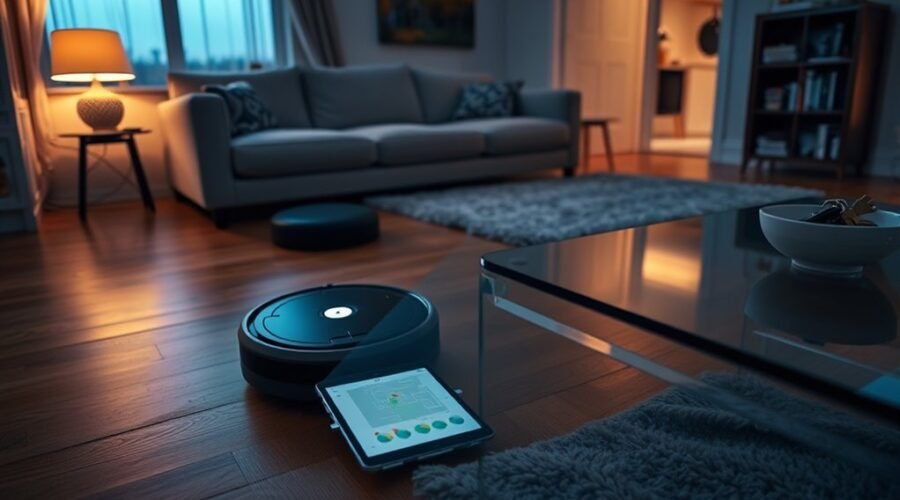
Robot vacuums collect more than dust data. They often log floor maps, room boundaries, cleaning routes, schedules, Wi‑Fi names, device IDs, and user settings. Some models also capture images or video for navigation and obstacle detection. Much of this information is sent to cloud servers for updates and diagnostics. The key issue is not only what is collected, but how much control remains after it leaves the device.
What Data Robot Vacuums Collect
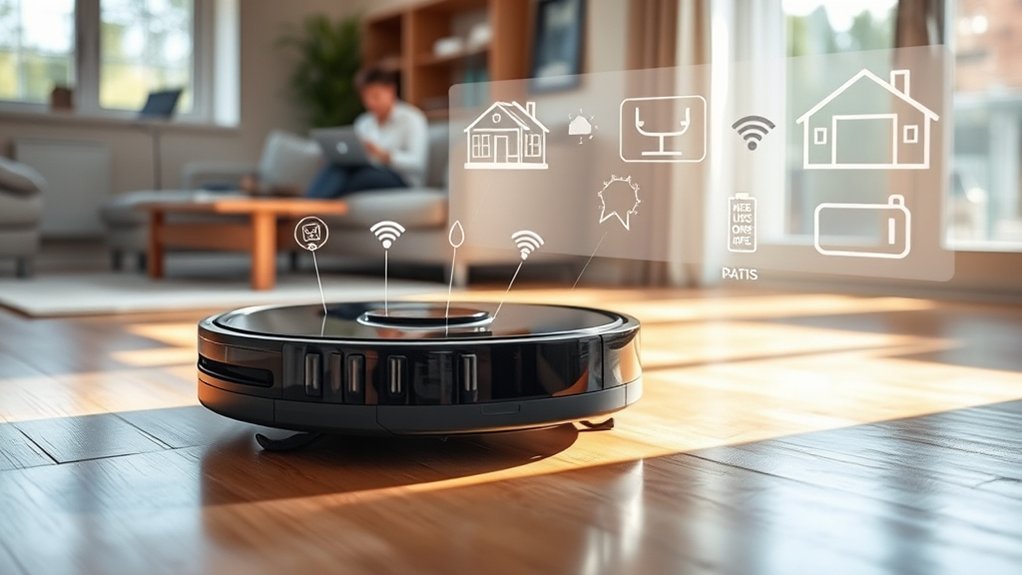
Robot vacuums collect a range of data that can extend well beyond simple cleaning performance. A robot vacuum often records floor maps, cleaning schedules, and room boundaries, creating data about household movement and occupied spaces.
Many smart devices also log Wi-Fi names, device identifiers, and other personal information that can help assemble a profile of the network. High-end models may add images or video from built-in cameras, increasing privacy exposure if access is not tightly controlled.
Smart devices may log Wi-Fi names and device IDs, while camera-equipped models can add images or video.
Some systems send data to cloud servers for syncing, diagnostics, and software updates, which can enlarge security concerns when data collection lacks clear limits. Manufacturers may also use collected data for targeted advertising or AI training.
For users seeking autonomy, the central issue is control: what is gathered, where it is stored, and who can reach it. Clear settings, limited sharing, and strong protections remain essential.
Why Robot Vacuums Map Your Home
Mapping is one of the main ways robot vacuums turn raw sensor data into efficient cleaning behavior. A robot vacuum uses advanced navigation tools, including LIDAR and cameras, to build a map of the home environment and guide movement with precision.
This mapping records room dimensions, furniture placement, obstacles, and cleaning zones, allowing cleaning optimization across repeated sessions. By learning where furniture sits and how rooms connect, the device can plan shorter routes, avoid collisions, and cover floors more systematically.
Many models also let users define virtual boundaries, which supports control over restricted rooms and preserves autonomy over the mapped space. In some high-end units, images may be stored alongside data collected during mapping, creating privacy concerns that deserve careful review.
Even so, the core purpose remains practical: to transform scattered sensor readings into a usable floor plan that enables cleaner, more adaptable, and more user-directed operation.
How Robot Vacuum Data Leaks Happen
Data leaks from robot vacuums typically emerge at the points where sensor data, cloud storage, and third-party access intersect.
In robot vacuum security, the main weak points are cameras, navigation systems, and service pipelines that handle personal data. Mapping images from devices such as Roomba J7 can be mishandled by contractors, producing unauthorized exposure on social media.
Robot vacuum security falters where cameras, navigation, and service pipelines meet, exposing intimate household data to misuse.
Other incidents show companies uploading footage to cloud servers without encryption, a direct failure of data protection and a breach of stated privacy policies.
Security vulnerabilities in connected models have also enabled outsiders to access cameras and microphones, turning household machines into surveillance tools.
Research further suggests that navigation systems can be repurposed for eavesdropping by reading vibrations that reveal conversations.
Each failure widens data leaks beyond technical error into social control.
For users seeking liberation, the implication is clear: any platform that centralizes intimate household traces creates leverage, and leverage invites misuse unless restraint is enforced.
Cloud Sync and Hacking Risks
Cloud synchronization often becomes the central risk point because many robot vacuums store floor plans, device identifiers, and usage patterns on remote servers, where weak protection can expose sensitive household data to hacking.
In practice, cloud sync expands hacking risks when data practices are opaque, especially if privacy policies are broad or revised without notice. The Eufy incident showed that footage could reach cloud servers without encryption, creating unauthorized access risks.
DEF CON 2024 demonstrations also revealed security vulnerabilities in some robot vacuums, including possible control of cameras and microphones. Such findings indicate that liberation from surveillance depends on disciplined safeguards, not assumptions.
- Data encryption limits exposure of sensitive data.
- Regular updates reduce known security vulnerabilities.
- Clear privacy policies can narrow misuse of robot vacuums.
Which Robot Vacuum Privacy Features Matter
After cloud-related risks, the practical question becomes which privacy features actually reduce exposure in everyday use. A robot vacuum may collect data about floor plans, cleaning schedules, and movement patterns; some smart home devices also use cameras, raising sharper concerns.
For consumer privacy, the strongest safeguard is local data processing, which keeps information on the device instead of expanding its path into external servers. End-to-end encryption protects data in transit, limiting interception, while two-factor authentication reduces the chance that account takeover exposes maps or settings.
These privacy features matter because manufacturers collect more than many users expect, and that data can reveal routines and living conditions. Equally important is the ability to disable remote access and review transparent policies on retention, sharing, and deletion.
When data security is built into design rather than promised later, the robot vacuum becomes less of a surveillance node and more of a controlled tool.
How to Choose a More Private Robot Vacuum
A more private robot vacuum is typically one that can operate offline and lets users disable remote access, reducing the amount of data shared beyond the home.
Encryption, two-factor authentication, and local processing are important controls because they help keep maps, images, and other sensitive information from being exposed through cloud systems.
Models without cameras or microphones, paired with clear privacy policies and customizable collection settings, offer a narrower attack surface and greater user control.
Offline Operation
Offline operation can substantially improve robot vacuum privacy by limiting how much data leaves the device and reducing exposure to cloud-based access risks.
A privacy-minded buyer should prioritize offline operation, privacy, data transmission, unauthorized access, remote access, local data processing, user control, cameras, microphones, and data collection.
Models that permit remote access to be disabled keep mapping and cleaning logic on-device, which reduces dependence on external servers. This setup supports local data processing and clearer user control over what is shared.
Selective room restrictions add another layer of liberation by excluding bedrooms and bathrooms from routine cleaning. Devices without cameras or microphones further narrow data collection and lower breach risk.
- Disable remote access when possible
- Favor local data processing
- Avoid cameras and microphones
Encryption And Controls
Beyond limiting remote access, privacy also depends on how thoroughly a robot vacuum protects the information it does collect. Strong encryption, ideally end-to-end AES-256, should secure user data in transit and at rest, reducing exposure from data collection and weak IoT security.
A more private model also lets the owner disable remote access and run offline, limiting cloud transfers and preserving control. Two-factor authentication for app access adds another security measure against unauthorized logins.
Equally important is transparency: manufacturers should clearly explain what is gathered, how it is used, and whether it is shared with third parties. Buyers should also examine breach history and vulnerability response, since prompt fixes often signal a commitment to privacy and user freedom.
Frequently Asked Questions
Are Robot Vacuums a Privacy Concern?
Yes; robot vacuum privacy presents data collection concerns through smart home integration, raising user consent issues, surveillance implications, and data security risks. Manufacturer transparency, ethical considerations, consumer awareness, and technology regulation remain essential safeguards against misuse.
What Are the Downsides of Using a Robotic Vacuum Cleaner?
Downsides include limited robot efficiency, imperfect navigation technology, short battery life, recurring maintenance costs, elevated noise levels, uneven cleaning performance, narrow floor compatibility, intrusive app integration, mixed user experience, and compromised design aesthetics.
Does Roomba Sell Your Data?
No; Roomba data is not sold, according to iRobot. User privacy, data security, consumer rights, and data ownership remain central through data transparency, user consent, smart home controls, and firmware updates, not marketing strategies.
Do Robot Vacuums Record You?
Yes, some robot vacuums record images or video through camera features; data collection can create privacy risks. Navigation mapping, audio recording, and data storage depend on user consent, data encryption, and usage transparency from manufacturers.
Conclusion
In the end, a robot vacuum is never only a broom on wheels; it is also a cartographer, scheduler, and quiet witness. It may store maps, Wi‑Fi details, device IDs, and preferences, while some models even gather images or video. As with any connected device, cloud links can widen the doorway to leaks or hacking. Choosing models with local processing, strong controls, and limited sharing keeps the house less like a glass room and more like a private one.