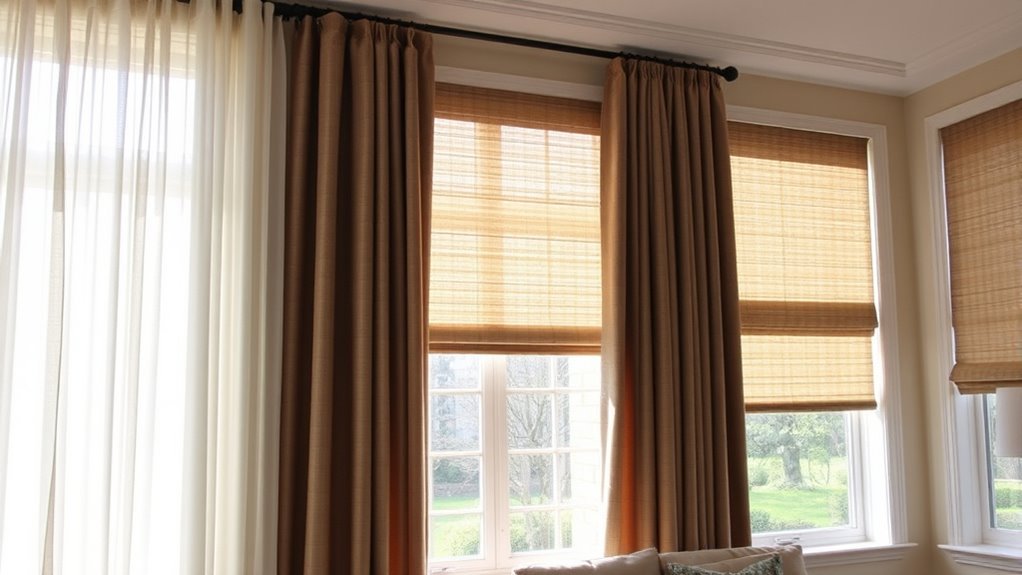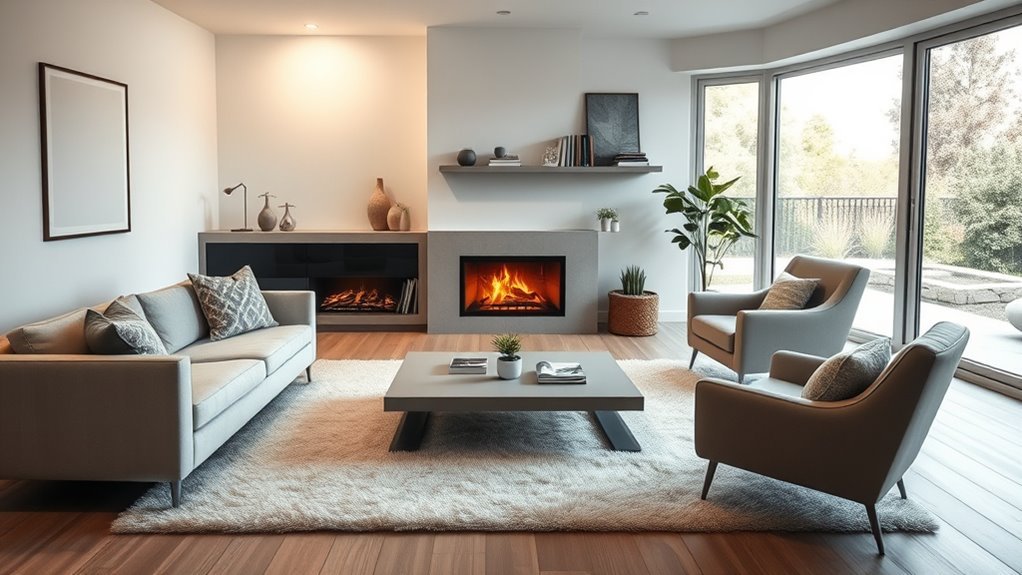
A cozy living room should feel soft, useful, and easy to breathe in—not packed with pillows, baskets, and décor you have to move every time you sit down. The simplest way to make the room feel warmer without clutter is to measure first, edit what you own, anchor the seating area with the right rug, layer gentle lighting, and display only the pieces that add comfort or meaning.
Quick Answer
To make a living room cozy without clutter, start by removing anything that does not support relaxing, reading, conversation, or storage. Use a properly sized rug to define the seating area, keep main walkways clear, add two or three soft light sources, layer a few touchable textures, and display personal items in small, intentional groups.
Key Takeaways
- Measure the room before buying a rug, baskets, lamps, or extra furniture.
- A rug should anchor the seating area, not float like a small island under the coffee table.
- Declutter first, then choose storage that fits what remains.
- Layer ambient, task, and accent lighting so the room feels warm without relying on one harsh overhead fixture.
- Use fewer, better personal pieces so the room feels lived-in instead of crowded.
At a Glance
| Time Required | 45 minutes to 3 hours for a room reset; longer if you are choosing a new rug or lighting |
| Difficulty | Easy to moderate |
| Tools Needed | Tape measure, painter’s tape, donation box, cleaning cloth, vacuum, and a notepad or phone notes app |
| Cost | $0 if you rearrange what you own; $20–$75 for baskets, bulbs, or a rug pad; more if you buy a new rug or lamp |
Start With a Simple Room Reset
Before you add anything cozy, remove the visual noise. Take one pass through the living room and sort items into four groups: keep in the room, move elsewhere, donate, and recycle or toss. This keeps the process simple and stops you from buying storage for things you do not actually want to keep.
- Clear the flat surfaces first. Coffee tables, side tables, media consoles, and window ledges collect clutter quickly.
- Remove anything that belongs in another room. Dishes, shoes, paperwork, toys, and chargers need a clear home.
- Decide what the room is for. A cozy living room usually supports conversation, relaxing, reading, watching TV, or family time.
- Only then choose storage. Baskets and cabinets should solve a real problem, not hide piles you have not sorted.
Note: A clutter-free room does not have to look empty. The goal is to leave enough open space that the soft textures, lighting, and personal pieces can stand out.
How to Choose the Right Rug Size for a Cozy Living Room
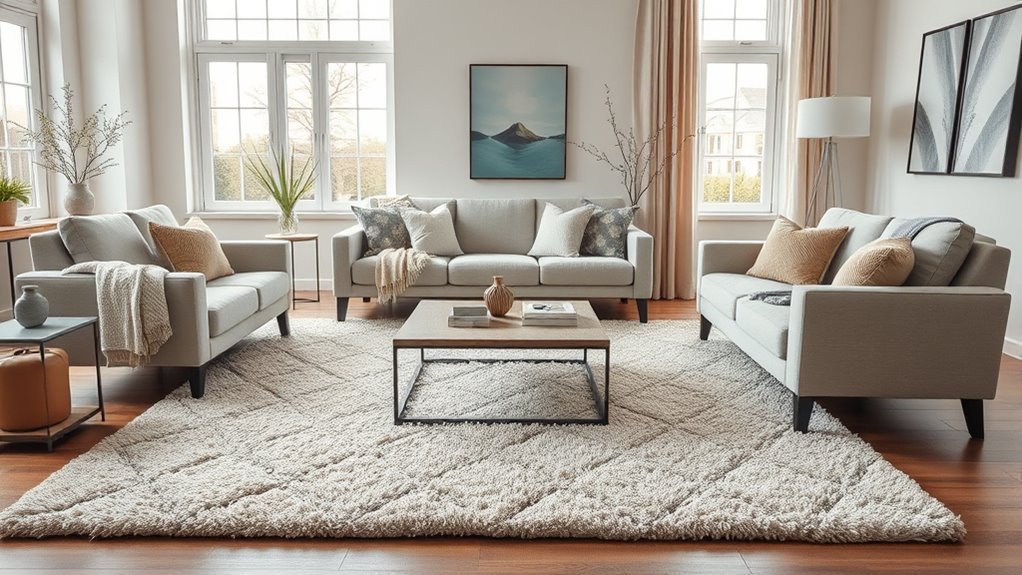
A rug makes a living room feel cozy because it visually gathers the furniture into one conversation zone. The mistake is choosing a rug that is too small. When a rug floats only under the coffee table, the room can feel disconnected instead of warm and settled.
Use these rug-size guidelines as a starting point:
- Small living room: choose a rug large enough to sit under the coffee table and at least touch or nearly touch the front of the sofa. Leave some visible floor around the edges so the room still feels airy.
- Medium living room: an 8×10 rug often works well when the front legs of the sofa and chairs rest on the rug.
- Large living room: a 9×12 rug or larger can hold all front legs—or all furniture legs—inside the seating area.
- Open-plan space: use the rug as a boundary between the living area and dining, kitchen, or entry zones.
Before buying, tape the rug size on the floor with painter’s tape. Sit down, walk around the furniture, and open nearby doors or cabinets. If the taped outline blocks movement, choose a smaller rug or adjust the furniture before spending money.
Pro Tip: If you love a smaller decorative rug, layer it over a larger neutral rug or natural-fiber base. You get the cozy pattern without making the seating area look undersized.
Recommended Products

【Super Soft Area Rug】Our 8x10 area rugs are crafted from soft and high-density material that create a velvety texture, gently cushioning every step—like walking on a cloud. Featuring a modern abstract design with bold artistic print patterns, the beige rug adds a contemporary touch to any space. Ideal large rugs for living room, bedroom, dining room under tables, nurserys, or office.

Ultra-Soft Low Pile Rug: Gent drizz living room rugs 8x10 made of Upgraded durable low pile faux wool fibers, 0.25'' thick, featuring a soft fuzzy density surface, soft and pliable to the touch, providing great comfort for your bare feet. The low pile makes it easy for your Large area rug to clean and is perfect for homes with kids and pets

Machine Washable Area Rug: These washable rugs 8x10 feature a surface that stands up to daily spills and light surface marks; you can wipe fresh messes away with a damp cloth, or fully machine wash these 8x10 area rugs for thorough deep cleaning, and avoid long soaking and strong cleaning agents to retain the rug’s original color and soft texture.
Declutter and Organize for a Cozy Space
While a cluttered space can feel chaotic, transforming your living room into a cozy retreat begins with effective organization. Start by decluttering one zone at a time: media console, coffee table, side tables, shelves, toy storage, and entry drop zone. Sorting the room in sections keeps the task from becoming overwhelming.
After the edit, choose storage based on what is left:
- Use closed storage for remote controls, game controllers, chargers, extra candles, paperwork, and anything visually busy.
- Use open baskets for soft items such as throws, magazines, or children’s books that are easy to return quickly.
- Use trays to group small items on a coffee table, ottoman, or console so the surface still feels intentional.
- Leave breathing room on shelves. A shelf that is only partly filled often looks calmer than one packed edge to edge.
Give surfaces, rugs, and upholstery a deep clean once the clutter is gone. A freshly vacuumed rug, wiped table, and fluffed cushions can make the same furniture feel softer and more inviting.
Arrange Furniture for Comfort and Clear Walkways
A cozy living room should be easy to move through. Pull seating close enough for conversation, but leave clear routes to doorways, windows, storage, and the main walkway through the room. When your layout allows, aim for about 36 inches of clear space on main walking paths; the 2010 ADA Standards use 36 inches as a minimum clear width for accessible walking surfaces in covered public and commercial settings, which makes it a useful reference point even though private homes vary.
If your room is small, prioritize the path people actually use. It is better to have one comfortable main route than several tight gaps around extra furniture. Try moving a chair, side table, or plant stand before assuming the room needs more storage.
Warning: Loose rugs, curled rug corners, cords, and cluttered walkways can become trip hazards. The CDC notes that falls can be prevented, so use a rug pad, keep cords tucked away, and avoid placing baskets or stools in the main path.
Lighting Tips for a Cozy Atmosphere
Once you have decluttered and organized your living room, focus on lighting. A cozy room usually needs more than one light source. Blend ambient, task, and accent lighting so the room feels warm at night, functional for reading, and softly layered rather than flat.
| Lighting Type | Purpose | Cozy Living Room Example |
|---|---|---|
| Ambient Lighting | Overall room warmth | A shaded floor lamp, ceiling fixture on a dimmer, or wall sconces |
| Task Lighting | Reading, games, crafts, or paperwork | A table lamp beside the sofa or an adjustable reading lamp near a chair |
| Accent Lighting | Highlighting focal points | A picture light, small lamp on a bookcase, or soft light near plants |
| Decorative Fixtures | Visual interest | A sculptural lamp, fabric shade, or pendant that adds texture |
| Soft Bulbs | Gentle, inviting glow | Bulbs labeled soft white or warm light, chosen by lumens instead of watts |
For a softer evening mood, choose bulbs by brightness, not old wattage habits. ENERGY STAR explains that light output is measured in lumens, so check the lumens on the bulb package and choose the lowest wattage that gives the brightness you need.
Note: If you use dimmers, make sure both the bulbs and the fixture are dimmer-compatible. Mismatched bulbs can flicker or fail to dim smoothly.
Recommended Products

100% Hand-Woven Paper Cord Shade with Mesmerizing Light & Shadow: Our living room floor lamp features 3-tier, staggered lamp heads and premium, durable vertical-ribbed hand-braided paper cord shades. The woven floor lamp casts stunning soft vertical striped shadows, diffuses warm glare-free brightness, delivers eye-friendly light for living room, bedroom, dining room, nursery, coffee shop, bistro corner, study, office, and instantly creates a cozy home atmosphere. NOT main overhead lighting

Modern Fully Dimmable(0-100%) Floor Lamp & Convenient Rotary Switch: Compared with traditional Non-dimmable floor lamps for living room, our floor lamp is fully Stepless Dimmable, which suitable for all the room style and using situation ,find the perfect light for your needs. This standing lamp is very easy to turn on and off. Just simply twist it and then you can adjust the arc floor lamps brightness what you want. 4.1FT rotary switch, which is very convenient for you to adjust it.

[DIMMABLE FLOOR LAMP FOR BRIGHTNESS & COLOR] This tall lamp can use the remote control to adjust the brightness by stepless from 10% to 100% and color temperature from 3000K to 6000K, for warm white, natural white, and cool white light. You can adjust the brightness from super soft and cozy to bright and energizing, and switch between warm, natural, and cool light depending on your mood.
Layer Textures for a Cozy Living Room
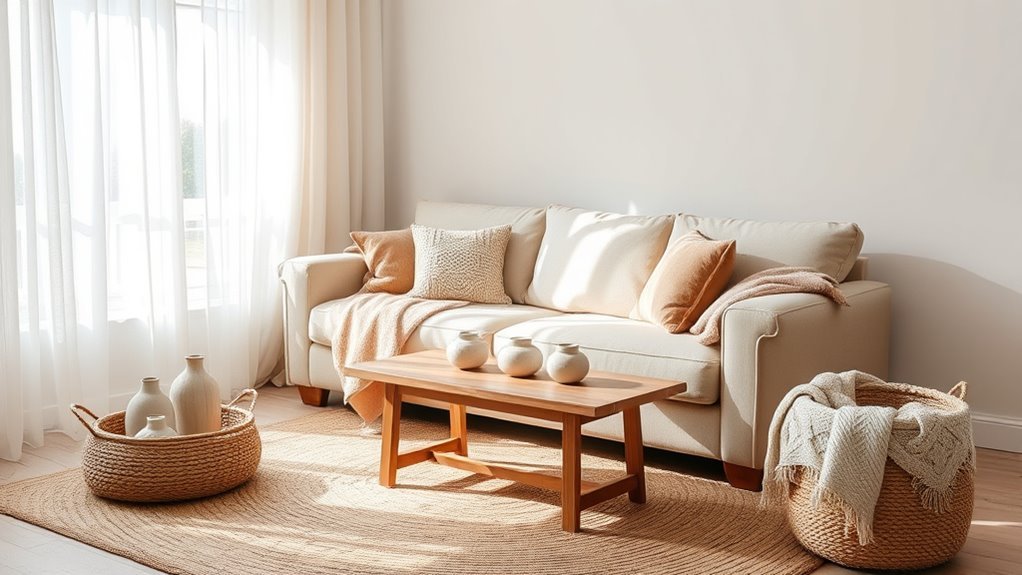
To create a truly cozy living room, layering textures is essential because it adds warmth and depth without needing lots of extra objects. Start with one soft throw blanket draped over the sofa or folded in a basket. Add two to four pillows in different textures, such as linen, velvet, bouclé, cotton, or wool.
Keep the palette calm so the textures do the work. A room can feel rich with only a few materials: a woven rug, a wood coffee table, a linen lampshade, a ceramic vase, and one plush blanket. The key is contrast. Pair smooth with nubby, matte with soft sheen, and structured pieces with relaxed textiles.
Cozy does not mean more stuff. It means more comfort from fewer, better-chosen layers.
Recommended Products

Ultimate Comfort & Warmth: Wrap yourself in the luxurious softness of our bubble faux fur throw blanket. Made with 800GSM fluffy faux rabbit fur on one side, providing an incredibly plush and warm touch, while the other side features a crystal super soft short plush, offering additional smoothness and comfort. This dual-sided blanket ensures unparalleled warmth without causing overheating, making it perfect for chilly nights on your couch or bedroom.


Nice home decor:The Linecooo Flannel Fleece Throw Blanket is an ideal addition to any living space, offering softness and lightweight convenience for all your needs. Its plush microfiber material provides a cozy, comfortable feel, making it perfect for relaxation on the couch, sofa, or bed
Choose a Cozy Color Palette Without Overdecorating
Color can make a room feel cozy before you add a single accessory. Start with one main color family, one supporting color, and one small accent. For example, warm white walls, taupe upholstery, and rust pillows can feel layered without becoming loud. Soft greens, warm browns, creams, muted blues, terracotta, and charcoal can all feel cozy when used with restraint.
If your room already feels busy, repeat the same two or three colors across the rug, pillows, art, and throws. Repetition makes the space feel intentional and reduces the urge to keep adding decorative pieces.
Bring In Natural Materials and Greenery
Natural materials add warmth without visual clutter. Try one wood accent, one woven texture, or one plant instead of several small decorative items. A single healthy plant in a simple pot can soften a corner. A wooden tray can gather remotes and candles. A woven basket can hold blankets while adding texture.
Choose pieces that also serve a purpose. A lidded basket hides toys or pet supplies. A wood bowl holds keys or coasters. A ceramic lamp adds both texture and light. This keeps the room cozy and practical at the same time.
Personalize Your Living Room Without Clutter
Creating a cozy living room does not stop at rugs, storage, lighting, and texture. Personal touches make the space feel truly yours. The trick is to display them thoughtfully instead of spreading them across every surface.
Choose a few pieces that tell a story: framed photos, art from a trip, a handmade bowl, favorite books, or a small collection. Group small treasures on a tray so they read as one display. Leave empty space around each group so the eye has somewhere to rest.
- Use the 3-5-7 rule lightly. Odd-number groupings often feel natural on shelves and tables.
- Rotate décor seasonally. Store extra pieces and bring them back later instead of displaying everything at once.
- Keep sentimental items visible but edited. One meaningful photo can have more impact than ten crowded frames.
- Give every daily item a home. Remote controls, chargers, books, and blankets should be easy to put away in under a minute.
Common Cozy Living Room Mistakes to Avoid
Small choices can make a cozy living room feel cluttered. Avoid these common mistakes:
- Using a rug that is too small. It can make furniture feel disconnected.
- Buying baskets before decluttering. Storage should hold what you use, not hide what you avoid sorting.
- Relying only on overhead lighting. One bright ceiling light can make a room feel flat and harsh.
- Adding too many pillows. If guests have to move pillows before sitting, edit the number down.
- Filling every shelf. Empty space is part of the design.
- Ignoring cords and walkways. A room is not truly comfortable if people have to step around clutter.
Frequently Asked Questions
What is the 3-5-7 rule of decorating?
The 3-5-7 rule means arranging decorative items in odd-numbered groups of three, five, or seven. Odd groupings often feel more relaxed and natural than pairs. Use it for coffee table décor, shelf styling, pillows, candles, or plants, but do not force it if the room already feels balanced.
How do you make a room cozy but not cluttered?
Make a room cozy but not cluttered by using fewer pieces with more texture and purpose. Choose a rug that anchors the seating area, add soft lighting, keep walkways open, store daily items in closed or contained storage, and display only a few personal pieces at a time.
What is the 2/3 rule for living rooms?
The 2/3 rule is a flexible proportion guideline. It can mean choosing wall art that is about two-thirds the width of the sofa, selecting a coffee table that is about two-thirds the sofa length, or keeping large furniture in proportion to the room. Treat it as a visual balance tool, not a strict rule.
What is the 70-20-10 rule in decorating?
The 70-20-10 rule is a color-balance guideline: use about 70% of one main color, 20% of a supporting color, and 10% of an accent color. It is similar to the more common 60-30-10 rule. Either approach helps a cozy living room feel coordinated instead of visually scattered.
How many pillows should a cozy sofa have?
Most sofas feel cozy with two to five pillows, depending on size. A loveseat may need only two pillows, while a large sectional can handle five or more. If people have to remove pillows every time they sit down, the sofa has too many.
How can I make a small living room feel cozy and open?
Use a correctly scaled rug, furniture with visible legs, closed storage, wall-mounted shelves, and soft lamps instead of bulky floor pieces. Keep the color palette simple and repeat textures instead of adding many small accessories. A small room feels cozier when every piece earns its place.
Conclusion
By choosing the right rug, decluttering with intention, embracing warm lighting, layering textures, and personalizing thoughtfully, you can create a living room that feels inviting yet serene. Imagine sinking into a plush sofa, reaching for a soft throw, seeing a gentle glow from nearby lamps, and enjoying a space where every object has a purpose. Cozy does not come from adding more. It comes from editing carefully, arranging comfortably, and letting the pieces you love have room to shine.
Sources
- ADA.gov — 2010 ADA Standards for Accessible Design — backs up the 36-inch clear walking surface reference used as a helpful accessibility benchmark.
- CDC — About Older Adult Fall Prevention — supports the caution about keeping walkways clear and reducing trip hazards.
- ENERGY STAR — Learn About Brightness — supports choosing bulbs by lumens and brightness rather than watts alone.