Choosing a 20- or 21-pint-class dehumidifier is not only about selecting the largest advertised coverage number. The Whirlpool 20-Pint Portable, Trazico 21 Pint, Senville 20 Pint, GoGuess 21 Pint, and PLUSCENT 21 Pint all target medium rooms, basements, bedrooms, laundry areas, and similar damp spaces, but they differ in noise, drainage, efficiency certification, tank size, and rating conditions.
For the most established feature set, consider the Whirlpool WHAD201CW. The Senville 20 Pint is the stronger efficiency-focused option, while the Trazico and GoGuess models advertise lower operating noise. PLUSCENT stands out when you want an included gravity drain hose and several operating modes.
Affiliate disclosure: This article contains Amazon affiliate links. We may earn a commission from qualifying purchases at no extra cost to you. Product specifications and availability can change, so confirm the current Amazon listing and manufacturer documentation before ordering.
Quick Answer
Best overall for efficiency-focused buyers: Senville 20 Pint
Best for advertised low-noise operation: Trazico 21 Pint
Best for flexible controls and a larger tank: GoGuess 21 Pint
Best for an included gravity drain hose: PLUSCENT 21 Pint
Best established-brand feature set: Whirlpool WHAD201CW
Quick Comparison of the Best 20- and 21-Pint Dehumidifiers
| Product | Best For | Listed Capacity | Advertised Coverage | Noise Information | Drainage | Amazon |
|---|---|---|---|---|---|---|
| Whirlpool WHAD201CW | Familiar controls and established-brand features | 20 pints per day | Up to 1,500 sq. ft. in some listings | About 48–51 dB in model documentation | Bucket or gravity hose connection | Check Availability |
| Trazico 21 Pint | Bedrooms and buyers prioritizing advertised low noise | Up to 21 pints at 95°F/90% RH | Up to 1,500 sq. ft. | Advertised at approximately 39 dB | 1.5L tank or gravity drain | Check Availability |
| Senville 20 Pint | Efficiency-focused daily use | 20 pints per day | Up to 1,500 sq. ft. | Up to approximately 51 dB | 0.8-gallon tank or gravity drain connection | Check Availability |
| GoGuess 21 Pint | Flexible humidity control and a larger tank | Up to 21 pints at 95°F/90% RH | Up to 1,600 sq. ft. | Advertised at approximately 40 dB | 2.3L tank or gravity drain | Check Availability |
| PLUSCENT 21 Pint | Continuous drainage and laundry use | Up to 21 pints at 95°F/90% RH | Up to 1,500 sq. ft. | Marketed as quiet; exact dB not confirmed | 1.5L tank and included 39.4-inch hose | Check Availability |
Important capacity note: Not every pint rating uses the same test conditions. Trazico, GoGuess, and PLUSCENT advertise their 21-pint output at 95°F and 90% relative humidity. Do not assume those models remove more moisture under normal basement conditions than a 20-pint model rated under a different standard.
Whirlpool 20-Pint Portable Dehumidifier with Auto-Shutoff & Timer
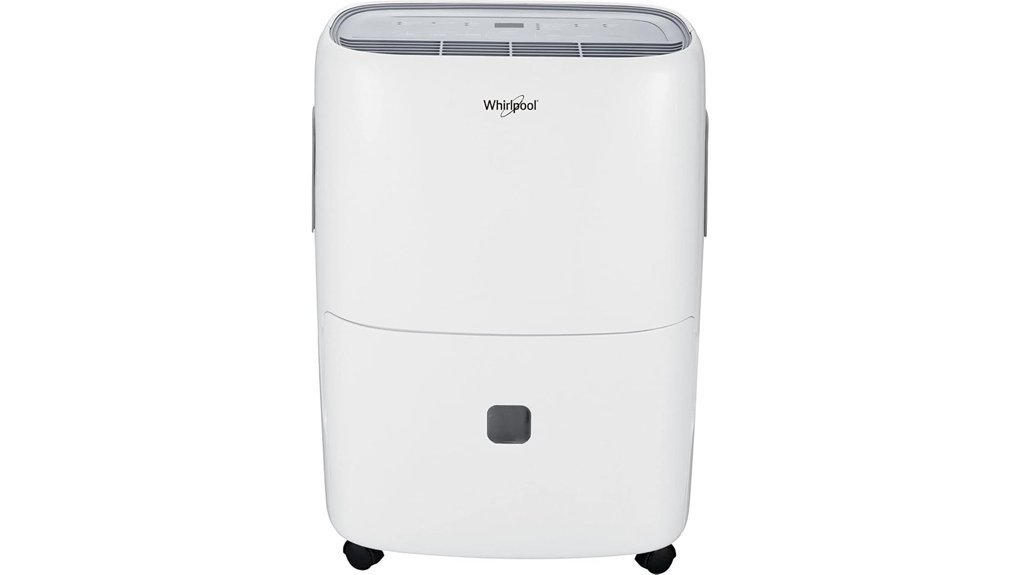
Best established-brand feature set
The Whirlpool WHAD201CW is a practical option if you want a recognizable brand, straightforward electronic controls, and flexible bucket or hose drainage. It is listed to remove up to 20 pints of moisture per day and includes a digital humidistat display, two fan speeds, a 24-hour timer, automatic defrost, automatic restart, child lock, washable filter, side handles, and caster wheels.
Some listings market it for spaces up to 1,500 square feet, but its real working area depends on room temperature, starting humidity, ceiling height, air movement, and the severity of the moisture problem. Model documentation places its sound output at approximately 48 dB on low and 51 dB on high, so it is not the quietest option in this comparison.
Why You’ll Like It: The controls are easy to understand, it remembers settings after a power interruption, and the continuous-drain connection can reduce bucket emptying.
Who Should Buy This: Homeowners or renters who want a familiar feature set for a basement, garage, storage room, living area, or other medium-size space.
Who Should Avoid This: Light sleepers who need the lowest advertised noise level or shoppers who specifically want Wi-Fi, app control, or a built-in condensate pump.
Pros:
- Rated to remove up to 20 pints of moisture per day.
- Includes electronic controls, a digital humidistat, timer, child lock, auto restart, and automatic defrost.
- Supports bucket collection or continuous gravity drainage.
- Casters and integrated handles make room-to-room movement easier.
Cons:
- Approximately 48–51 dB operation is louder than the lowest advertised ratings in this roundup.
- A standard garden hose may need to be purchased separately.
- No Wi-Fi connection, mobile app, or built-in drain pump.
- Current retailer availability may vary, so confirm that the Amazon offer is for the correct WHAD201CW model.
Trazico 21 Pint Dehumidifier for Home and Basement
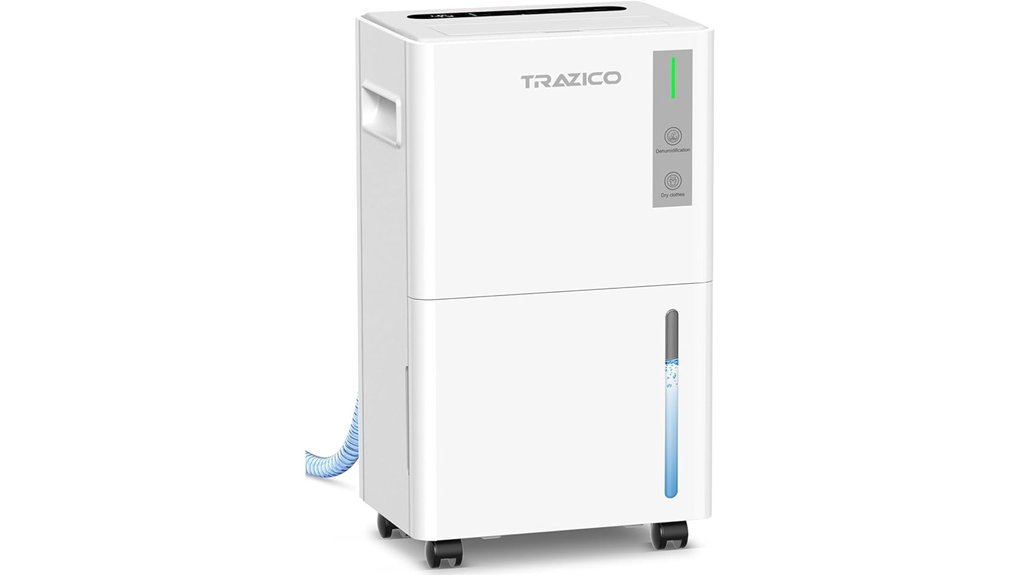
Best for advertised low-noise operation
The Trazico 21 Pint Dehumidifier is designed for buyers who want automatic humidity control without a large cabinet. It advertises removal of up to 21 pints per day at 95°F and 90% relative humidity and coverage up to 1,500 square feet. Actual daily extraction will normally be lower in cooler or less humid rooms.
You can select Smart DEHU, Fast DRY, or Continuous mode. Smart DEHU is an automatic humidity-control mode rather than Wi-Fi or app control. Other listed features include a 30%–80% humidity setting range, two fan speeds, a 24-hour timer, automatic defrost, automatic restart, child lock, washable filter, and an advertised sound level of approximately 39 dB.
Why You’ll Like It: Its lower advertised noise level and compact 1.5-liter tank design make it easier to place in bedrooms, offices, laundry areas, and smaller basement zones.
Who Should Buy This: Buyers who prioritize lower advertised noise, automatic humidity adjustment, laundry drying, and continuous gravity drainage.
Who Should Avoid This: Anyone who needs independently verified DOE capacity, ENERGY STAR certification, a large bucket, a drain pump, or genuine smart-home connectivity.
Pros:
- Advertised 39 dB operation is among the lowest stated noise levels in this comparison.
- Offers automatic humidity, fast-dry, and continuous operating modes.
- Includes auto defrost, auto restart, child lock, timer, and a washable filter.
- Supports either tank collection or continuous gravity drainage.
Cons:
- The 21-pint claim is measured at 95°F/90% RH and should not be directly compared with every DOE-rated product.
- The 1.5-liter tank can fill quickly in damp conditions.
- “Smart” refers to automatic control, not a mobile app or Wi-Fi connection.
- Long-term warranty and service details should be confirmed before purchase.
Senville 20 Pint Dehumidifier, ENERGY STAR Certified
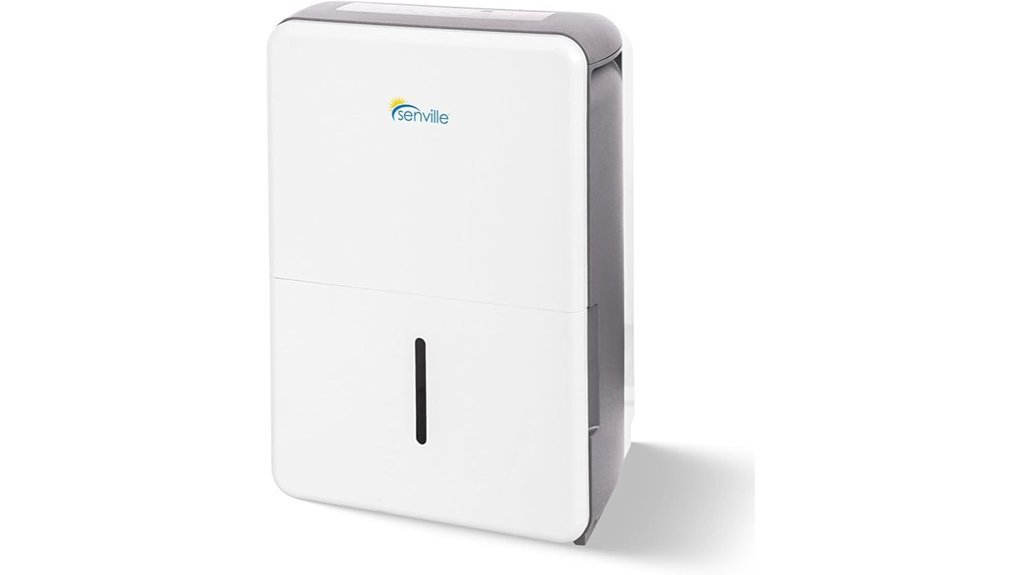
Best overall for efficiency-focused buyers
The Senville 20 Pint Dehumidifier is a strong choice when energy efficiency and straightforward controls matter more than the lowest possible noise level. It is listed to remove up to 20 pints of moisture per day and is marketed for basements, bedrooms, living areas, and other spaces up to 1,500 square feet.
The model includes ENERGY STAR certification, adjustable digital humidity controls, an LED display, a 24-hour timer, auto shutoff, automatic restart, a washable filter, and a continuous-drain connection. It is also specified for operation at temperatures down to approximately 41°F, although compressor dehumidifiers generally remove less water as room temperature falls.
Why You’ll Like It: The ENERGY STAR positioning, 0.8-gallon tank, reusable filter, and low-temperature capability make it suitable for regular basement or living-area use.
Who Should Buy This: Buyers who want an exact 20-pint model with efficiency certification and do not need app control or an integrated pump.
Who Should Avoid This: Very noise-sensitive sleepers, buyers who require an included drain hose, or anyone dealing with severe water intrusion that calls for a larger-capacity machine.
Pros:
- Listed 20-pint daily capacity and ENERGY STAR certification.
- Digital humidity controls, LED display, timer, auto shutoff, and auto restart.
- Continuous-drain connection and washable filter simplify maintenance.
- Specified to operate at temperatures down to approximately 41°F.
Cons:
- Maximum sound output is listed at approximately 51 dB, so it is not an ultra-quiet model.
- The gravity drain hose may need to be purchased separately.
- The 0.8-gallon tank may require frequent emptying in very damp rooms.
- Current warranty terms should be verified on the product listing or with the manufacturer.
GoGuess 21 Pint Basement Dehumidifier with Humidity Control
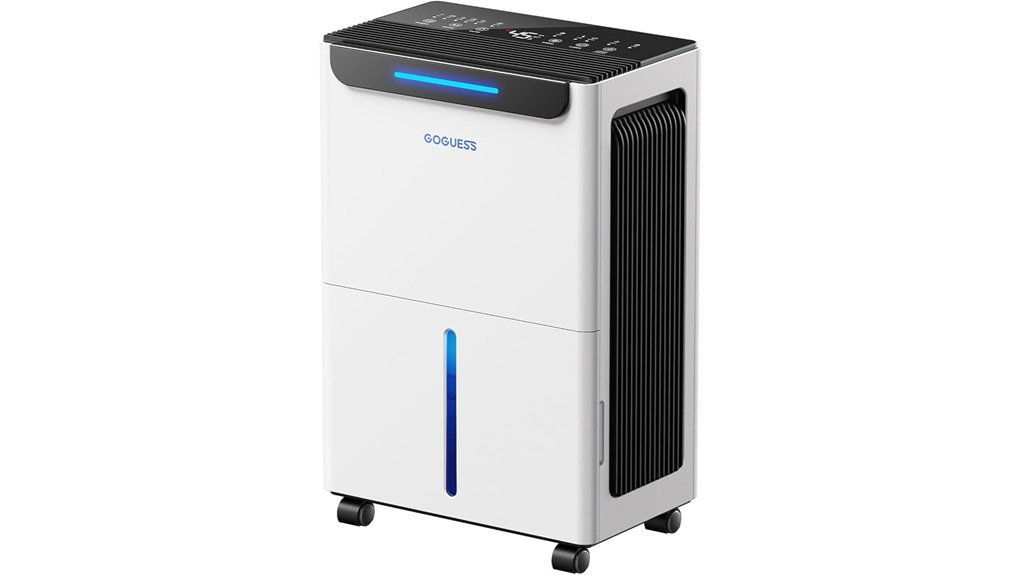
Best for flexible controls and a larger tank
The GoGuess YC3D6-PRO is marketed as a 21-pint dehumidifier for spaces up to 1,600 square feet. Its 21-pint extraction claim is measured at 95°F and 90% relative humidity, so expect lower water removal in typical cooler household conditions.
DEHU mode lets you select a target between 30% and 80% relative humidity, TURBO increases fan activity for faster drying, and SLEEP mode reduces disruption. The color humidity indicator provides an at-a-glance reading, while the 2.3-liter tank, automatic shutoff, continuous-drain connection, timer, auto defrost, overload protection, and child lock support daily use.
Why You’ll Like It: The larger tank, visual humidity indicator, three modes, and advertised 40 dB sound level offer a useful balance for bedrooms, offices, RVs, laundry spaces, and moderately damp basements.
Who Should Buy This: Buyers who want several operating modes, a larger bucket than the 1.5-liter models, and a lower advertised noise level.
Who Should Avoid This: Buyers who require independently verified ENERGY STAR data, a built-in pump, or strong manufacturer documentation before purchase.
Pros:
- 2.3-liter tank is larger than the tanks in several competing compact models.
- Offers DEHU, TURBO, and SLEEP modes with adjustable humidity and fan settings.
- Includes automatic shutoff, auto defrost, child lock, timer, and continuous drainage.
- Advertised 40 dB operation may suit noise-sensitive living areas better than standard-noise models.
Cons:
- The 21-pint claim is based on 95°F/90% RH conditions.
- The 1,600-square-foot figure is a maximum marketing claim, not a guarantee for a very wet basement.
- No confirmed app control, Wi-Fi connection, or built-in pump.
- Manufacturer support and warranty details should be checked before ordering.
PLUSCENT 21 Pint Portable Dehumidifier with Drain Hose
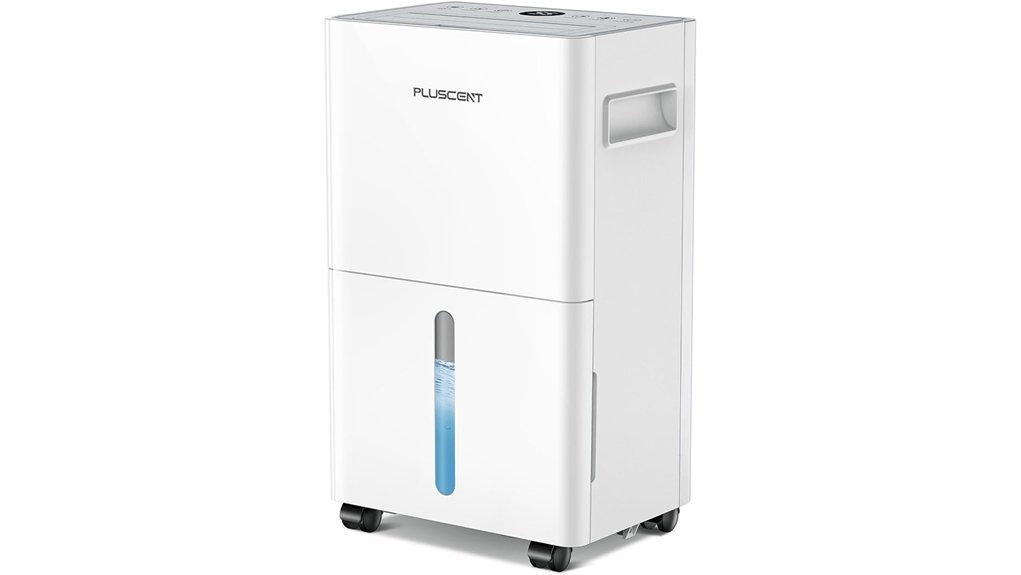
Best for continuous drainage and laundry use
The PLUSCENT VG270 suits buyers who want a compact compressor dehumidifier with a drain hose already included. It advertises removal of up to 21 pints per day at 95°F and 90% relative humidity and coverage up to 1,500 square feet.
You can choose Dehumidification, Continuous, or Laundry mode and use the 24-hour timer to control its schedule. The unit also includes automatic defrost, automatic restart, a 1.5-liter tank with auto shutoff, a washable filter, child lock, adjustable humidity control, caster wheels, and a 39.4-inch gravity drain hose.
Why You’ll Like It: The included hose removes one extra purchase, while Laundry mode and continuous operation make it practical for damp basements and indoor clothes drying.
Who Should Buy This: Buyers who want flexible modes, portable wheels, and a ready-to-use gravity-drain arrangement.
Who Should Avoid This: Anyone who needs an integrated pump, verified ENERGY STAR certification, a large water bucket, or an independently confirmed decibel rating.
Pros:
- Includes a 39.4-inch gravity drain hose.
- Offers Dehumidification, Continuous, and Laundry modes.
- Includes timer, auto defrost, auto restart, child lock, casters, and a washable filter.
- Compact design is easier to reposition between rooms.
Cons:
- The 21-pint output is advertised under 95°F/90% RH conditions.
- The 1.5-liter tank may fill quickly when the hose is not connected.
- An exact operating noise level could not be confirmed.
- No built-in pump, Wi-Fi control, or mobile app.
Factors to Consider When Choosing a 20- or 21-Pint Dehumidifier
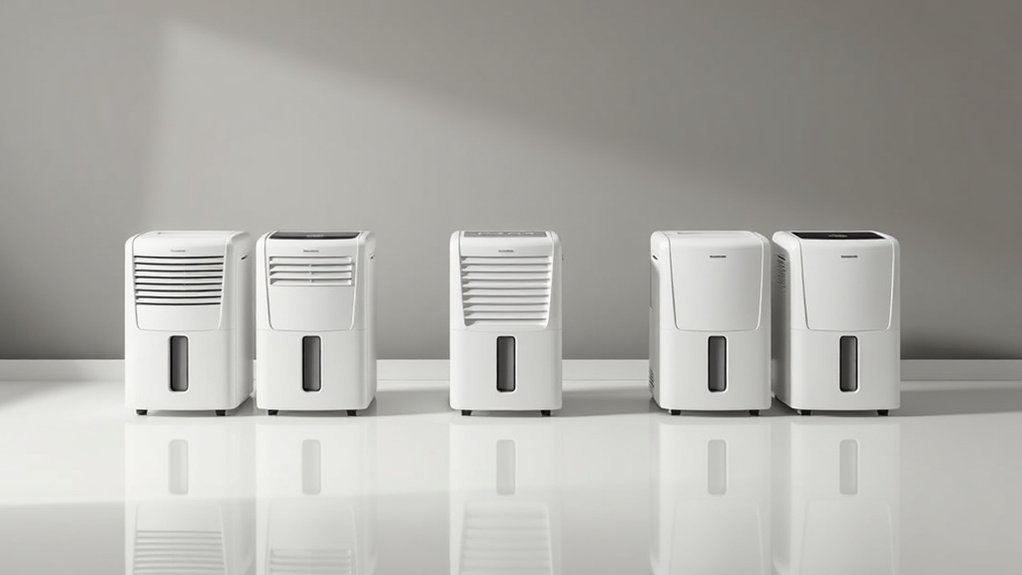
Start with the dehumidifier’s capacity rating and test conditions, not only the advertised square-foot coverage. Then compare drainage, operating temperature, noise, energy efficiency, tank size, controls, and the severity of your moisture problem.
Capacity Rating and Test Conditions
A pint-per-day rating describes how much water a dehumidifier removes over 24 hours under specified test conditions. It does not describe the size of the collection bucket. Ratings measured under different temperatures and humidity levels are not directly comparable.
Several 21-pint models in this guide advertise their output at 95°F and 90% relative humidity. Those hot and extremely humid conditions can produce a larger extraction number than normal basement conditions. Look for a DOE-rated capacity or clearly stated test conditions before deciding that one model is more powerful than another.
Coverage Area
Advertised coverage figures such as 1,500 or 1,600 square feet are useful starting points, but they are not guarantees. A relatively dry, warm, open 1,500-square-foot area is easier to manage than a cold basement of the same size with wet walls, air leaks, or standing water.
Consider floor area, ceiling height, starting humidity, temperature, room layout, outside air infiltration, laundry activity, and any active water source. Choose a larger-capacity unit when the area is very wet, divided into several rooms, regularly exposed to outdoor air, or affected by an unresolved leak.
Moisture Removal
A 20-pint dehumidifier can be suitable for a bedroom, living area, laundry room, storage space, or moderately damp basement. It may be undersized for flood recovery, serious seepage, a large open basement with high moisture load, or a space that remains cold for much of the year.
For general comfort and moisture control, many households aim for approximately 45% to 50% relative humidity. Extremely low settings can increase energy use and make the unit run longer without providing a meaningful benefit.
Drainage Options
Portable dehumidifiers normally collect water in a removable bucket, use a continuous gravity drain, or offer both methods. Automatic shutoff stops bucket collection when the tank becomes full.
Gravity drainage requires the hose to slope continuously downward toward a drain that is lower than the outlet. A kinked, raised, or submerged hose can prevent proper flow. None of the products in this roundup is confirmed to have a built-in condensate pump, so do not expect them to push water upward into a sink or through a raised drain line.
Drainage tip: Test the hose connection while you are nearby before leaving a unit to drain unattended. Confirm that water reaches the drain without leaking, backing up, or collecting around the appliance.
Noise Level
Noise matters in bedrooms, offices, nurseries, and shared living areas. Trazico and GoGuess advertise levels around 39–40 dB, while Whirlpool and Senville documentation indicates operation near 51 dB at the louder setting.
Manufacturer noise figures may use different fan speeds and measurement methods. Even a low advertised rating does not guarantee that compressor cycling, vibration, or water movement will be unnoticeable. Place the unit on a firm, level surface and avoid contact with walls or furniture that can amplify vibration.
Energy Efficiency
Look for an ENERGY STAR-certified model and compare its Integrated Energy Factor when standardized data is available. IEF measures how many liters of water the unit removes per kilowatt-hour while accounting for dehumidification and non-dehumidification energy use.
A humidistat and timer can also reduce unnecessary runtime. Set a realistic target rather than forcing the appliance to maintain an excessively low humidity level. Clean the filter regularly because restricted airflow can reduce performance.
Operating Temperature
Compressor dehumidifiers become less effective as room temperature falls. Frost may form on the coils in cooler spaces, causing the appliance to pause for a defrost cycle. Auto defrost helps protect operation, but it does not make a small compressor model equally effective at every temperature.
Check the minimum operating temperature in the manual if you plan to use the dehumidifier in an unheated basement, garage, crawl space, or seasonal property. Senville documentation lists operation down to approximately 41°F, while Whirlpool documentation places its minimum working temperature in the mid-40s Fahrenheit.
Tank Size and Maintenance
A smaller tank makes a dehumidifier more compact but can require frequent emptying. The Trazico and PLUSCENT models use 1.5-liter tanks, while GoGuess lists a larger 2.3-liter tank and Senville lists approximately 0.8 gallon.
Wash reusable filters according to the manual and allow them to dry before reinstalling them. Clean the bucket periodically to control residue and odors. Never block the air inlet or outlet, and maintain the clearances specified by the manufacturer.
Convenience Features
Useful features include a digital humidistat, timer, automatic restart, automatic defrost, bucket-full shutoff, washable filter, caster wheels, child lock, and multiple fan or drying modes.
Do not confuse an automatic humidity mode with Wi-Fi control. None of the five products in this guide is confirmed to provide a mobile app or connected-home operation. Also check whether the drain hose is included; the PLUSCENT package advertises one, while other models may require a separate hose.
Before You Buy Checklist
- Confirm the exact model and ASIN: Amazon listings can change or combine several capacity variations.
- Check the rating conditions: Compare DOE capacity with DOE capacity whenever possible.
- Measure the drainage route: A gravity hose needs an uninterrupted downward slope.
- Review room temperature: Cold spaces reduce compressor dehumidifier performance.
- Allow airflow clearance: Do not place the appliance inside a closed closet or against a wall unless the manual permits it.
- Resolve water sources: Repair plumbing leaks, seepage, drainage problems, and water intrusion rather than relying only on a dehumidifier.
- Verify warranty and returns: Support terms can vary by brand and seller.
Frequently Asked Questions
How Often Should I Clean a 20-Pint Dehumidifier Filter?
Inspect the filter about every two to four weeks and clean it according to the manufacturer’s instructions. Homes with pets, renovation dust, smoke, or heavy dehumidifier use may require more frequent cleaning. Let a washable filter dry fully before reinstalling it.
Can a 20-Pint Dehumidifier Run Continuously Overnight?
Many models can run overnight when installed and maintained according to their manuals. Use a grounded outlet, keep the air inlet and outlet clear, place the unit on a firm level surface, and confirm that the bucket is seated correctly or the gravity hose drains without leaks. Do not operate it with a damaged cord or unsuitable extension cord.
What Is the Ideal Humidity Setting for a Basement?
A setting around 45% to 50% relative humidity is a practical starting point for many basements. Adjust it based on comfort, condensation, temperature, and moisture conditions. A separate hygrometer can help you check whether the dehumidifier’s built-in sensor is representative of the entire room.
Do 20-Pint Dehumidifiers Reduce Mold Growth Effectively?
Lowering indoor humidity can make conditions less favorable for mold growth, but a dehumidifier does not remove existing mold or repair the water source that caused it. Address leaks, seepage, condensation, and ventilation problems, and use appropriate mold-remediation guidance when growth is already present.
How Noisy Are 20-Pint Dehumidifiers During Operation?
Noise varies by compressor, fan speed, surface, and measurement method. The models in this guide range from advertised figures around 39–40 dB to documented maximum levels near 51 dB. Compressor cycling may be more noticeable than the steady fan sound, especially in a quiet bedroom.
Can I Put a Dehumidifier in a Closet?
Do not operate a portable dehumidifier inside a closed closet unless the manufacturer specifically allows it. Restricted airflow can reduce moisture removal and contribute to overheating or repeated cycling. Keep the required clearance around the inlet and outlet and leave interior doors open when trying to dry connected areas.
Does Continuous Drainage Require a Pump?
Not when the drain is lower than the dehumidifier outlet. The models in this roundup use gravity drainage, which requires a downward-sloping hose. A separate condensate pump is needed when water must travel upward or to a drain higher than the appliance.
Final Recommendation
Choose the Senville 20 Pint when standardized 20-pint capacity, ENERGY STAR positioning, and low-temperature operation are your main priorities.
Choose the Trazico 21 Pint when the lowest advertised sound level and compact automatic controls matter most.
Choose the GoGuess 21 Pint when you want a larger tank, several operating modes, and a visual humidity indicator.
Choose the PLUSCENT 21 Pint when you want an included gravity drain hose and a dedicated laundry mode.
Choose the Whirlpool WHAD201CW when you prefer an established-brand control layout, ENERGY STAR certification, and a well-documented feature set, provided the correct model remains available.
Conclusion
The best 20- or 21-pint dehumidifier depends on more than the number printed in the product title. Compare the capacity test conditions, operating temperature, sound level, drainage arrangement, tank size, efficiency certification, and warranty support before buying.
For everyday use, set a realistic humidity target, keep the filter clean, maintain proper airflow, and use continuous drainage only when the hose has a safe downward route. Most importantly, repair leaks and other water sources instead of expecting a portable dehumidifier to solve structural moisture problems by itself.